
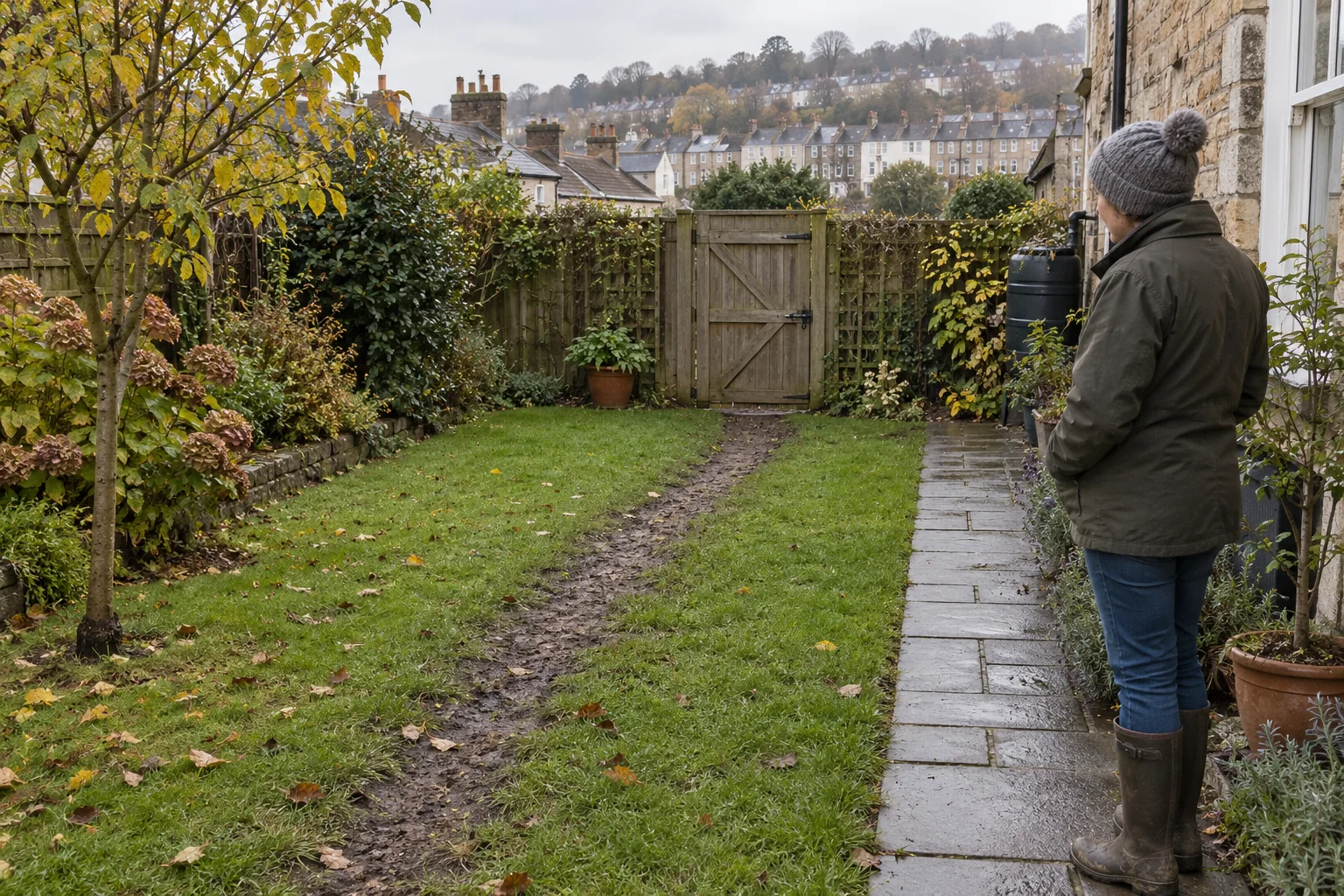
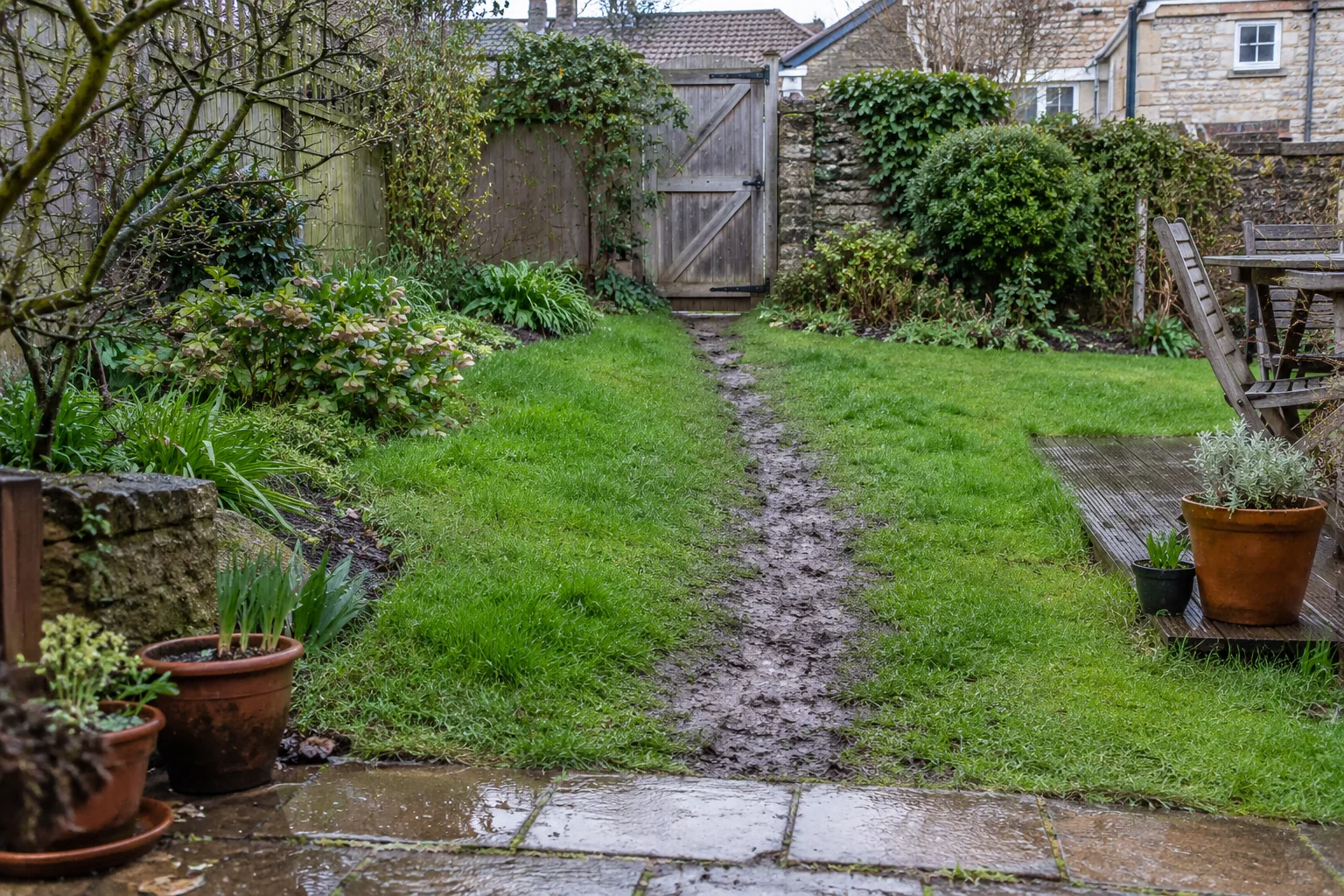
A thin brown track across a lawn often reveals the route everybody actually uses. In winter, that shortcut can become muddy even if the surrounding grass looks healthy. The problem is repeated pressure on turf when the soil is wet, followed by slower recovery in low light and cool weather. You can reduce damage now by changing the route, limiting traffic during the wettest spells and planning repairs for conditions that allow grass to grow.
The RHS waterlogged-lawn guide explains that walking on saturated turf can create a sticky, puddled surface and worsen compaction. Its December lawn advice also warns that frosty grass blades are brittle and can be damaged underfoot. The key is to notice the condition of the lawn before crossing it, not to set a blanket ban on using the garden.
Find the route that takes the wear
Look from the house door towards the bin, gate, washing line and shed. Which trips happen every day, even in rain? A worn diagonal usually means the existing path is inconvenient, too narrow or blocked by pots. Take a photograph after rain and another in a dry spell. Mark puddles, bare patches and the places where people step off paving. This tells you whether wear is the main issue or whether water is collecting independently.
Try a simple behaviour change first. Move a pot that narrows the route, make the gate easier to reach and ask everyone to use a paved path during saturated spells. If a short crossing is unavoidable, direct traffic over the same deliberate, stable route rather than allowing several muddy tracks to spread. Keep the route safe: a loose object on wet grass can be a trip hazard.
Pets can create a similar line of wear, particularly near a gate or a favourite waiting spot. Observe where they run and whether a short, washable hard surface near the entrance would relieve the grass. Move toys or feeding stations away from the weakest patch if that is practical. The aim is to take repeated pressure off one point, not to close the whole garden. A small change in where people pause can make as much difference as a new path.
Use temporary protection with care
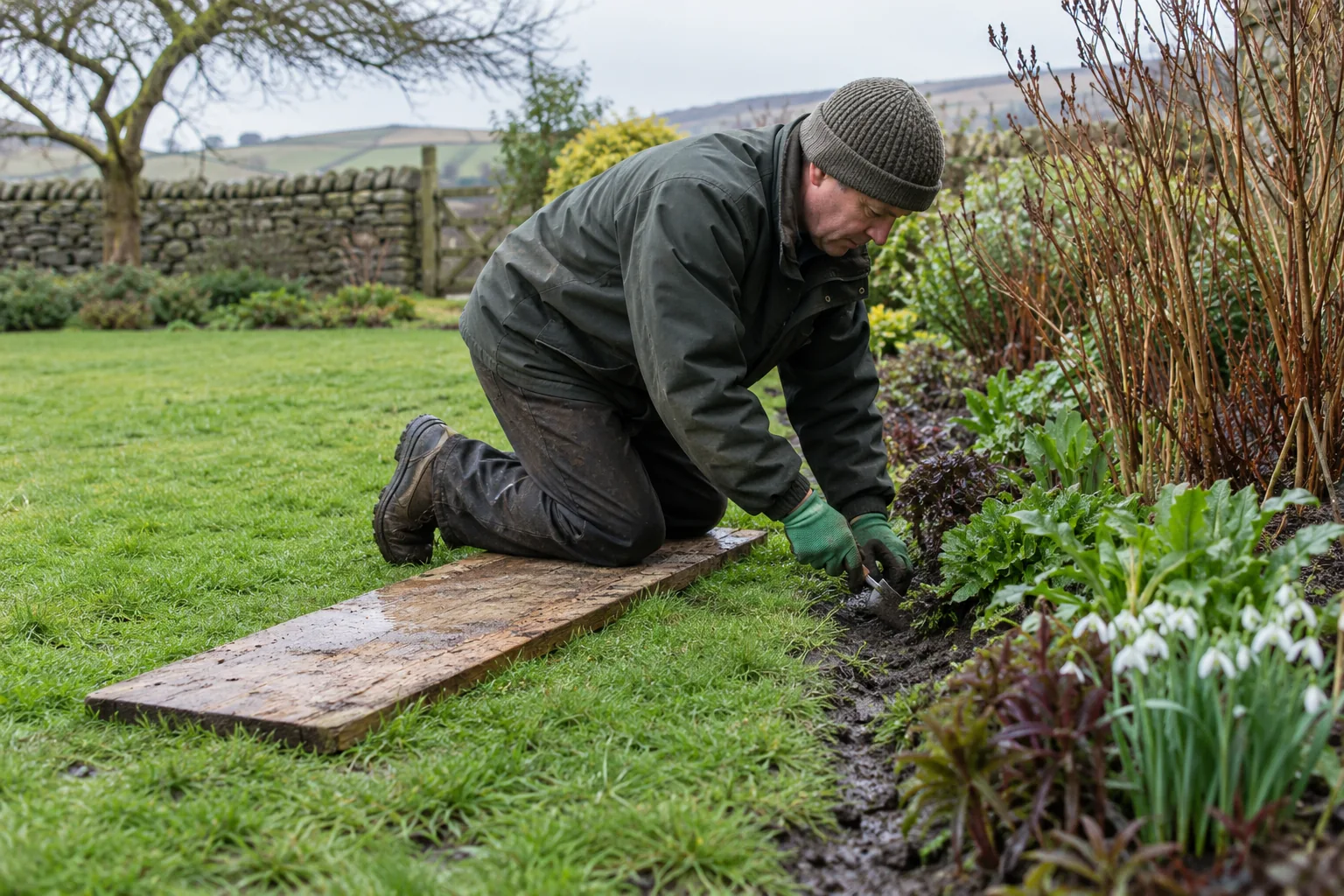
For occasional work, a wide, sturdy board can spread weight across a damp area while a task is completed. Put it down and remove it afterwards; a board left on grass for weeks will block light and can damage turf itself. Check it is stable, especially for older users or anyone carrying tools. Temporary mats designed for outdoor pedestrian use may be suitable for a short event, but read the maker's instructions and avoid using them as a permanent drainage solution.
Do not wheel a loaded barrow or drag heavy bins across saturated turf if another route is available. Where a contractor needs access, agree the route beforehand and ask how the lawn will be protected and restored. Heavy equipment may require a more robust access system than household boards. Avoid improvising with slippery plastic sheeting, which can become hazardous and does little to distribute a concentrated load.
If the garden has a daily route over grass, consider a properly designed path once the weather allows. Stepping stones or a permeable walkway may suit a small garden, but their position, stable base and the path water takes all need thought. A badly placed path could shift the muddy problem to its edge. Plan it around the route people already take, rather than forcing everyone to detour around an ornamental design.
Choose a width that suits the people and objects using it. A route to a wheelie bin needs more room than a decorative stroll. Check whether an edge would trap runoff against the lawn or house wall. In rented or shared gardens, agree permanent changes with the responsible person. A temporary route can test the line before paving.
Know when to leave the lawn alone
If water is standing or a footprint fills with water, keep off that part of the lawn where possible. Do not spike saturated ground simply because it looks compacted. The RHS recommends waiting for standing water to drain and the surface to be workable before aerating. A repeated puddle may also be caused by runoff from paving or a downpipe, not only foot traffic. Our guide to compacted soil versus poor drainage helps establish the cause before you choose a remedy.
Frost calls for a different pause. Walking on frosty blades can bruise the grass and leave a visible track when it thaws. If you need to reach a bin or gate each morning, a proper hard route becomes more valuable than repeated requests to avoid the lawn. A single careful crossing during an occasional frost is unlikely to define the garden, but daily use deserves a lasting solution.
Keep fallen leaves from building up on the used part of the lawn. A light rake from the path can remove them without churning the soil. Avoid close mowing as a response to mud; a shorter sward does not repair compacted ground. The RHS mowing guidance says never to mow when soil is very soft, wet or frozen.
Moss in the worn area is another clue, but removing it immediately will not fix persistent wetness or shade. Notice whether the same spot is wet after ordinary rain, whether surrounding ground remains firm and whether water comes from a hard surface. Our November guide to a small urban garden in wet weather offers a short inspection routine that can help you record those patterns.
Repair later, after fixing the cause
Bare turf cannot establish well while it is still being crossed every day. Decide first where people will walk. Then assess drainage and soil structure when the ground is workable. A localised worn strip may need aeration and reseeding; a constantly wet hollow may need a different water-management solution. Our guide to repairing bare lawn patches covers preparation and the choice between seed and turf in suitable conditions.
Rake out accumulated debris gently and note the size of the bare area rather than scattering seed into winter mud. Seed needs appropriate soil contact, moisture and temperatures for establishment. A spring plan is often more realistic than trying to disguise a route that will continue to be used all winter. If the spot is too shady or heavily used for lasting grass, consider reducing the lawn area or redesigning access.
When repair becomes feasible, protect new grass from traffic while it establishes. If the route cannot be diverted, postpone seeding rather than repeat a failed repair. If the same strip goes bare each winter, a path or edge may reduce maintenance and mud carried indoors.
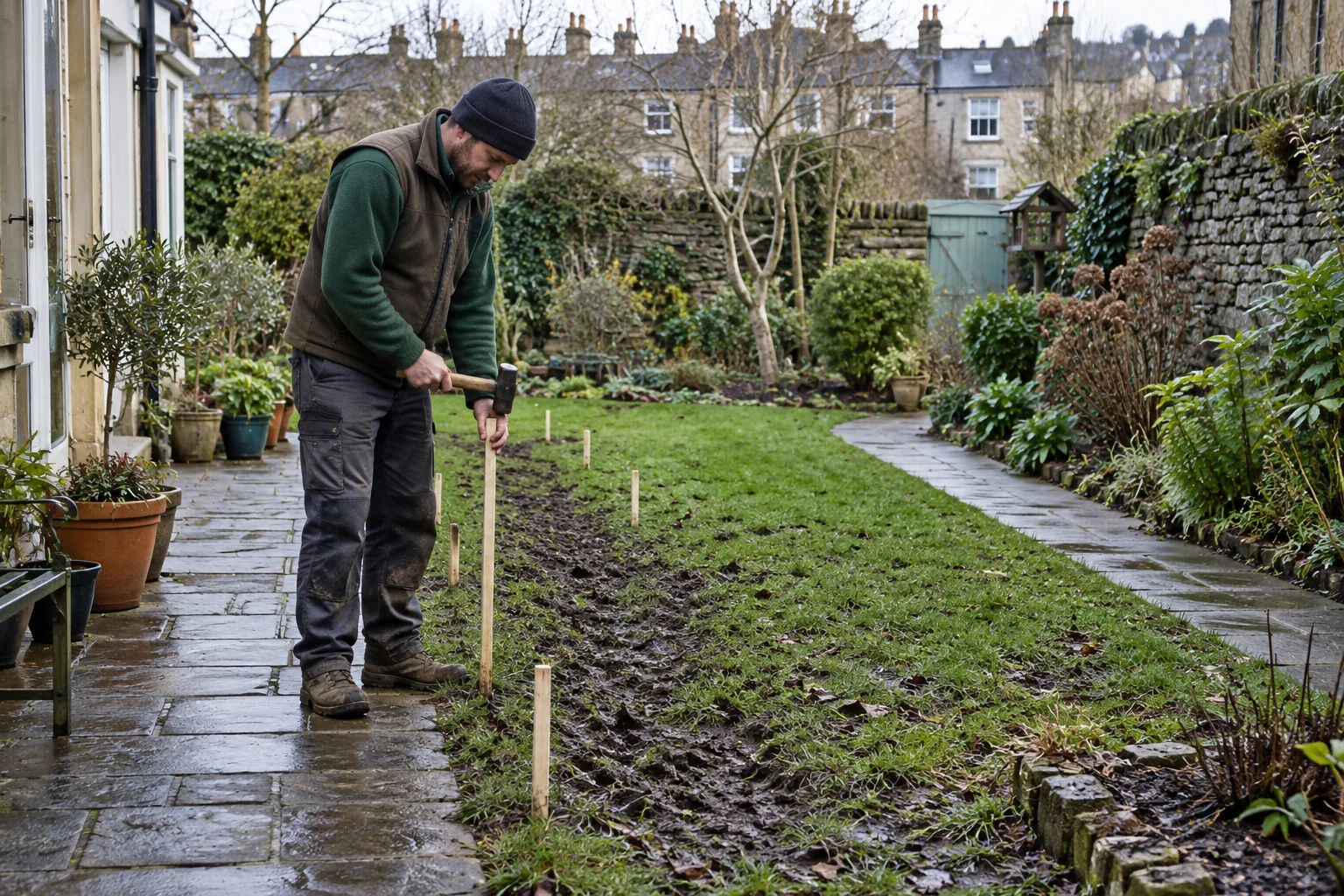
The best winter protection is a route people will actually follow. Keep access clear, avoid pressure on waterlogged or frosty turf, and treat repeated muddy tracks as evidence about how the garden functions. When conditions improve, repair the surface after solving the traffic pattern that wore it away.