
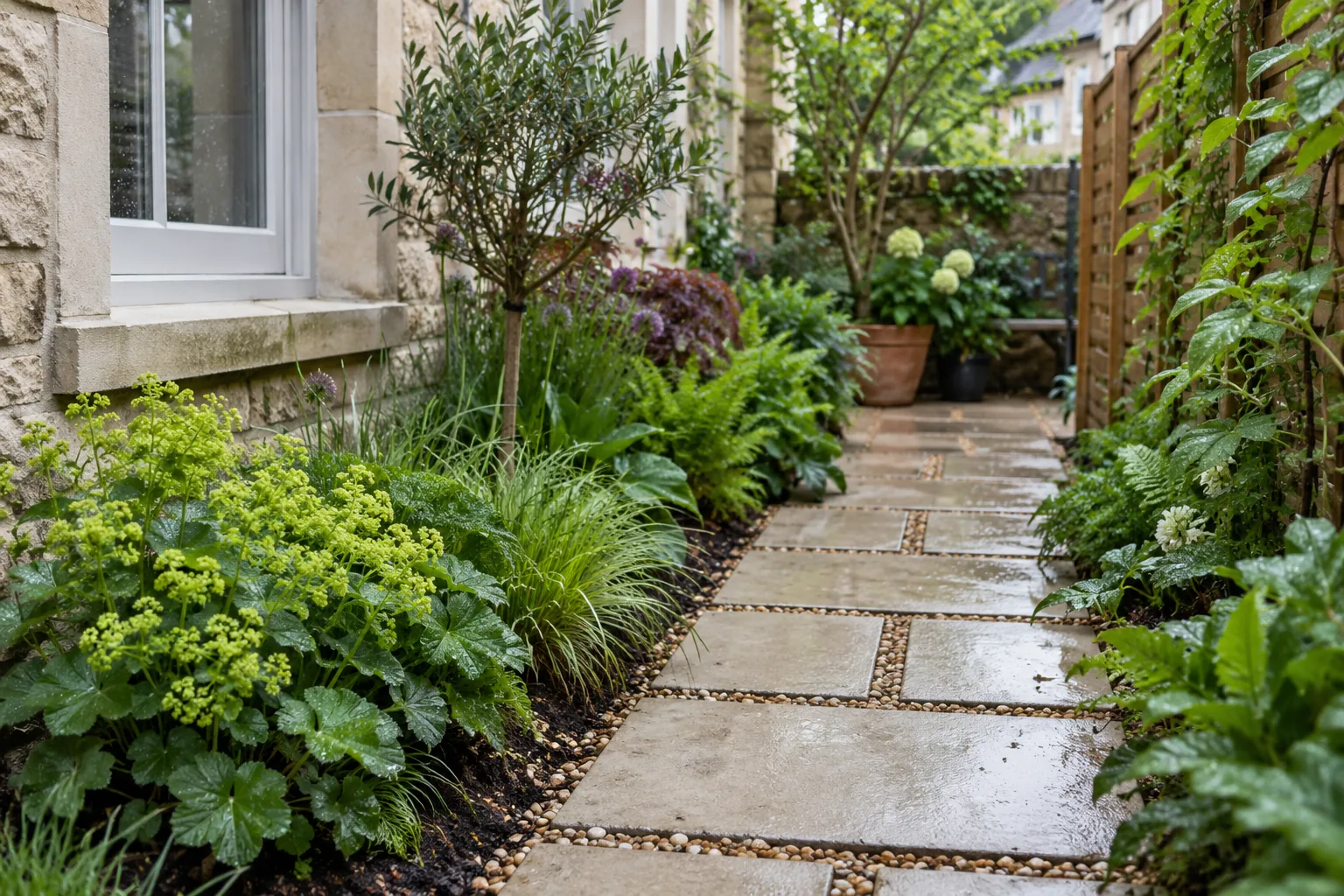
A narrow garden needs a surface that is comfortable to walk on, easy to maintain and able to cope with rain. Those aims are connected. If every square metre is sealed, water may rush towards the house, collect beside a fence or turn the only planting strip into a soggy afterthought. A permeable surface lets rain pass through its joints or body into a suitable base beneath. It can make a compact space more useful without asking it to behave like a miniature car park.
The right choice depends on how you use the garden, what lies beneath it and where water can safely go. Here is a practical way to compare options before buying a pallet of paving.
Start with the route, not the product
Watch where people actually walk. In a typical Bristol terrace, the route from the back door to a shed or gate may be the garden’s busiest line. Measure its clear width after allowing for pots, open doors and plants at maturity. If the route feels cramped now, a thick border of edging will make it worse. Sketch the route and the places where someone needs to stop, turn or carry a bin.
Decide whether the surface is for occasional foot traffic, everyday access or furniture. Loose gravel may suit a side strip but is uncomfortable under narrow chair legs. Stepping stones through planting can work where the route is leisurely; they are frustrating when you are carrying laundry in the rain. A small seating area needs a stable, reasonably level finish, even if a more informal material works elsewhere.
What “permeable” actually means
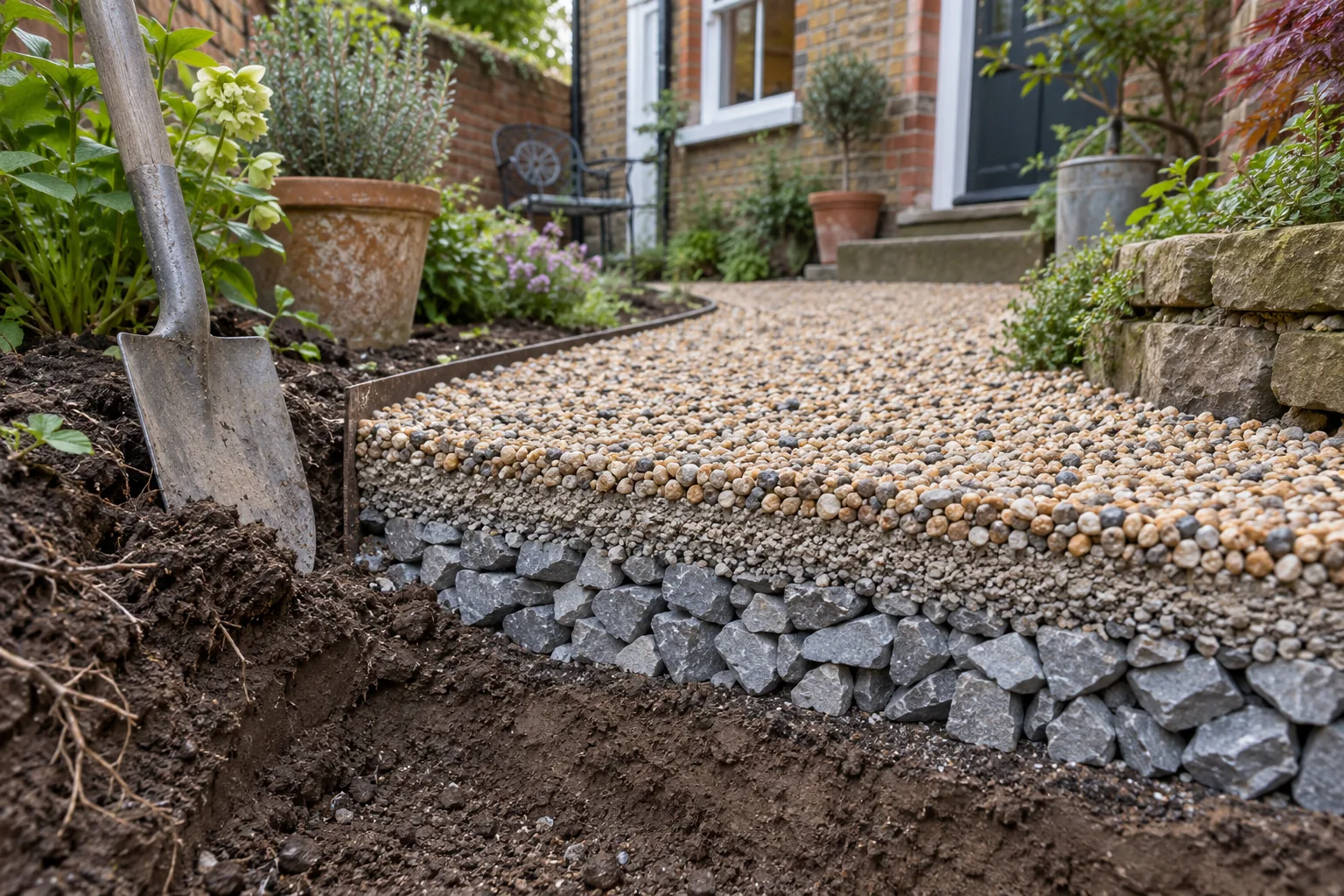
Permeable paving is a system, not just a porous top layer. Water must move through the surface, through the bedding and into a base that can store or release it. Conventional mortar beneath attractive open joints can block that route. Equally, a free-draining surface over heavily compacted soil may simply hold water above the ground.
There are two common approaches. Porous materials allow water through the material itself. Permeable constructions use gaps between solid units, filled with suitable aggregate. Both need a correctly specified foundation. Before choosing either, establish whether the ground can absorb water and whether the site has an existing drainage problem. A professional may recommend an infiltration test, particularly for a larger area or where water already stands after rain.
Do not assume that more infiltration close to a house is always beneficial. Water should be directed away from buildings and neighbouring property, and the ground levels must preserve the damp-proof course and any ventilation openings. If the plot slopes towards the rear wall, the drainage design matters more than the colour of the slabs.
Compare materials against daily use
Self-binding gravel offers a relatively informal look and can create a firm walking route when installed properly. It needs careful grading and may require maintenance in heavily used spots. Ordinary loose gravel drains readily and is often affordable, but small stones migrate into beds and may be difficult for wheels or less steady walkers.
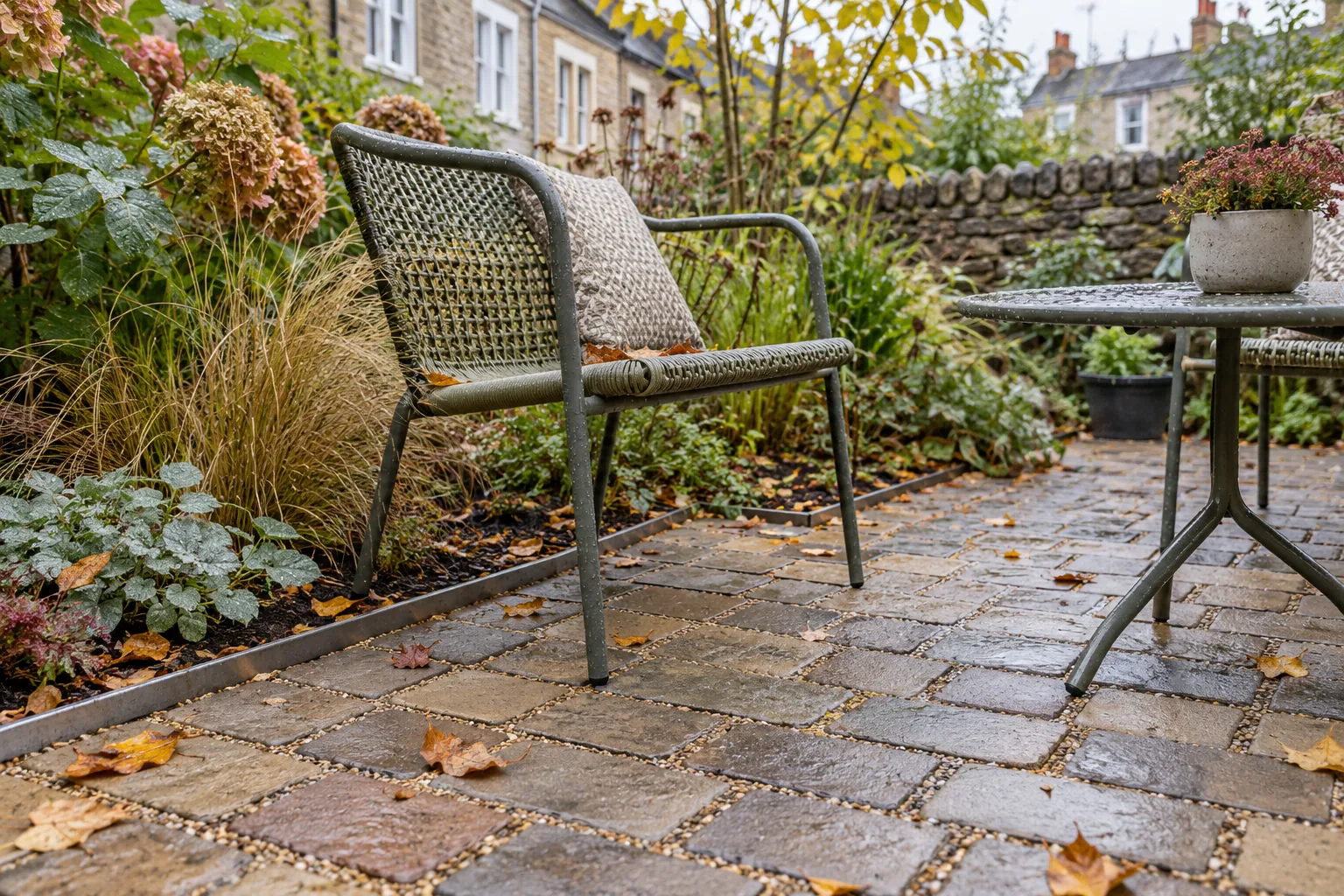
Permeable block paving gives a more regular, stable surface. The joints and sub-base must be specified as a permeable system rather than copied from ordinary block paving. Joint aggregate can settle or clog, so allow for occasional cleaning and topping up. In a narrow garden, smaller units can follow a gentle route, although too many colours and patterns may make the space feel busy.
Large slabs with generous gravel joints can look calm and work well for a short path. The detail under the slabs is important: isolated pockets of aggregate between impermeable mortar beds will not solve a drainage issue. Where furniture stands, consider whether chair feet will catch in joints. Resin-bound surfacing may look seamless, but its performance depends on the specification and construction beneath it; ask the installer for the complete drainage build-up, not a surface sample alone.
Keep useful planting space
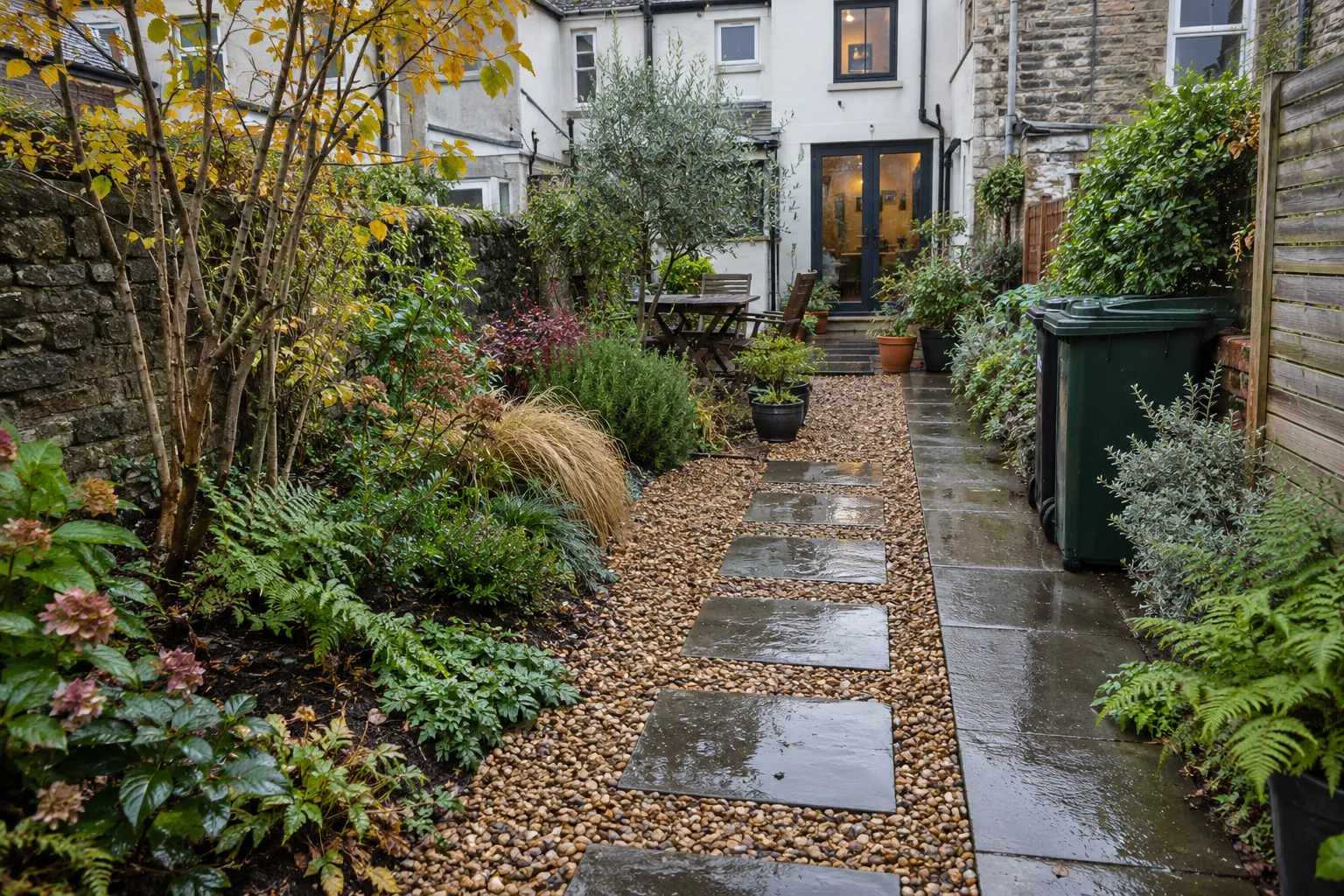
The most effective permeable choice may be less paving. A narrow border can absorb rain, soften a fence and leave room for roots, provided soil has not been compacted during construction. Avoid turning the last planting strip into a catchment for all surface water without checking its capacity. In a shady passage, select plants for the actual light and soil conditions, rather than relying on gravel to make a wet bed dry.
Try laying out the proposed path with a hose or string. Walk it carrying a watering can, wheelie bin or folding chair. This simple test often shows that a modest path and a slightly wider turning point work better than a uniform strip from end to end. Our garden design service can help plan those proportions and match materials to the way a small garden is used.
Check levels, edges and access
A small site has little room for mistakes in finished height. Measure thresholds, air bricks, drainage channels and fence bases before work starts. A new surface that looks level in isolation may bridge a damp-proof course or trap water against a door. The installer should explain the proposed fall, finished levels and destination for runoff in plain terms.
Edges keep aggregate in place and protect planting, but a tall raised edge may become a trip hazard. Think about how a mower, wheelbarrow or bin crosses from one material to another. If the garden is reached only through the house, ask how excavation material and new aggregate will be moved without damaging indoor floors. The disposal and delivery plan can affect the cost of a narrow courtyard considerably.
Also consider maintenance access. Can you sweep leaves from the joints? Is there enough room to lift a damaged unit without dismantling a bed? Are inspection covers still reachable? These unglamorous details often decide whether a surface remains pleasant after several wet winters. If the path becomes slippery, our patio and path cleaning service can assess the surface before choosing a cleaning method.
Ask for a complete specification
When comparing quotations, ask each contractor to describe excavation depth, sub-base material, bedding, surface, edging and drainage connection or infiltration method. A price for “permeable paving” without those parts cannot be compared fairly. Request an explanation of how the design responds to your soil, levels and intended use. If drainage calculations or permissions are relevant, have them checked before work is booked.
Photograph the garden after a heavy shower and mark where water collects. Note the sunniest and shadiest parts, the route you use most and any plants worth keeping. Those observations are more useful than choosing a product solely from a brochure. The result should be a dependable path or seating area that fits the garden, gives rain a sensible route and leaves the remaining space worth spending time in.