
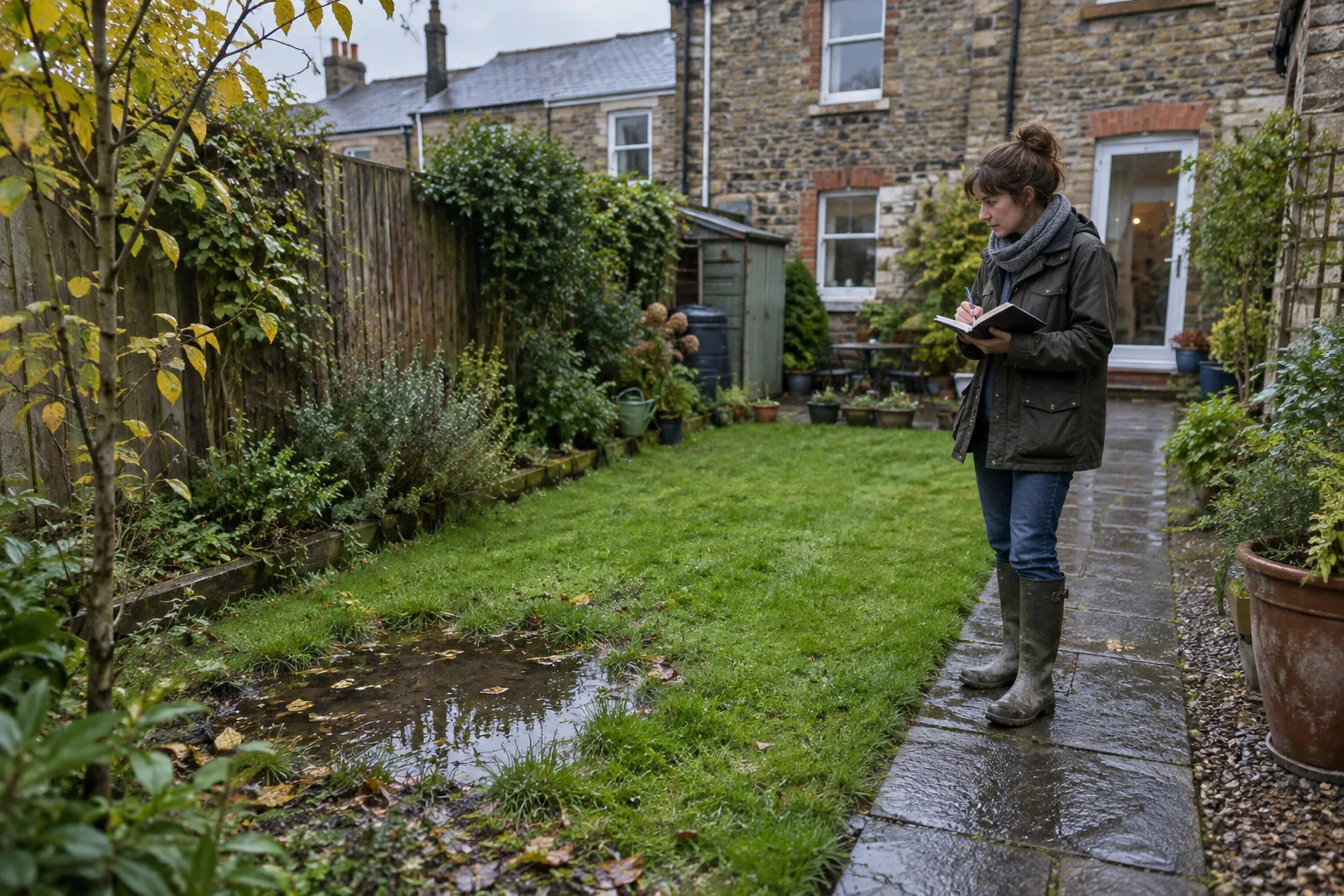
A puddle after rain does not automatically mean you need a drain. Water may be unable to enter the soil because feet or machinery have compressed the surface. It may also be arriving faster than the ground can absorb it from a roof, path or neighbouring slope. In other gardens, heavy soil or a high water table keeps a broad area wet for much longer. These problems can look similar on a single rainy afternoon but need different responses.
Before digging, watch what happens during and after several showers. Note where the water first appears, how far it spreads and whether it remains after the rest of the garden has dried. Compare a worn route with an undisturbed border and check whether paving directs extra water into one corner. A short record can prevent an unnecessary drainage installation and help you explain the problem if you seek professional advice.
Start with a map after rain
Walk the garden from firm paths and mark the wet areas on a simple sketch. Is there one puddle where everyone crosses the lawn, or does the entire lawn feel spongy? Does water collect beside a patio edge, under a downpipe or at the lowest point of the plot? Take photographs at the end of rainfall and again the next day. The time between the images is as useful as the size of the puddle.
Do not trample a saturated patch to test it repeatedly. A few careful observations are enough, and extra foot traffic can worsen compaction. Look for flattened grass, wheel tracks and a hard, bare strip along a gate or washing line. These clues suggest pressure on the soil. If a border that receives little traffic is also waterlogged, a wider drainage or soil-structure issue becomes more likely.
The RHS guidance on garden drainage recommends identifying the problem area and testing how poorly it drains before installing a system. Water that remains for hours or days deserves more investigation. A brief puddle during intense rain is different from persistent standing water, especially if roots remain wet over successive days.
Understand what compaction does
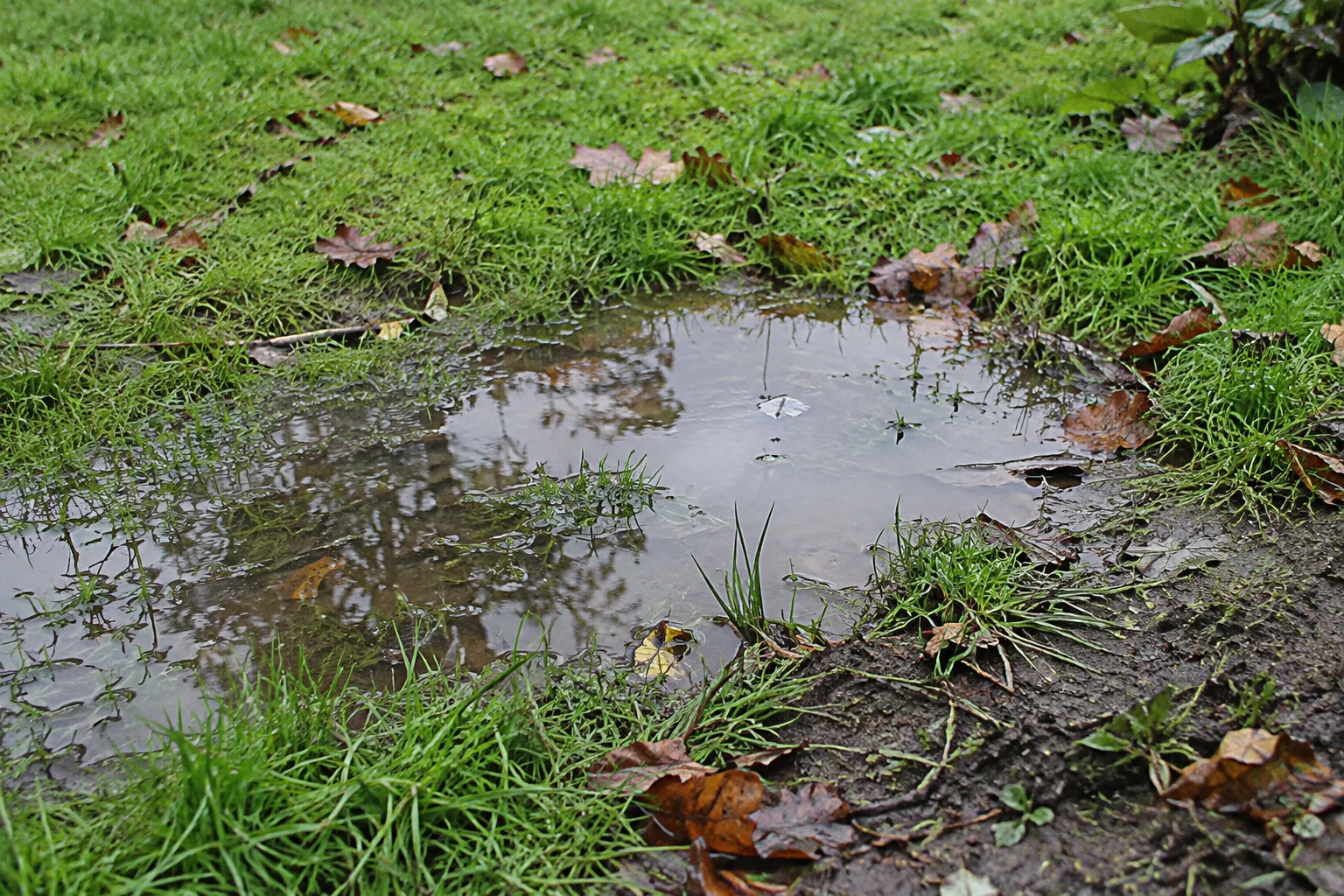
Healthy soil has spaces through which air and water can move. Repeated pressure squeezes those spaces, so rain may sit on the surface or move slowly into the root zone. In lawns, compacted areas often coincide with a regular walking route or a place where furniture has stood. Grass may thin there, making the surface even more vulnerable to mud.
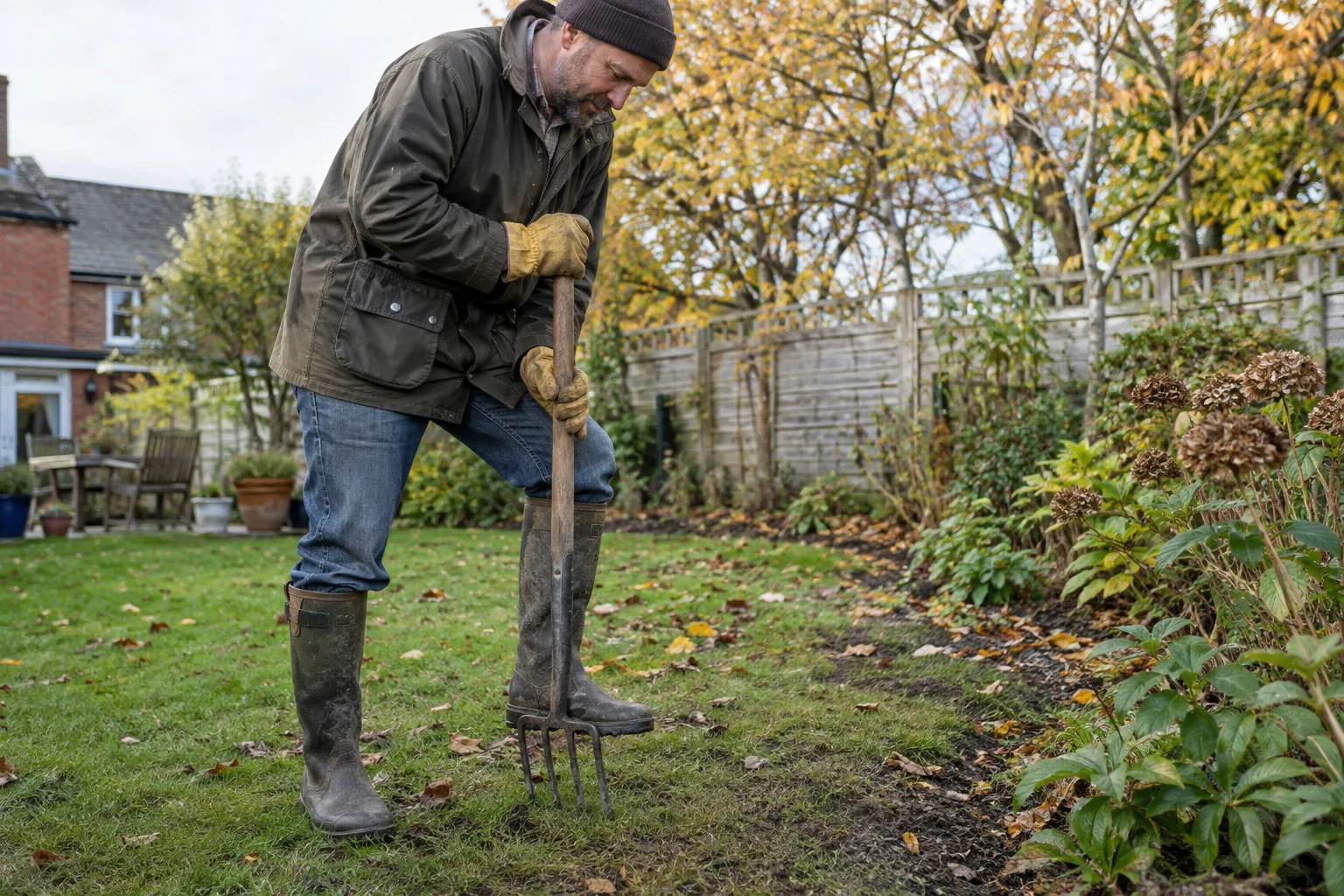
Compaction is not the same as naturally heavy soil, though the two can occur together. A clay lawn can be firm and workable when appropriately moist, yet become easily damaged when very wet. A compacted layer may be localised near the surface or beneath an old construction route. Use a hand fork only after water has drained and the ground is workable. If the tines meet unusual resistance in a narrow strip but enter nearby ground more easily, compaction is a plausible cause; stones, roots or buried material are other possibilities.
The RHS advice on waterlogged lawns describes aeration as an option for compacted turf once standing water has gone. That timing is important. Forcing tools into saturated soil can smear and compress it further. Keep traffic off the affected area first, then consider whether spiking or hollow-tine aeration is appropriate for the actual lawn condition.
Trace water arriving from elsewhere
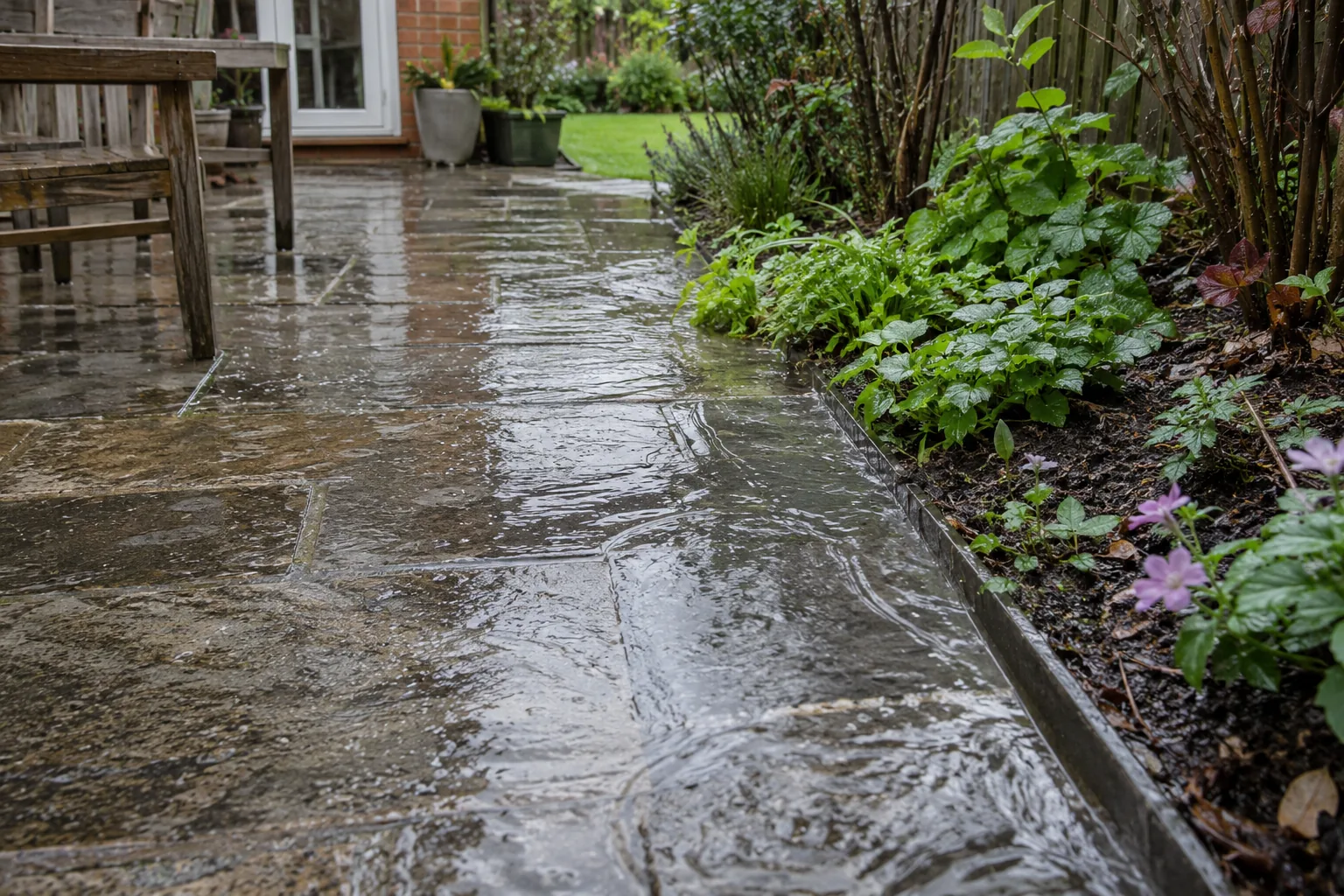
If the wet area begins at the edge of paving, inspect the direction of the slope. Hard surfaces shed rain quickly, and a small bed may receive runoff from a much larger patio. Check that water from a downpipe reaches its intended destination and that gullies and surface drains are clear. Do not disconnect or redirect rainwater without understanding where it will go; sending it towards a neighbour or a wall can create a larger problem.
A puddle in a low spot is often a symptom of levels as well as soil. Compare it with the surrounding garden: if every route falls towards that point, aerating the surface alone may have limited effect. Water needs a safe destination. The RHS overview of waterlogging and flooding notes that hard landscaping can leave less soil to absorb runoff. That is useful context when a garden became wetter after paving was added.
Clear leaves and debris from surface grilles, then observe the next rainfall. If water disappears once the route is open, the blockage may have been the main issue. For a slippery or poorly draining paved area, the patio cleaning service can assess cleaning needs, but it should not be treated as a cure for water collecting beneath the surface.
Check the pattern in beds and containers
Beds can reveal whether the problem extends beyond turf. If established plants in several borders are struggling and soil remains saturated after rain, the issue may be widespread. A single waterlogged planting hole may instead reflect local soil disturbance or a low pocket. Avoid digging wet clay to test it: smeared sides can create a basin that holds water around roots.
Containers are a separate system. A pot can stand in water because its drainage hole is blocked or its saucer remains full, even while the garden soil is fine. Lift it safely, check the outlet and empty the saucer where appropriate. Do not classify every wet pot as evidence that the plot needs drainage work.
Where a border is consistently damp, plant choice may be part of the answer. The RHS guide to gardening on wet soils discusses working with moisture-loving plants as well as drainage options. Before changing planting, understand whether waterlogging is seasonal, caused by runoff or persistent through much of the year.
Choose the smallest useful intervention
For a localised compacted lawn route, reduce traffic while wet and plan aeration when the soil is suitable. For a blocked surface channel, clear it and monitor the result. For runoff from a path, consider how the surface is graded and whether a safe, permeable receiving area exists. A broad, persistent wet zone may justify a specialist assessment before a drain, soakaway or level change is proposed.
The garden maintenance service can help keep lawns and borders in good condition while a persistent problem is investigated. If bare turf has already developed, our guide to repairing autumn lawn patches explains why the cause must be addressed before sowing.
Use the evidence you collected to make the next decision. One compacted strip, one runoff point and a garden-wide drainage problem are not interchangeable. Observe after rain, protect wet ground from further pressure and choose a remedy for the path water actually takes. That is more reliable than buying drainage materials because a single puddle appeared.