
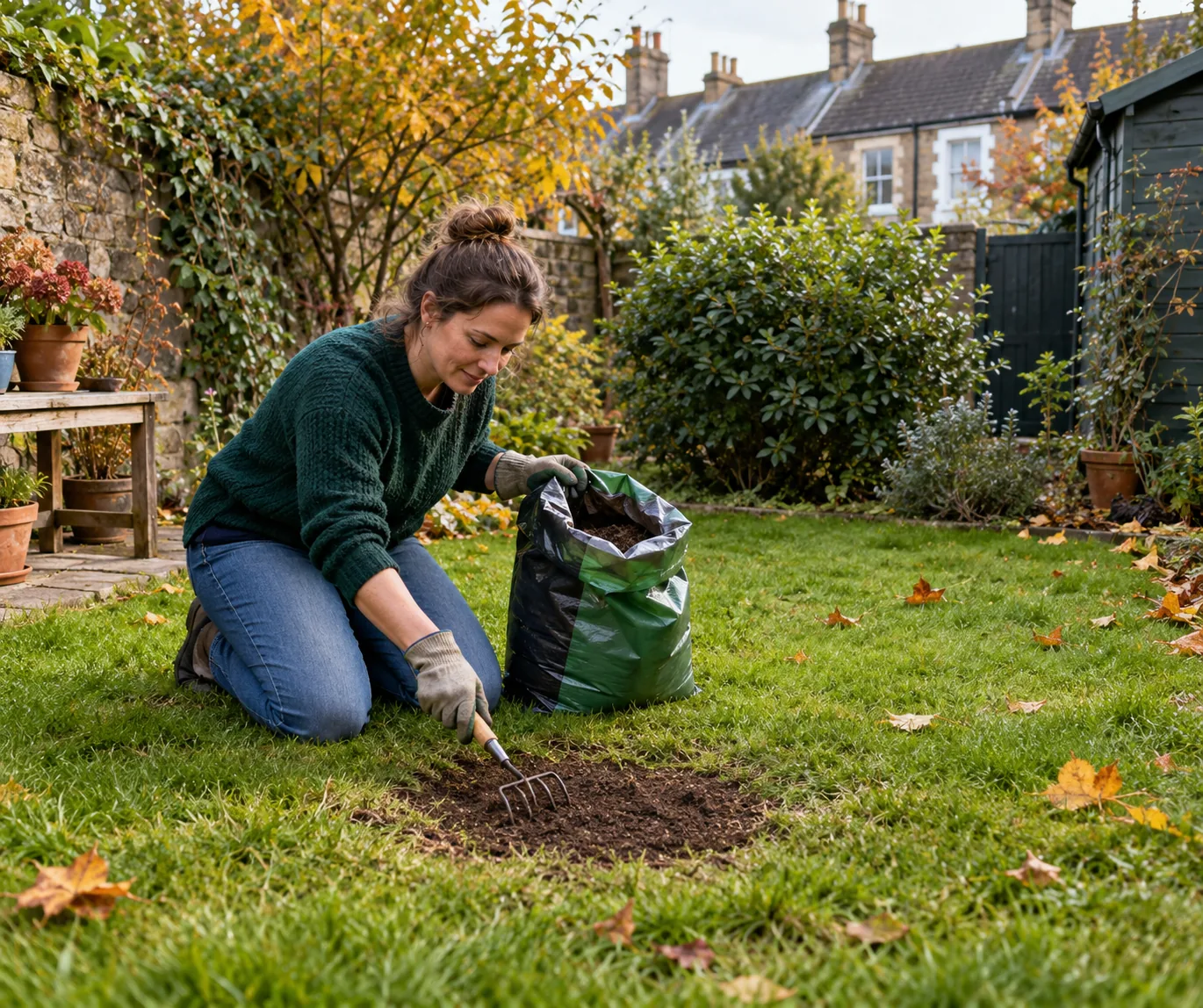
An autumn repair can work if the soil is still warm enough for seed to germinate and the ground can be prepared without turning it into mud. A small bare patch in a Bristol lawn may be worth treating in early autumn, but the decision becomes less certain as the season cools. Seed needs time to establish; a tidy-looking surface on the day of sowing is not the same as a durable lawn by winter.
Start by finding out why the grass disappeared. A patch beside a gate may be worn by feet, a shaded corner may lack light, and a hollow may remain wet long after rain. Simply scattering seed over the same conditions can produce a brief improvement followed by the same failure. Fix the cause, then choose seed or turf according to the size of the patch, the weather and how soon the area must be usable.
Diagnose the bare area before buying seed
Look at the shape and position. A narrow strip beside a path suggests repeated traffic. A circle under a tree may point to shade, root competition or dry soil in summer. A patch at the bottom of a slope can stay wet; one that appears after fertiliser or weedkiller use may have been damaged by the treatment. The RHS guide to dead patches lists several possible causes and cautions against diagnosing by appearance alone.
Feel the soil after rain and again a day later. If it remains sticky while nearby ground dries, deal with the drainage or compaction question first. If it is very dry beneath the surface despite rainfall, tree roots or an overhang may be involved. Watch where people and pets travel. A new path across the lawn will quickly wear out another seed repair unless the route changes or is given a more durable surface.
Photograph the area and note its size. A few gaps call for a different response from an entire lawn that has thinned. Where most turf is weak, patching each mark separately can waste time; broader renovation or a change in use may be more sensible. The lawn mowing service can discuss lawn condition alongside a practical care routine.
Decide whether the season is still suitable
The RHS lawn repair guidance identifies spring and autumn as the usual repair seasons because cool, damp conditions support recovery. That does not make every autumn day suitable. Seed germinates slowly as temperatures fall, and a forecast of persistent heavy rain can wash it from a prepared patch. Saturated ground is difficult to level and easy to compact.
In October, assess the actual conditions rather than assuming it is either definitely too late or certainly fine. The RHS October lawn advice notes that sowing may still be possible in warmer parts of the UK, while soil temperature becomes a limiting factor. If there is little time for seedlings to establish before frost, protect the area and plan a spring repair. Waiting is a valid choice, especially for a heavily used lawn.
Turf can give immediate cover, but it still needs roots to knit into the soil and must be watered appropriately. Do not lay it onto waterlogged, frozen or poorly prepared ground to disguise a problem. A small, urgent patch at the edge may be suited to turf when the weather allows; a wider, lower-priority area may be easier and cheaper to seed in the next favourable window.
Prepare a firm, level seedbed
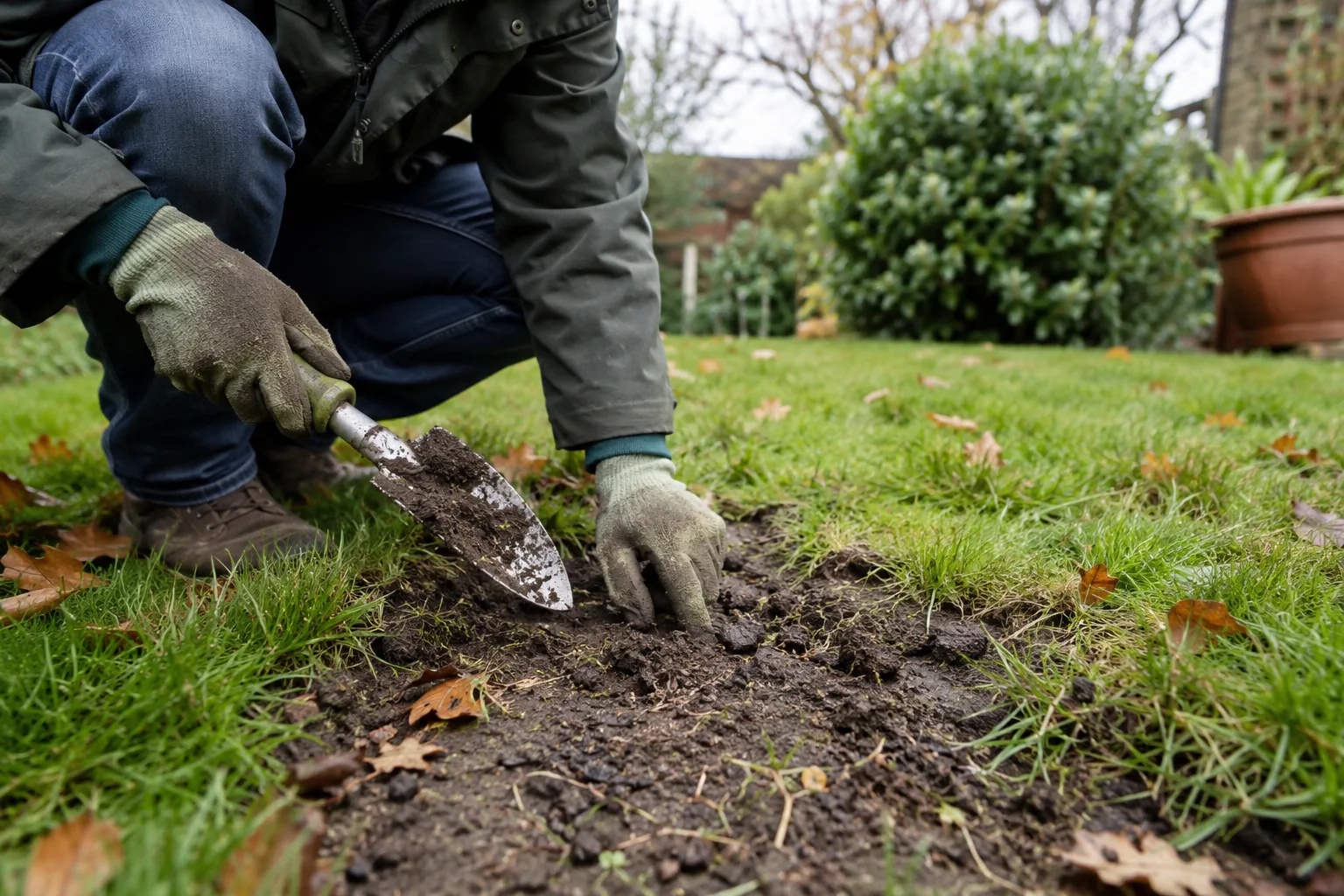
Remove dead grass, stones and persistent weeds from the repair area. If a compacted crust caused the failure, loosen the upper soil gently rather than scratching seed into a hard surface. Add a modest amount of suitable topsoil or well-rotted garden compost if needed, then level and lightly firm the area. Avoid piling new soil above the surrounding lawn, where a mower will scalp the new growth later.
The RHS method for a clearly dead patch is to cut out the damaged turf, lightly work the exposed soil and firm it before sowing. For a thin area where some grass remains, a lighter rake may be sufficient. Choose the least disruptive preparation that gives seed contact with soil. Do not work clay when it is so wet that it smears on the spade; allow it to dry to a workable state first.
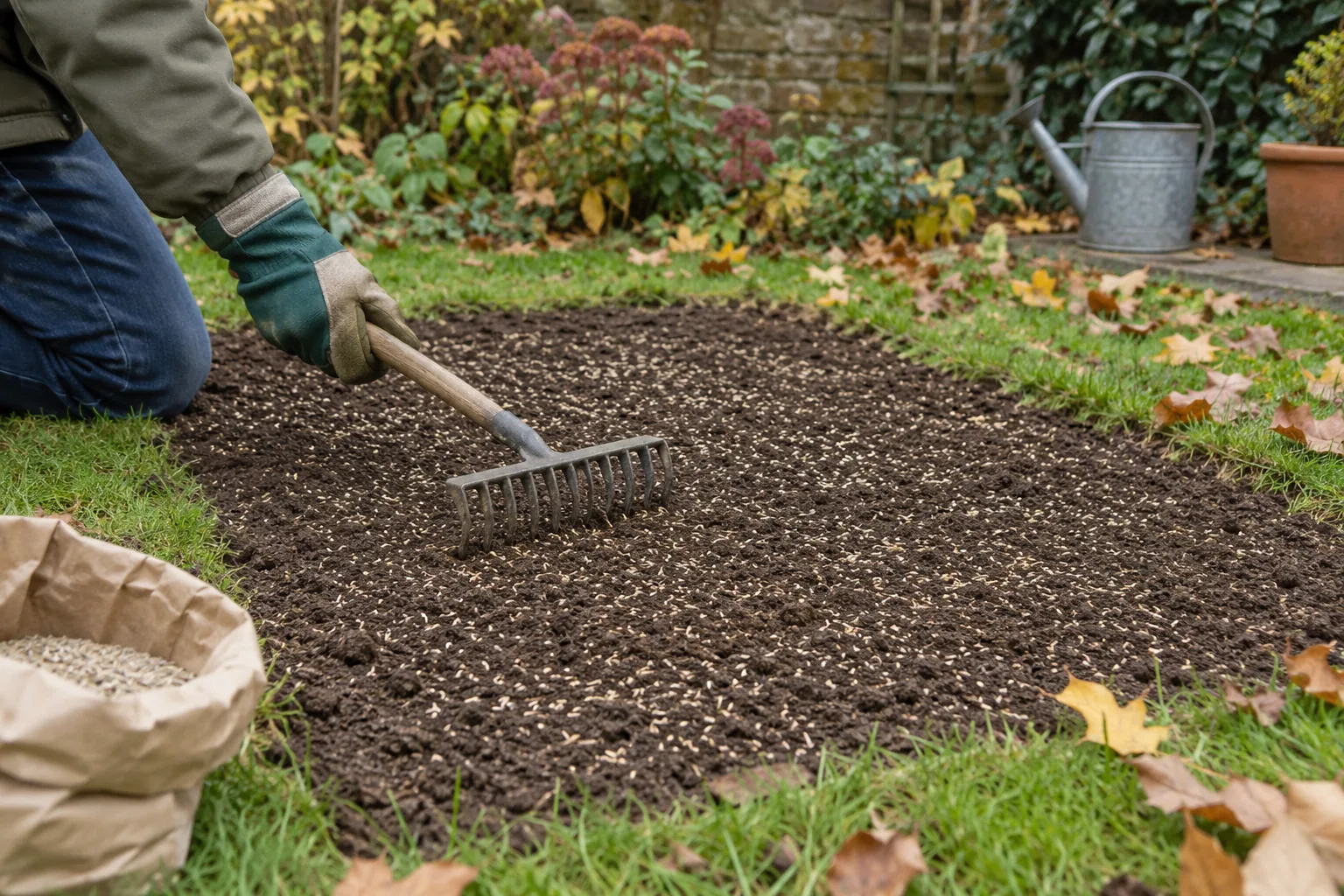
Choose a seed mix for the conditions. A shaded site needs a different mix from a play lawn that takes regular wear. Check the packet for sowing rate rather than guessing: sowing too thickly can create competition, while too little leaves gaps. Scatter evenly, gently rake or cover with a light sprinkling of fine soil, and water with a fine rose if rain is absent. A strong jet can wash seed into one corner.
Protect the patch while it establishes
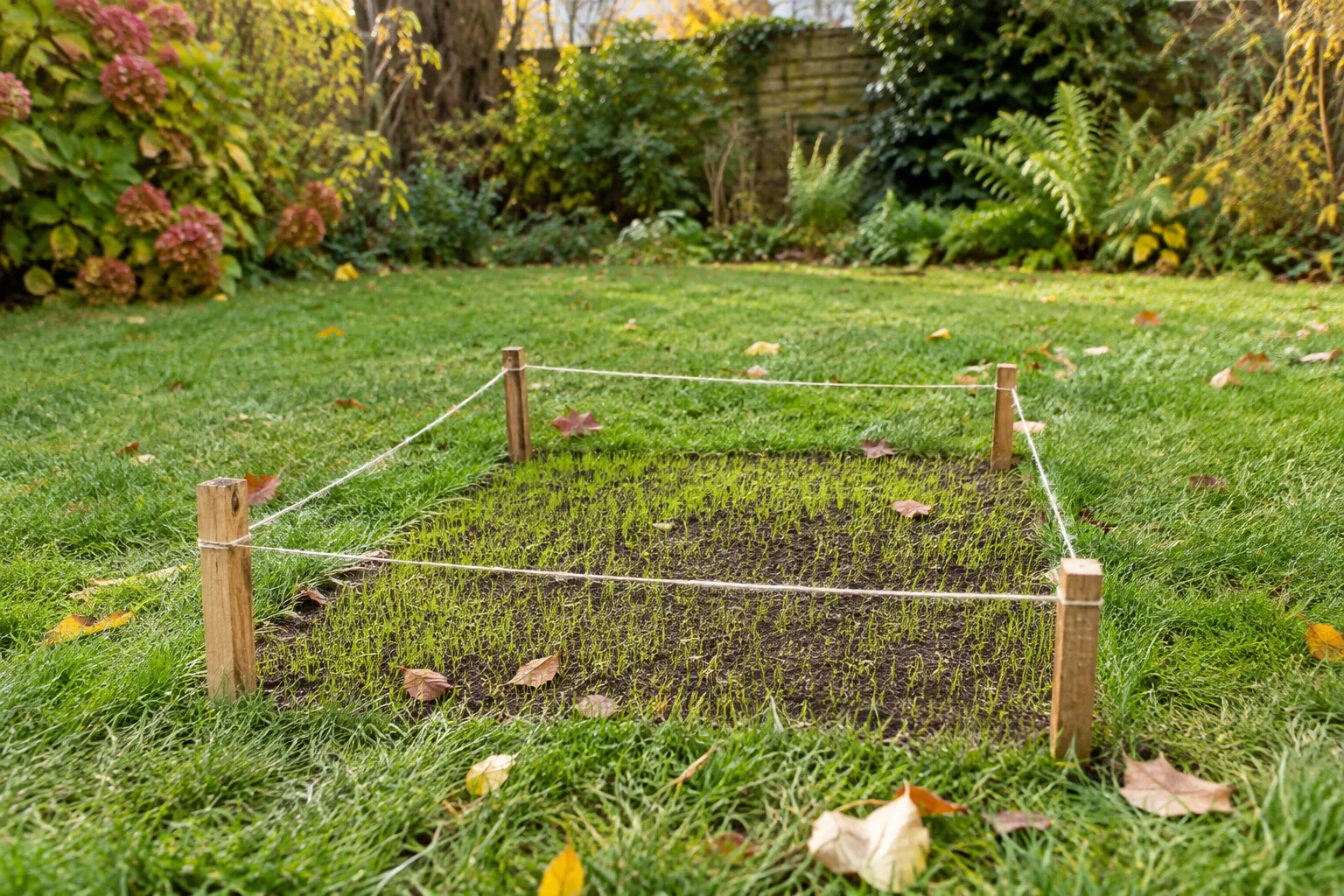
Seedlings need moisture and space. Keep people, pets and mower wheels off the patch until the young grass is established. A temporary marker or low barrier can help in a family garden, provided it does not create a trip hazard on a path. Check after heavy rain: if seed has washed into a line, gently redistribute it when the surface is workable.
Water according to conditions, not by a rigid daily rule. Autumn rain may supply enough moisture, but a dry spell can leave the upper soil where the seed sits too dry. Use a gentle application and avoid making the patch waterlogged. The RHS notes that new seed or turf can dry out until it is well rooted, so keep checking rather than assuming seasonal rain is sufficient.
Do not mow the new area merely because the rest of the lawn is due a cut. Wait until the young grass is robust enough, use a higher setting and make sure the ground is firm. If autumn growth stops before that point, leave the patch undisturbed over winter. Removing fallen leaves gently is useful; walking repeatedly across it to achieve a spotless finish is not.
Know when a bigger change is needed
The most important part of a patch repair may be changing the conditions around it. If every attempt fails beneath dense shade, reconsider whether grass is suitable there. If traffic always cuts the same corner, a defined stepping route may serve the garden better. If water stands in the area for days, investigate where it comes from before buying more turf.
Small holes can be repaired individually, but a lawn with widespread thinning may need a broader plan involving light, soil condition and use. The garden maintenance service can help assess how mowing, borders and seasonal care interact. When deciding on the next cut, our guide to the last autumn lawn mow explains why a firm surface and a higher setting matter.
For now, choose one realistic outcome: repair a suitable patch properly, or protect an unsuitable one until spring. Either is better than hurriedly scattering seed over compacted soil. Observe the cause, prepare carefully and give new grass a chance to establish without being trampled. That is how a small autumn repair becomes part of a healthier lawn rather than an annual repeat job.