
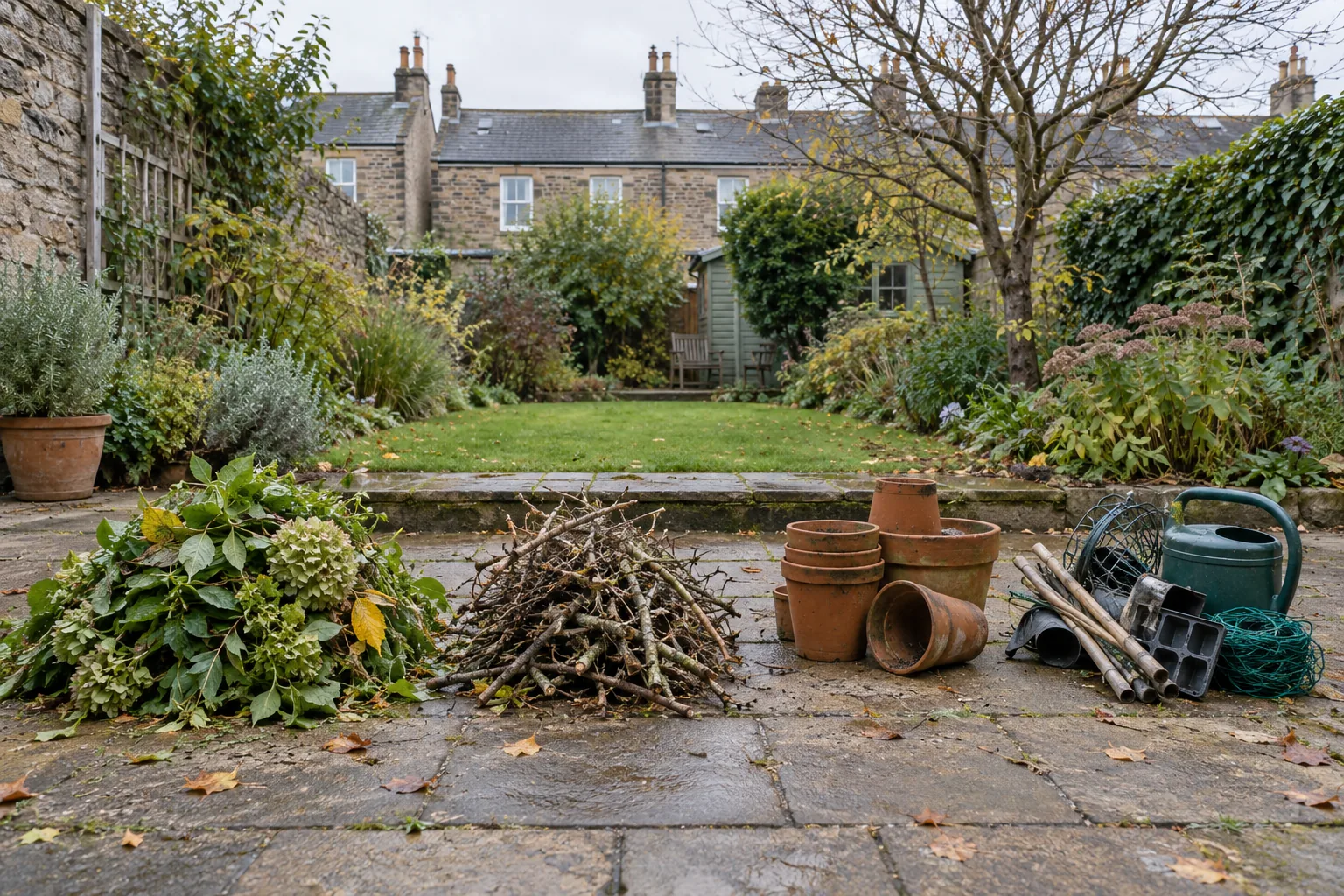
A major garden clear-up can produce more material than the garden itself seems able to hold. Cut hedges, long grass, branches, old pots and abandoned rubbish quickly merge into one heap. That makes disposal slower, more expensive and harder to explain to anyone collecting it. The best time to plan the waste route is before the first cut, while you can still see what is growing and what has been left behind.
For a Bristol household, the sensible approach is to separate material at source, keep useful organic matter where it helps, and choose a legitimate route for what must leave. The details matter because a green waste bin is not a general clearance bin.
Make four piles before filling a bag
Set aside a clear working area and label four groups: compostable plant material, council garden waste, reusable items and everything needing another disposal route. Put sharp or suspect objects aside safely rather than burying them in vegetation. If the garden is very overgrown, work in sections so no pile blocks the only exit or hides a path you have just uncovered.
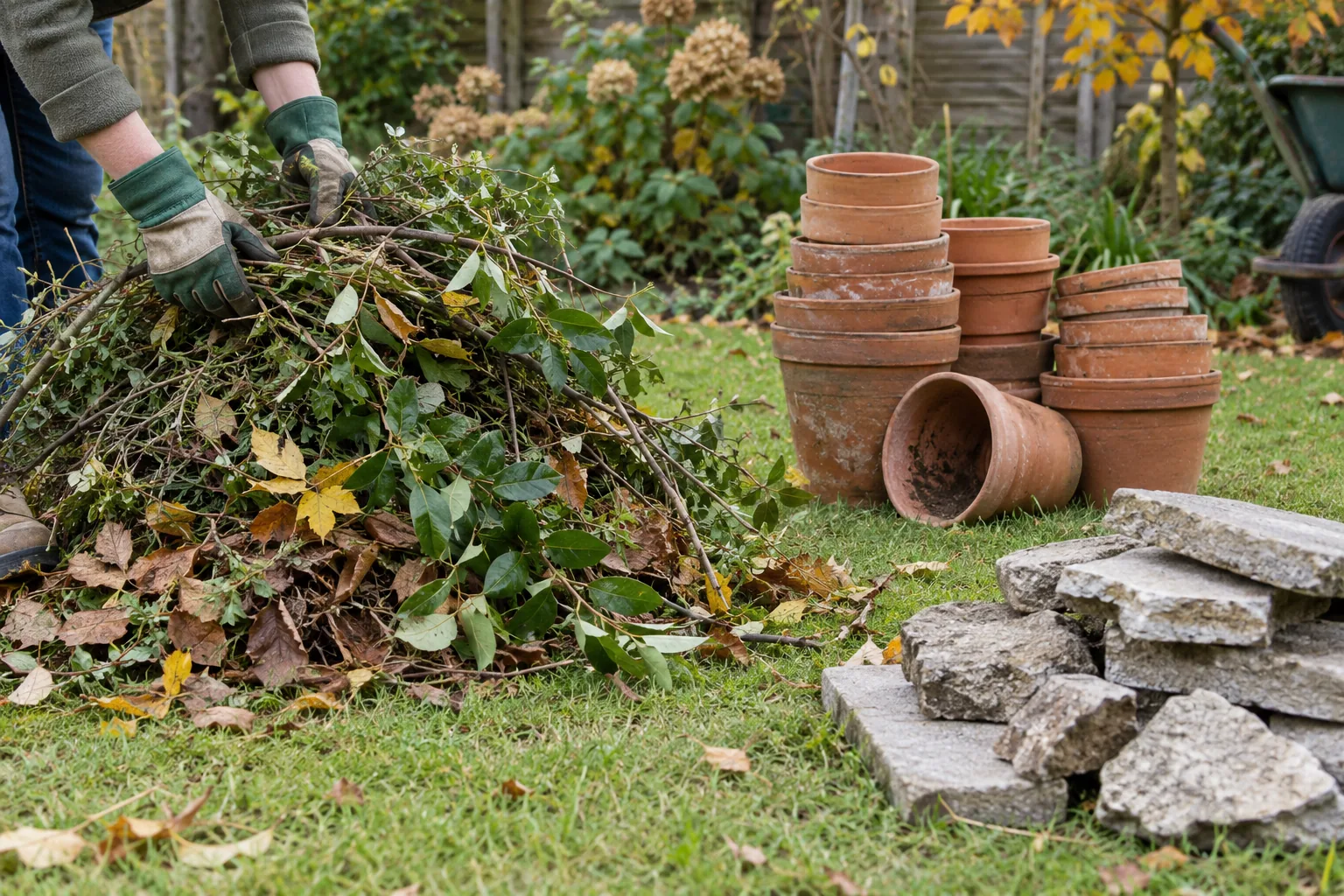
Keep soil, stones, broken paving, treated timber and plastic pots out of the green material from the start. A contractor pricing green waste disposal cannot treat a mixed pile as clean vegetation. Even if the total volume is modest, contamination may change where it can go and what the collection costs.
Take photographs before and after each section. They help you estimate the volume and agree what stays. Mark shrubs, self-seeded plants or wildlife cover worth retaining. A clear-up need not strip the garden bare; useful structure can reduce the amount to move and give a later planting plan a better start. Our garden clean-up service can include waste arrangements, but the volume and removal method should be agreed in the quotation.
Keep some material on site where it earns its place
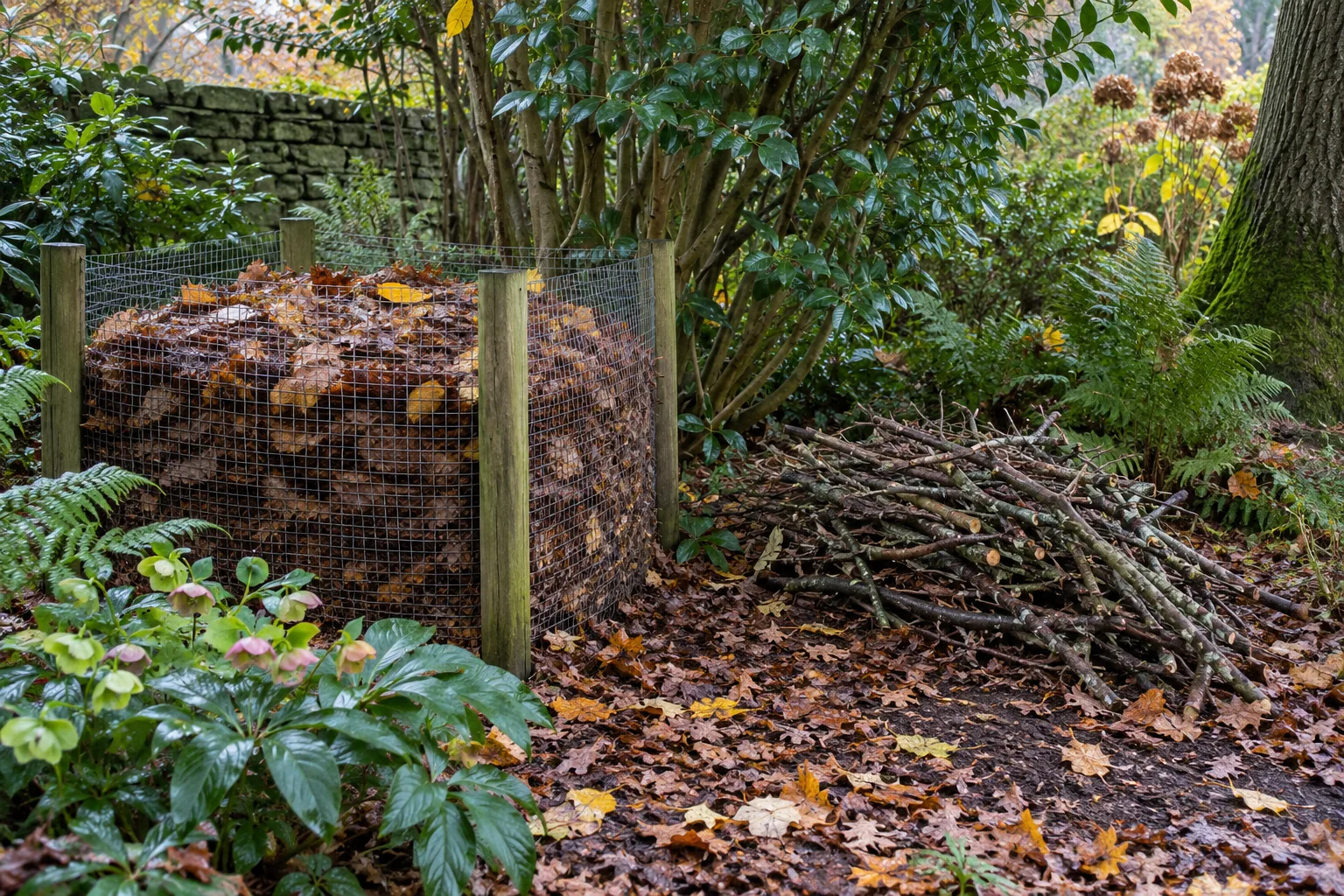
Healthy leaves can become leaf mould or a light layer beneath shrubs. Small amounts of suitable soft growth can go into a home compost system. Chipped woody material may be useful on paths or beds if it is appropriate for the setting. These choices save transport, but they still need space, care and a realistic use. A heap pressed against a fence or blocking a drain is storage, not a compost plan.
Avoid putting diseased material or invasive plants into an ordinary home heap without checking the species and the disposal guidance. Do not spread roots and fragments through the garden while moving them. If you suspect Japanese knotweed or another controlled invasive plant, identify it before cutting or transporting anything. A mistaken guess can turn a straightforward clear-up into a much larger problem.
Wildlife also changes the timing. Before dismantling dense piles or old vegetation, check for nests, sheltering animals and signs of activity. Work gently, especially around hedges and the base of shrubs. Leaving a small, deliberate habitat area can be more useful than retaining random heaps across the whole garden.
Know what Bristol's garden waste service accepts
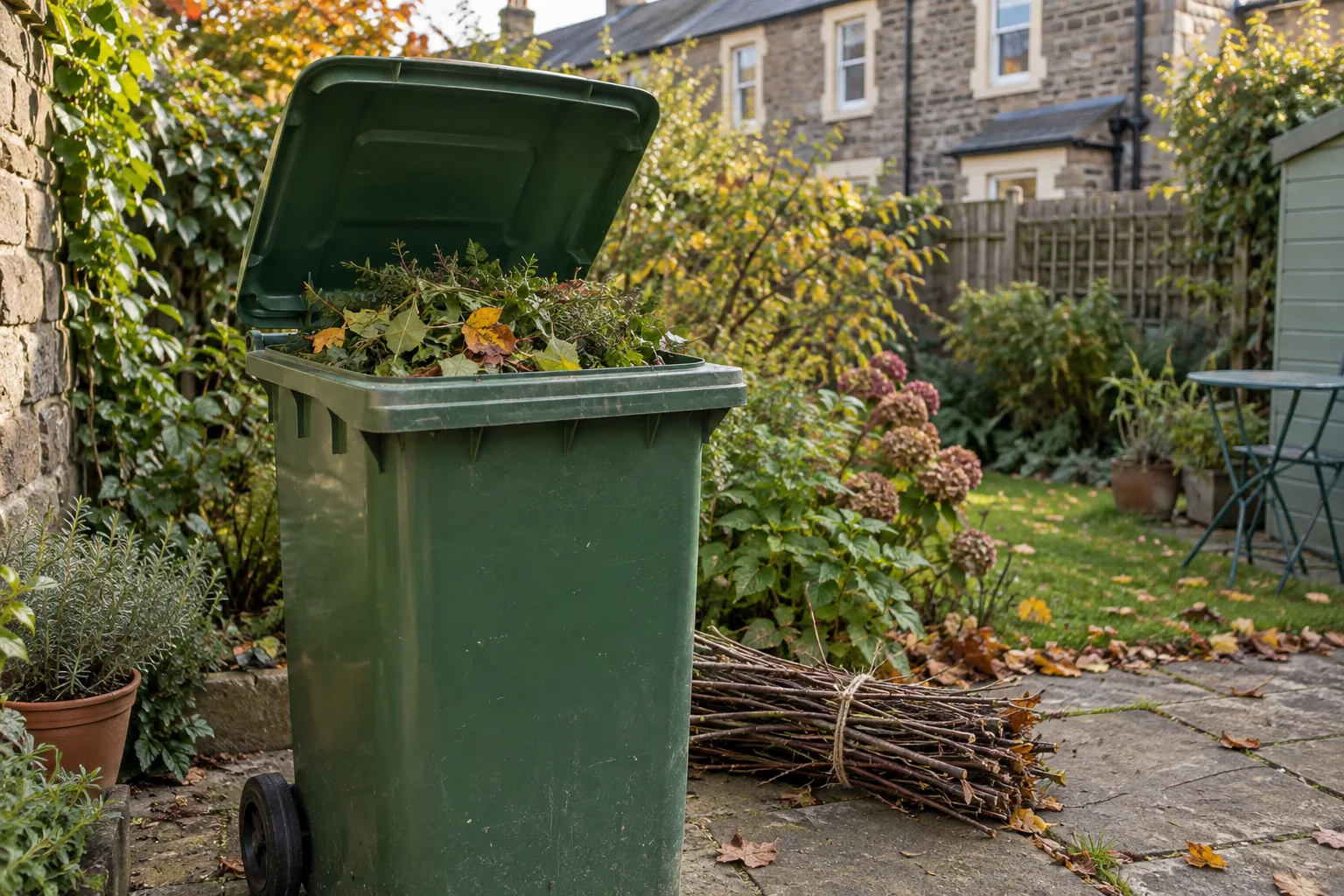
Bristol City Council offers domestic garden waste collections through its green bin and sack arrangements. The council says that garden waste is normally collected fortnightly, with the service available to domestic properties. Check the current booking, charges and collection date for your address before assuming a particular volume will disappear on the next bin day.
The council accepts loose plant material such as grass cuttings, leaves, flowers, hedge prunings and twigs. It also lists limits for branches. It excludes soil and turf, stone and rubble, treated wood, plant pots, food and plastic bags. Japanese knotweed is explicitly excluded. Even a bag of leaves inside a plastic liner can contaminate the stream, so transfer the leaves loose into the approved container. The current council list of accepted garden waste is the safest reference when sorting an unfamiliar item.
For a very large clearance, a domestic bin may take many collection cycles. Estimate the volume in filled bags or a measured pile, then decide whether staggered collections are practical. Do not leave extra waste beside a bin expecting it to be taken automatically. Keep the pavement and neighbours' access clear while you arrange removal. If you use sacks, avoid packing wet grass and heavy cuttings so tightly that they become difficult to lift. A short spell of dry weather can make handling easier, but do not leave loose material where wind will scatter it back across a neighbour's plot.
Choose a collection route for the remainder
If you hire a private collector, describe the waste honestly: mostly green cuttings, mixed garden rubbish, soil or bulky timber all require different handling. Ask whether the quote includes loading, transport and disposal, and whether there is a limit on weight or volume. A cheap collection that excludes the awkward items may leave you with the hardest part of the job.
Before the visit, confirm where a vehicle can stop and whether the team must carry material through the house, down steps or along a narrow shared passage. These access details affect loading time and protect neighbours from blocked routes. If the pile includes heavy wet timber or soil, point that out in photographs; volume alone will underestimate the work. Agree which reusable items remain in the garden and mark them clearly so nobody removes a pot or tool by mistake.
Householders in England have a responsibility to take reasonable steps to ensure that waste handed to a private business goes to an authorised carrier. Ask for the carrier's registration details and check them on the Environment Agency public register. Keep the company's details and a receipt or written record of the collection. This is particularly useful when several tradespeople are working on a property or a landlord needs to show where clearance waste went.
If you plan to take material to a household recycling centre yourself, check the current Bristol booking rules, vehicle restrictions and accepted materials first. Do not assume that every site takes every garden-related item, or that commercial waste can enter through a household route. Sort material before loading so you can unload it safely and efficiently.
Make the next clear-up smaller
Once the bulk has gone, look at what generated it. A hedge that repeatedly overwhelms the space may need a different maintenance rhythm or a more suitable planting choice. A lawn surrounded by dense shrubs may need regular edge work rather than another annual rescue. A small garden maintenance plan can spread cutting and disposal across the year.
Leave a practical place for a compost bin, leaf bag or approved garden waste container. It should be reachable from the beds but not obstruct a gate or seating area. Record what filled most of the bags this time and when it grew. Those notes turn an exhausting clear-up into a manageable routine. The garden becomes easier to use, and the next decision about waste is made while the material is still small enough to handle.