
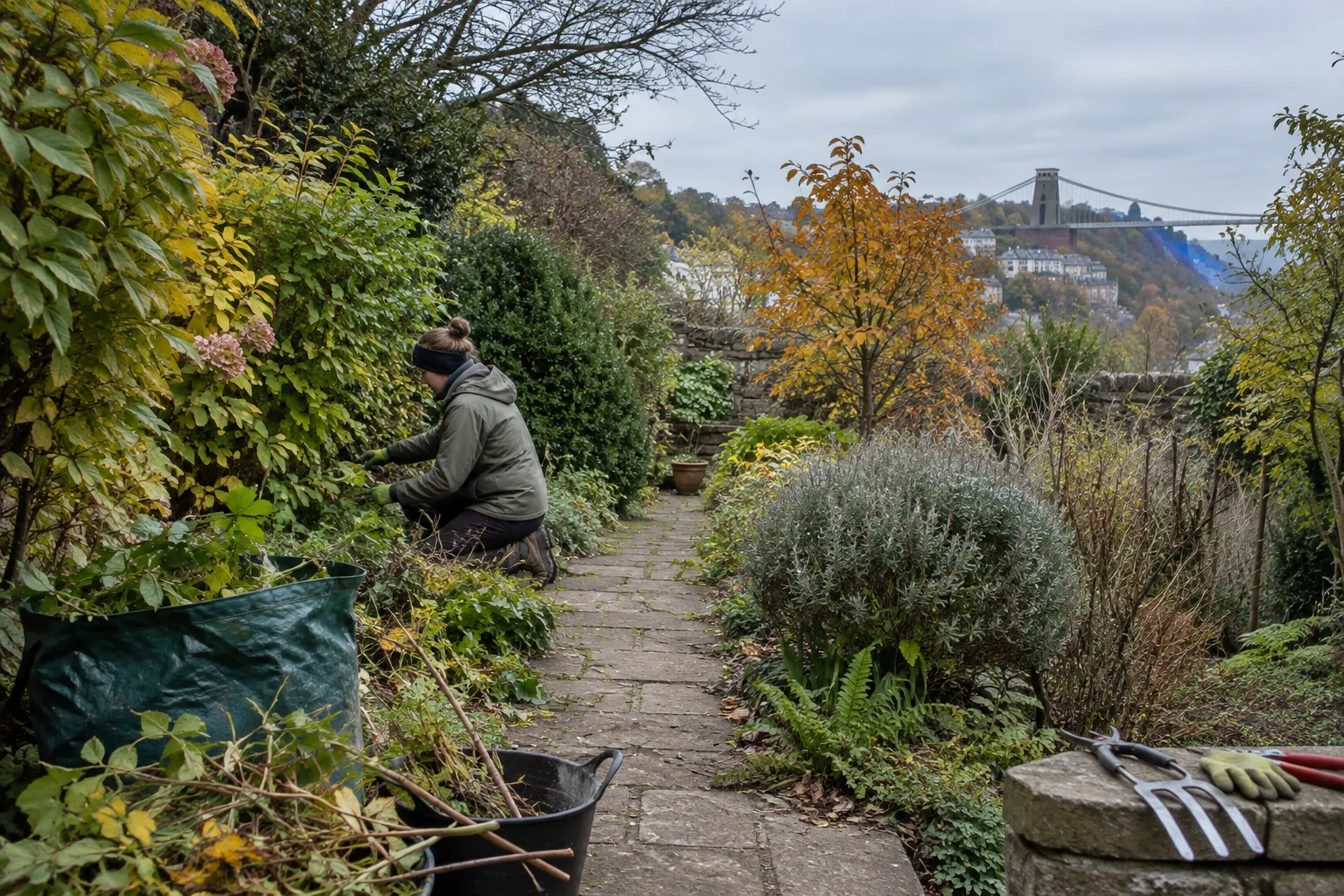
An overgrown garden is easier to tackle when each visit has a clear purpose. Dense vegetation can hide broken paving, wire, dumped objects and plants worth keeping. Cutting everything at once makes hazards harder to track and creates a waste pile that may be difficult to remove. Begin with access and an inspection, then clear in measured sections.
This approach is particularly useful when a Bristol property has not been maintained for a season or more. The first goal is a route you can use safely and enough visibility to plan the remaining work. A garden can look untidy while still supporting healthy shrubs, bulbs and wildlife. Keeping a record of what is found prevents accidental damage during the next stage.
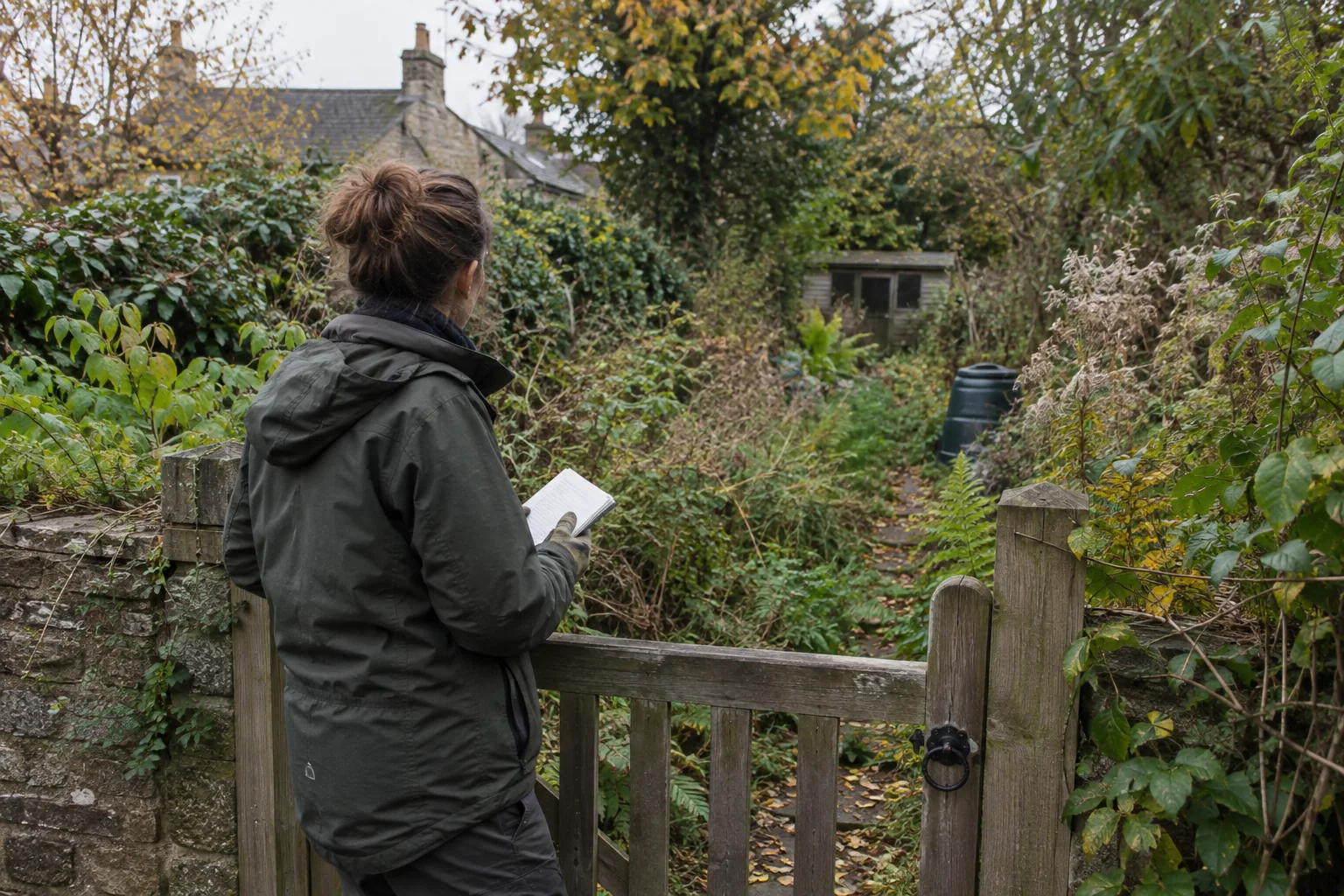
Inspect from the edge before entering
Walk the accessible perimeter and take wide photographs. Note the gate, steps, drain covers, retaining walls and routes to sheds or bins. Look for brambles at face height, broken glass, unstable timber, loose wires or signs of a collapsed structure. Do not reach into dense growth where you cannot see the ground. If you suspect sharps, hazardous materials or an unsafe building, stop and arrange specialist advice rather than treating it as ordinary garden waste.
Identify what must remain. A mature shrub may be valuable even if it needs later pruning; spring bulbs may have no foliage in autumn. Ask the owner or manager about planted areas, irrigation lines and stored items before cutting. A simple marked photograph can show “keep”, “assess” and “remove” areas without relying on memory. This matters especially when several people will work on the site.
Check for wildlife before disturbing piles, dense hedges or long grass. An active bird nest must not be damaged or destroyed while in use or being built under the Wildlife and Countryside Act 1981. Nesting can occur outside a neat calendar window, so observe the area. If wildlife is present or uncertain, leave the relevant section and seek suitable guidance before resuming.
Open one safe route first
Start with the main gate-to-door or gate-to-work area path. Remove loose surface debris with hand tools before using machinery. Cut back plants that block the route only as far as needed to see and walk safely. Keep cuttings off the newly opened path, and make sure they do not cover a drain or step. Mark any uneven surface that cannot be repaired immediately.
Do not assume a strimmer is the fastest first tool. String can strike hidden wire, stones or glass, and dense woody growth may be beyond the tool's purpose. Use appropriate protective clothing and tools for the material actually found. Work from a stable position where possible. If the route is steep, slippery or beside an unstable wall, change the work plan rather than forcing access.
Once the path is open, check its condition. Algae, wet leaves and loose slabs are separate hazards. Our guide to cleaning a slippery garden path explains when brushing is enough and when repair or drainage needs attention. A clear path gives a safer base for every later stage of the garden clearance.
Divide the garden into workable areas
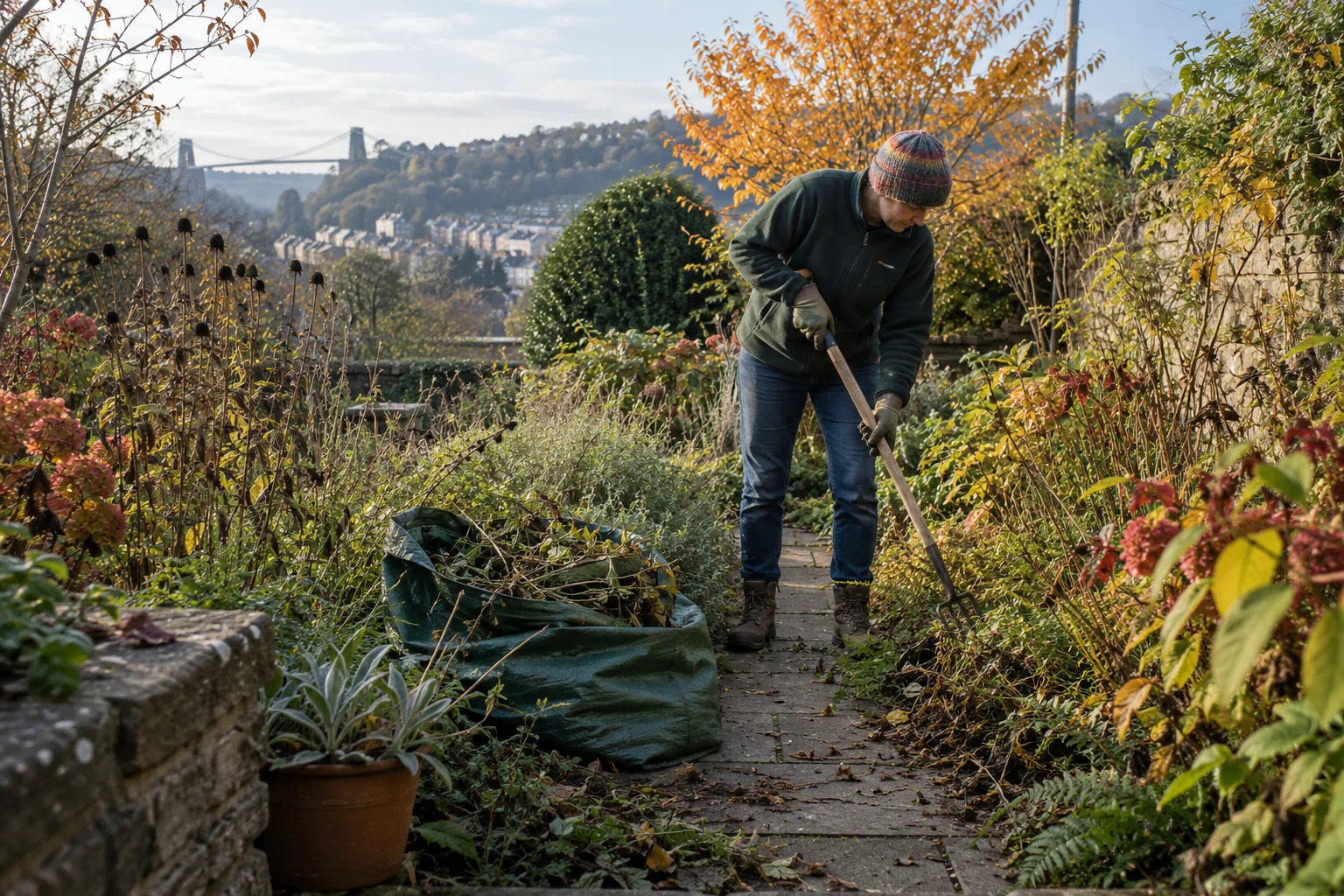
Choose one small zone at a time: the path, patio, lawn edge, borders, then the more difficult boundary. Define what “finished” means for each zone. For a patio it may be visible paving and separated waste; for a border it may be identified plants and accessible soil. This avoids repeatedly moving the same material from one corner to another.
Keep plant identification ahead of cutting. Lift climbers away from a fence cautiously to see whether they are holding or concealing damage. An overgrown hedge may need a staged renovation, not a hard single-day cut. Our guide to when hedge trimming should be postponed covers nesting, species timing and unsafe access. Where large branches or trees are involved, a qualified tree professional may be needed.
Photograph each finished zone and update the task list. Note what has been deferred: a saturated lawn, unidentified plant, damaged step or area with wildlife activity. A staged record makes the next visit more efficient and helps an owner see progress beyond the volume of cuttings. It also prevents a repeated attempt on a problem that needs a different specialist. Put urgent repairs and access issues at the top of the list, followed by routine horticultural jobs that can be timed for a better season.
Sort waste as it is created
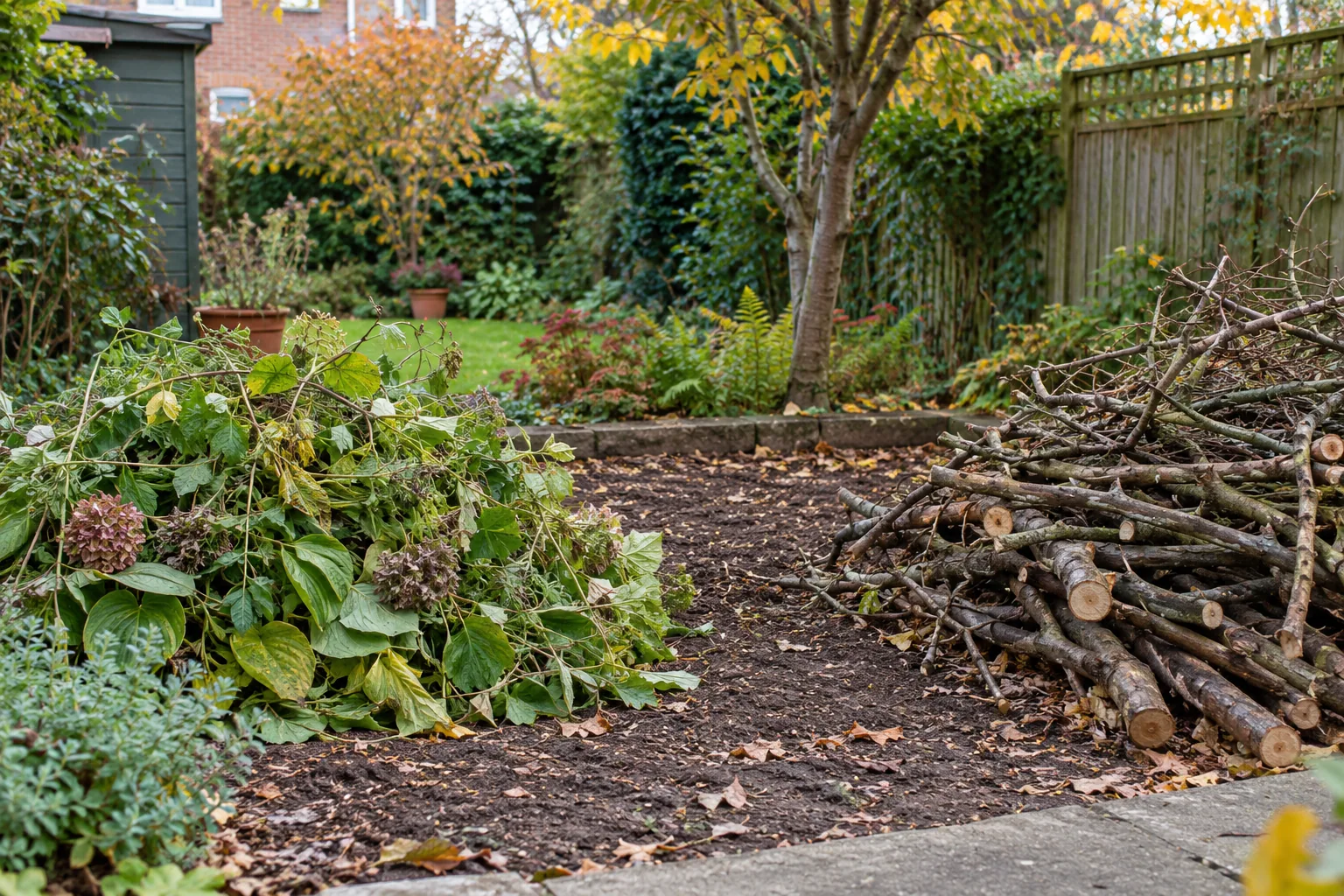
Separate leaves and soft cuttings from woody branches, soil, rubble and household items. Mixed piles take longer to handle and may not fit the same disposal route. Keep clear bags or defined piles where they do not obstruct access. Do not burn material or leave it against a fence or building simply because the day's cutting is done.
For domestic properties, Bristol City Council's garden-waste guidance explains its collection options and accepted material. Check the current service and container rules before assuming a large clearance fits a routine bin. Some clean material may be suitable for composting on site, but do not turn a garden that has just been opened into a new unmanaged heap.
If a private business removes household waste, the GOV.UK waste duty-of-care guidance says householders should check that the business is an authorised upper-tier carrier. Ask for the registration details and keep a useful record of the arrangement. The garden clean-up service can discuss the scope of clearance and green-waste removal before work begins.
Restore the garden without rushing it
Once light and access return, observe what grows back before redesigning every bed. A weed-covered area may conceal perennials; a patch of bare soil may reflect deep shade or repeated traffic. Remove persistent weeds with their roots where practical, but avoid digging wet ground into a compacted mess. Our guide to compaction versus drainage helps decide what to investigate after rain.
Plan follow-up visits rather than promising a permanently tidy result from one clearance. Brambles may regrow from roots, weeds may germinate where light reaches the soil, and an exposed hedge may need careful later shaping. A manageable garden maintenance schedule can protect the investment in the initial work without requiring the garden to be stripped bare.
The safest sequence is inspection, a clear route, small work zones, sorted waste and documented follow-up. It gives the garden a useful shape again while leaving room to make informed decisions about plants, repairs and wildlife. Progress is measured by safe access and a sensible next step, not only by how much has been cut in one day.