
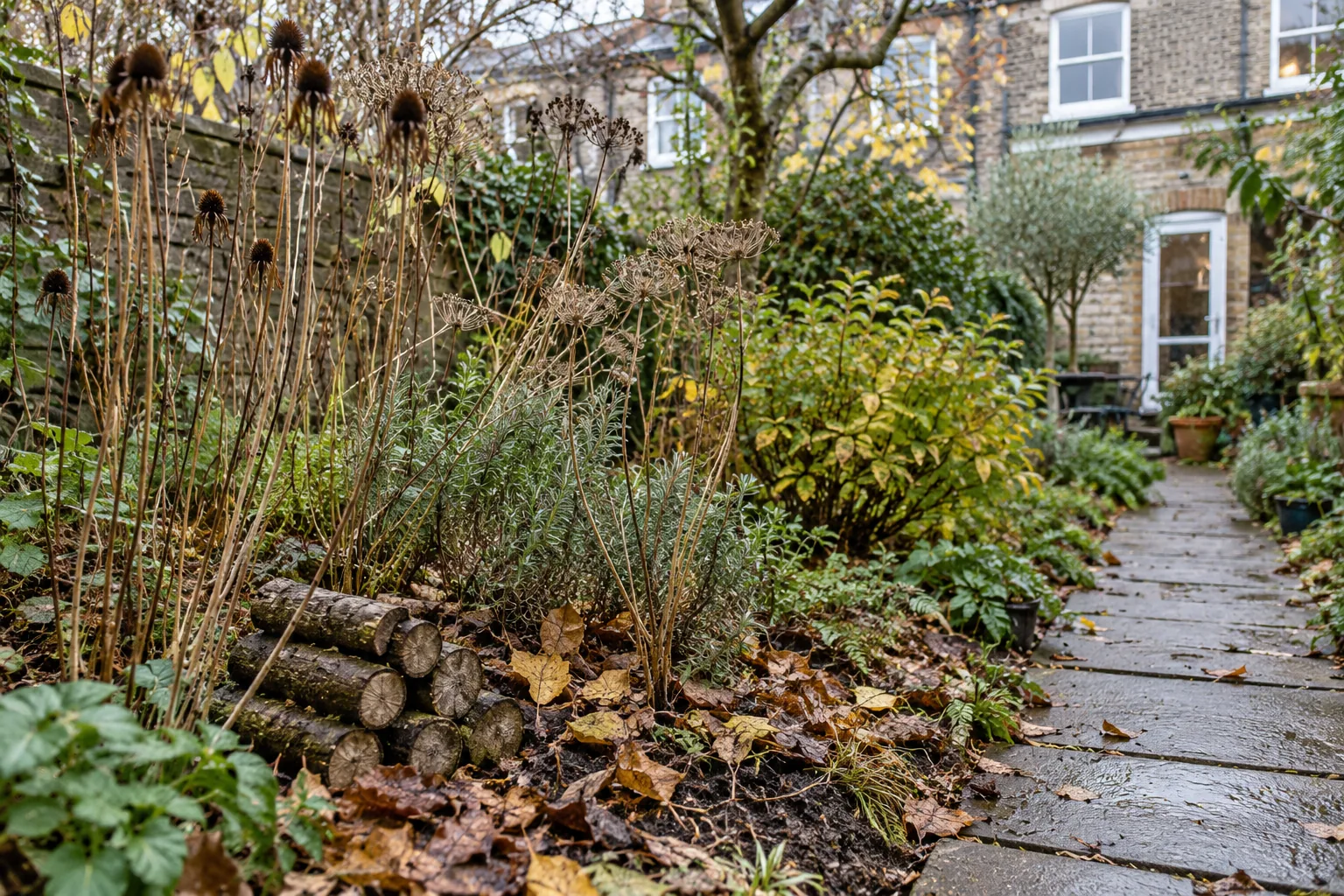
A garden can look tidy in November and still give insects somewhere to survive the cold months. The useful places are often ordinary: dry stems, leaves under shrubs, a small pile of sound wood or an undisturbed patch of soil. They work because they stay relatively sheltered, not because every corner has been left to grow unchecked. In a small Bristol garden, a few deliberate refuges can coexist with clear paths and maintained beds.
The important decision is what to leave, where to leave it and when to revisit it. An autumn clear-up that removes every stem and leaf may take away shelter before the next generation has emerged. On the other hand, keeping diseased plants or piles against the house is not sensible. This guide helps you make a selective plan.
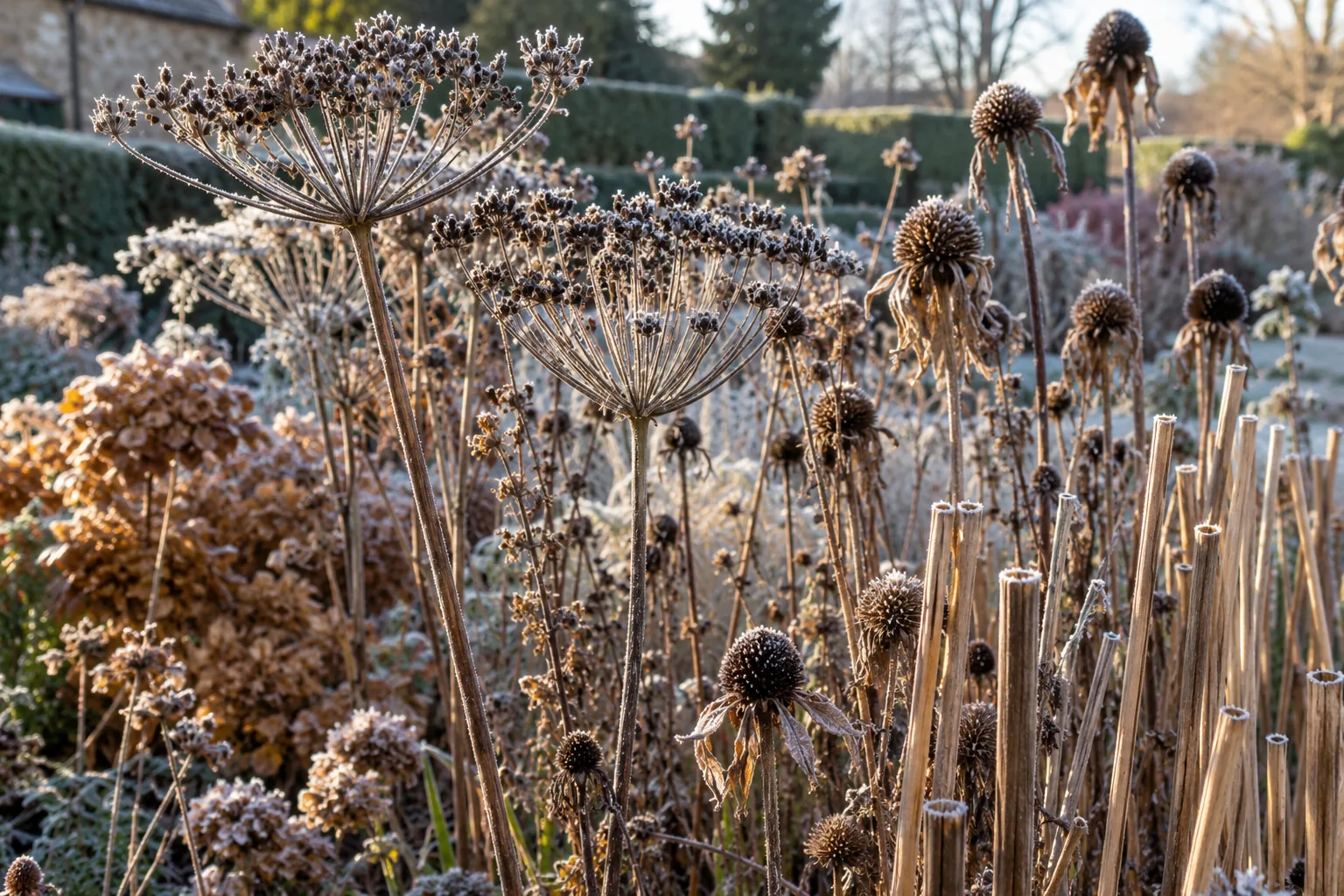
Leave some upright stems and seedheads
Dry perennial stems create small cavities and surfaces that insects may use over winter. The Royal Horticultural Society notes that hollow stems can provide homes for insects, while the seedheads also feed birds and small mammals. Choose sound, standing clumps that hold their shape well. A few groups give a border structure and look more intentional than isolated dead stalks scattered everywhere.
Do not assume all stems offer the same value. A solid, collapsed, diseased clump may be better removed. Trim growth that blocks a route, leans across a doorstep or catches at a gate. Leave selected clumps in quieter parts of the bed, especially where soil drains reasonably well and plants will not be repeatedly disturbed. If appearance matters, cut a crisp edge around the bed and keep the path clear; the planting can remain less formal within that frame.
Some stems may be used by nesting insects into spring. If you need to clear them later, avoid cutting everything on the first mild day. Move the material gently to a sheltered spot for a while rather than shredding it immediately. Observe where new growth is appearing, then remove only what is genuinely in the way.
Put leaves where they can stay undisturbed
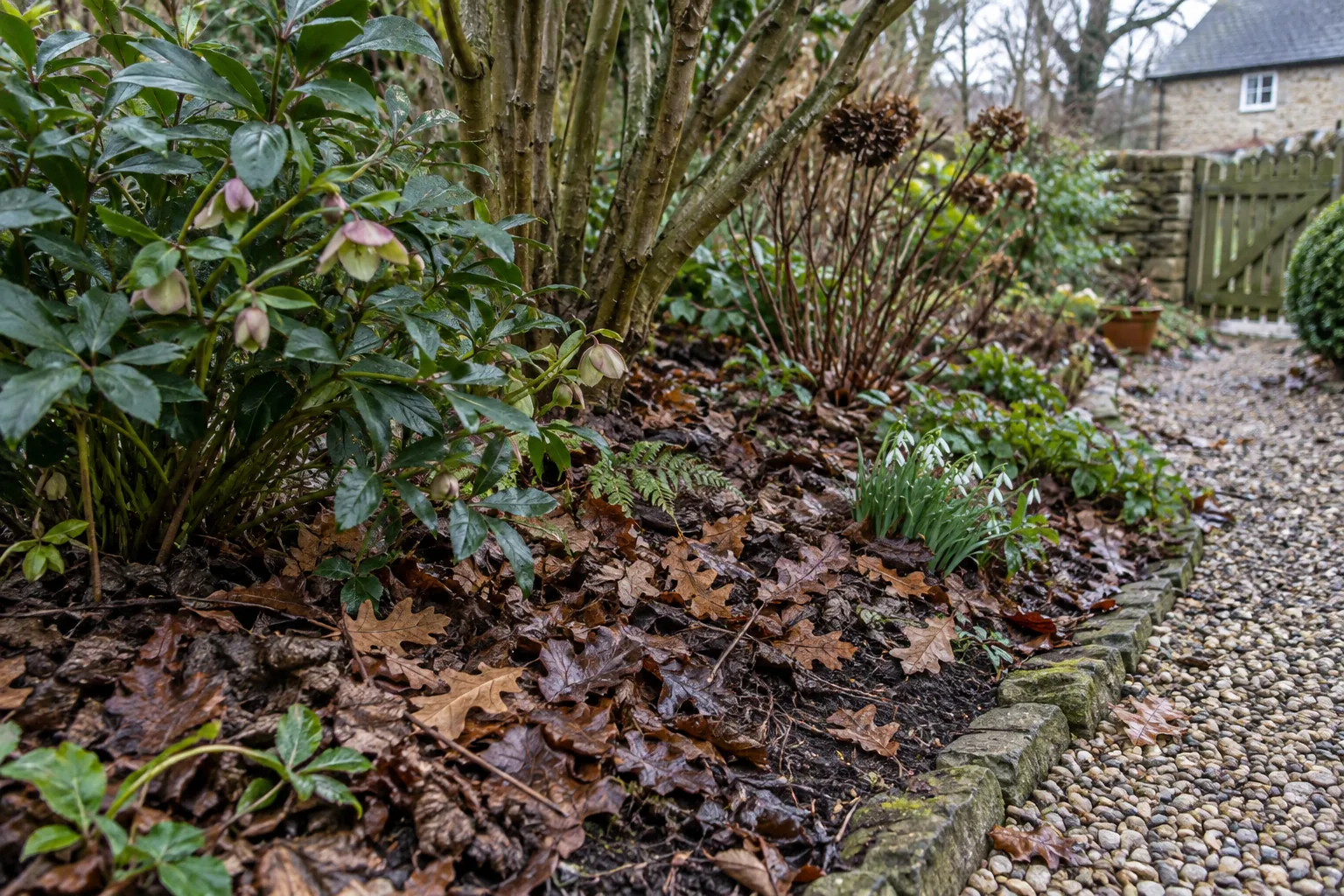
Leaves are valuable beneath shrubs and around established plants, where they cover soil and create small spaces for invertebrates. They can also become leaf mould over time. Rake them off the lawn if a thick wet layer is smothering grass, and clear drains, steps and frequently used paths. Move suitable leaves into beds or a contained leaf bay instead of treating every fallen leaf as waste.
Keep the layer modest around small plants and avoid burying crowns that resent persistent damp. Do not bank wet leaves against a wall or door. In a narrow garden, one tucked-away area beneath a hedge can do more good than leaves blown across the entire patio. The refuge should be stable enough that you will not have to disturb it each week to use the space.
Queen bumblebees may overwinter in loose soil, leaf litter and other sheltered places. The Bumblebee Conservation Trust advises leaving dedicated leaf litter areas and avoiding disturbance of potential hibernation spots. This does not mean that every leaf pile contains a queen; it means careful handling has a worthwhile chance of protecting one. If you uncover a dormant bee while gardening, follow the Trust's current advice rather than taking it indoors.
Build a small wood refuge carefully
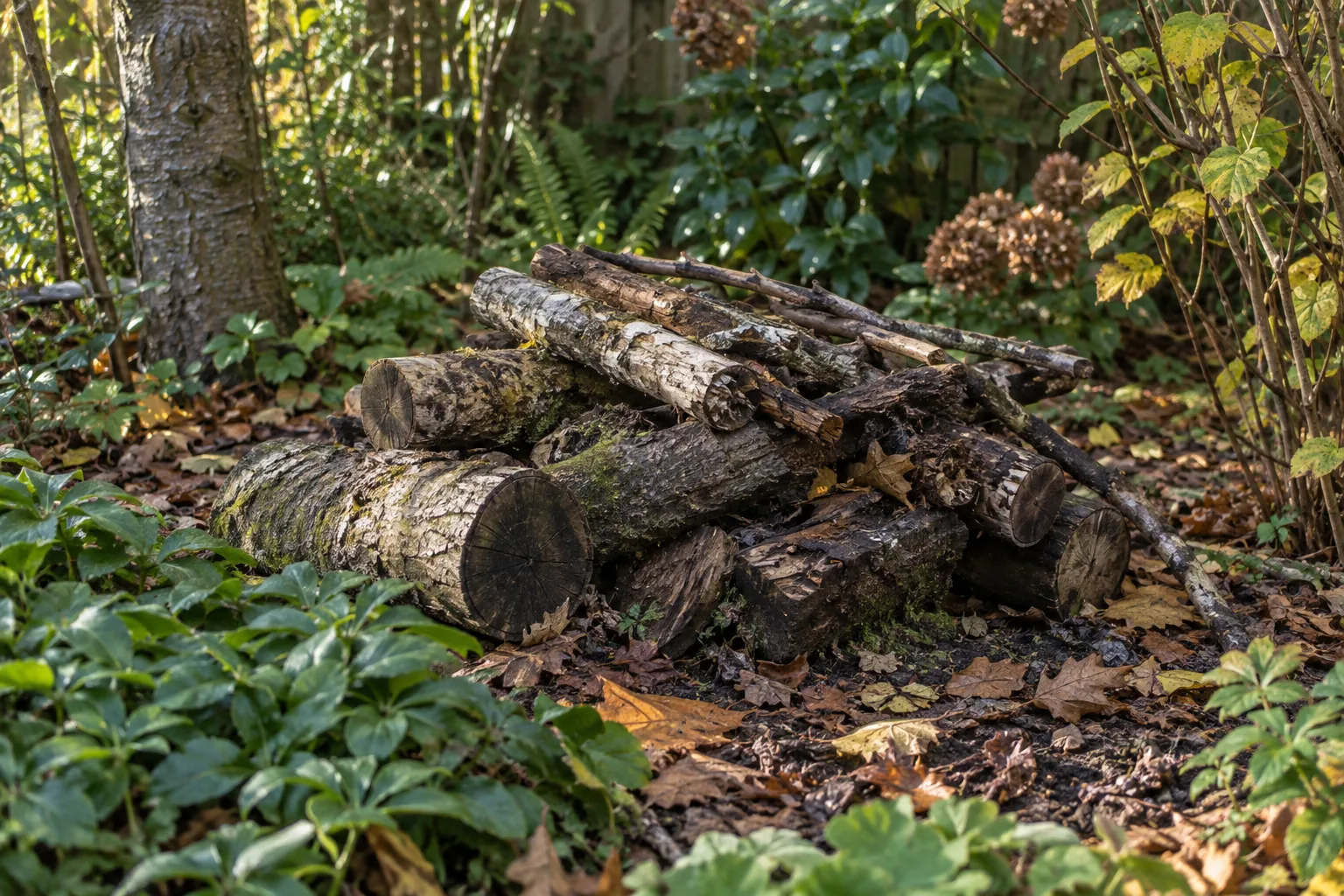
A handful of untreated logs or branches can make a useful, unobtrusive habitat feature. Place them on soil in a quiet, partly shaded corner where they will not roll, obstruct access or sit against timber fencing that needs inspection. Different sizes create small gaps. Let the wood weather and decay naturally. Do not repeatedly dismantle the pile to see what has moved in.
The best position is not necessarily the darkest, wettest hollow. A patch that floods after rain may be unsuitable for insects trying to survive winter. Keep any pile clear of drainage channels, air bricks and the house wall. If a large garden clearance is planned, identify sound wood that can remain before a contractor begins cutting. Our garden clean-up service works from an agreed keep-and-remove plan, which can preserve a small habitat area while restoring safe access.
Avoid adding painted timber, treated fence posts, plastic or general rubbish to a habitat pile. Those items belong in their own disposal streams. A simple pile of clean natural wood is easier to maintain and easier to explain to anyone caring for the garden later.
Keep a patch of soil and vegetation quiet
Some insects spend winter in the ground rather than in a purpose-built insect hotel. Leave a small area of loose, well-drained soil undug if it is already used by wildlife or has the right sheltered position. Dense mulching and repeated cultivation can disturb that space. A few longer grass tussocks or low, non-invasive plants nearby can add cover, but keep their spread in proportion to the garden.
This is particularly helpful when the rest of the plot needs regular use. Mark the refuge on your maintenance sketch and tell anyone helping with weeding or planting. A small designated patch is less likely to be cleared by mistake than an unlabelled corner that looks forgotten. Good garden maintenance can include clear access and seasonal care without flattening every winter habitat.
Use insect hotels with realistic expectations
An insect hotel may suit a compact garden, but it should supplement natural shelter rather than replace it. Place it securely in an appropriate dry position and choose a construction that can be maintained. Overcrowded or persistently damp materials can become less useful. If you cannot keep a purchased structure sound, a small area of stems and leaf litter may be a better starting point.
The goal is continuity. If everything is cleared in November and a new hotel is hung in December, insects already living in the old material have lost their refuge. Work around existing features first. Add a hotel only when you understand which insects it is intended to support and how the design will remain clean and sheltered.
Make a winter plan you can keep
Walk the garden and choose one or two undisturbed places: perhaps a leaf layer under the back hedge and a small log pile near a bed. Keep the route to the gate safe, remove obviously diseased growth and note which stems will stay until spring. Photograph the chosen areas so other household members know they are intentional.
Revisit the plan gently as the seasons change. Watch for emerging growth and insects before cutting old stems, and refresh the habitat area only when necessary. A garden does not need to be untidy everywhere to support wildlife. It needs a few connected, reliably quiet places that survive routine maintenance and remain usable through the wet Bristol winter.