
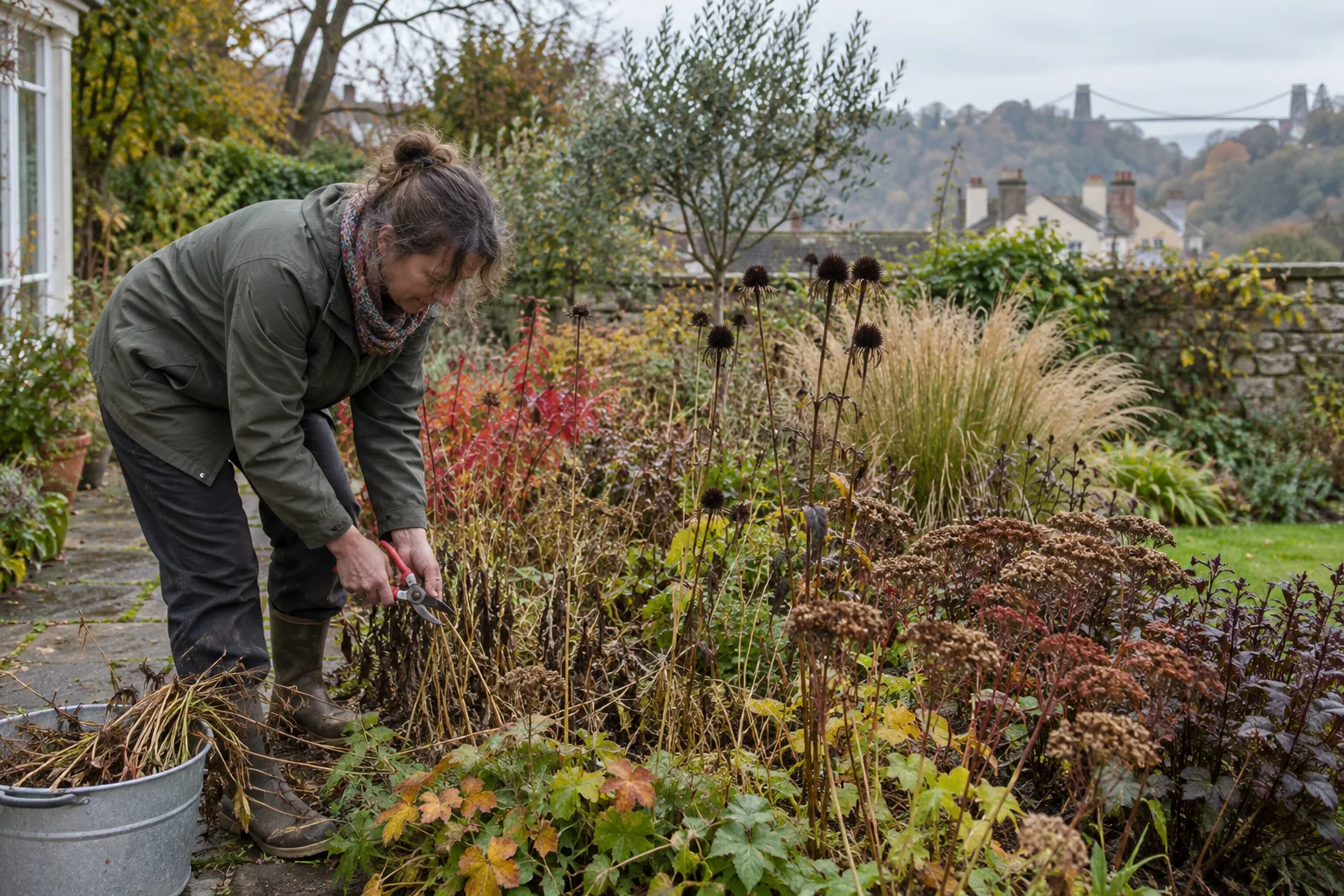
An autumn border can look messy when summer flowers fade, yet cutting everything to ground level removes useful winter structure. Some stems are decaying and should go; others hold seedheads, shelter insects or protect a plant's crown. A selective tidy creates a clearer edge without turning the whole bed into bare soil. Walk the border plant by plant before picking up the secateurs.
The Royal Horticultural Society's guide to cutting back perennials explains that many gardeners delay cutting until spring for winter interest and wildlife value. It also supports selective autumn removal where material is decaying or shows signs of disease. That distinction is the starting point for a practical Bristol border, when rain has left some plants collapsed.
Identify plants and new growth first
Look at each clump from the base upward. Is it a perennial that dies back to the ground, an evergreen perennial or a small shrub? The pruning response differs. A woody lavender or rosemary should not receive the same low cut as a spent herbaceous stem. If the plant is unlabelled, use photos taken in summer or identify it before making a severe cut.
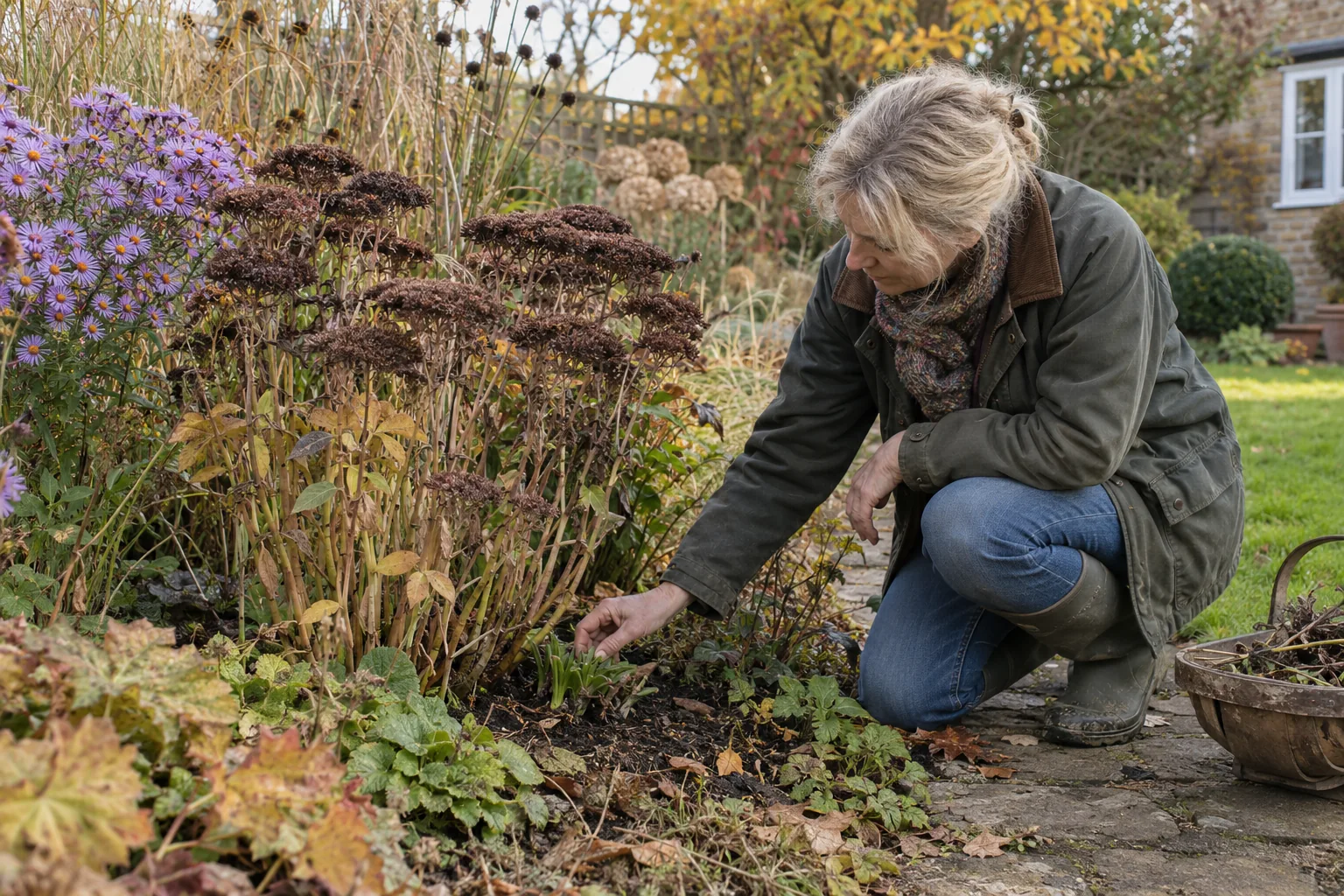
Part the foliage gently to find new basal shoots. Some asters and sedums already have fresh growth near the crown. Old stems can be shortened above those shoots rather than cutting through them. If the foliage is only beginning to yellow and still looks healthy, there is no urgency to remove it merely because the calendar says October.
Check the soil too. A wet border can be damaged by repeated footsteps and wheelbarrows. Use a firm path or board for access, or postpone the work. If the bed stays wet long after rain, our guide to compaction and drainage can help separate a soil problem from a seasonal puddle. A tidy top cannot compensate for compacted roots underneath.
Remove stems that are collapsing or diseased
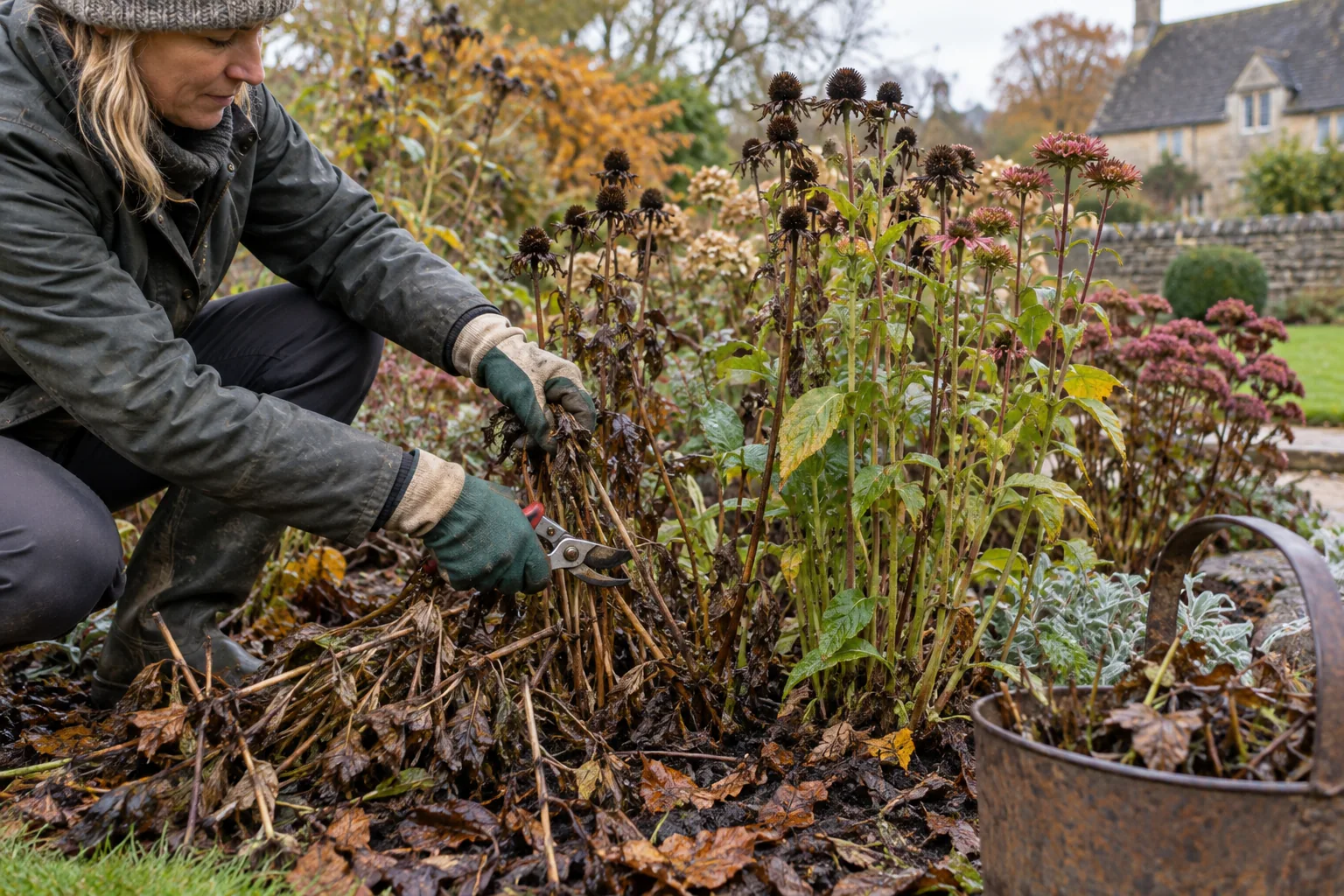
Soft, slimy foliage lying over neighbouring plants is a good candidate for removal. It can hold damp against healthy crowns and obscure the plants beneath it. Cut or lift it carefully, working from the outside of the clump. Keep the crowns visible and avoid pulling a whole rootball out with tangled stems. Clear the main edge and path first where fallen material affects access.
Look for obvious leaf spots, mildew or rust on dead growth. The RHS recommends separating diseased material from ordinary compostable cuttings and using an appropriate council green-waste route or local recycling centre. Do not scatter suspect material across the border. Clean tools when moving between affected and healthy plants, especially if you have been cutting soft or diseased stems.
Some herbaceous perennials, including crocosmia and peony, produce foliage from below ground and can be cut close to soil level once the top has died back. Check for new shoots before cutting and avoid gouging the crown. Where a plant is still firm and attractive, the work can wait. The aim is to remove a problem, not to meet a uniform height across every clump.
Keep sound seedheads and grasses
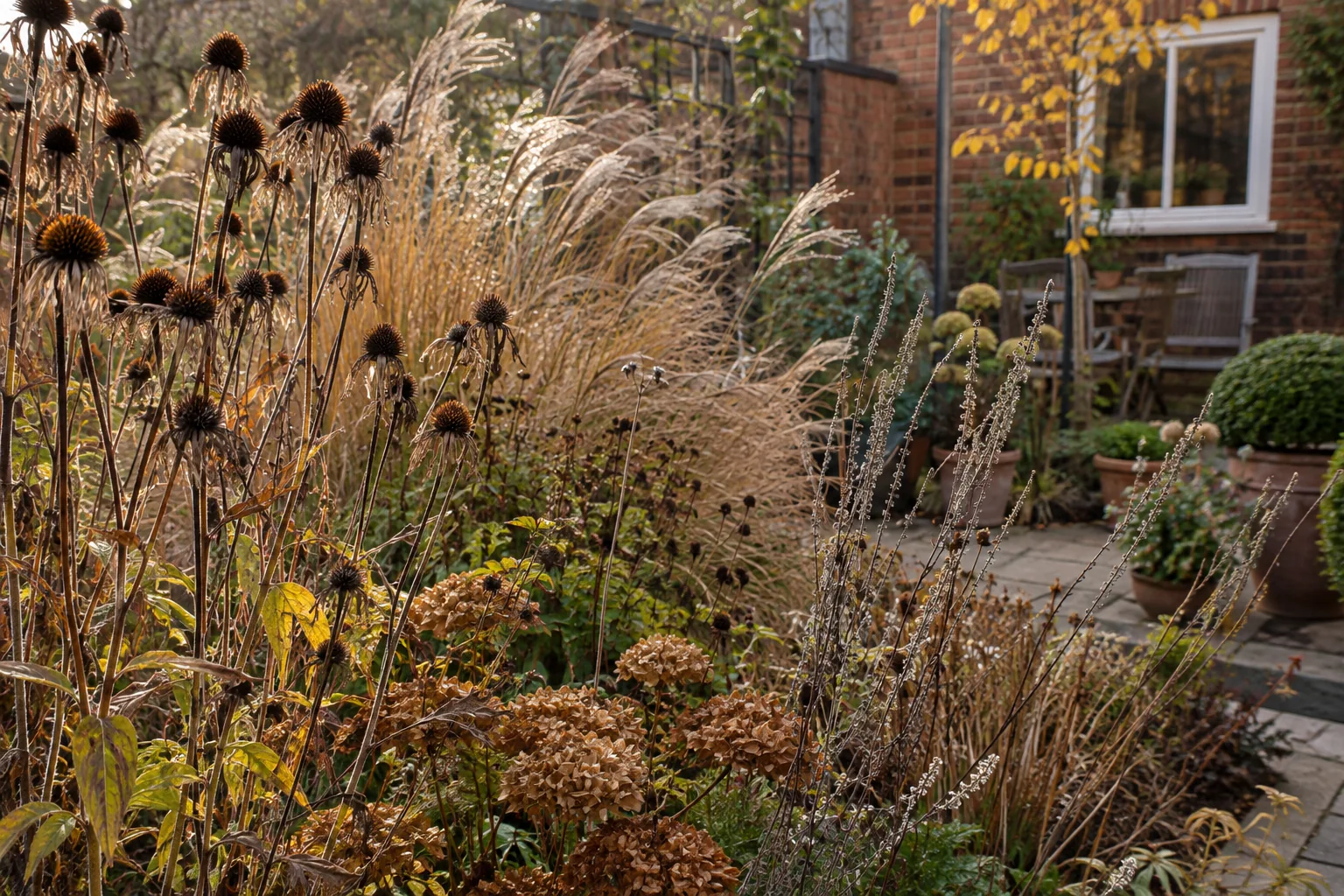
Sturdy seedheads bring shape to a winter border and may offer food or shelter to wildlife. Sea holly, some sedums and ornamental grasses often retain an appealing outline after flowering. View the border from the house and the path: a few upright groups can provide a structure that is more satisfying than an indiscriminate clear-out.
Leave stems only where they stand safely and do not block a route or crowd vulnerable plants. A tall stem leaning across steps should be shortened even if its seedhead is attractive. Wind may flatten a grass later, so revisit the decision after storms. Some gardens benefit from retaining only the best groups while cutting back broken or untidy pieces nearby.
Evergreen perennials and sedges are another exception to a blanket cut. They keep living foliage over winter, so remove only dead or damaged leaves as appropriate. Cutting an evergreen clump to the ground may weaken it or leave an avoidable gap for months. The RHS advises tidying these plants during spring and summer rather than treating them like dormant herbaceous perennials.
Protect tender and borderline-hardy plants
Old stems are not always waste. Penstemons and some other borderline-hardy perennials can retain their stems through winter, giving the crown a measure of protection from frost. The RHS advises leaving their main pruning until the frost risk has passed, usually in April or May. A brief autumn tidy around them is different from cutting them low.
Check the plant's identity and hardiness before deciding. A sheltered city garden may keep a plant through winter that struggles in an exposed plot, but that does not make a severe October cut sensible. Remove clearly dead, wet material if it is harming the crown, while leaving useful stem structure. Avoid wrapping a damp plant in impermeable material; trapped moisture can cause another problem.
Mulch can be useful around suitable plants, provided the soil and material are right and the mulch stays clear of crowns. Our guide to autumn mulching explains why some beds should wait. Do not bury the old stems and emerging shoots simply to make the border look uniformly finished.
Choose a clean cutting technique
Use sharp secateurs for individual stems and shears only where you can see what lies beneath the blades. Cut spent herbaceous stems near the crown without damaging dormant buds or fresh shoots. For a dense clump, work in small handfuls rather than forcing a large bundle through the tool. Pull weeds while their roots are visible, but avoid turning wet soil over for a cosmetic finish.
Separate ordinary healthy material from diseased cuttings. Suitable green material can be composted where the system is managed well; seedheads that are about to shed unwanted seed may need a different decision. Check whether the household has garden-waste collection rather than leaving a heap beside the bed. The garden clean-up service can help with a large border tidy and agreed waste removal.
Keep a note of what you left. A photograph in October helps you recognise standing plants when new growth begins in spring and reduces the risk of cutting into a developing crown. Mark any clump that needs division rather than trying to do every border task in one visit. Our guide to dividing perennials in autumn explains when that separate job is appropriate.
Finish with a spring follow-up in mind
In spring, the retained stems can be cut back before new shoots become difficult to distinguish. Work carefully around emerging growth and check for creatures using hollow stems or litter before clearing. If winter has left the bed saturated, wait until it can be accessed without compacting it. A staggered tidy is usually easier on the plants and more useful to wildlife than an all-at-once clearance.
The decision for autumn is straightforward: remove collapsed or diseased growth, keep sound seedheads and grasses where they are safe, and protect plants whose old stems help them through frost. Treat each clump according to its growth habit. The result is a border that is cared for now and still has something to offer through winter.