

It is easy to mistake a tired-looking November lawn for a hungry one. Grass may be slower to grow, shade reaches further across the garden and leaves are falling daily. More fertiliser does not solve every cause of poor colour. By early November, the normal window for autumn lawn feed has passed. The useful question is what the lawn needs now, and what can wait until growth returns.
The RHS guide to fertilisers places autumn lawn fertiliser between moist conditions in September and mid-October, ideally before the first frosts. Its autumn lawn-care guidance also says most lawns recover from summer wear without feeding. That gives a practical Bristol rule: stop routine feeding as winter approaches, and do not apply a product simply because it is still in the shed.
Understand the two different feeds
Summer lawn feed is designed to support active leafy growth. Applied late, especially when a lawn is wet and light is limited, it can encourage soft growth that is more vulnerable to disease. The RHS October lawn advice warns against using leftover summer feed in autumn because of its higher nitrogen content. Store it according to its label for a suitable season, provided it remains usable, rather than emptying the packet onto the grass.
A product sold specifically for autumn use has a different purpose. The RHS describes autumn formulations as encouraging hardiness and root growth rather than lush leafy growth. Even so, it is an optional treatment for a lawn that is growing poorly, not an annual obligation. Timing and the instructions on a particular product matter. Do not assume that the word “autumn” makes it suitable for any wet November day.
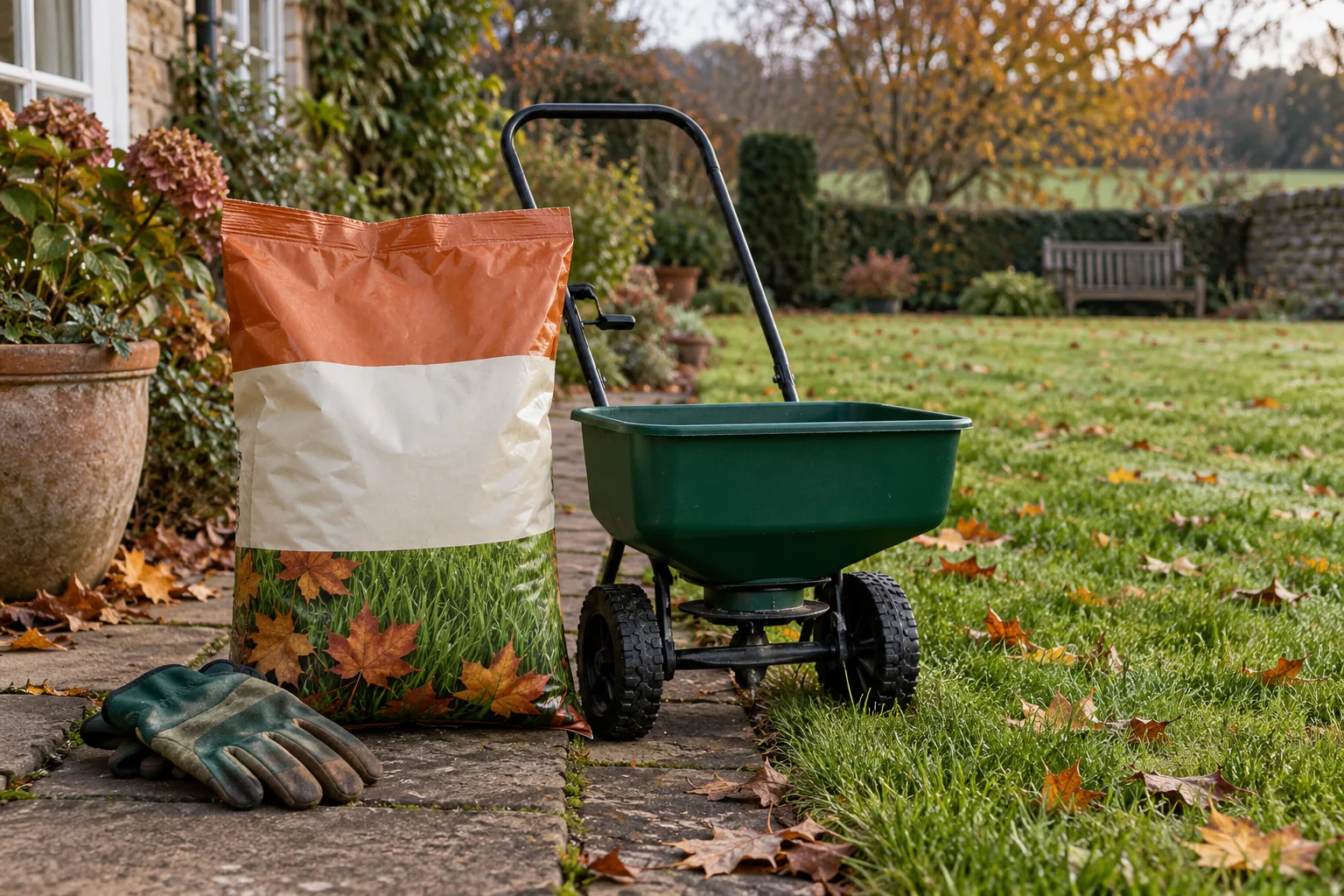
Granular products also need careful distribution. A small lawn may be tempting to treat by hand, yet an extra handful on one corner can leave a stripe while another corner receives nothing. If you do decide to feed during the recommended season, measure the lawn area, weigh the amount the label specifies and calibrate a spreader. Keep granules off hard paving and sweep up accidental spills. A gentle forecast shower can help an autumn feed settle, but heavy rain and standing water are poor conditions for applying anything.
Decide whether the grass is actually hungry
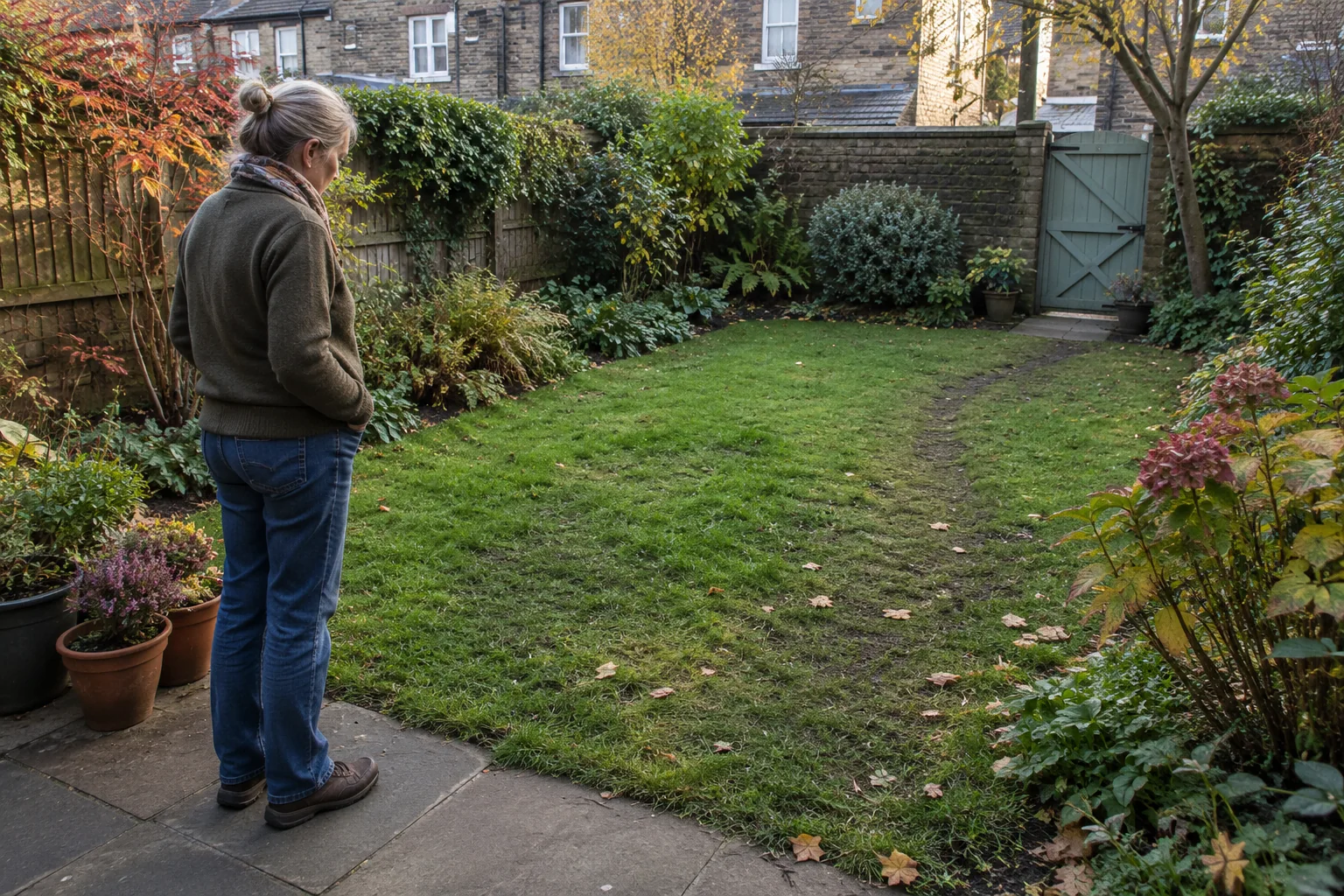
Look across the whole lawn in daylight. Is growth weak everywhere, or only beneath a tree, beside a wall or on a route people use? A consistent lack of vigour after a difficult summer may justify a correctly timed autumn feed next year. A single thin strip is more likely to need a change in shade, wear or soil conditions. A lawn with mixed grasses and wildflowers may benefit from fewer nutrients: RHS advice says feeding is unnecessary where the aim is to encourage a wider range of plants.
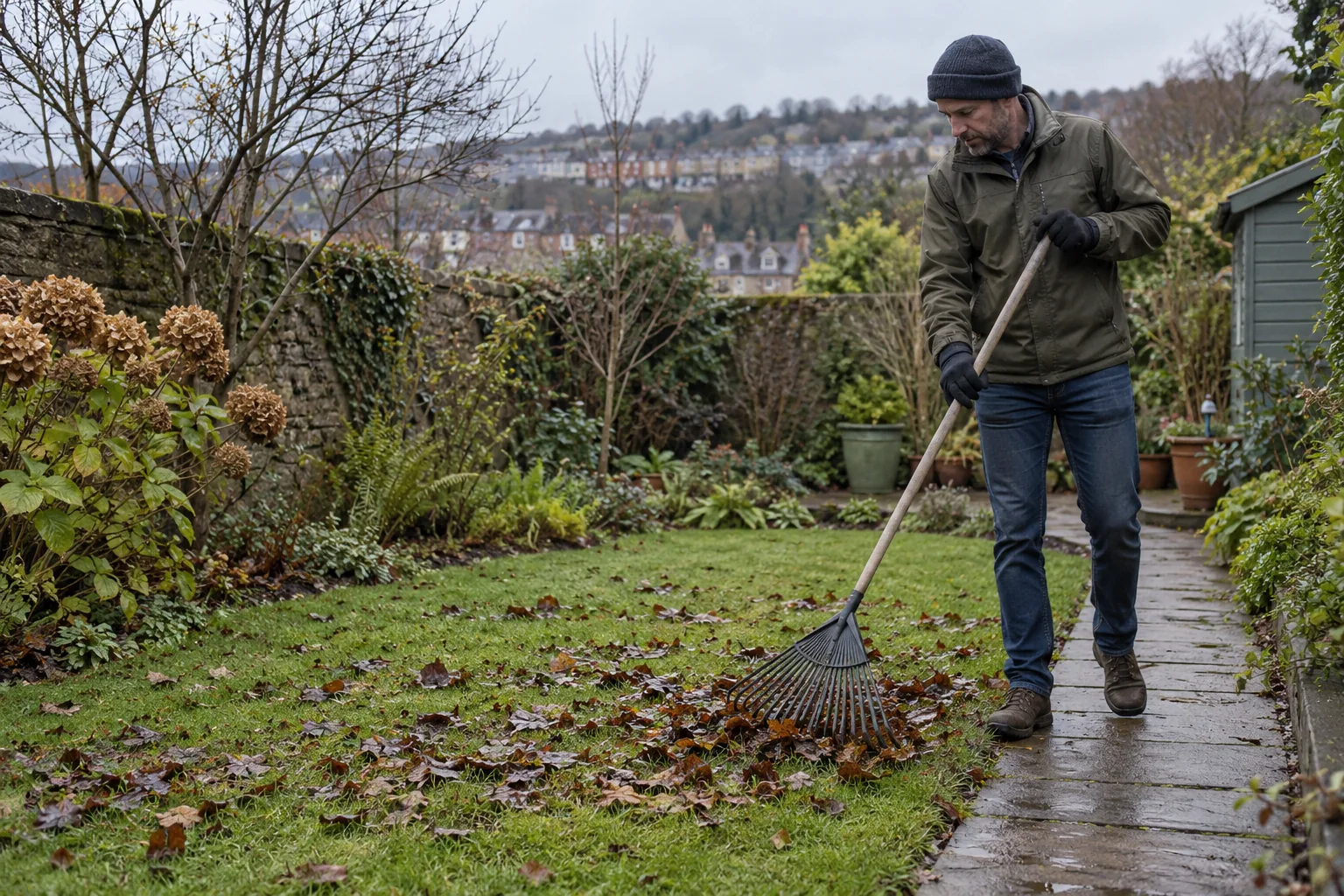
Check the simple causes first. A mat of fallen leaves blocks light and air; rake it up gently rather than applying fertiliser over it. Compacted or waterlogged ground can stop roots functioning well, so feeding the surface may have little effect. Our guide to compacted soil or poor drainage helps separate those problems. If there are distinct dead patches, note when they appeared and whether they are spreading. Product choice should follow a diagnosis, not replace it.
There is no reliable visual shortcut for measuring a specific nutrient deficiency in a domestic lawn. If you have repeatedly fed the grass and it still performs badly, review soil conditions, light and use before adding more. A soil test can be useful where a persistent problem remains unexplained, but a photograph and a few observations over the seasons are a good first step.
One useful comparison is with an area that receives the same amount of rain but less traffic. If that grass is healthy, footfall is more likely to explain the worn section than a garden-wide shortage of nutrients. Where only grass under dense shade is thin, consider whether a conventional lawn is realistic in that spot. Repeating feed without changing the conditions can waste product while leaving the underlying problem in place. Our bare-patch repair guide covers targeted repairs when the timing and soil are suitable.
If you have missed the autumn window
Do not try to catch up with a double dose. Applying too much or unevenly can damage grass, and nutrients can be lost from a wet garden. Follow the manufacturer’s rate and weather conditions when it is time to feed again. For November, focus on keeping leaves off the turf and allowing sodden ground to recover. The RHS waterlogged-lawn guide advises keeping off a waterlogged lawn where possible because walking can worsen the puddled surface.
Keep the spreader clean and store unused fertiliser dry and securely. If the bag has lost its label, do not guess its formula or dose. Avoid spreading near a drain, pond or watercourse. The fertiliser label is the final authority for handling and application, while the garden’s condition decides whether it is needed at all.
This is especially relevant in a narrow urban garden with a paved edge. A little overspill may wash towards the street rather than into the lawn. Hold off until you can apply accurately and the surface can absorb it. If a lawn-care contractor recommends a late treatment, ask what product they propose, why this lawn needs it and how its label fits the current conditions. A clear answer is more useful than a generic promise of a greener winter lawn.
What can you do instead this winter?
Remove leaves regularly while they are light enough to lift without raking hard into the turf. Adjust foot traffic around the wettest corner, and avoid routine mowing when the grass and soil are too wet. If mild weather keeps the grass growing, the RHS mowing guide recommends judging mowing by growth and ground conditions rather than the calendar. Our guide to the last autumn cut explains the same decision in detail.
Make a note of places where leaves collect, water stands or moss dominates. In spring, once the soil is workable and the grass is growing, reassess the need for feeding alongside mowing, aeration or repair. The RHS spring and summer lawn-care guide advises against extending summer feed beyond August. Plan the year's lawn work around that seasonal rhythm rather than treating every colour change as an emergency.
Keep expectations modest: grass naturally changes pace and colour through the colder months. A short list of observations, such as the first frost, the date leaves stopped falling and where water lingered, will help you plan the following autumn. You may discover that one timely leaf clearance or a more suitable route across the garden matters more than any fertiliser application.
For a Bristol lawn at the start of November, the sensible default is to stop feeding. An autumn feed belongs to an earlier, suitable window and only to a lawn that needs it. A clear lawn surface, reduced wear and a record of persistent weak spots will give you better information for the next growing season than a late application of fertiliser.