
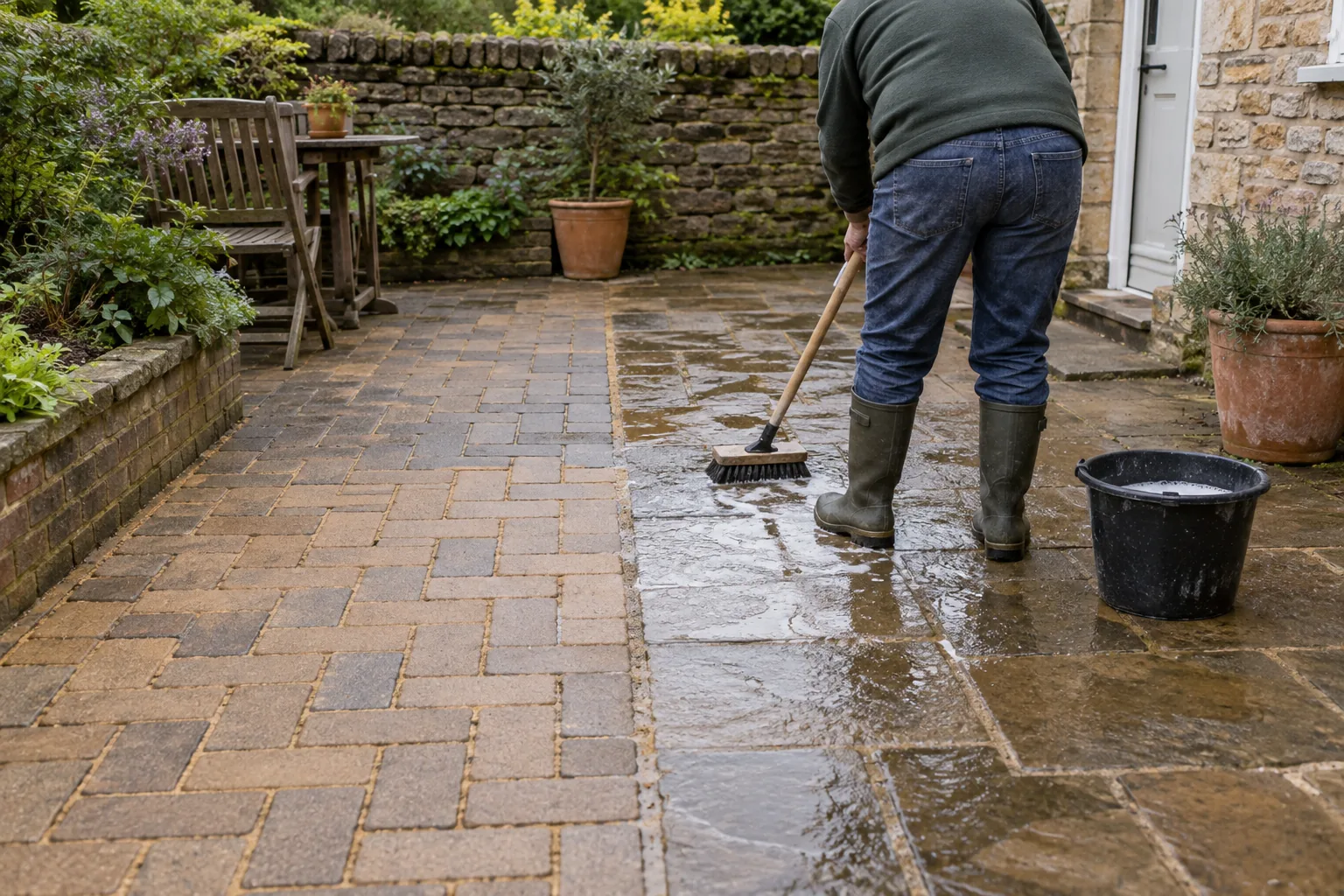
Two patios can look alike from the kitchen door yet need different cleaning methods. One has sand between block pavers, another has mortar around stone slabs, and a third uses a resin or permeable jointing system. Strong water pressure aimed at every gap can remove the material that holds the surface together. A sensible clean begins by identifying the joint and checking the paving before choosing a brush, detergent or machine.
This matters in Bristol’s damp, shaded courtyards, where algae and dirt may return between annual cleans. The goal is a safer, brighter surface while keeping joints intact and allowing water to drain as the paving was designed to do. Work in a small test area first and follow the paving and jointing manufacturer’s guidance when it is available.
Inspect the surface before it gets wet
Move pots and light furniture, then sweep away leaves and grit. Photograph cracks, missing jointing and any slabs that rock underfoot. Note where water normally runs and whether a drain or planted border lies nearby. Cleaning can reveal hidden defects, but it will not repair a loose base. If several slabs move, investigate the cause before concentrating a jet of water on their edges.
Look at the joint material. Sand is loose and usually found between close-fitting blocks. Mortar is hard but can crumble with age. Some modern products are resin-bound or polymer-modified and have specific cleaning tolerances. Permeable paving may use open aggregate joints so rain can pass down through the surface. If you cannot identify the system, start with the gentlest method and seek advice before applying a chemical cleaner or powerful washer.
The paving face also matters. Natural stone, concrete and porcelain differ in porosity and finish. A treatment safe for one may mark another. Bradstone’s patio care guidance warns that regular high-pressure washing can damage paving surfaces and wash out jointing material, while warm water and a stiff brush are often enough for routine grime. That is a useful starting point for an uncertain patio.
Clean sand-filled block joints gently
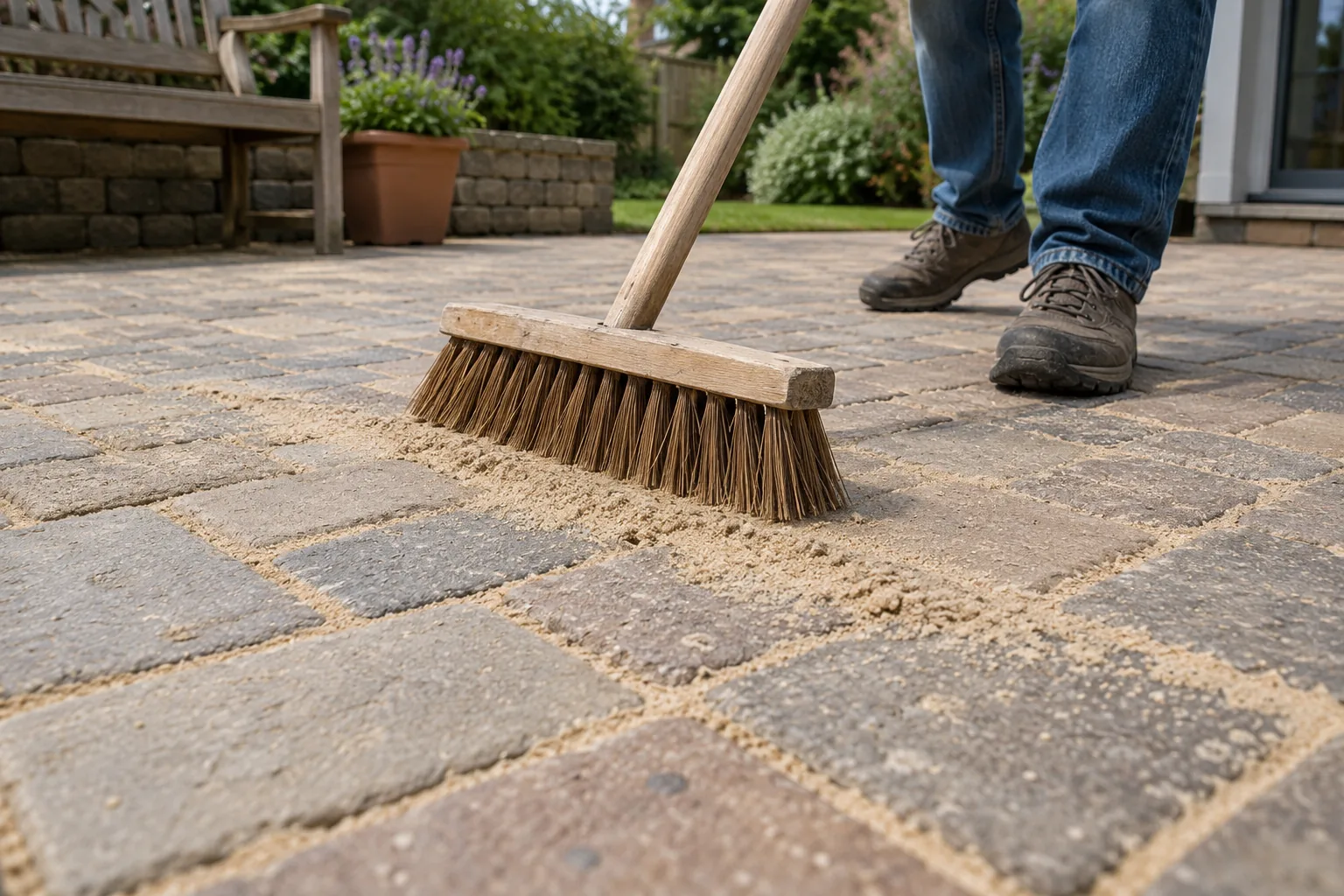
Sweep diagonally across block paving where practical, rather than directly along the joint. This helps leave more sand in place. A stiff brush with warm water can remove general dirt. Use a cleaner only if it is suitable for the blocks, nearby planting and drainage route, and test it in an inconspicuous area. Rinse in a controlled way so dirty water does not simply carry silt into a gully.
If pressure washing is genuinely needed, avoid a concentrated jet aimed into the gaps. Work from a safe distance with an appropriate fan pattern and setting, following the equipment and paving guidance. Inspect afterwards: if sand has been lost, replenish with the correct dry jointing material when conditions allow. Standard block paving and permeable systems do not necessarily take the same sand grade, so check the original specification.
Weeds may be visible in some joints. Remove young growth carefully before washing and collect loose material. If a few gaps repeatedly fill with plants, investigate why sand is disappearing or soil is washing onto the surface. Weed removal is a separate task from washing; the present cleaning method should preserve sound joints rather than strip them bare.
Treat mortar and resin joints as finished edges
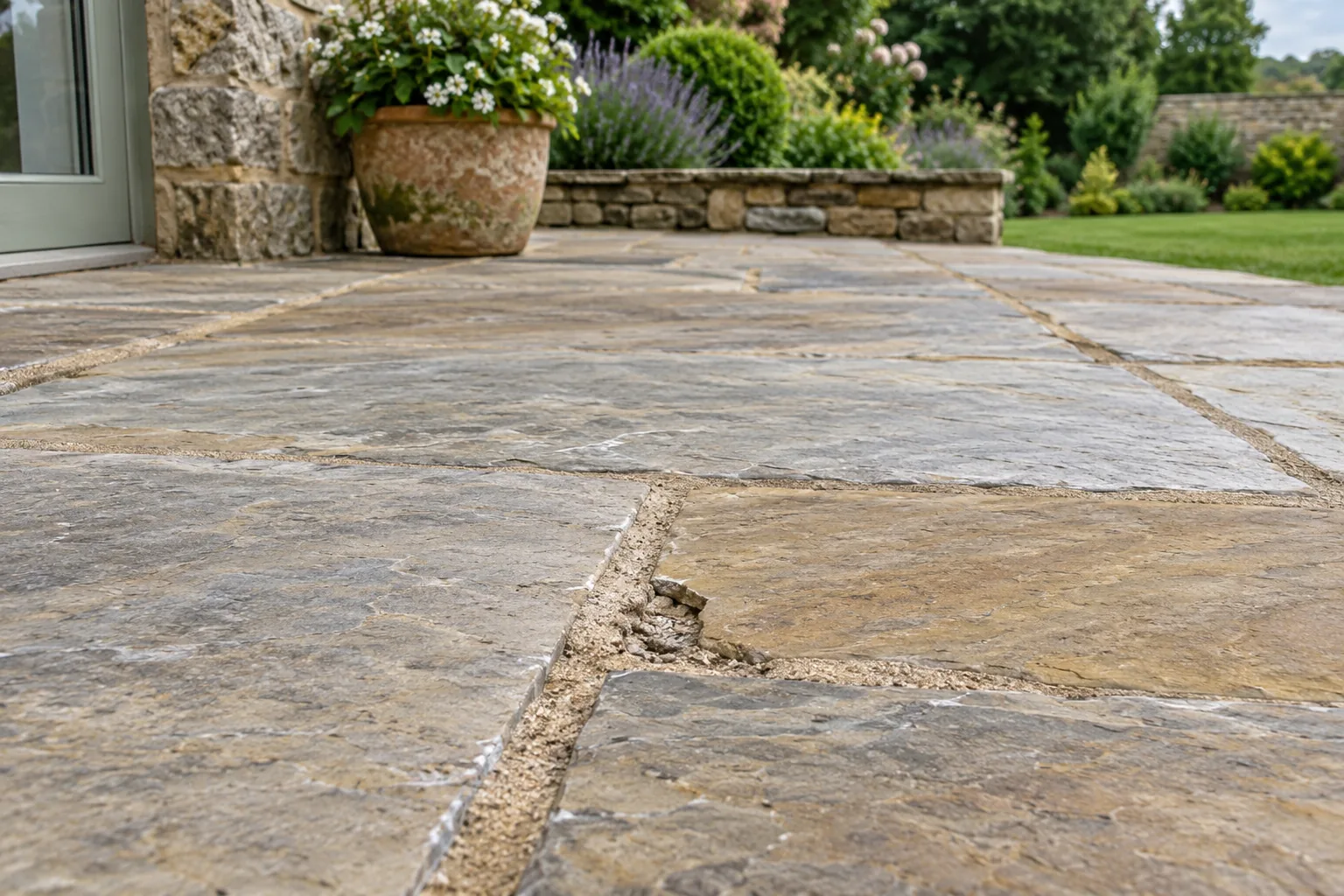
On a slab patio with mortar joints, scrape away only loose surface debris. A firm, intact joint should not be chiselled simply because it is stained. Brush the paving face and rinse without blasting water into hairline cracks. If mortar is powdering or falling out, mark it for repair after cleaning. Repointing should use a compatible material and a sound base; filling a moving gap with a thin skin of mortar is unlikely to last.
Resin or ready-made jointing compounds vary by product. Some tolerate light pressure washing after full cure, while others have restrictions on nozzle distance, pressure or cleaners. Read the manufacturer’s data if you know the product. Where it is unknown, use a mild mechanical clean and ask the installer or supplier before aggressive treatment. Acid-based cleaners can stain or damage natural stone and jointing; never assume a strong product is a shortcut to a better finish.
Porcelain paving is often easier to wipe clean than porous stone, but its joints can still be vulnerable. The hardness of the slab does not make a weak or failed joint safe for a close pressure jet. Keep the method matched to the weakest part of the surface.
Stains deserve their own assessment. Rust from furniture, grease from cooking and pale mineral marks are different problems, and the wrong treatment may spread a mark or change the colour of stone. Photograph a stubborn patch and check the paving maker’s advice before applying a specialist product. Never mix cleaning chemicals. If the finish is uncertain, a discreet test and a realistic expectation of partial improvement are safer than repeatedly increasing strength or pressure.
Respect permeable joints and drainage
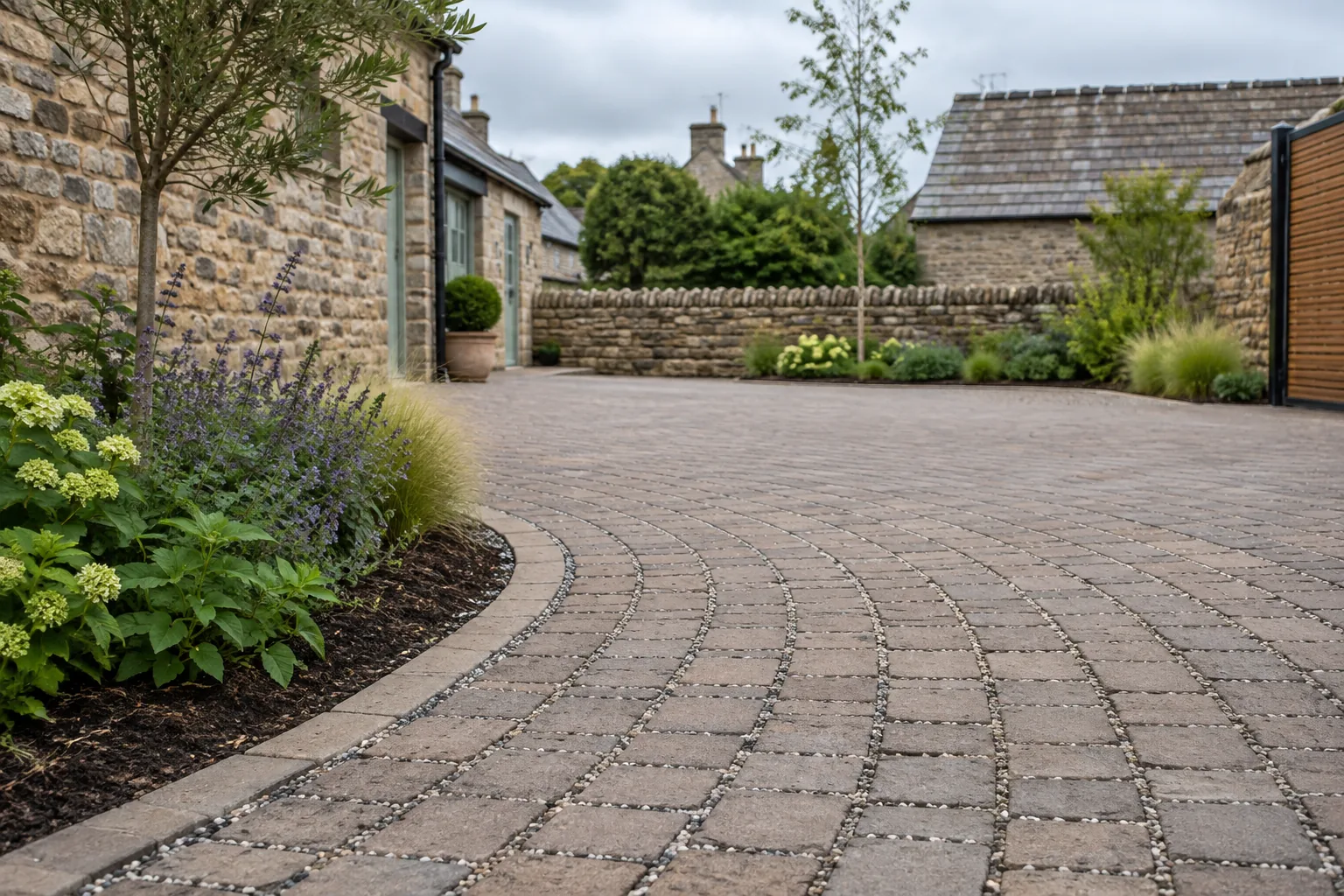
Permeable paving is designed to let water pass through gaps or the material itself. Those joints may hold specially graded aggregate, not ordinary mortar. Sweeping and removing surface silt can help maintain their function, but washing fine debris deeper into the openings may cause problems. Avoid sealing or filling them with an impermeable product without design advice.
Check where rinse water and loosened dirt will go. A patio that drains into a flower bed needs a different approach from one beside a surface-water gully. Capture or sweep up solid debris before rinsing. If the paving already ponds after rain, record the locations; the clean may make it easier to see whether blocked channels, settlement or another drainage issue is involved. Our patio cleaning service assesses material, joints and runoff before setting the cleaning method.
Finish with inspection and a light routine
Let the patio dry enough to judge the result. Check for dislodged sand, crumbling mortar, lifting compound and newly exposed movement. Arrange suitable repair rather than hiding a defect beneath furniture. Put pots back on feet where practical so damp and dirt do not concentrate under their bases. Sweep leaves regularly, particularly in shaded corners and around drains.
A yearly deep clean may be reasonable for some surfaces, but the interval depends on shade, use and regrowth. A quick sweep and occasional gentle wash can reduce the need for aggressive work. If the patio needs more extensive preparation after months of neglect, our garden clean-up service can address the adjoining beds and debris as part of an agreed scope.
The joint type should guide the cleaning. Start gently, protect intact material, restore any lost fill with the correct product and investigate recurring movement or ponding. That approach keeps a Bristol patio attractive without shortening the life of the paving beneath it.