
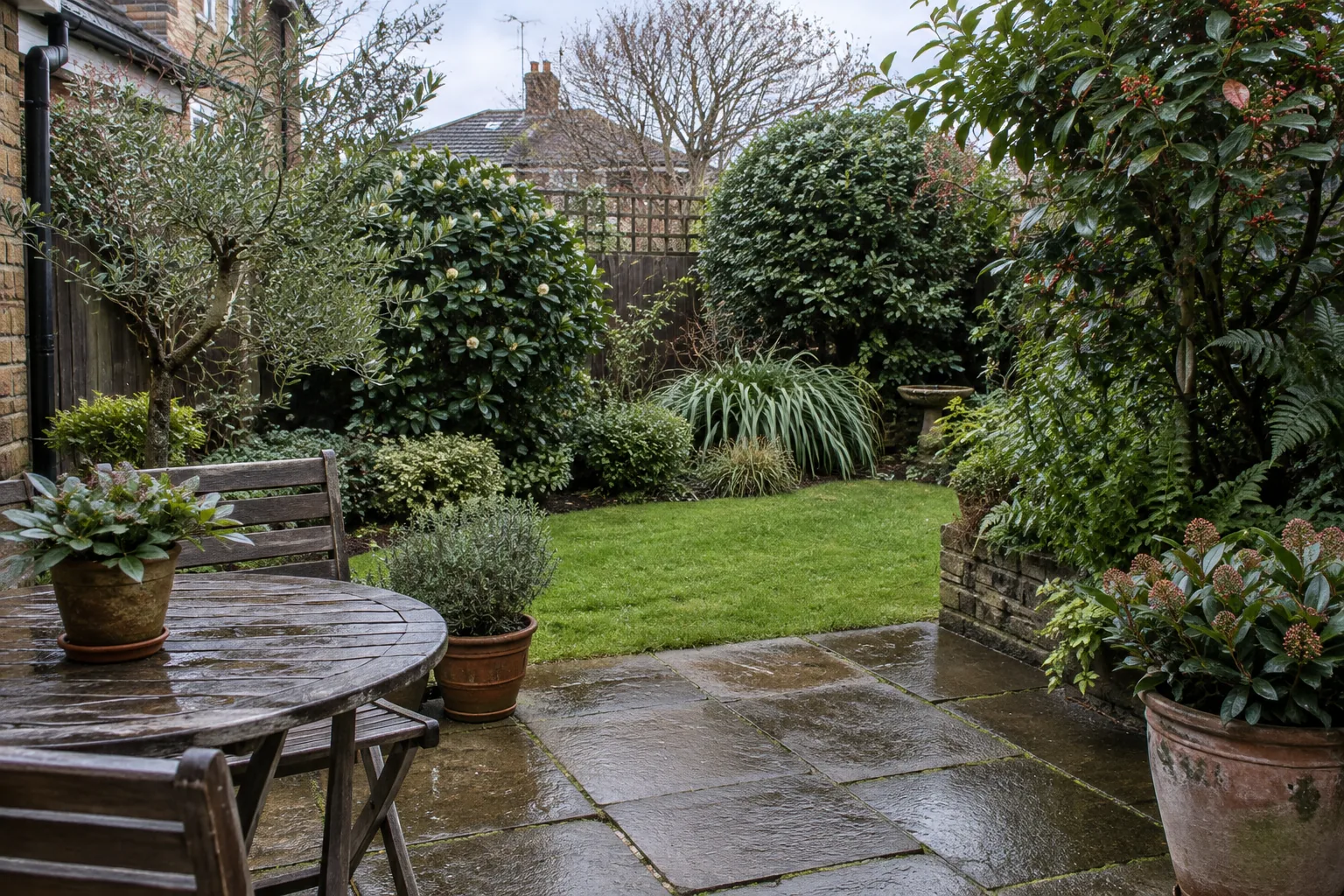
Evergreen leaves make a garden feel alive in winter, but keeping leaves also means the plant continues to lose some water while growth is slow. Wind, cold soil and a pot that cannot drain can all cause damage. A Bristol winter may be mild for weeks and then bring a sharp frost or a dry, windy spell. The useful approach is to check each plant’s exposure and root conditions rather than treating all evergreens as either thirsty or dormant.
Begin by identifying what you have and whether it is planted in the ground or in a container. Hardy established shrubs in suitable soil usually need less intervention than recently planted or borderline hardy specimens. Check the species before wrapping, moving or pruning it. Winter care is a series of small observations, not one dramatic treatment.
Inspect moisture at the roots
Rainfall often provides enough water for outdoor containers in winter, according to the Royal Horticultural Society. Yet a pot under an eave or against a sheltered wall may miss rain entirely. Dry wind can take moisture from evergreen leaves even when the air feels cold. Feel the compost a few centimetres below the surface during a frost-free spell. Water only if it is drying and the plant needs it, allowing surplus water to drain.
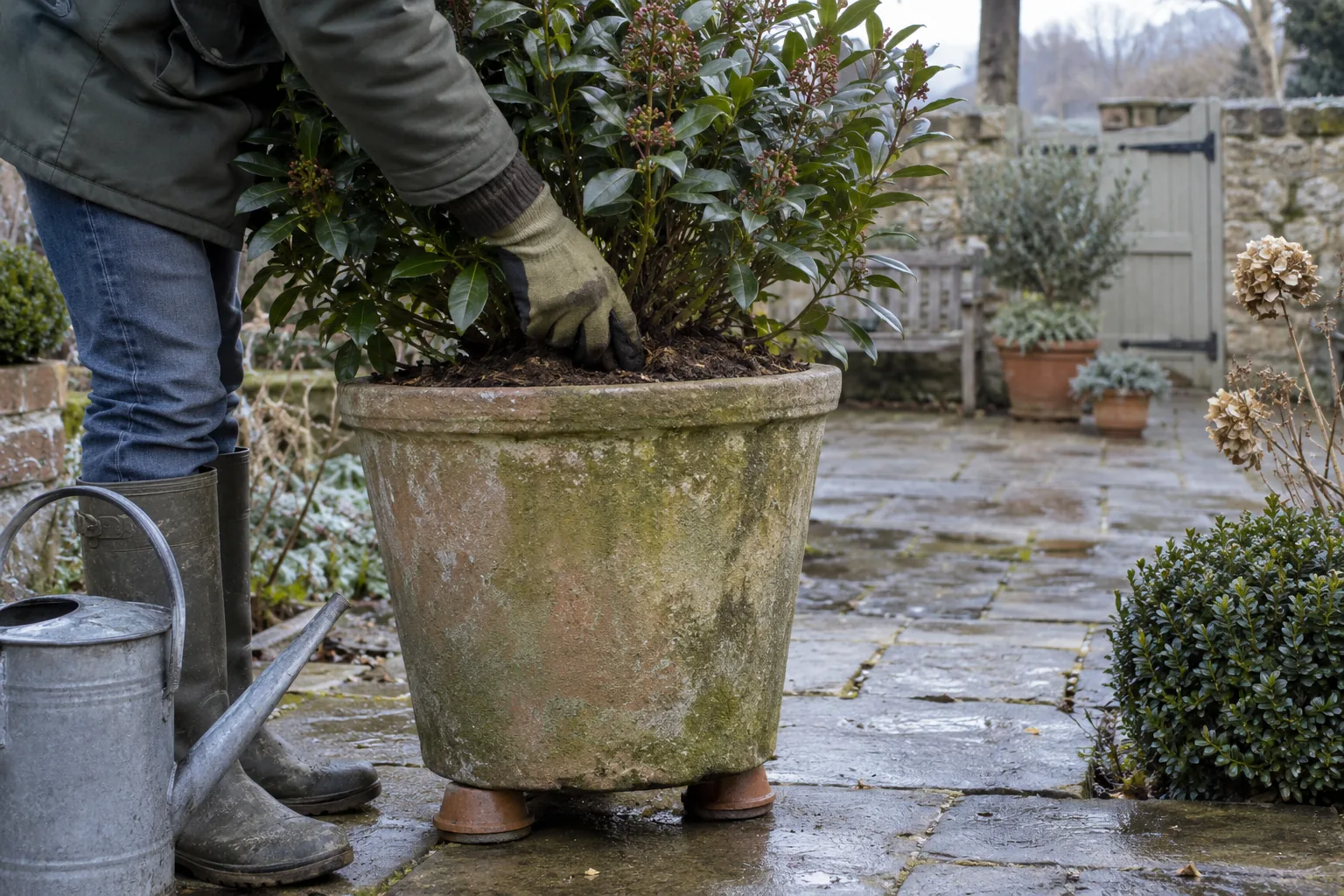
The opposite problem is persistent saturation. Remove saucers that hold water through winter and raise pots on feet where drainage holes would otherwise sit flat on paving. Clear leaves from the base without scraping the root surface bare. If a container remains heavy and wet for days, inspect its holes and compost structure. Waterlogging can deprive roots of air and mimic drought stress above ground.
For newly planted evergreens in a border, check the root zone after a dry spell, especially on a bank or in a sheltered rain shadow. An established shrub with deep roots is different from a root ball planted recently into a small hole. Apply a suitable organic mulch to conserve moisture and moderate soil temperature, leaving a gap around the stems. Do not heap mulch against a trunk or use it to hide a drainage problem.
Reduce wind and frost exposure intelligently
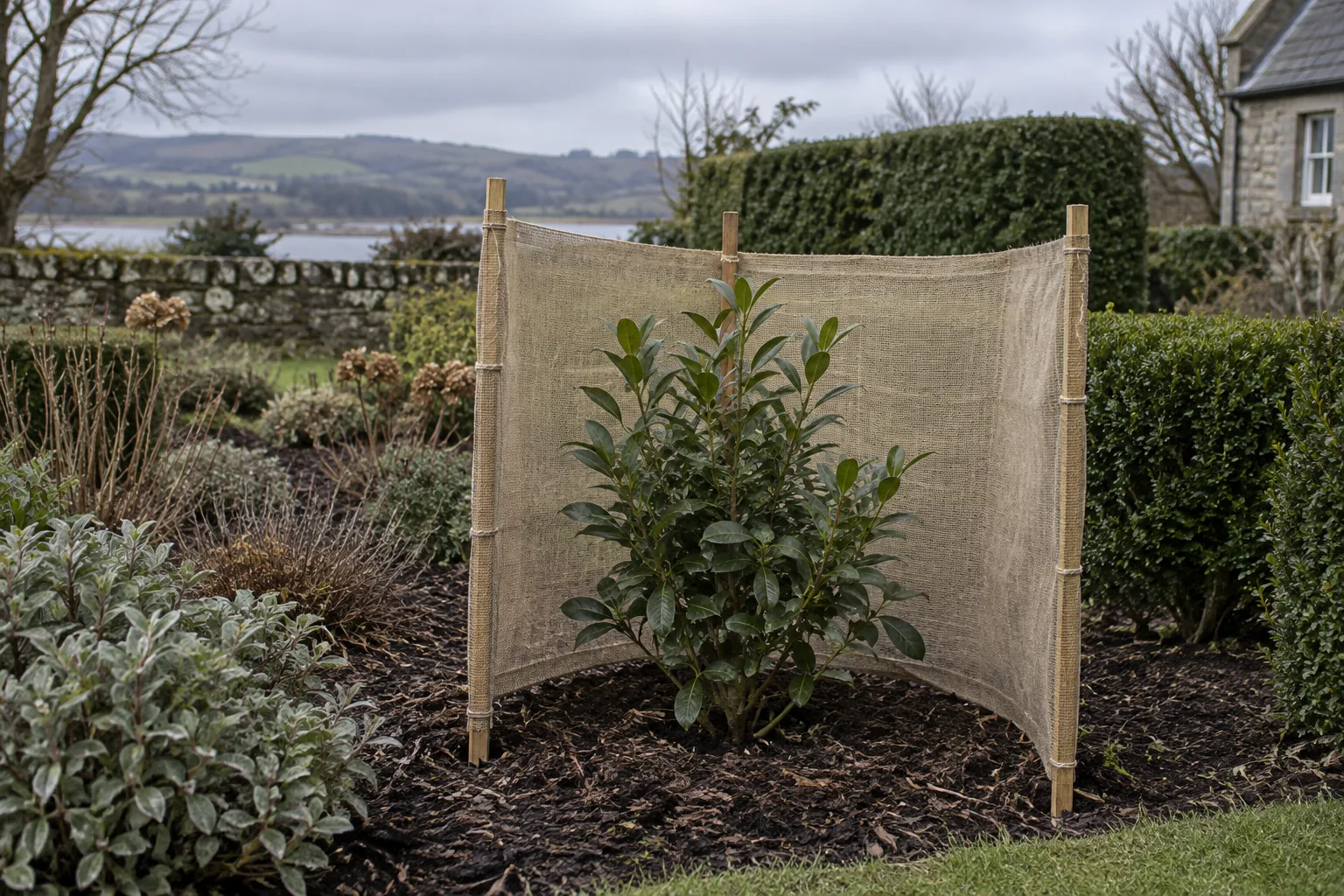
Brown leaf edges can follow cold, drying winds. The RHS describes winter wind scorch in evergreens and recommends shelter to reduce water loss from leaves. A temporary windbreak can help a vulnerable plant if it is secure and does not rub the foliage. In a small yard, moving a pot to a brighter sheltered position may be simpler. Do not place it in a dark cupboard or against a heated wall merely because it is cold outside.
Some slightly tender plants benefit from horticultural fleece during a short severe spell. Fleece offers limited insulation and wind protection; it is not a substitute for choosing a plant suited to the site. Fit it so air can circulate, check that it stays secure and remove or open it when conditions improve as appropriate. Heavy wrapping left on for weeks can trap damp and block light. The RHS notes that fleece grades vary in the amount of light and protection they provide.
Containers expose roots to colder temperatures than open ground. Group pots where they remain in suitable light, keep them stable in wind and consider insulating the outside of a vulnerable pot. Do not block drainage holes. A top-heavy evergreen can topple in a storm, so check the pot’s weight and support rather than tying the whole plant tightly to a weak fence.
Know when to leave foliage and flowers alone
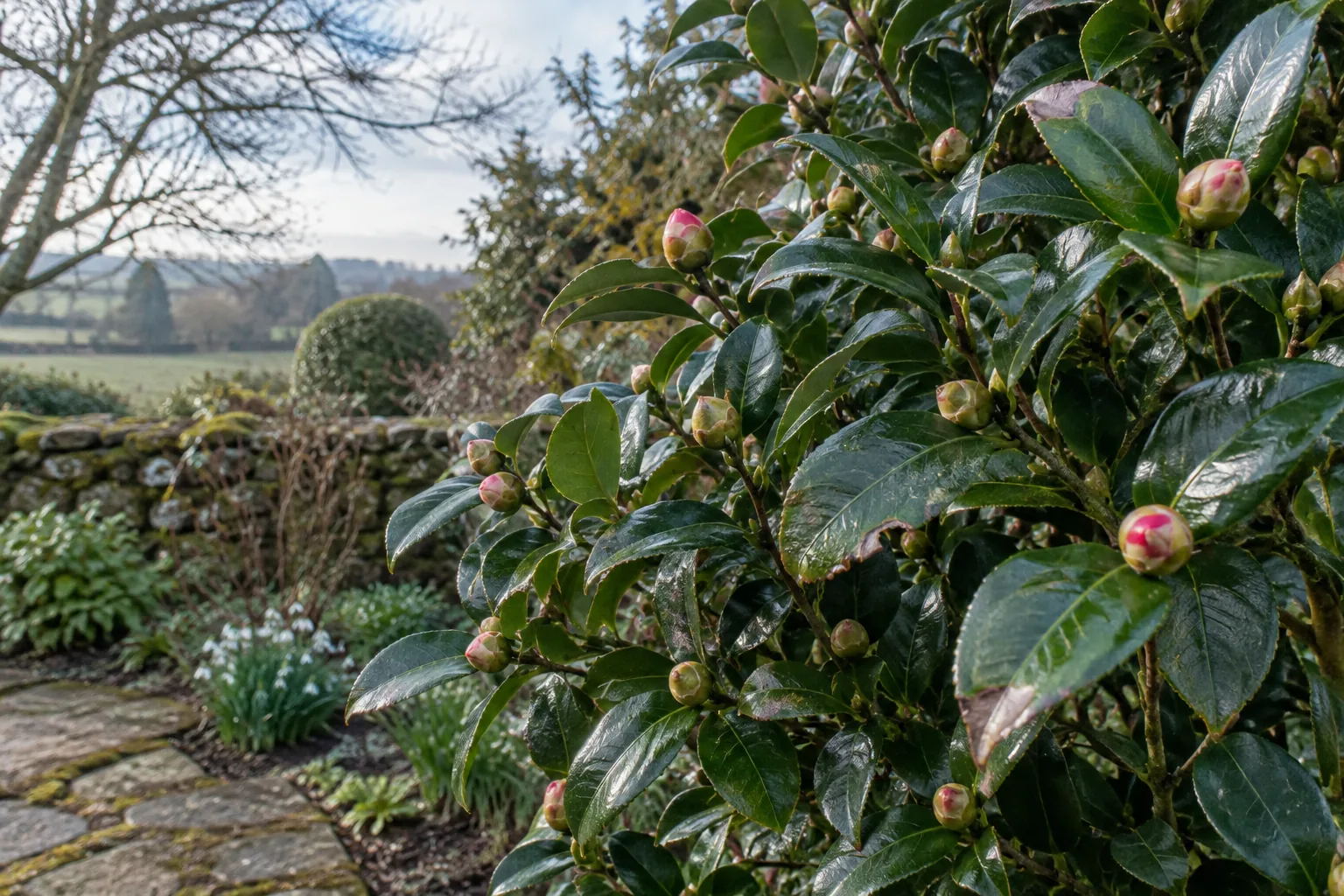
Do not cut every evergreen into shape in November. Some spring-flowering shrubs already carry buds on older growth. Camellias, rhododendrons and other flowering evergreens have species-specific pruning windows; a general winter trim can remove flowers or expose tender tissue. Remove clearly broken material when safe, but postpone routine shaping until you have identified the plant and checked its guidance.
Winter berries and dense foliage also support wildlife. If a shrub is healthy and not blocking access, leaving it intact may be the best maintenance choice. Where a branch obstructs a path or is rubbing against a structure, make a targeted correction rather than reducing the entire plant. Check for active birds before working in dense growth at any time of year. Our hedge trimming service can assess species, size and the right maintenance window for a boundary evergreen.
Avoid feeding to force fresh growth during the coldest part of the year. A pale or patchy plant may need a diagnosis of roots, soil, light or disease rather than fertiliser. Photograph symptoms and note when they appeared. If damage followed a frost, wait until spring growth reveals what has survived before pruning heavily, unless a branch is unsafe.
Keep paths, beds and containers safe
Clear fallen leaves from important routes and drains, but there is no need to strip every planted bed. A modest leaf layer under suitable shrubs can protect soil and offer habitat. Watch for leaves collecting inside the crown of a low evergreen, where persistent damp may be undesirable. Adjust the tidy-up to the plant and the way people use the space.
Inspect ties and supports on new evergreens. A loose stake can rub a trunk; a tight tie can constrict it as growth resumes. Check that a windbreak or fleece does not blow into a path. Keep access around pots and avoid placing them where water drains towards a doorway or freezes on a walking route. Our garden maintenance service can incorporate these winter checks alongside path and border care.
After a storm, look for leaning root balls, snapped branches and salt or spray exposure near roads. Do not try to right a large unstable tree or work near power lines yourself. Photograph the issue and seek appropriate professional assessment. For a small shrub, firm loosened soil gently when it is workable and monitor whether the plant remains stable.
Review plants in early spring
As growth begins, compare healthy buds and new leaves with damaged areas. Winter browning is not always permanent plant death. Give a borderline plant time to show live growth before removing it, while cutting away clearly dead or dangerous material when appropriate. Reassess whether its position is too exposed or its pot repeatedly waterlogged, and fix the cause before replacing it with the same species.
Good winter care for evergreens is measured. Check water at the roots, preserve drainage, offer limited shelter when exposure warrants it and avoid unnecessary pruning. Those regular observations help a Bristol garden keep its winter structure without creating more work or damage in spring.