
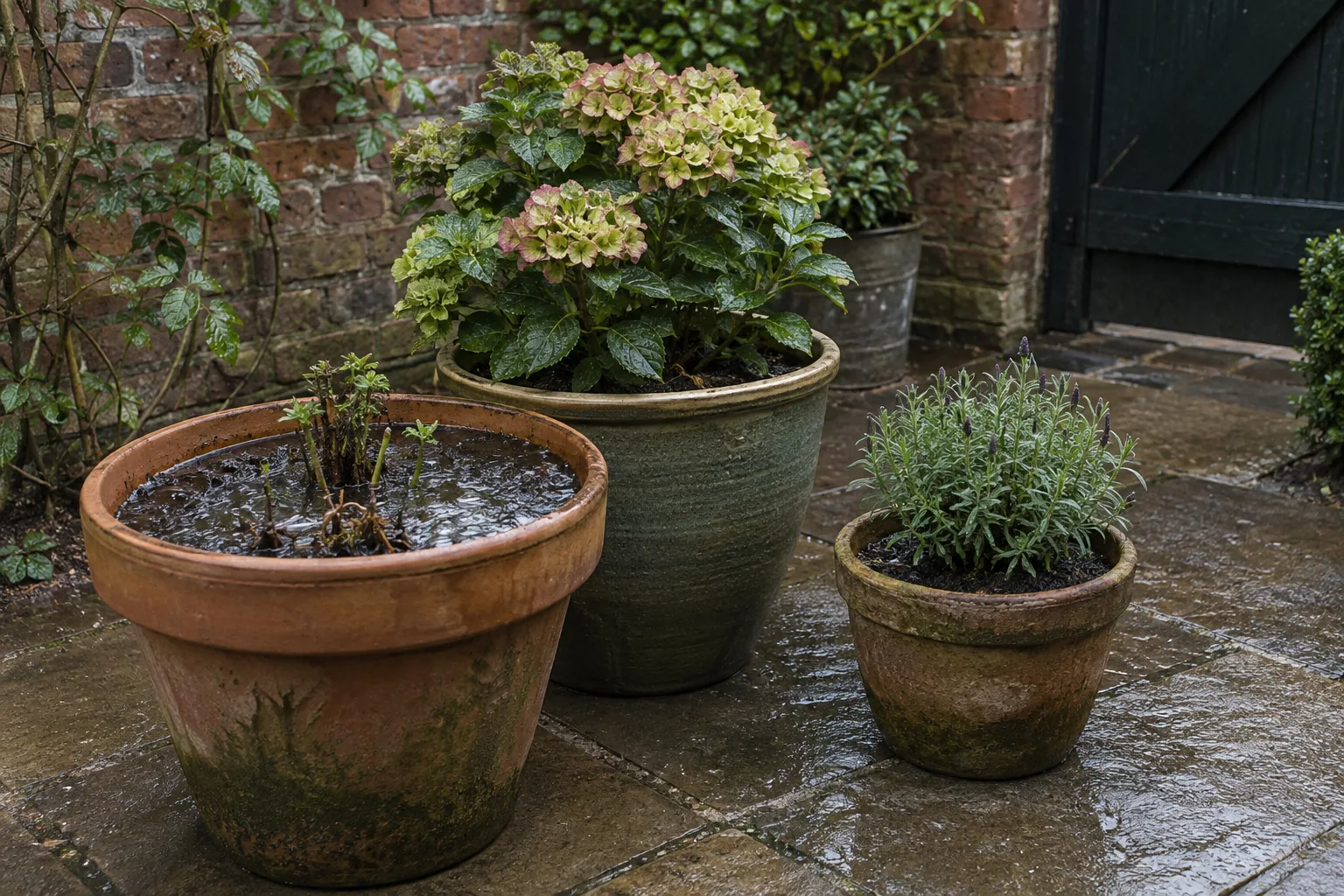
Water standing on the surface of a pot after rain is a warning to investigate, but it does not identify a single fault. The drainage hole may be blocked, a decorative outer pot may be holding runoff, the compost may have collapsed, or the container may simply be too large for a small root system. In a Bristol courtyard, repeated wet weather and shade can make the problem more persistent. The solution begins with observing where the water stops rather than adding more grit at random.
Roots need air as well as moisture. When compost remains saturated, air spaces fill with water and many plants struggle or rot. The Royal Horticultural Society advises using containers with drainage holes, checking that they remain clear and keeping pots out of standing water, particularly in winter. Diagnose the whole arrangement before repotting a stressed plant.
Check the route out of the pot
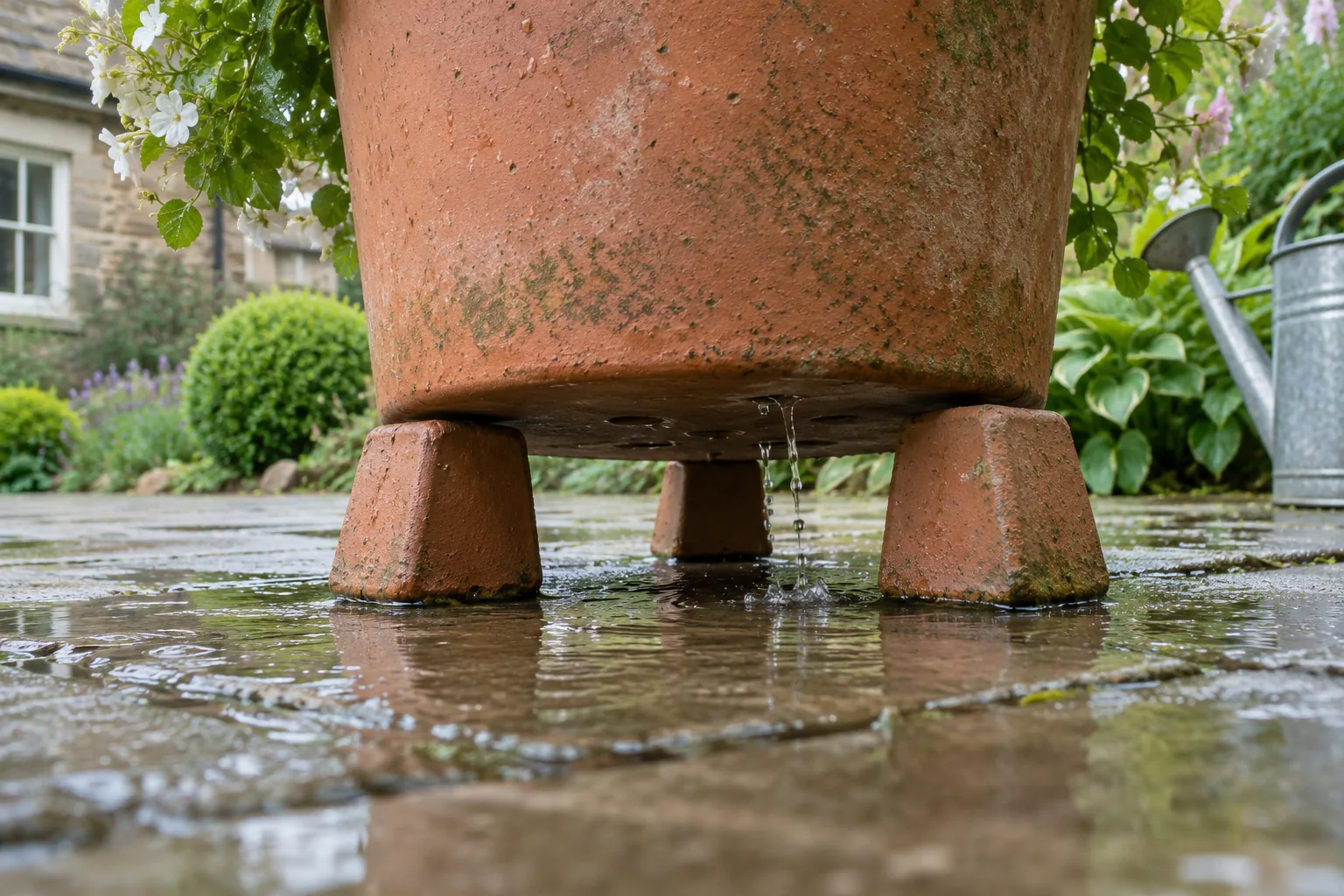
Lift the pot carefully and look underneath. Does it have one or more open drainage holes? Are they pressed flat against paving, blocked by roots or filled with compacted compost? A pot on a saucer may drain correctly but then sit in the collected water. Empty the saucer, or remove it during wetter months. The RHS recommends raising pots on feet or bricks where needed so holes can release water freely.
If a decorative outer container has no hole, lift out the inner growing pot and check whether water is pooled at the bottom. Empty it and let the inner pot drain before replacing it. Do not drill a valuable or brittle container without considering its material and safe method. A hidden plastic liner can make a stylish planter look dry from above while its root zone remains submerged.
Observe the surface after watering. Water that sits briefly and then sinks is different from a puddle that remains for hours. If the compost is bone dry and shrunk away from the rim, water may initially run down the side rather than wet the root ball. Check moisture a few centimetres down and in the centre before deciding whether the plant is wet or dry. Both conditions can cause wilting.
Assess the compost and root system
Old potting compost can lose structure, compact and drain poorly. A fine, dense mix used for the wrong plant may hold more water than its roots can use. Likewise, a small plant in a very large pot leaves a substantial volume of wet compost beyond its roots. The RHS cautions against oversizing containers because excess compost can become waterlogged. Choose a pot that allows some growth without surrounding the plant with a vast wet reservoir.
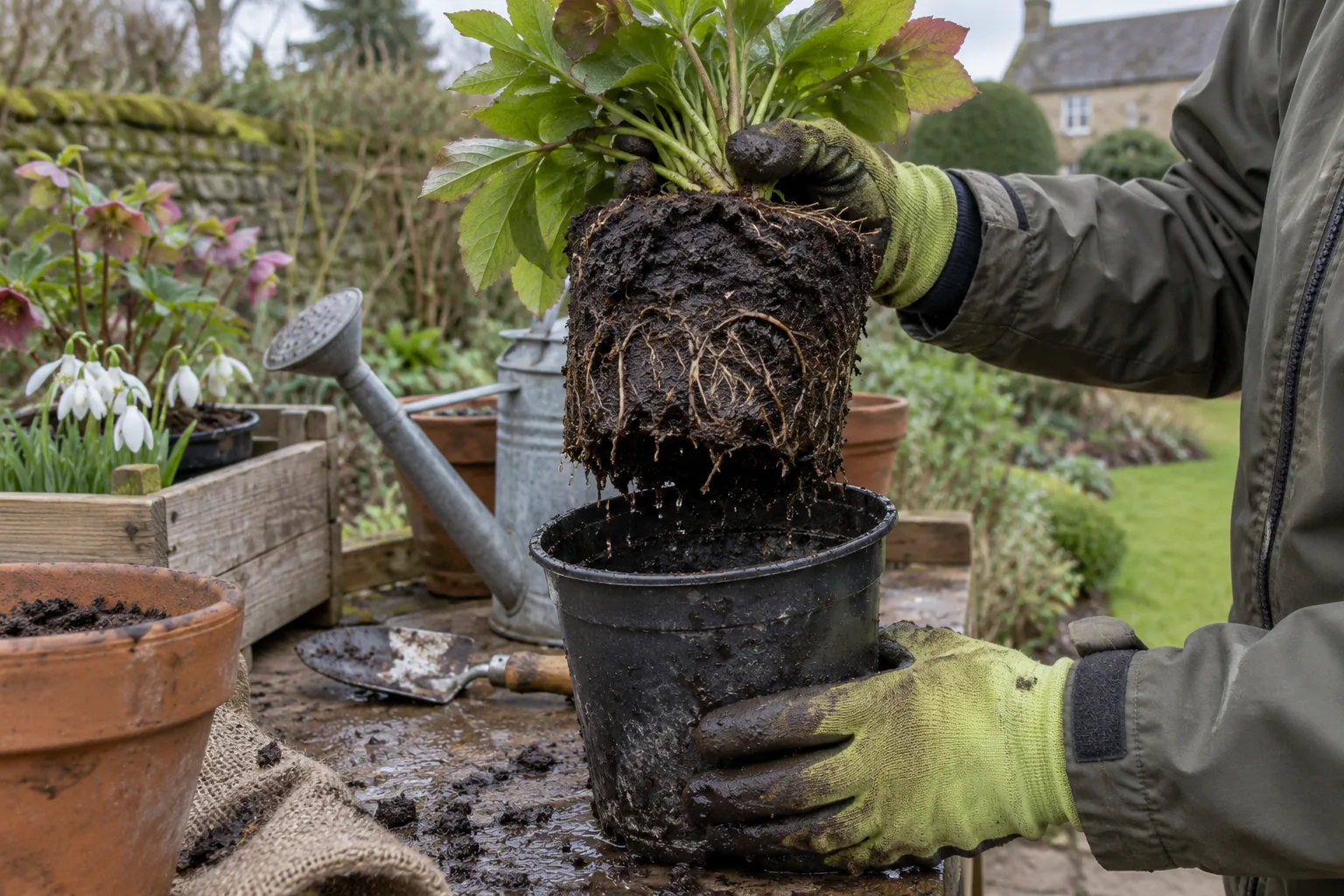
If water will not pass through despite clear holes, ease the plant out when you can do so without damaging it. Examine the root ball and smell the compost. Healthy roots vary by species, but soft, blackened, foul-smelling tissue can suggest rot. Remove only clearly dead material with clean tools and choose an appropriate fresh medium. If the plant is valuable or badly affected, obtain species-specific advice before severe root work.
Do not assume a deep layer of stones at the bottom will cure a pot without drainage. The RHS identifies the belief that crocks improve drainage as a gardening myth. A small piece over an unusually large hole can stop compost falling out, but the key is an open exit and suitable growing medium. Adding material below a blocked base does not give water anywhere to go.
Adjust watering to weather and position
A fixed daily watering schedule is rarely suitable for every pot. A sunny terracotta container may dry rapidly, while a shaded plastic pot holds moisture longer. The RHS advises checking the compost and watering according to need rather than the calendar. In summer, a saucer can catch runoff temporarily, but it should be emptied after a few hours so the compost does not remain saturated.
In autumn and winter, rainfall may supply most water for outdoor pots. Check rather than watering by habit. Evergreens can still need water during a dry winter spell, particularly when sheltered from rain, so “never water in winter” is equally unhelpful. Feel below the surface, consider the plant’s needs and avoid watering frozen compost. Move a pot temporarily if roof runoff pours directly into it, while keeping the plant in a suitable light position.
A heavy downpour may compact exposed compost. A suitable surface mulch can reduce splash and help structure, but it cannot correct blocked holes or waterlogged medium. Keep mulch clear of stems. If several containers collect runoff from the same roof or paving fall, examine where that water should go. Our garden design service can help place containers within a wider layout that respects light and drainage.
Repot only when the cause is clear
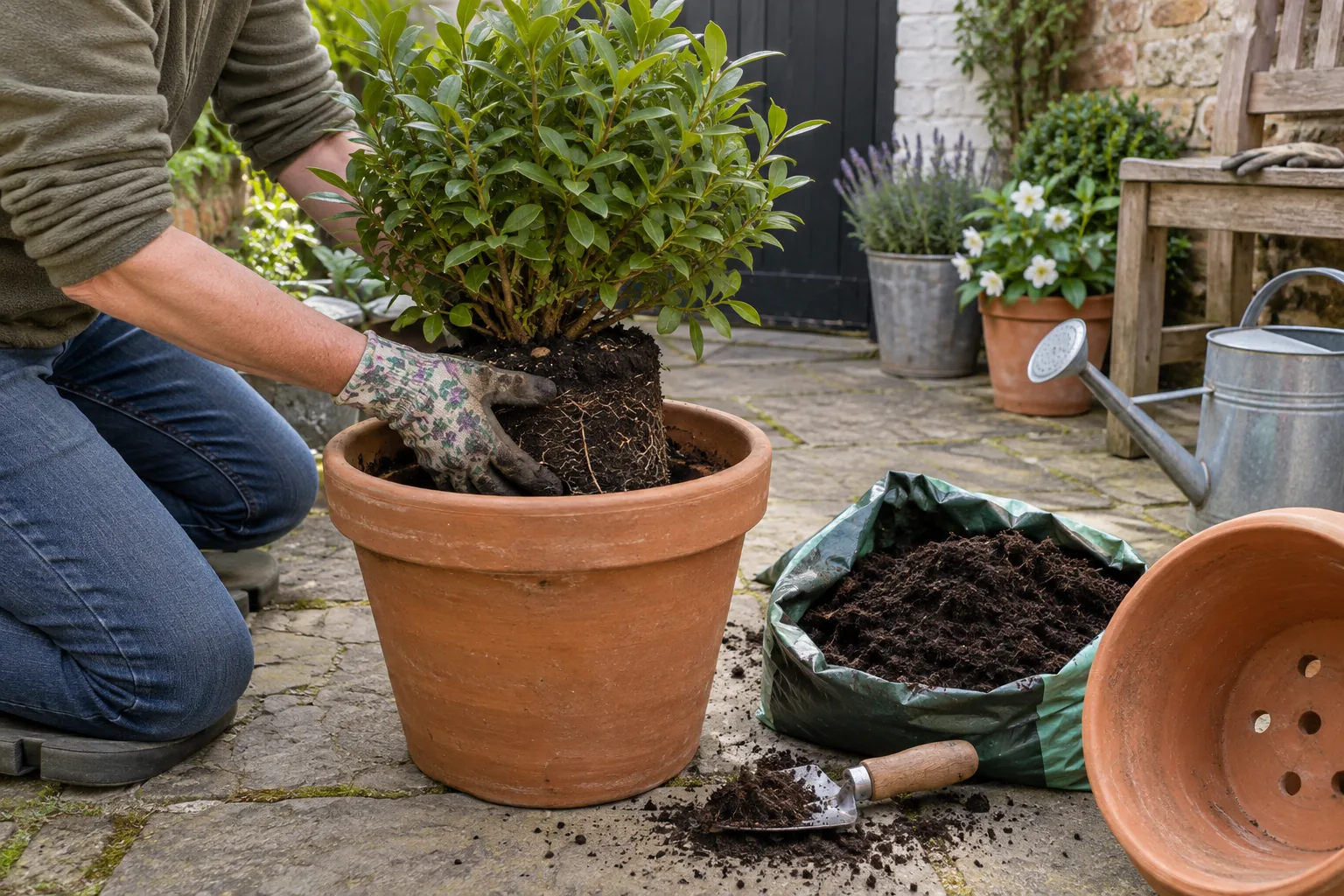
Choose a container with adequate drainage holes and enough space for the root ball. Use a growing medium appropriate to the plant and the expected length of time in the pot. The RHS notes that container plants eventually need either a larger pot or refreshed compost as the medium changes over time. Do not automatically move a struggling plant to the largest container available.
Set the plant at a similar depth to its previous level unless species guidance says otherwise. Firm the fresh compost lightly and water to settle it, then confirm that water can leave the base. Watch the pot over the next few weeks. If water still sits on top, revisit the medium and drainage route; if leaves continue to decline, consider disease, root damage, cold and light as well as watering.
For a group of pots, label or photograph each plant and note when it was repotted and how often it needs checking. That simple record prevents several people from watering the same container on the same day. Our garden maintenance service can help establish a practical routine for larger collections and identify which plants need more than a change of watering habit.
Keep a simple prevention routine
Check drainage holes when placing new pots, leave clearance beneath them and inspect saucers after rain. Refresh compost when it has broken down, and match pot size and watering to the plant rather than appearance alone. Recheck shade and shelter through the seasons. The aim is a root zone that holds enough moisture for the plant while allowing surplus water to escape.
Standing water is a symptom you can investigate step by step. Once you know whether the blockage is below, within or around the pot, you can make a targeted change and give the roots the balance of air and water they need.