
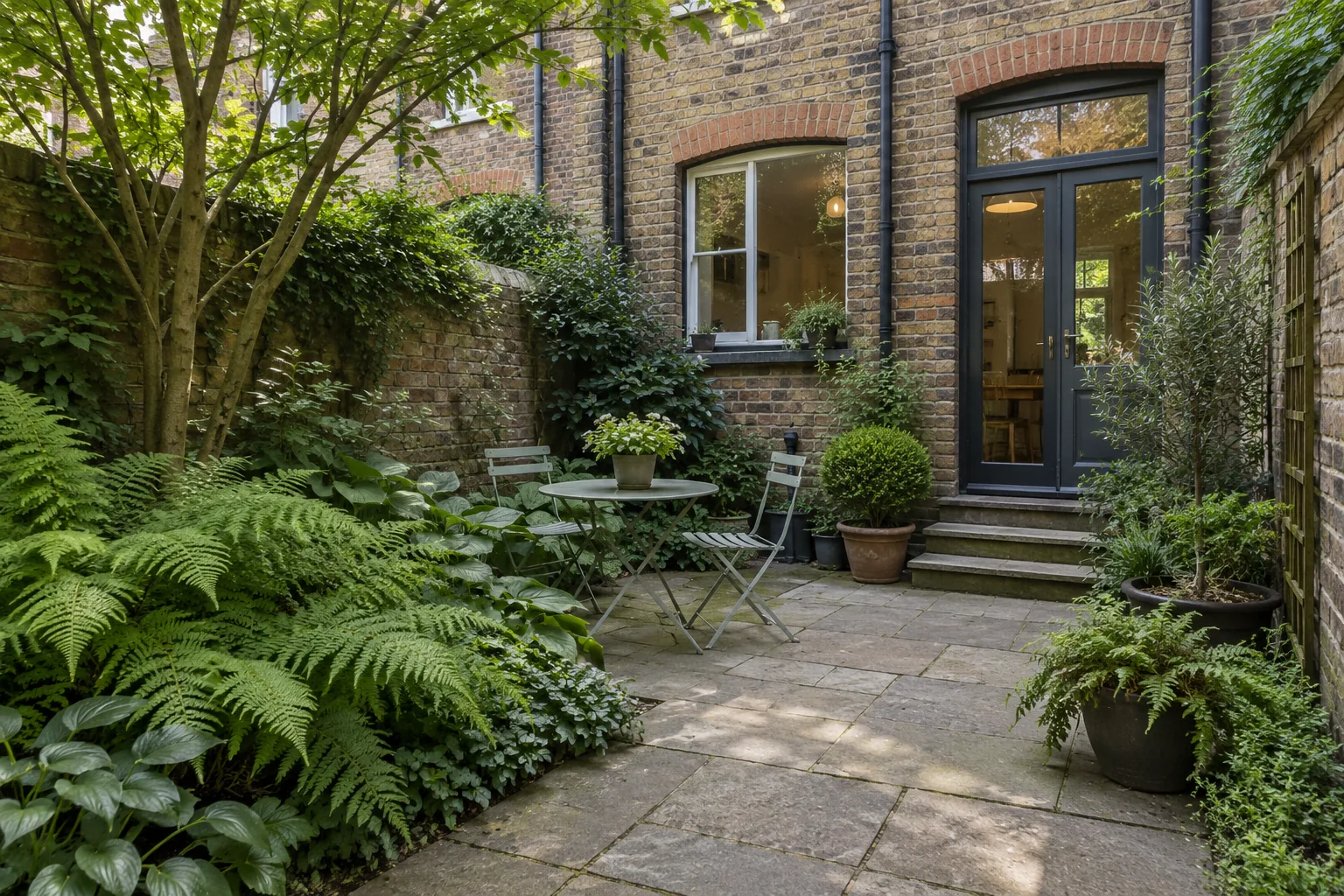
A shaded rear yard does not need to be an empty paved space. It can support foliage, seasonal flowers and even a few useful containers when plants are chosen for the actual light and moisture available. The difficulty is that “shade” describes several different conditions. A courtyard screened by buildings may remain open to the sky, while a corner beneath an evergreen canopy may receive very little light and compete with roots for water.
Before buying anything, observe the yard at different times on a clear day and note where direct sun appears. Feel the soil after rain and again in a dry spell. Identify the spots that are permanently dark, the places with a few hours of morning or evening sun, and any walls that keep rain away. Those distinctions help you choose plants that can thrive rather than merely survive.
Match the kind of shade, not just the compass direction
A north-facing yard can receive reflected light and occasional sun, while a west-facing space may be shaded by a neighbouring terrace for most of the day. Record the actual light at planting height. A raised pot or wall planter may sit in better light than the bed directly below it. If you are unsure, grow one or two trial plants in movable containers for a season before filling the whole yard.
The Royal Horticultural Society distinguishes light shade, partial shade and deep shade. Partial shade offers some direct sun; deep shade beneath dense evergreen cover is far more restrictive. Dappled shade under an open deciduous canopy changes through the day and year. A label that says “partial shade” should not automatically be read as “deep shade”. Our garden design service can help position planting and seating around the light a compact plot actually receives.
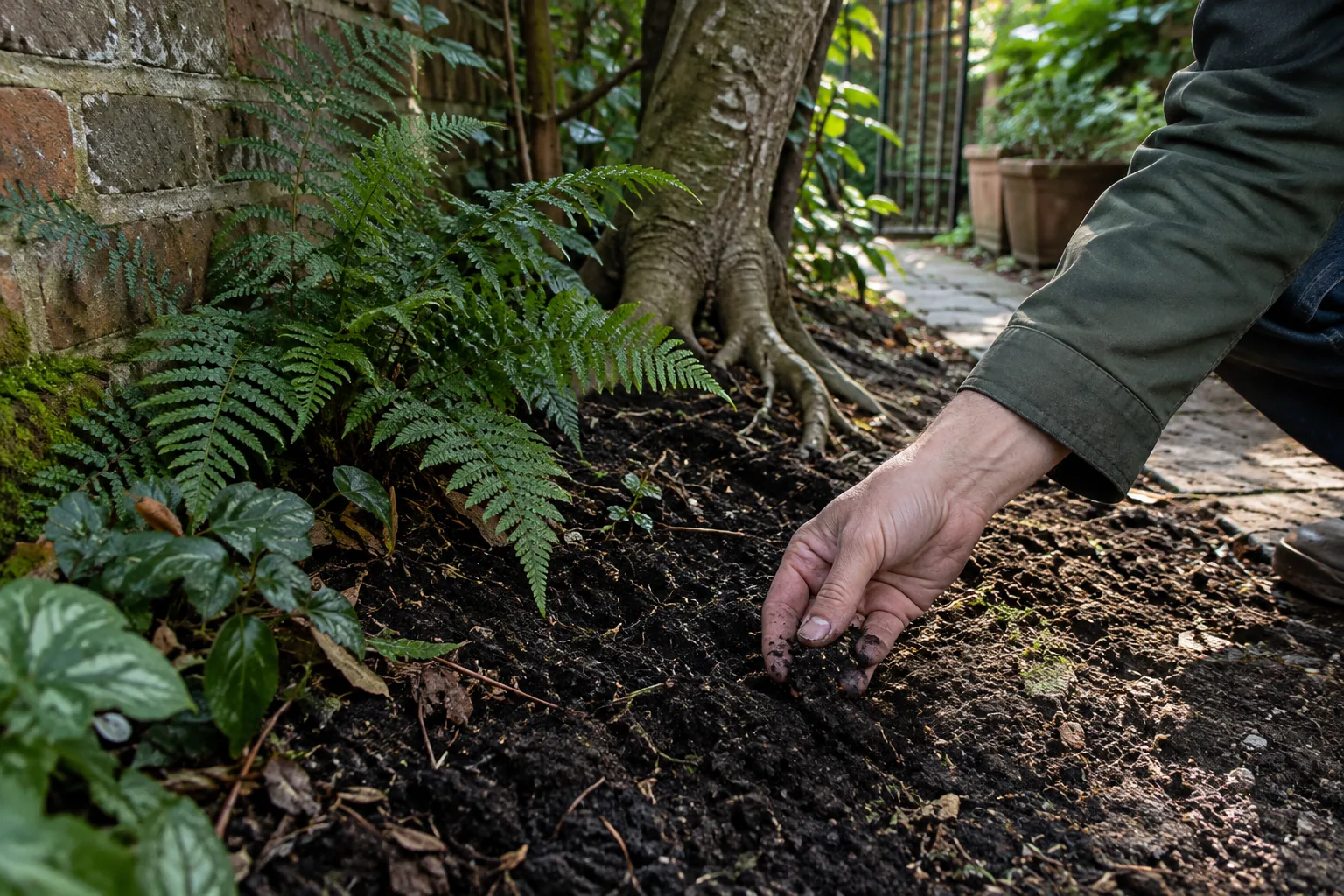
Also distinguish shade from dryness. Tree roots draw water from surrounding soil, while a wall or overhang can create a rain shadow. A cool-looking corner may therefore need more careful watering than an open bed. Conversely, poorly drained ground can stay wet in shade. Test with your hand rather than assuming all dark soil is moist.
Build a reliable foliage framework
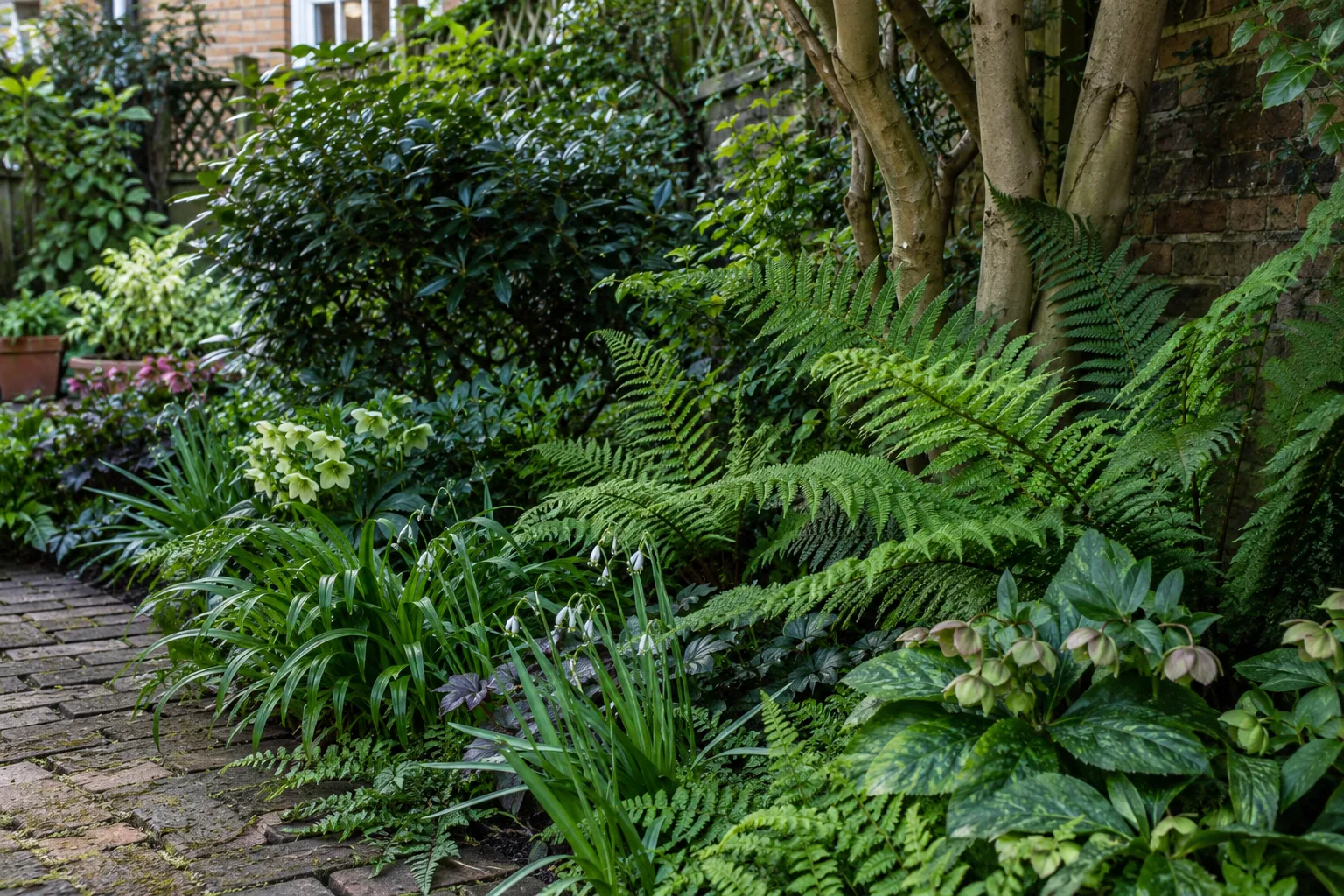
Ferns can give a shady yard structure and texture. The RHS lists Dryopteris affinis among robust choices for shade, though each species and cultivar has its own soil and moisture preferences. Check mature size: a fern sold in a small pot may fill a narrow passage later. Place taller plants where they will not obstruct doors, drains or the route to storage.
Shade-tolerant shrubs can provide year-round shape, but “shade tolerant” does not mean every shrub suits every dark corner. The RHS shade shrub guide lists choices for varying degrees of shade and gives mature spread. In a small yard, a compact plant that needs less cutting is usually more useful than a vigorous specimen repeatedly clipped against a wall. Check the specific cultivar’s size and whether it needs shelter from cold wind.
Use a limited palette rather than buying one of everything. Repeating two or three dependable foliage forms can make a small space feel calmer and more coherent. A mix of leaf shape, height and seasonal interest gives depth without requiring a crowded bed. Dark green foliage can look rich against pale paving or brick, while a light-coloured pot makes plants easier to see in a shaded corner.
Think about the view from inside the house as well as the view while standing outdoors. A compact evergreen near a window can offer winter interest, provided it will not eventually block the useful daylight that reaches the room.
Add flowers where light allows
Some shade-tolerant perennials flower well in suitable conditions. The RHS names Alchemilla mollis and autumn-flowering anemones among its robust shade suggestions, but their size, moisture needs and spreading habits still matter. Spring bulbs can take advantage of light before deciduous trees leaf out. Select varieties for the exact place and avoid promising a continuous flower display in a deeply shaded, dry slot.
If a strip receives several hours of direct summer sun, reserve it for plants that reward the extra light. In a fully paved yard, containers let you place flowers in the brightest pocket and move them if observations show a better position. Always check whether the plant is suitable for a pot and whether someone can water it through warm spells.
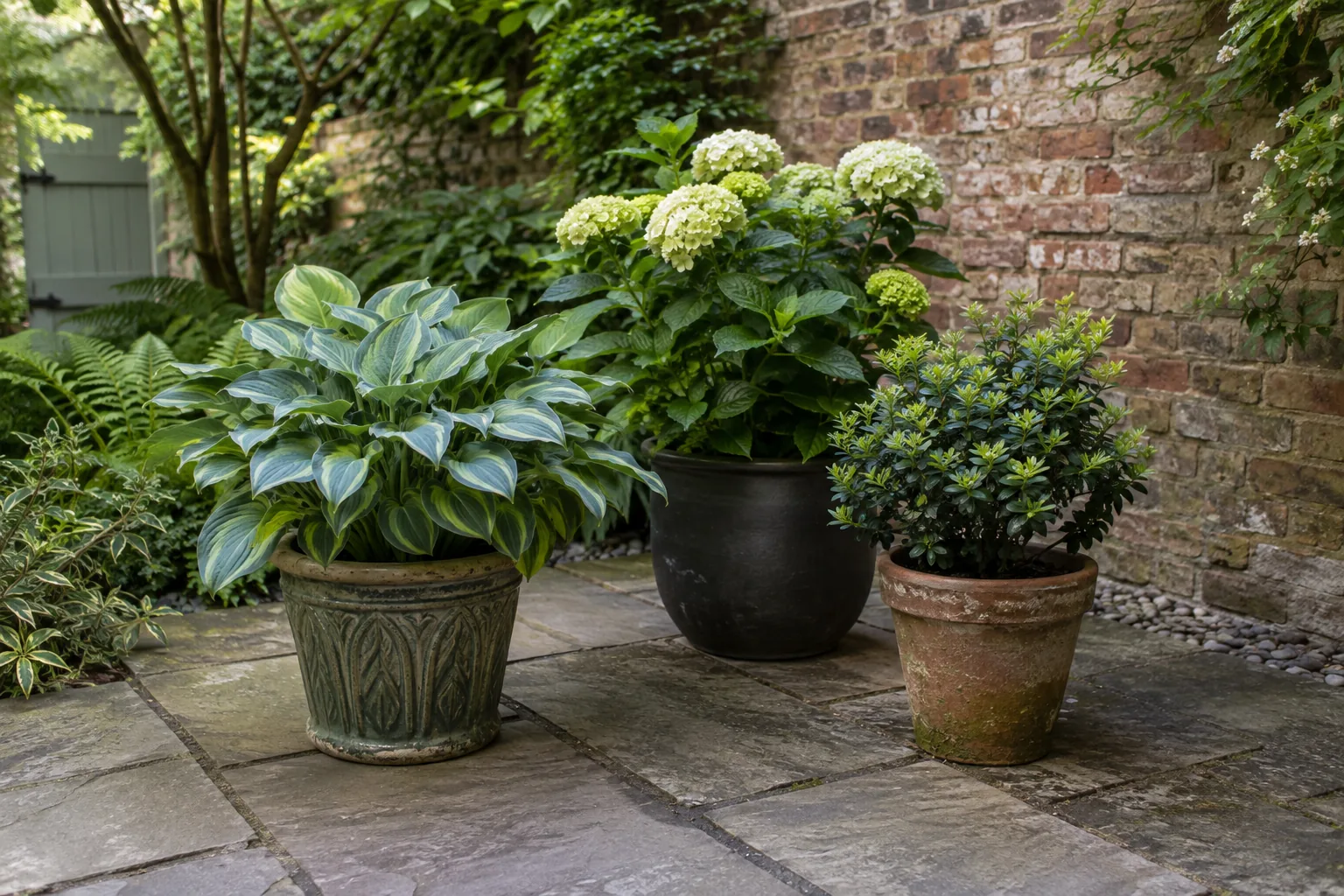
Containers in shade are not maintenance free. Compost can remain wet after rain, or dry surprisingly fast beside a sheltered wall. Use pots with drainage holes and a suitable growing medium, then check moisture below the surface before watering. A decorative outer pot should not leave the root ball sitting in water. Our garden maintenance service can help organise watering and seasonal care when a collection of pots has become difficult to manage.
Prepare the planting space thoughtfully
Clear weeds and rubble without stripping useful topsoil. If a bed is compacted, loosen the planting area carefully and add suitable organic matter according to the soil’s condition. Do not pile fresh compost against a wall or over a drain. Where roots from an existing tree dominate, avoid extensive digging that damages them. A raised container or a shade-suited ground cover may be safer than forcing new shrubs into a dense root mat.
Space plants for their mature width. A narrow courtyard needs clear movement, ventilation and access for cleaning. Leave a gap between foliage and the house wall where inspection is needed. A climbing plant may soften a fence, but confirm that its support is sound and that it will not overwhelm a small structure. Check any species-specific safety considerations if children or pets use the yard.
Water new plants thoroughly and monitor them through their first growing season. Shade does not remove the need for establishment watering. Mulch a suitable bed to reduce evaporation and weed growth, keeping it clear of stems. In a tiny space, a few well-established plants can be more satisfying than a crowded scheme that competes for water and light.
Review the result across seasons
Take a photograph from the same spot each month. It will show how sunlight moves, which plants are filling out and where the yard remains bare. If foliage becomes pale, weak or stretched, light may be part of the problem, but check water, soil and pests before moving the plant. If a supposedly damp shade plant repeatedly wilts, investigate whether a wall or tree is keeping the root zone dry.
The most successful shady yard is planned around its real conditions. Map the light, test moisture, choose compact plants with known shade tolerance and leave room to care for them. With that groundwork, a Bristol rear yard can become a pleasant planted space even when direct sunshine is limited.