
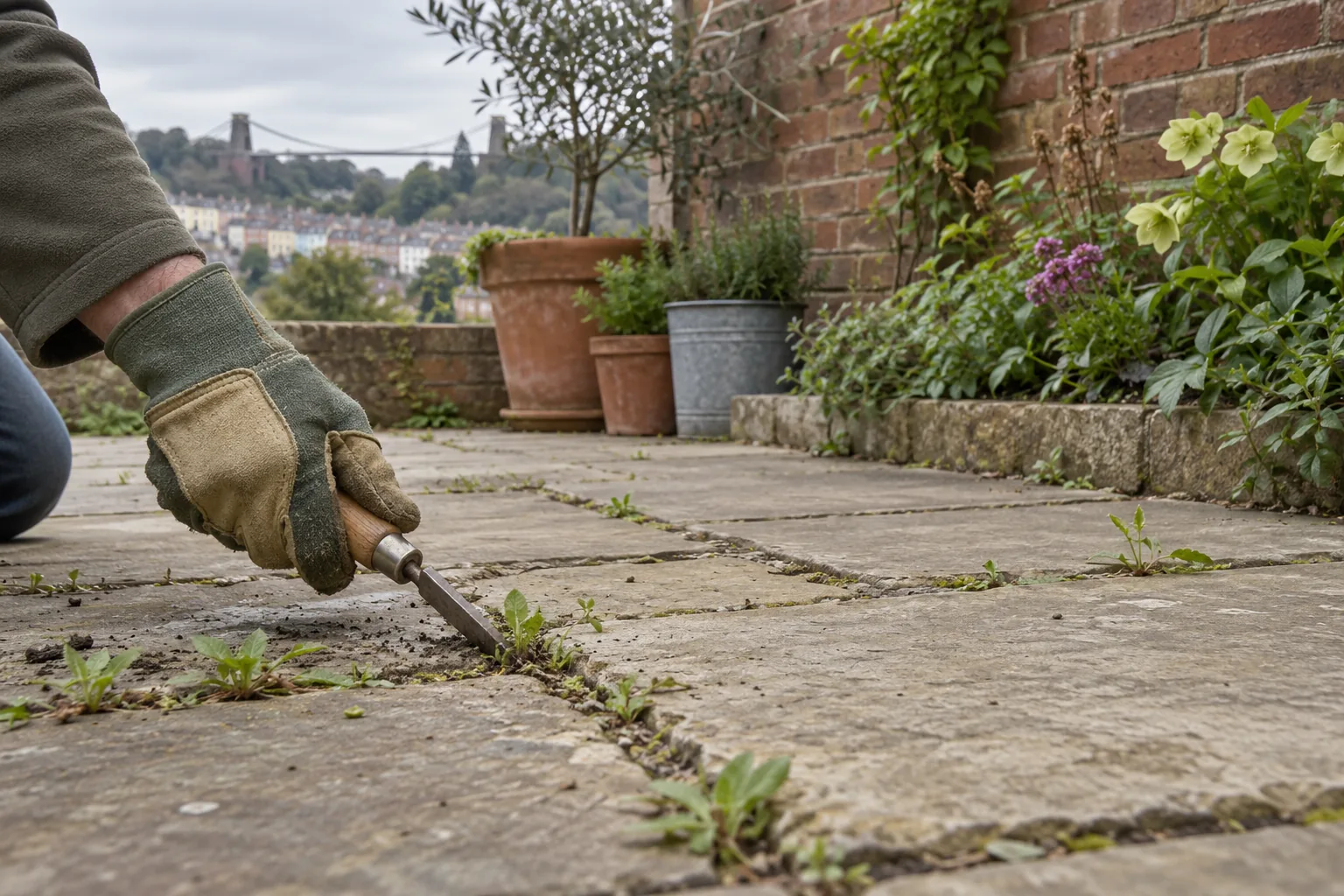
Small plants in the joints of a Bristol patio can make an otherwise tidy space look neglected. More importantly, repeated growth may reveal missing jointing, trapped debris or a surface that is difficult to clean. The useful response is to remove the weeds, understand why the gaps stay hospitable and repair joints only with a material suited to that paving. Scraping every gap aggressively can create more room for the next generation of seedlings.
Most weeds on hard surfaces begin as seed blown into dust and organic matter. Some establish from roots or fragments already present. The Royal Horticultural Society recommends hand tools and brushes for many paving weeds, with repeat removal of top growth where roots cannot be reached. That approach takes more attention than a one-off spray, but it lets you see the condition of the joints as you work.
Identify the joint before choosing a tool
Start by looking closely at what lies between the slabs or blocks. A loose sand-filled joint, a firm mortar joint, a resin-bound compound and a planted permeable gap need different treatment. Check whether the material is sound or crumbling, and whether the paving itself is stable. If a slab rocks or sits above a void, weed removal alone will not solve the underlying problem.
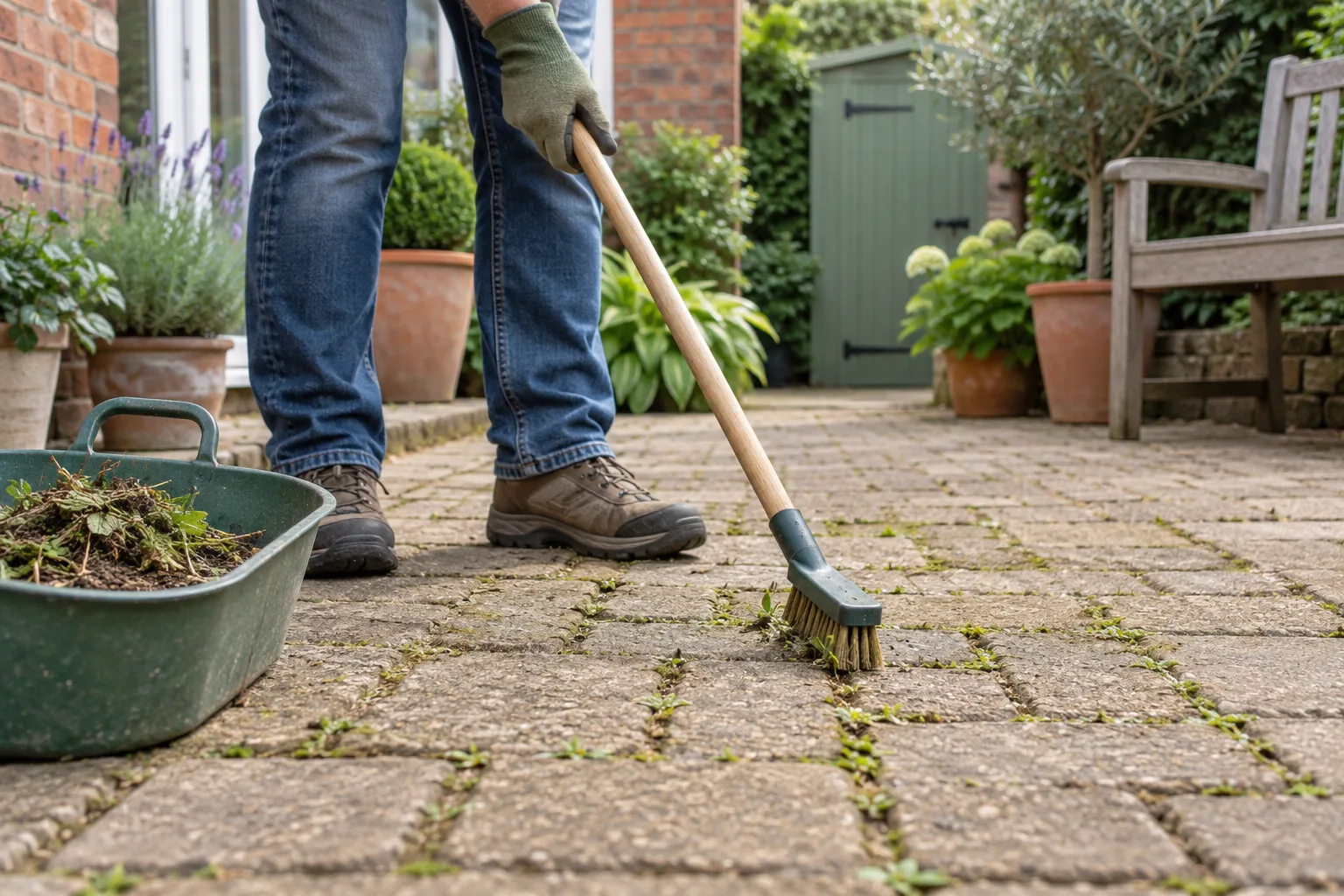
Sweep away loose leaves and grit first. A stiff broom often removes tiny seedlings before they build a substantial root system. Work along the joint rather than dragging grit across a delicate stone face. Test any metal implement in an inconspicuous place: soft stone and some finishes scratch easily. Gloves, eye protection and a steady working position matter when small fragments flick free.
In a narrow, sound joint, a hand weeding knife can lift shallow roots. A long-handled joint brush reduces bending and works well for regular maintenance. Use the tool gently enough to leave intact mortar or stable sand where it belongs. Avoid levering against slab edges or gouging out good pointing to reach a root. If the joint has already failed, record that for repair rather than pretending cleaning will restore it.
Deal with different weed roots
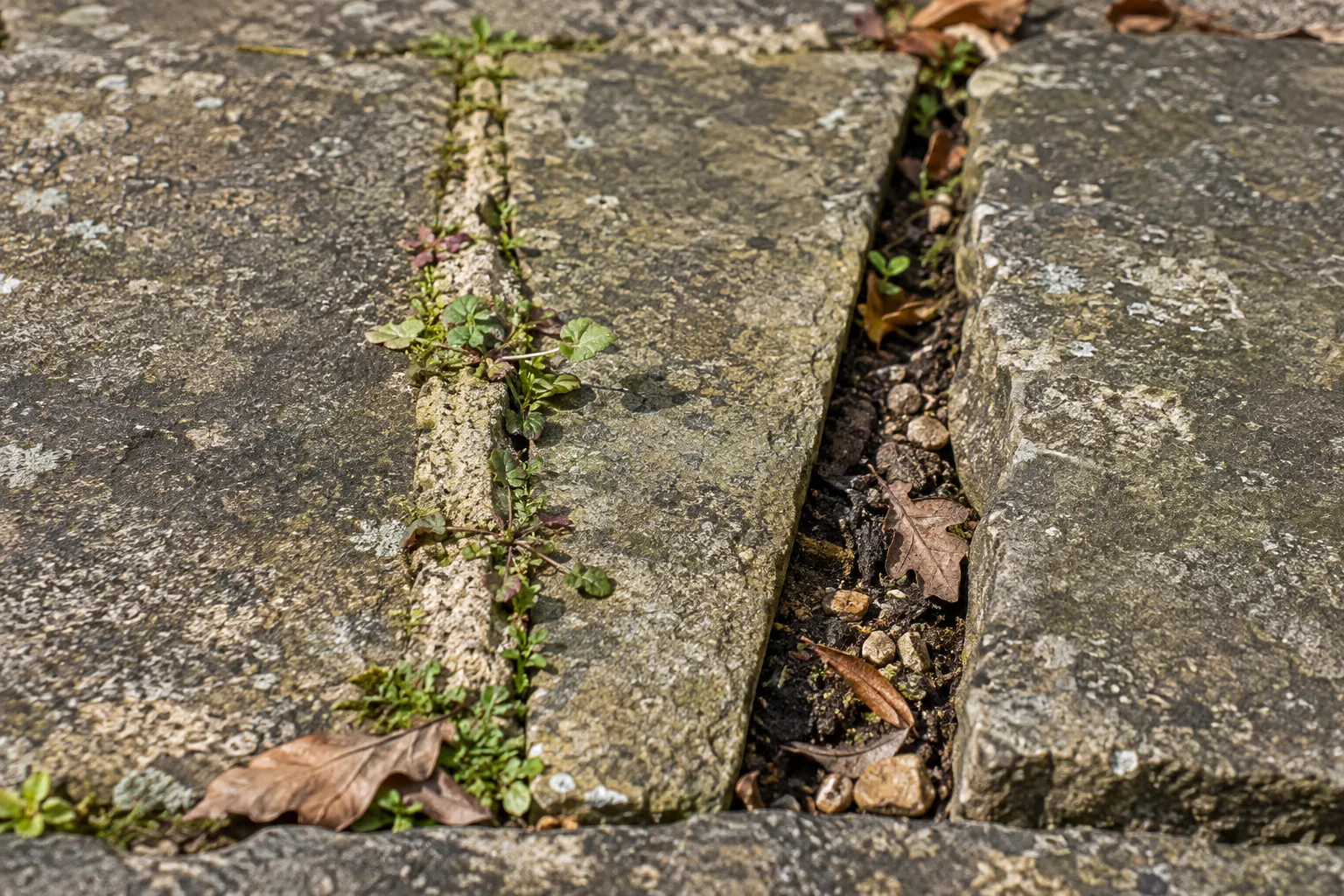
Annual seedlings are easiest to remove while small and before they set seed. Sweep or lift them after rain when the debris is slightly easier to work, but wait until the surface is safe and not slippery. Collect the plants and loose material so they do not simply wash into a drain. A monthly glance at a path often saves more effort than a hard annual clearance.
A dandelion or another deep-rooted perennial is harder to extract from a very narrow gap. A specialist weeder can help where there is room to work without damage. If the root cannot be reached, repeated removal of leaves weakens the plant over time. The RHS notes this as an option for narrow paving joints. Expect several visits rather than a perfect result after one pull.
Grass in block-paving joints may spread through shallow rooting in accumulated sand and soil. Remove the clump carefully, then inspect how much jointing material remains. Where the joint was designed to hold sand, replacement sand may be needed after cleaning. A weed growing from beneath a lifting slab may signal a wider paving defect; do not simply seal over movement or a drainage problem.
Be cautious with heat, chemicals and pressure washing
Boiling water can scald people, pets and desirable planting and may not reach perennial roots. A flame tool brings fire risk near timber fences, dry leaves, sheds and stored materials. Neither method repairs an open joint. If you consider either, weigh the hazards against simple mechanical removal and follow the tool maker’s guidance. In a compact yard with planting close to paving, targeted hand work is often easier to control.
If you consider a weedkiller, check that the product is authorised for the intended hard-surface use and follow its label exactly. The Health and Safety Executive advises considering non-chemical alternatives first and never pouring pesticide products into drains. Hard surfaces can shed water quickly, so runoff routes are relevant. Avoid improvised salt or strong vinegar treatments that may damage surrounding soil or surfaces and create no lasting repair.
Pressure washing can dislodge sand or weak pointing along with dirt. Use a suitable setting and method for the specific paving, protect nearby planting and keep dirty water away from drains where practical. Do not aim a concentrated jet at a loose joint. If cleaning exposes gaps, plan to refill or repoint them once the surface is ready. Our patio cleaning service can assess the surface and the cleaning method before work begins.
Repair gaps in a way that suits the paving
Once weeds and loose debris are removed, let the joints dry as required by the chosen product. For failed mortar pointing, remove unsound material and repoint with a compatible mix or suitable ready-made jointing compound. The RHS lists repointing as a longer-term way to reduce gaps where weeds collect. This is a repair task, not an excuse to pack every opening with the same material.
Some paving is designed to be permeable. Its joints may need clean, correctly graded aggregate so water can pass through. Filling them with impermeable mortar could change drainage and cause water to pond elsewhere. In older paving, rigid repairs can fail if the base moves. Check the original construction and manufacturer guidance, and seek a paving specialist’s advice when movement or drainage is significant.
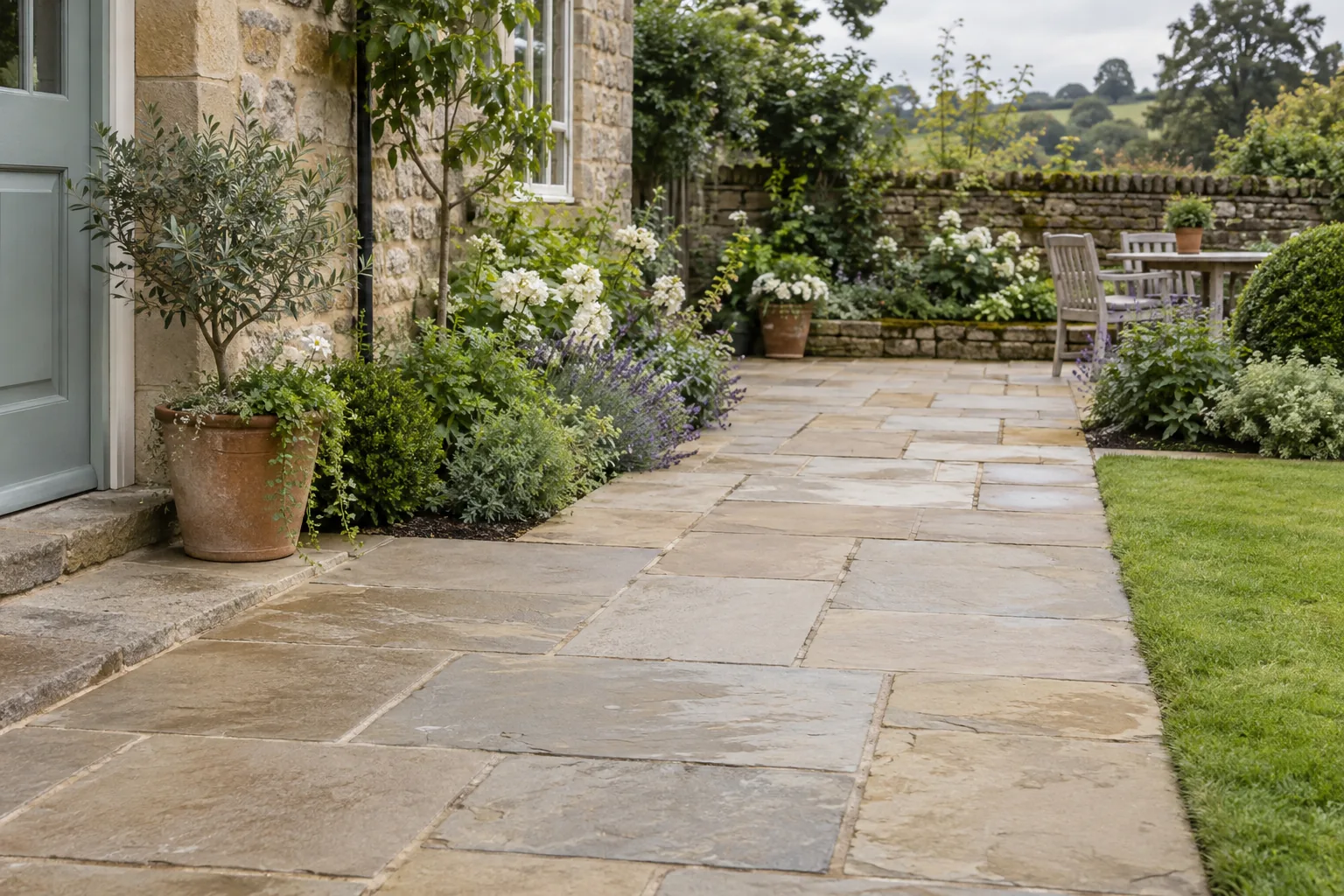
Keep joints reasonably clear after repair. Sweep leaves before they become soil, remove new seedlings promptly and avoid piling compost or potting mix against the paving edge. Where runoff carries silt from a bed onto the patio, consider edging or planting that reduces soil wash. Fixing the source of debris can reduce future weeding more than another round of scraping.
Make the maintenance routine manageable
Set a realistic interval for a quick sweep and close inspection, especially through the growing season. Note whether weeds return in the same few gaps. That pattern may point to poor jointing, a drip line, shade that retains damp debris or soil entering from the border. Keep photographs of any recurring movement or pooling so the cause is easier to discuss.
Dispose of removed weeds in a way that prevents troublesome roots and seeds returning to the garden. The RHS cautions against putting weeds with runners, taproots or seeds in a typical home compost bin, which may not heat enough to kill them. Check the local green-waste arrangements for suitable disposal. If the whole space needs a reset, our garden clean-up service can include the surrounding debris and planting areas in the scope.
Weed-free joints are maintained through small, careful interventions. Remove young growth, preserve sound jointing, repair genuine gaps with the right material and keep soil from collecting on the surface. That is a more durable plan for a Bristol path or patio than repeatedly stripping the joints and starting again.