
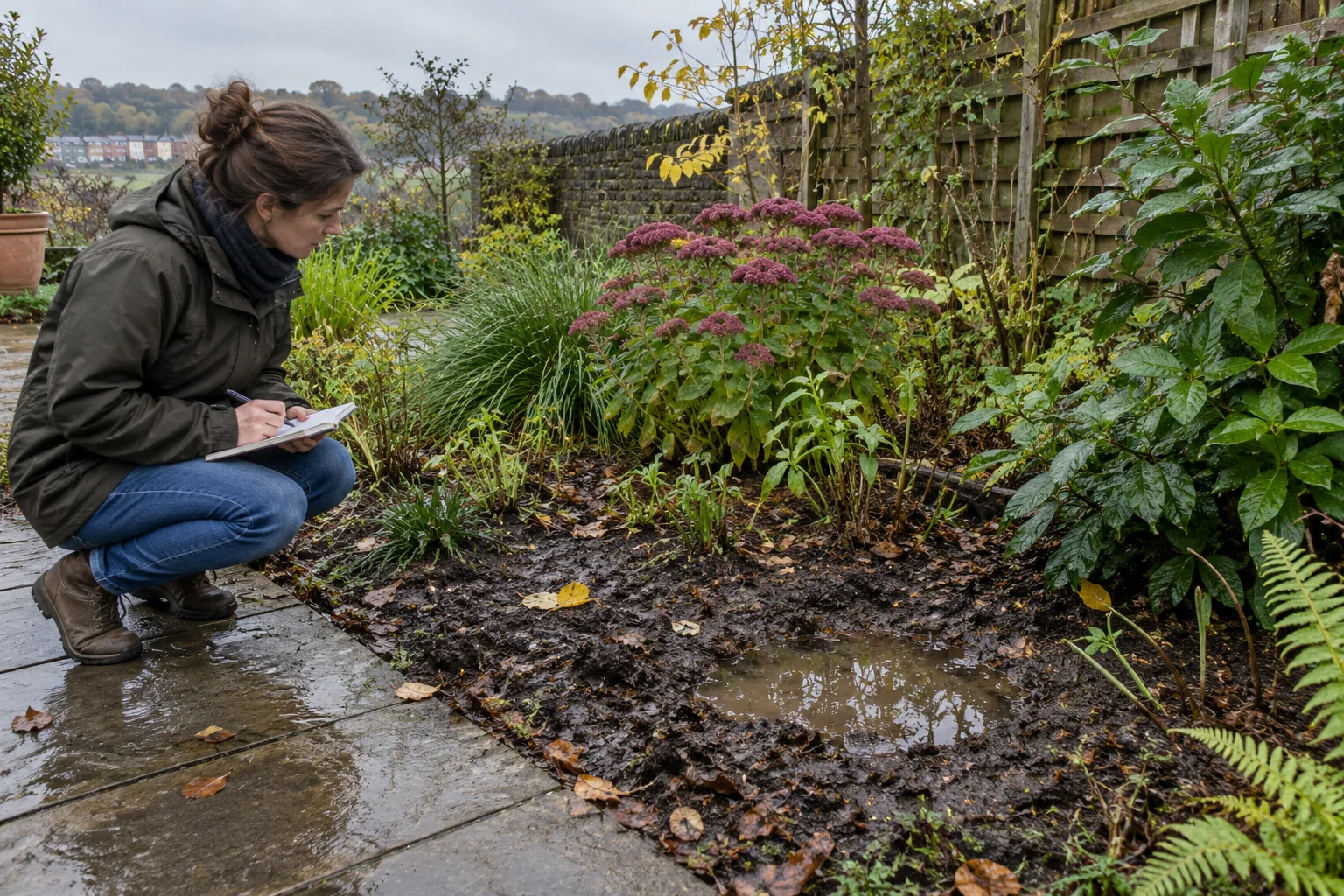
Clay soil can be wet after heavy rain and still support a healthy border. It holds water and nutrients well, but its fine particles make it slow to work when saturated. The concern is persistent standing water or roots that remain in airless soil long after ordinary rainfall. Observe the bed over several days before digging, adding material or ordering drainage work.
The Royal Horticultural Society's clay-soil guidance warns that walking on or working wet clay can damage its structure. That makes a careful, mostly visual inspection the first step. From a firm path, record where water arrives, where it gathers and how quickly the surface changes as the weather clears.
Watch the same border over time
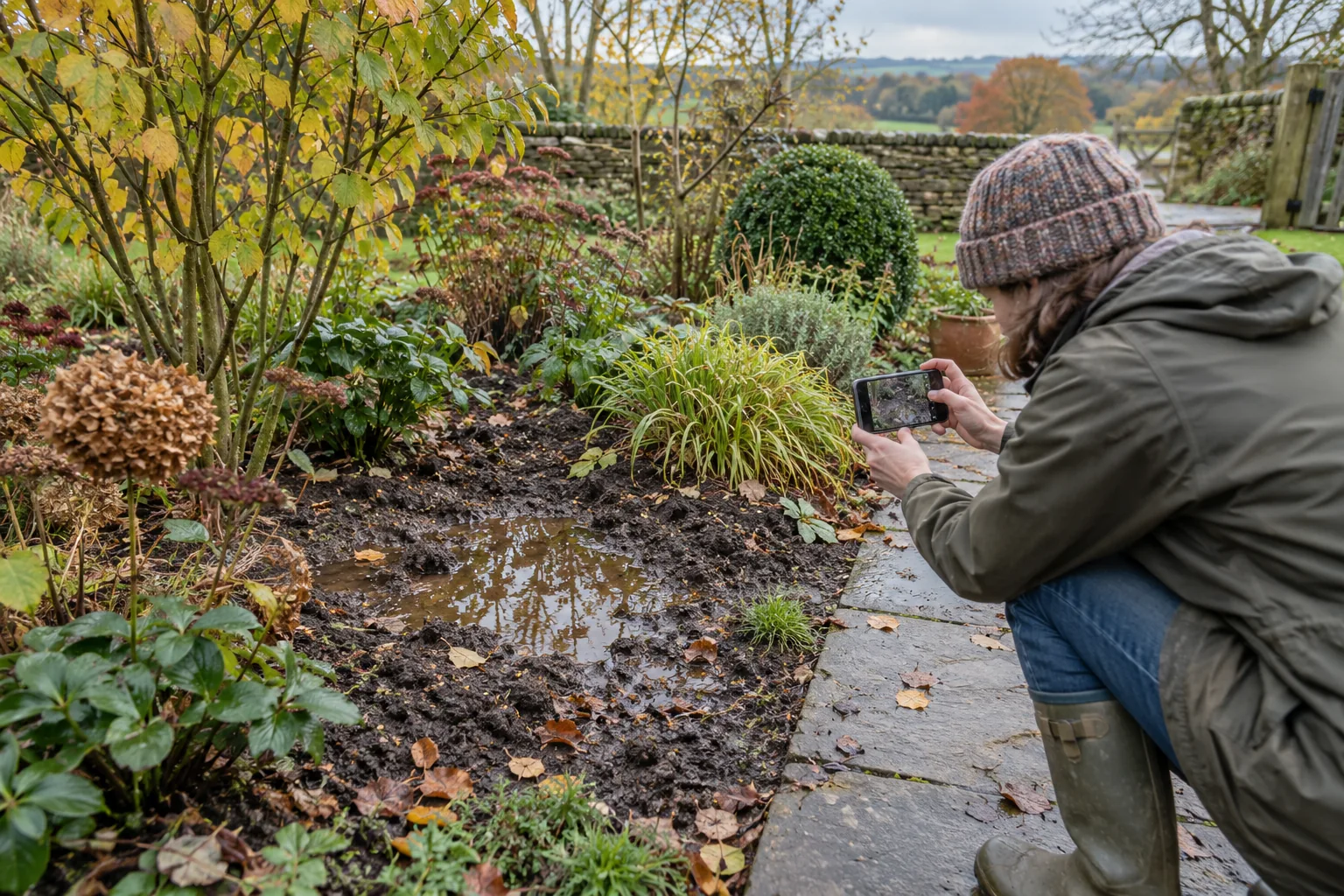
Take a photograph shortly after rain, another the next day and a third after a dry spell. Use the same viewpoint so changes are easy to compare. A temporary shallow puddle immediately after a storm may not indicate a serious problem. Water remaining in the same low spot for days, accompanied by failing plants, calls for a closer look.
Note the exact position rather than describing the whole garden as “wet”. Does water collect at the foot of a wall, where paving meets a bed or around one shrub? Is the centre of the border drier than the edge? Small differences can point to runoff from a path, a low level or a blocked outlet. A photograph with a familiar object for scale can help a professional understand the extent without making a visit during the rain.
Look at the plants as well. Yellowing, stunted growth and root problems can be associated with waterlogging, although they have other possible causes. The RHS waterlogging guide explains that prolonged saturation reduces oxygen available to roots. One discoloured leaf is not a diagnosis; several affected plants concentrated in a repeatedly flooded part of the bed are a more useful pattern.
Compare the same species in a drier part of the garden if you have one. Note whether the struggling plant was recently installed, since a new rootball can have its own watering or planting-depth problem. If the whole border stays green and vigorous despite short-lived surface water, monitor it rather than assuming it needs excavation.
Trace where the water comes from
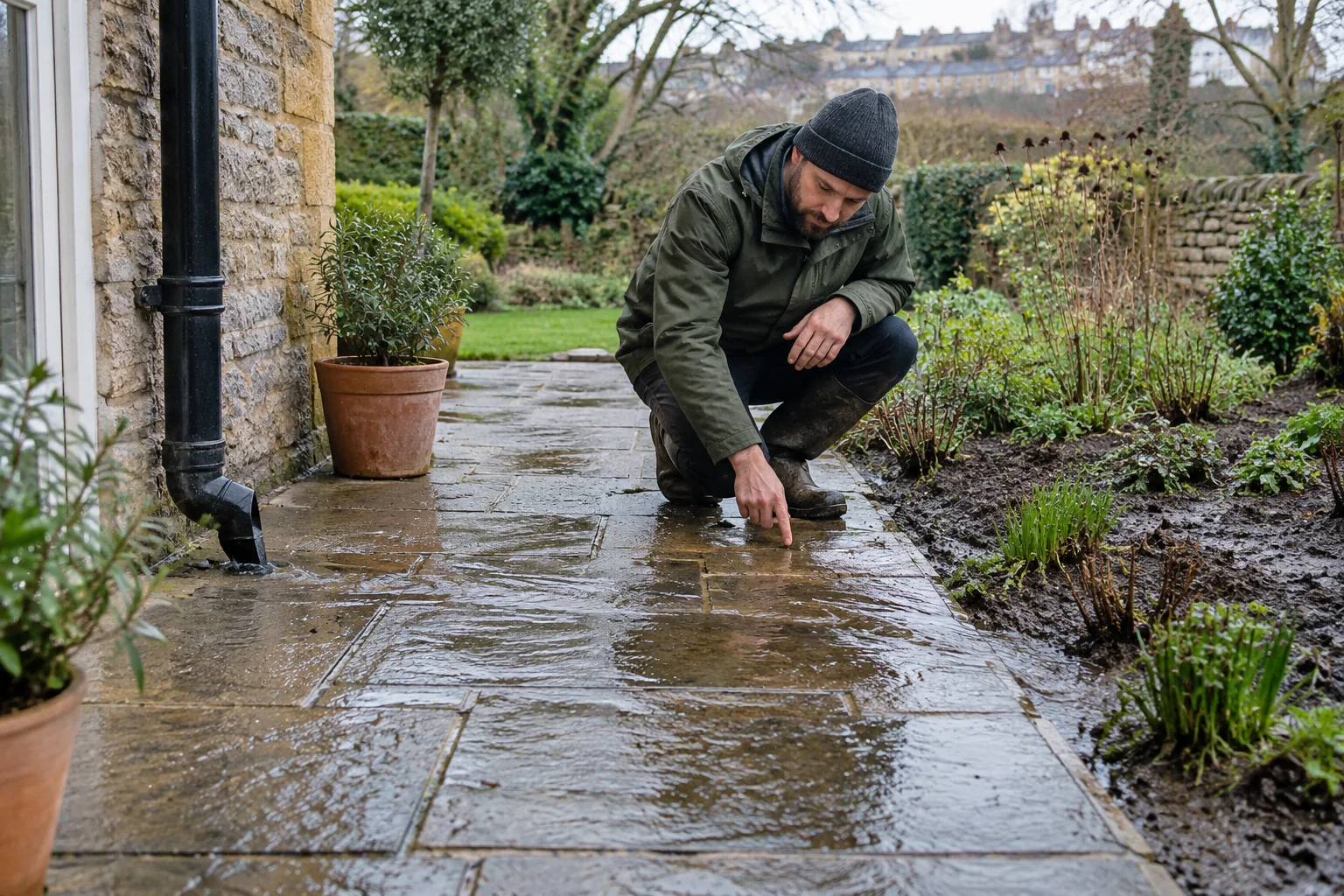
Watch the border during a normal shower from a safe position. A downpipe may discharge nearby, water may cross a patio, or a sloping lawn may send a sheet of runoff into the bed. Check visible drain covers for leaf debris without pushing it inside. If the bed only floods when a particular gully overflows, the first task may be an outlet inspection rather than changing the soil.
Consider surfaces added in recent years. More paving leaves less ground to absorb rainfall, and the remaining border may receive water from a larger area than it once did. The RHS notes this relationship in its waterlogging guidance. Do not assume the clay itself has suddenly become worse if the patio or roof drainage has changed.
Mark the direction of flow on a simple garden sketch. Include downpipes, hard surfaces, slopes and the deepest puddle. This separates a surface-runoff issue from slow movement through the soil. Our earlier guide to compaction versus poor drainage provides a broader first check; this article focuses on what to do when the affected bed is known to be clay-rich.
Protect the clay while it is wet
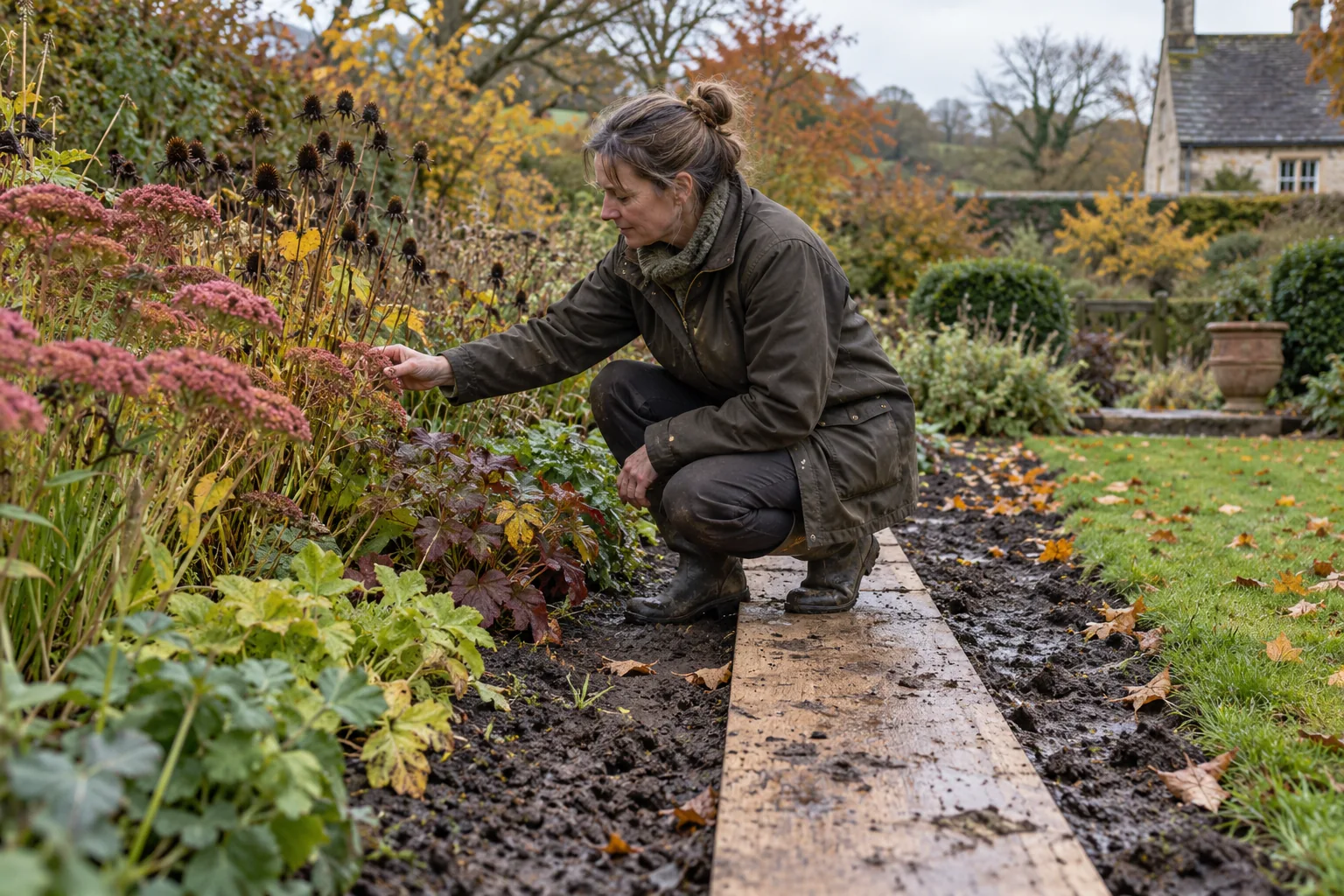
Avoid standing in the border to test every puddle. Footprints press wet clay particles together and can make the problem worse. Use an existing path or a suitable board if essential access is needed. Delay digging, hoeing or planting until a squeezed handful of soil can be worked without smearing into a sticky mass. The RHS notes that clay may remain unworkable for a long period after winter rain.
Do not try to solve a wet patch by tipping a bag of sand into one planting hole. A small isolated amendment may not change where water can go and could leave the new rootball sitting in a sump. Equally, a deep hole with gravel at the bottom does not create an outlet by itself. The drainage route must connect to a place where water can leave, and any construction needs appropriate assessment.
Keep exposed soil covered where suitable, using established planting or an appropriate organic surface layer when the bed is ready. Our guide to autumn mulch decisions explains why a wet bed should not automatically receive a thick layer immediately. Avoid burying plant crowns or trapping a visibly saturated surface beneath a cosmetic finish.
Match the solution to the pattern
If water is arriving from a blocked gully or misdirected downpipe, repair that source first. If an area stays wet because the bed is low, a change in levels or a carefully designed raised bed may help plants whose roots need better aeration. The RHS guide to raised beds advises avoiding construction when soil is very wet and planning the bed for the actual ground conditions.
Where water has a suitable outlet, a drainage system may be possible, but it is disruptive and needs careful design. The RHS drainage installation guide notes that drainage work is difficult in wet soil and that pipes and cables must be considered before trenching. If there is nowhere for water to go, raised planting or a wet-soil planting scheme may be more realistic than an isolated trench.
Plant choice can be part of the response. Some plants tolerate moist ground better than others. A border with persistent winter wetness may need species matched to that condition instead of repeated replacement of plants that require free drainage. Do not decide from one storm: use the recorded pattern across seasons and note how the site behaves in summer as well.
Plan improvements when the ground is workable
Organic matter can improve the structure of suitable clay soil, but timing matters. Work it in only when the ground is dry enough to handle, or use a surface approach where appropriate. Avoid repeated cultivation that destroys soil structure. The garden maintenance service can help assess recurring bed care, while a more serious structural drainage issue may need a specialist design.
Keep the record simple: rainfall, photograph, time until puddles disappear, affected plants and any visible runoff source. It gives a useful basis for deciding whether the border needs a changed water route, different planting, a raised area or just patience after a very wet spell. The first successful intervention may be leaving the wet clay alone until it can be worked without damage.