

Finding a bag of bulbs at the end of October does not mean every planting window has closed. Tulips are commonly planted in November, while other spring-flowering bulbs would ideally have gone into the ground earlier. The right decision depends on the type, the condition of the bulbs and whether the soil or container will drain through winter. Plant sound bulbs promptly rather than storing them indefinitely in hope of a perfect day.
The Royal Horticultural Society's bulb-planting guide recommends daffodils, crocuses and hyacinths preferably by the end of September, hardy summer-flowering bulbs such as alliums in September and October, and tulips in November. These are preferred windows, not a guarantee that a late bulb will fail. They help set sensible expectations for next spring.
Give tulips their November window
Tulips are the straightforward choice for a planned late-autumn display. Choose firm, healthy bulbs and a position with enough light and good drainage. In a small Bristol garden, a group in a border or a generous container often has more visual effect than single bulbs scattered widely. Check the cultivar's height and flowering period if you want a sequence rather than one short burst.
The RHS tulip guide places dry-bulb planting in autumn, including November. Tulips generally prefer a free-draining site; a clay bed that remains waterlogged may be a poor choice. Do not plant into a puddle merely because the month is right. A container with open drainage holes can offer more control over the growing medium and location.
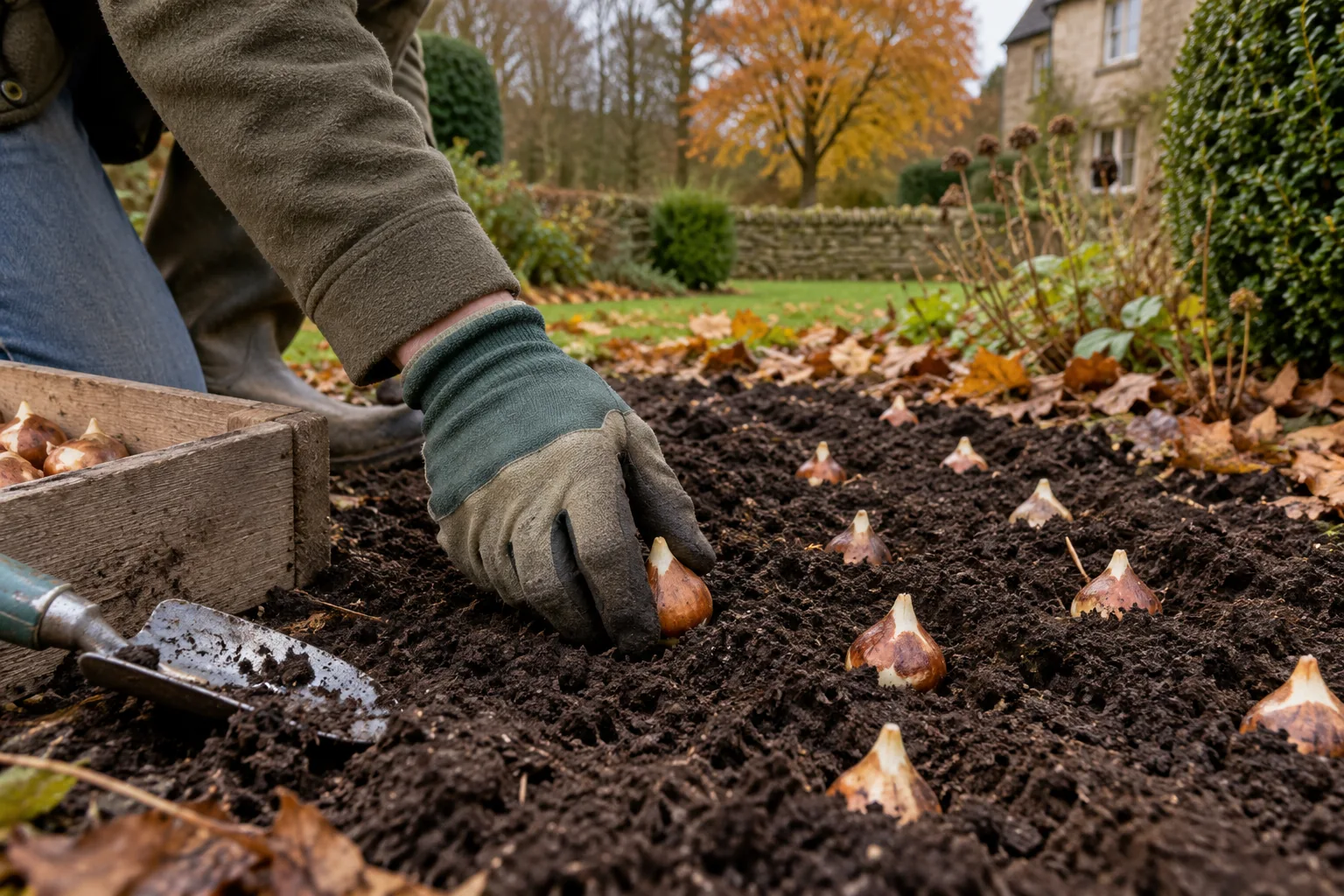
Set bulbs at the depth recommended for the species and pack. The general RHS rule is roughly three times the bulb's depth, with enough space that bulbs do not touch. Position the pointed end upwards where it is clear; some bulbs are less obvious, so use the supplier's diagram. Cover and firm the soil gently, then water if needed to settle it without saturating an already wet bed.
Treat late daffodils and crocuses as a catch-up job
Daffodils, crocuses and hyacinths are best started earlier in autumn. If sound bulbs remain in a bag in late October, planting them promptly in suitable conditions is generally more useful than leaving them to deteriorate in storage. Their first season may be less impressive than expected, particularly after prolonged storage or very late planting. Label the area so emerging shoots are not disturbed in spring.
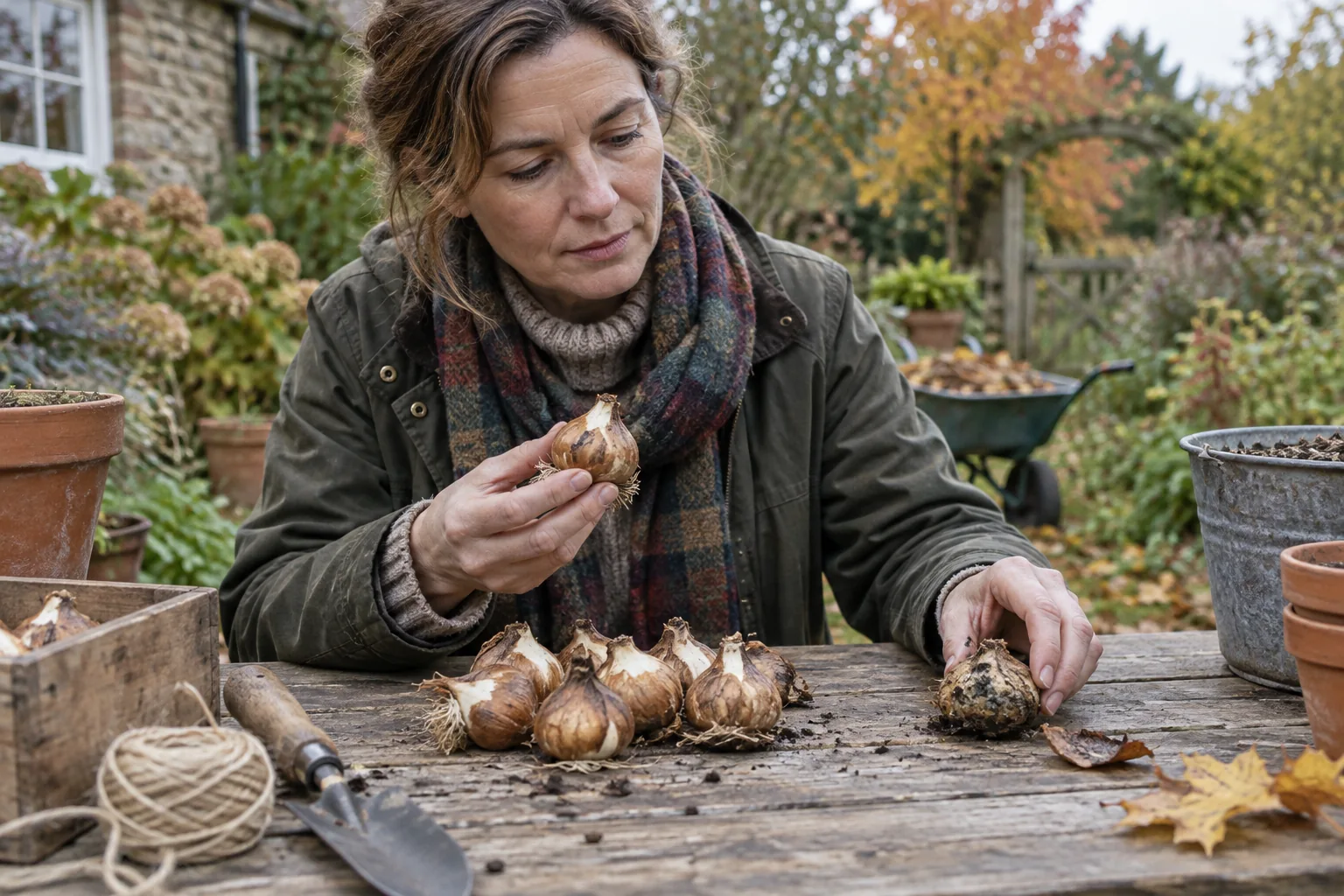
Sort the bulbs before digging. Discard any that are soft, mouldy throughout or badly damaged; keep the firm, healthy ones. A dry papery outer skin is normal. If a bulb's base is rotten, putting it beside healthy bulbs is unlikely to help. Do not mix varieties whose labels you have lost into a formal scheme that depends on exact colours and heights.
Some other bulbs have more specific timing. The RHS puts hardy summer-flowering alliums and lilies mainly in September and October, so a late October planting may still fall near their normal window. Autumn-flowering bulbs such as nerines were due in by late summer and are not interchangeable with spring-flowering bulbs. Check the species rather than buying a mixed “autumn bulb” pack and assuming one date fits all.
Test the planting ground first
Choose a spot that is workable, not waterlogged or frozen. Heavy clay can hold winter rain around dormant bulbs. The RHS clay-soil guidance warns against working it when wet because its structure can be damaged. Our guide to checking a clay border after rain shows how to identify persistent wetness before planting.
Avoid creating a small deep hole filled with loose compost in an otherwise saturated clay bed. It may act as a sump, leaving the bulb in wetter conditions than the surface suggests. If the site cannot be planted without smearing the soil, use a suitable container or wait for a workable spell. A raised bed or different planting area may be a longer-term answer where water routinely stands.
Check existing plants and underground services before digging. A border may already contain dormant perennials and spring bulbs. Use a hand trowel near established crowns and leave appropriate space. Mark new bulb groups on a sketch or photograph, particularly if the garden receives maintenance visits over winter. The garden maintenance service can help integrate bulb planting with existing border care.
Use containers with reliable drainage
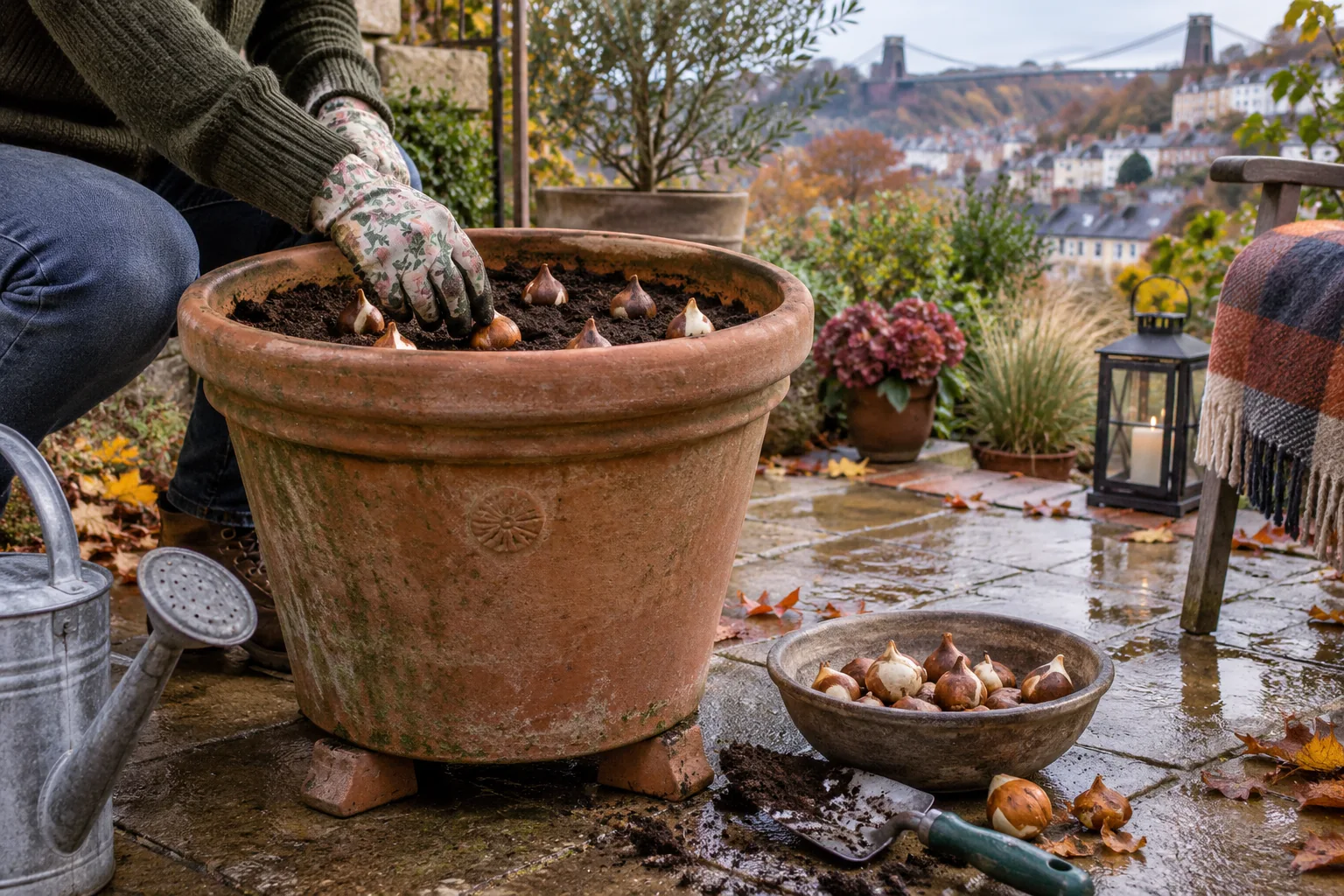
Pots are useful where the border is too wet or the display needs to be moved. Choose a container large enough for the bulbs and with drainage holes that remain open on its standing surface. Use a suitable growing medium and follow planting-depth guidance. A decorative cover pot with no outlet can hold winter rain around the inner pot, so check it after showers.
Raise containers on stable pot feet when necessary to keep the holes clear. Our guide to preparing pots for winter rain explains how to check outlets, feet and saucers. Place the pot where it receives the light the bulbs need and where runoff will not make a path slippery. Protect it from being knocked over rather than crowding it into a dark corner.
Water after planting if the compost is dry, then monitor it through winter. Rain may supply enough moisture outdoors; a pot under eaves may need occasional attention. Do not keep the medium permanently saturated. If shoots appear during a mild spell, leave them to develop and avoid cutting them off as “too early”.
Plan next autumn while you plant this one
Record what went in, where and when. If daffodils flower weakly after late planting, note the timing rather than immediately blaming the variety. You can order or buy those bulbs earlier next year and leave November for tulips. A small garden benefits from a few deliberate groups whose flowering times overlap, rather than a large mix planted at random.
Think about what will cover the soil after flowering. Bulb foliage needs time to feed the bulb before it dies back naturally, so place groups where yellowing leaves will be tolerated or gradually screened by later perennials. Do not tie or cut green leaves simply to neaten the bed. In a container, plan what will happen after the spring display without assuming every tulip will return at the same strength next year.
The practical answer is nuanced: tulips are well suited to November; other sound spring bulbs can be planted late as a catch-up with modest expectations; and some types have an earlier, more specific window. Whatever the label says, wet soil is a reason to change the location or timing. Healthy bulbs, sound drainage and a clear record give the best chance of a useful spring display.