
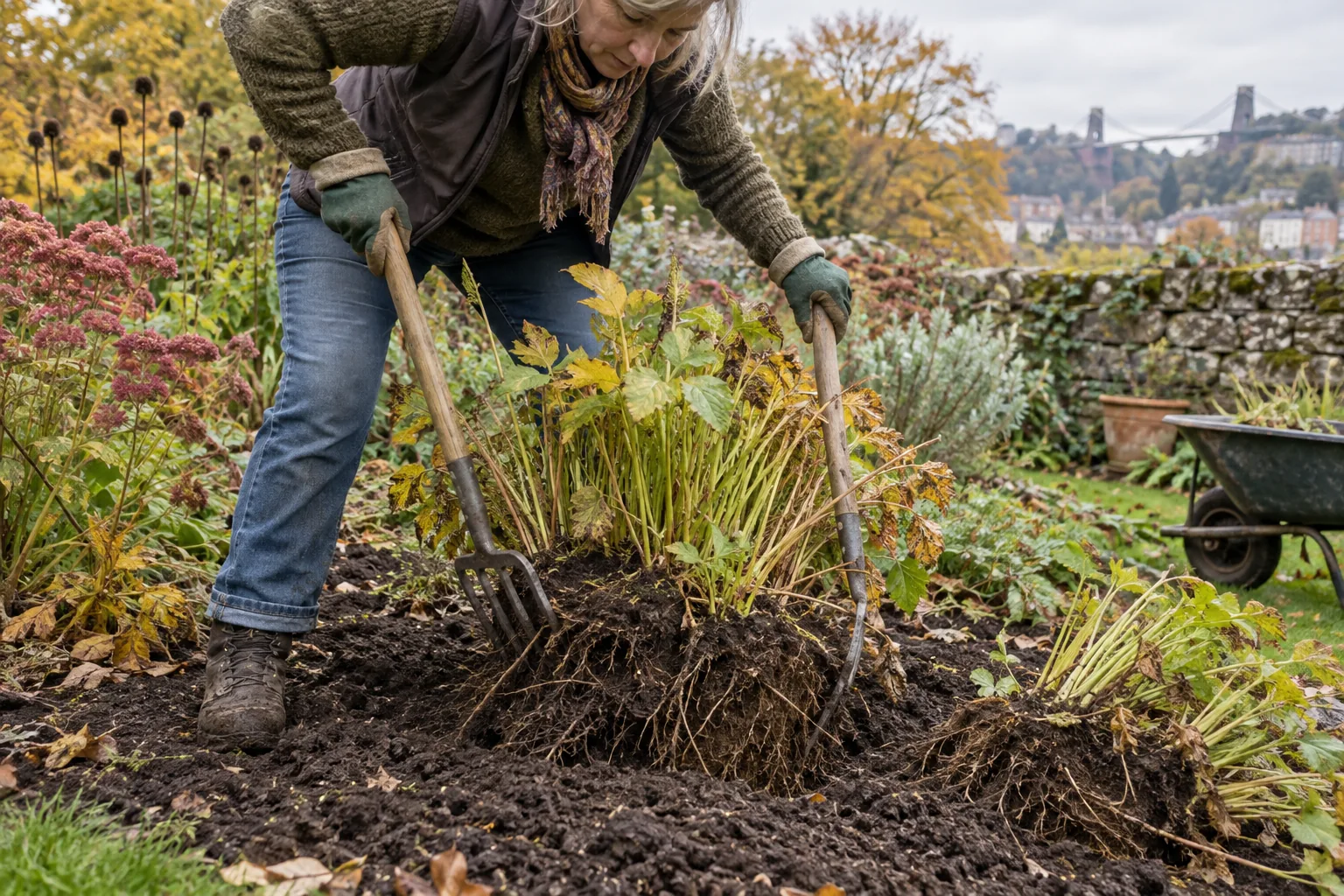
An established perennial can become crowded in the middle while its edges still grow strongly. Dividing a clump gives vigorous pieces room to develop and lets you fill another part of the garden without buying new plants. Autumn can be a good time for summer-flowering perennials, provided the soil is workable and the divisions have time to settle before prolonged cold and wet weather.
It is not a job for every perennial or every October day. The Royal Horticultural Society's guidance on dividing perennials places summer-flowering plants in a spring or autumn window, when the ground is dry enough to handle. It advises waiting until spring in a wet autumn, particularly for less hardy plants. That simple soil test matters more than a fixed calendar date in a Bristol garden.
Choose plants that form a clear clump
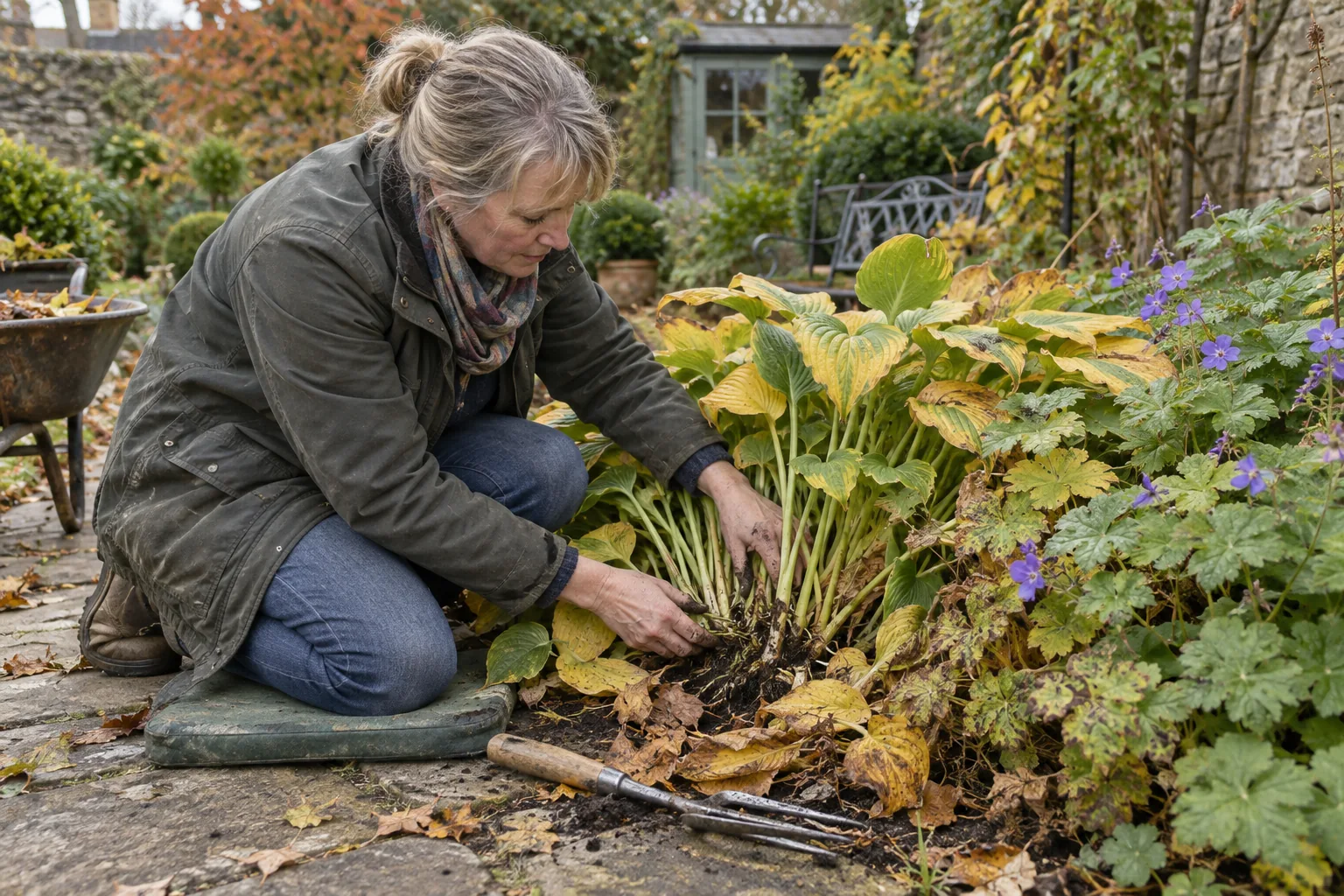
Start with a healthy plant that has several growing points rather than a single woody stem. Hardy geraniums, daylilies, hostas and some asters are familiar examples of clump-forming perennials that may be divided. Summer-flowering phlox and rudbeckia can also be candidates once growth has slowed. Identify the plant first, because similarly shaped foliage may belong to a bulb, shrub or plant with a different preferred season.
The RHS lists a wide range of clump-forming perennials, including bergenia, crocosmia, epimedium, primula and ornamental grasses, as possible subjects for division. That list describes the technique's potential, not a command to divide all of them in October. Check the plant's flowering season, hardiness and current condition. A small, recently planted clump usually benefits more from undisturbed establishment than from being multiplied.
Look for a practical reason to divide: a bare centre, reduced flowering, roots pushing up, or a clump that has outgrown its allotted space. A plant can also be split to make matching groups elsewhere in a border. If it is thriving, still has room and gives you the display you want, leave it alone. Dividing too frequently creates needless disturbance and may delay the next season's flowers.
Know when autumn is the wrong time
Spring-flowering irises are a useful exception to a broad autumn rule. The RHS advises dividing many rhizomatous irises in mid to late summer after flowering, when new roots form. Clump-forming irises may have an autumn or spring window, so the exact type matters. If the label is missing, identify the plant before lifting it merely because nearby perennials are ready.
Some plants resent disturbance or recover slowly. A peony that flowers well generally needs no routine autumn split. Dieramas are another example the RHS describes as taking time to flower again after division. Tender perennials may struggle to establish in cooling, wet ground and are often better left until spring. Plants that are flowering, stressed by drought or showing disease should not be treated as easy propagation material.
Test the soil before choosing a date. Squeeze a small handful from the root zone. If it smears and sticks heavily to the spade, wait for a drier spell or for spring. Lifting a clump from saturated ground compacts the surrounding bed, and the new pieces may sit wet. Our guide to distinguishing compaction from poor drainage can help if a border remains waterlogged after ordinary rain.
Prepare the new space first
Decide where every division will go before you lift the parent plant. Remove perennial weeds from the receiving area, check the light and make planting holes wide enough for the roots. A shady hosta should not be moved to a baking south-facing strip just because there is space. A vigorous geranium may need more room than its small division initially suggests.
Improve poor soil according to its actual condition. Garden compost can help a suitable border, but adding a pocket of rich material to a persistently wet hole does not fix drainage. Avoid burying a plant's crown beneath a thick layer of compost. If the receiving bed is not ready, pot sound divisions temporarily in appropriate compost and keep them watered and sheltered while you choose a better site.
Plan access so that you are not standing on wet beds while working. Put a board down if needed and keep tools, labels and water nearby. Mark the original planting depth before lifting. For a border with many plants, take a quick photograph first; dormant neighbours and bulbs are easy to damage when their foliage has disappeared. Our garden maintenance service can help plan a larger border refresh where plant identification and spacing need attention.
Lift and divide with viable roots
Water the plant beforehand only if the soil is dry; do not soak an already damp bed. Insert a garden fork beyond the edge of the clump and work around it, easing the rootball up with as many roots intact as practical. Shake or brush off enough soil to see the structure. Remove obvious dead, damaged or diseased material, and check for persistent weed roots threaded through the clump.
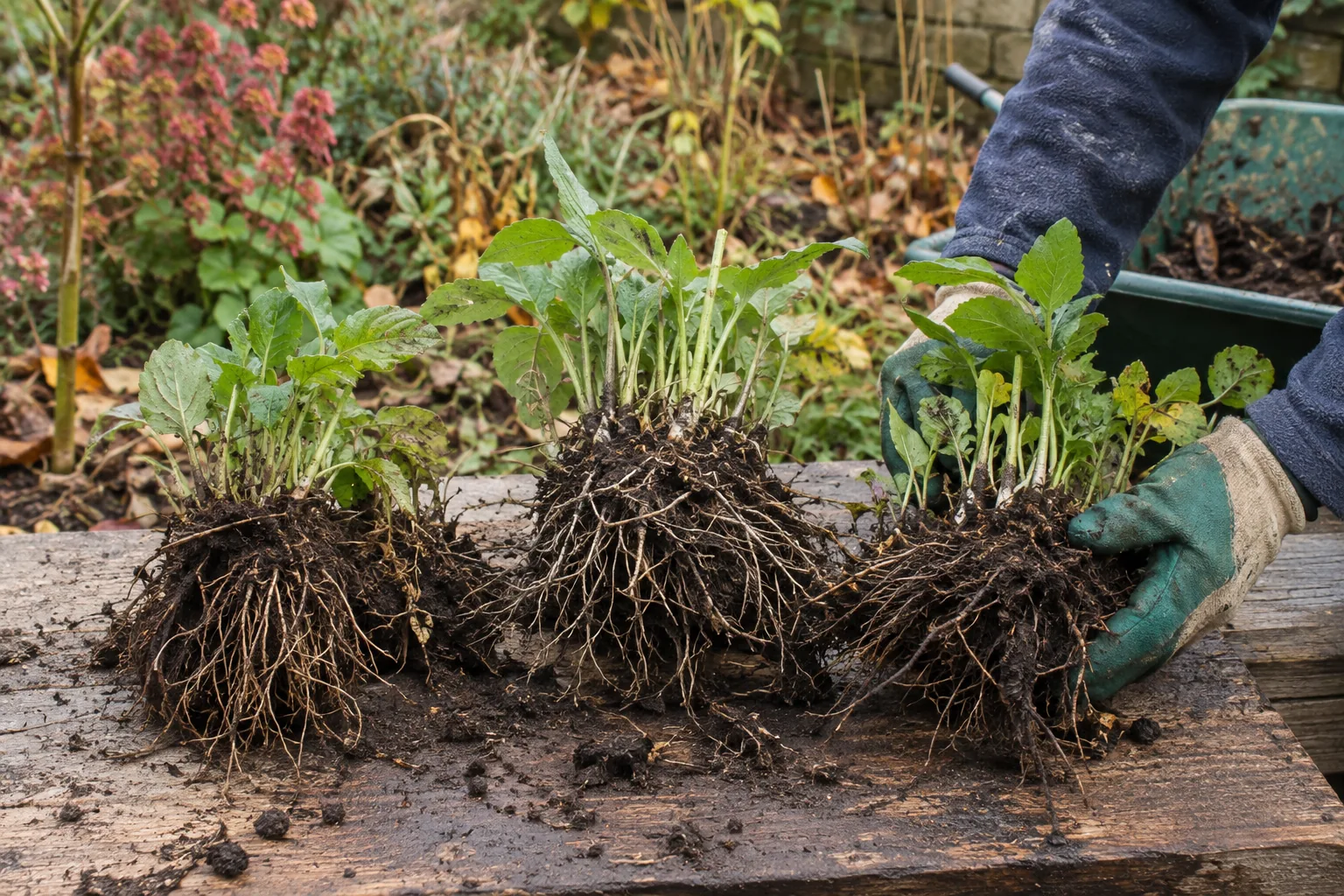
Small fibrous clumps may pull apart by hand. A larger, firm clump can be separated with two forks placed back to back, or cut with a clean spade where appropriate. Each piece needs healthy roots and at least one viable growing point; tiny root fragments with no visible shoot are less reliable. Keep the useful outer portions and discard a dead centre rather than replanting it for the sake of a bigger-looking specimen.
Do not force a tight woody crown apart if it will not separate cleanly. Reassess the plant and its method. Large divisions usually re-establish more reliably than many very small pieces, and fewer substantial plants often make a stronger border. Keep exposed roots out of drying wind and direct sun while you work. If you cannot replant promptly, cover them or pot them so they remain moist.
Replant at the right depth
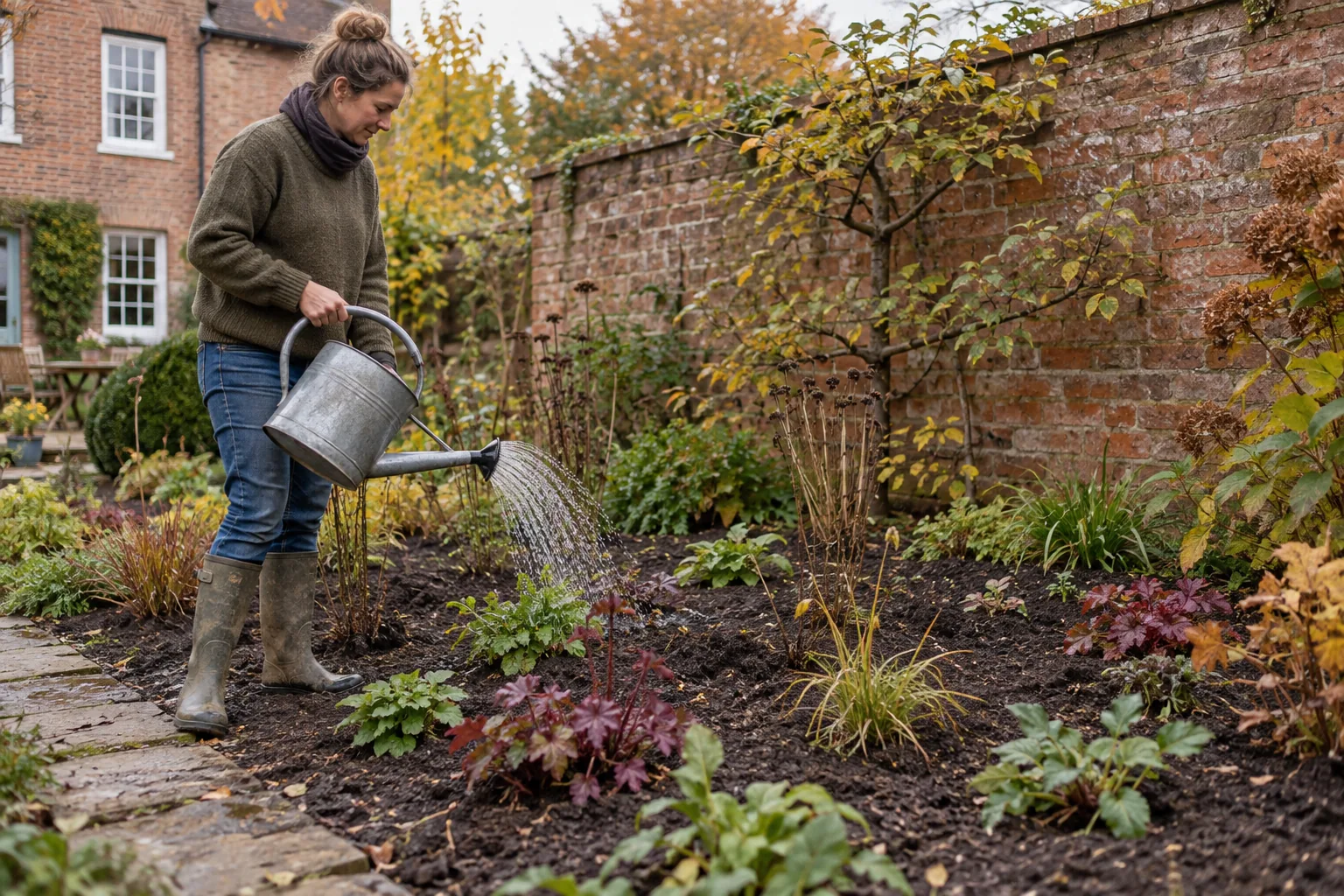
Set each division at roughly the depth it grew before, with the crown at the appropriate soil level for that plant. Spread roots into the hole rather than bending them into a small pocket. Firm the soil gently to remove large air gaps, water to settle it and label the plant. Leave enough room for mature growth; an empty-looking gap in October may be exactly what the border needs next summer.
Check the divisions after a week and after heavy rain. Water during a dry spell, but do not keep already wet soil saturated. A light, suitable mulch around the plants can help protect the surface, provided it stays clear of crowns and stems. Our autumn mulching guide explains when mulch helps and when it should wait.
Let conditions decide the final timing
Autumn division works best as a selective job. Choose an identified, healthy summer-flowering clump that actually needs renewal; prepare its new place; lift and split it while the soil is workable; then replant substantial pieces promptly. Leave spring-flowering irises for their preferred window and postpone work when the ground is saturated. A well-timed division should leave the border healthier, not simply create more plants on a wet afternoon.