
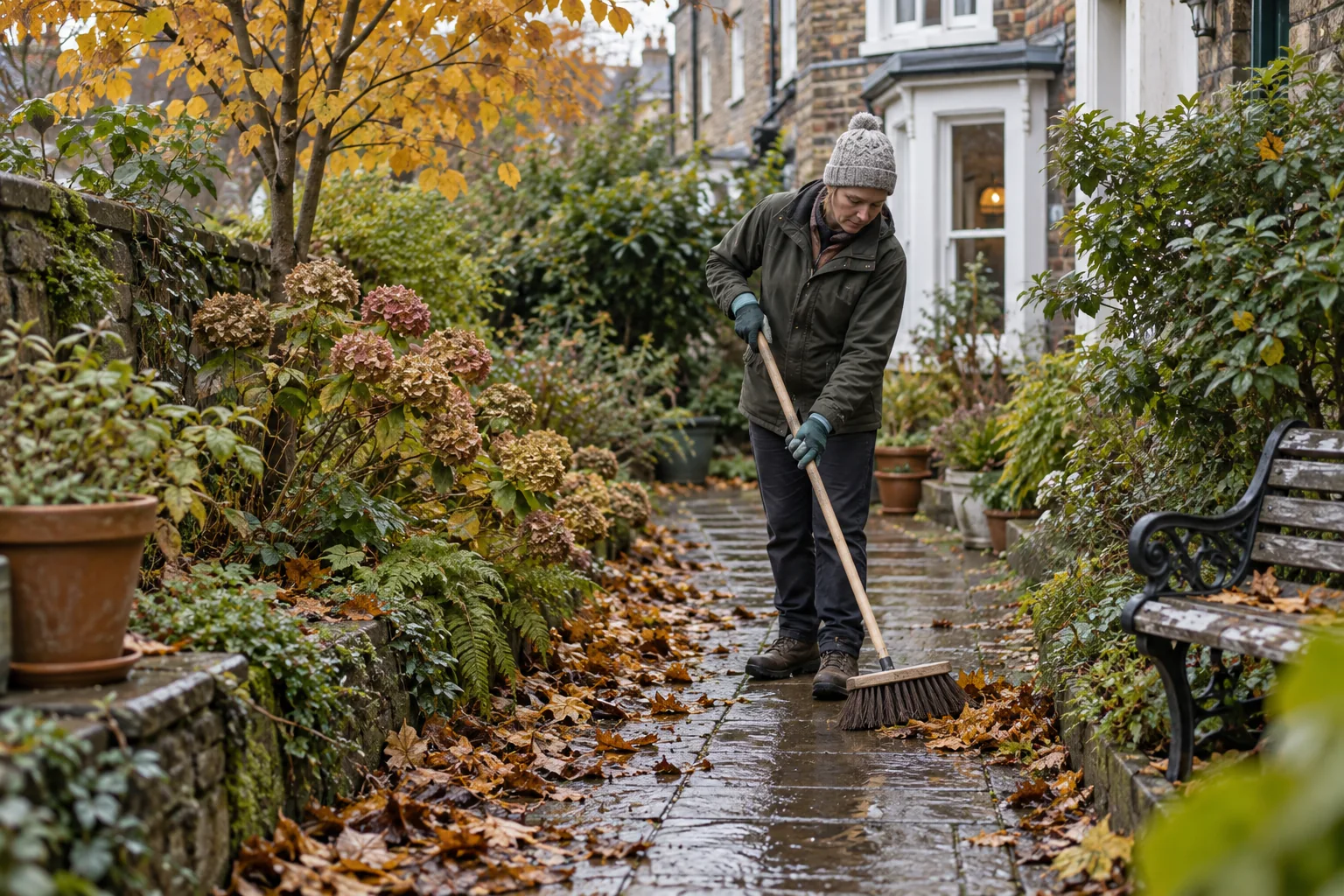
A damp path can become treacherous long before it looks dirty. Fallen leaves conceal steps, and a thin green film may be almost invisible on stone or concrete until somebody slips. The safest cleaning method depends on the surface, the growth on it and where the water will go. Start with a close look, then use the gentlest method that gives the walking route reliable grip.
The Royal Horticultural Society's guide to algae and moss on hard surfaces notes that these growths commonly occur on paths and paving. It recommends controlling them where people walk, while recognising that growth away from access routes need not be removed. That is a useful distinction in a Bristol garden: the aim is a safe path, not a sterile surface everywhere.
Identify the surface and the hazard
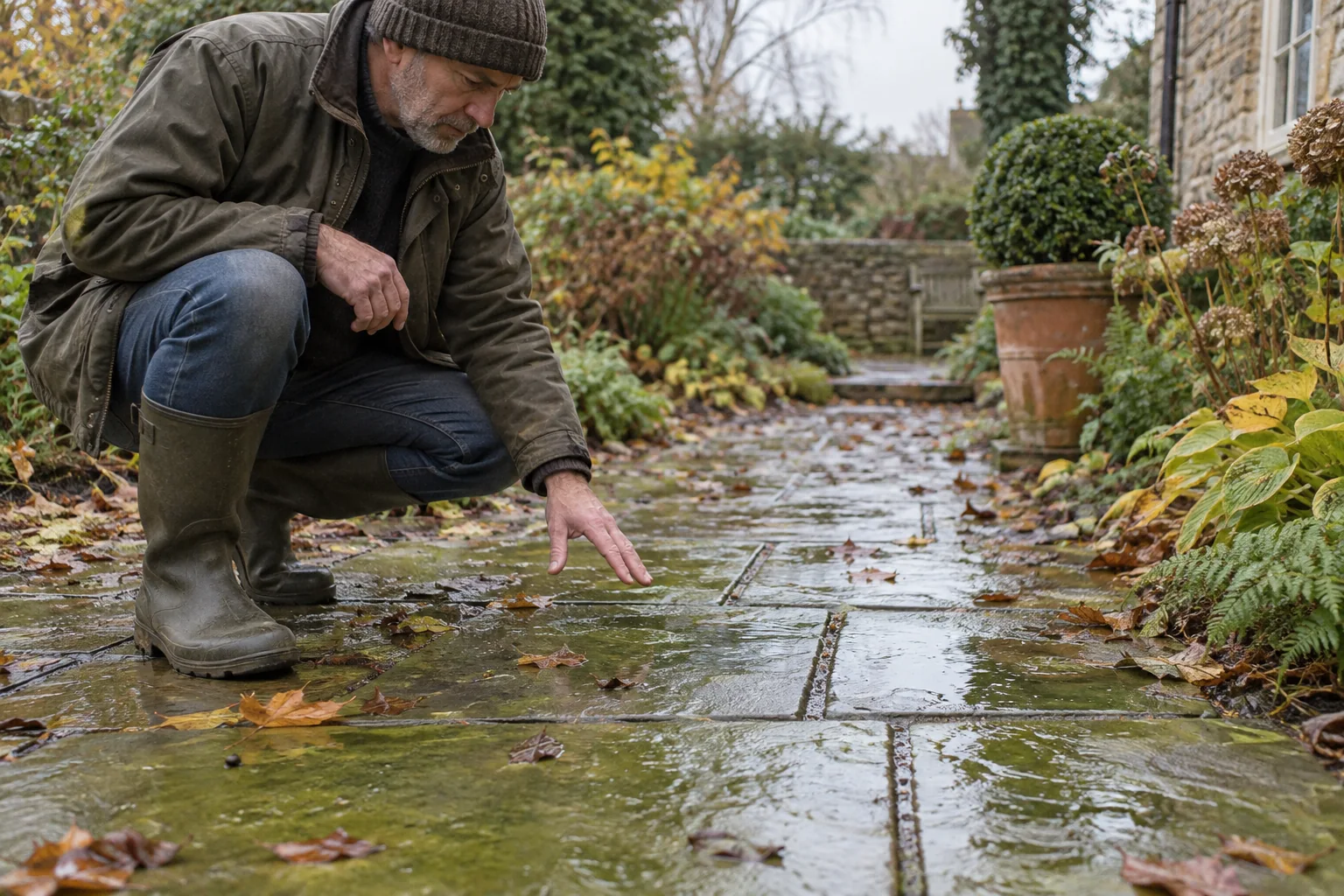
Walk the route in daylight without stepping onto a visibly slick area. Note where leaves collect, where water stands after rain and whether the surface is level. Look for loose slabs, open joints, cracked steps and edges hidden by planting. A loose slab needs repair; washing its top will not make it stable. Photograph defects before cleaning.
Check what the paving is made of. Concrete slabs, natural stone, clay brick and timber decking respond differently to scrubbing and water pressure. Older stone may have a weathered surface or fragile pointing. If the material is uncertain, test a small, inconspicuous area first. A stiff brush that is suitable for robust concrete may mark softer stone. Avoid scraping blindly along joints with a metal tool.
Separate loose debris from attached growth. Dry or damp leaves can usually be swept away. Algae tends to form a green film, especially in shade; moss grows in cushions and between joints. Lichens may form flat patches attached to the surface. These need different amounts of effort, and a patch that is merely discoloured does not always indicate a slipping hazard.
Clear leaves before adding water
Start at the highest or driest end and sweep leaves, twigs and grit into a container. Work away from drains rather than pushing material towards them. Clear steps and the main route to bins or the gate first. If the path is very slick, keep a firm footing on an adjacent safe surface and use a long-handled brush rather than reaching across the slippery area.
Sort the debris after sweeping. Clean leaves can be kept for leafmould or suitable beds; mixed grit, litter and diseased material may need another route. Our guide to using autumn leaves in a small garden explains where leaf cover is helpful. Do not put a new heap where it will blow back onto the path or obstruct a drain.
Once loose material is gone, reassess the surface. A path that was slippery mainly because of wet leaves may need only regular sweeping. If it still has a slimy film, brushing the walked-on area is a sensible next step. Removing the immediate hazard before considering stronger cleaning also makes it easier to see damaged joints and uneven slabs.
Brush growth with the paving in mind
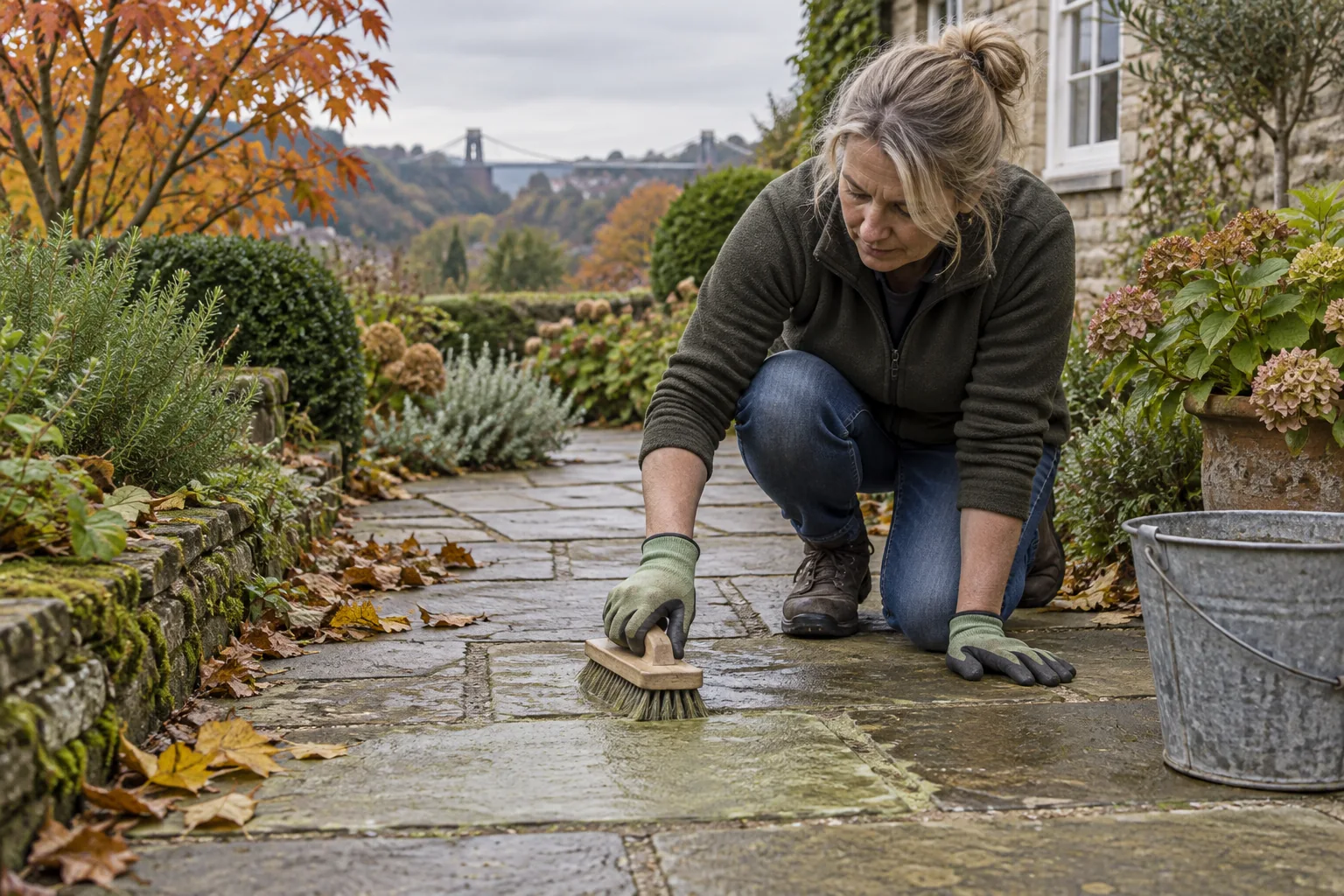
Use a brush suited to the surface, with a small test patch where needed. Work in short sections and keep the loosened growth out of planting beds and gullies. A narrow hand brush can lift moss from sound joints, but do not gouge out mortar or sand merely to make the line look clean. If pointing comes away with light brushing, stop and arrange a repair assessment.
The RHS describes regular brushing as a non-chemical way to prevent growth from taking hold. This is especially useful on a path shaded by a boundary or tree. It does not eliminate the damp conditions that favour algae, so plan to inspect the route again after wet weather rather than treating one clean as permanent.
Be careful with cleaning products. Check the product label against the exact paving material and nearby planting, and follow its directions for dilution, contact time and runoff. Do not mix products or assume a household cleaner is suitable outdoors. For a short domestic path, physical removal may be enough, particularly where water could carry residue into a bed, drain or pond.
Treat pressure washing as a considered option
A pressure washer can remove attached growth quickly, but it is easy to make the wrong choice for a fragile surface. A concentrated jet may disturb loose pointing or jointing sand, expose an already weak edge or splash dirty water over walls and plants. Test a discreet area with a suitable setting and distance, and follow the surface manufacturer's guidance. If joints or slabs are already failing, repair them before aggressive cleaning.
Consider runoff as well as pressure. Extra water on a path that drains poorly may worsen damp around nearby structures. The RHS warns that pressure washing can be a temporary fix when the underlying wet conditions remain and advises eye protection during use. A small path with sound paving may respond well; a heavily cracked or poorly drained one needs a broader decision.
Our patio cleaning service can help assess a larger paved area or persistent growth. Describe the material and any loose joints when asking for a quote, and send photographs in daylight. This helps distinguish straightforward cleaning from repair or drainage work.
Check why the path stays wet
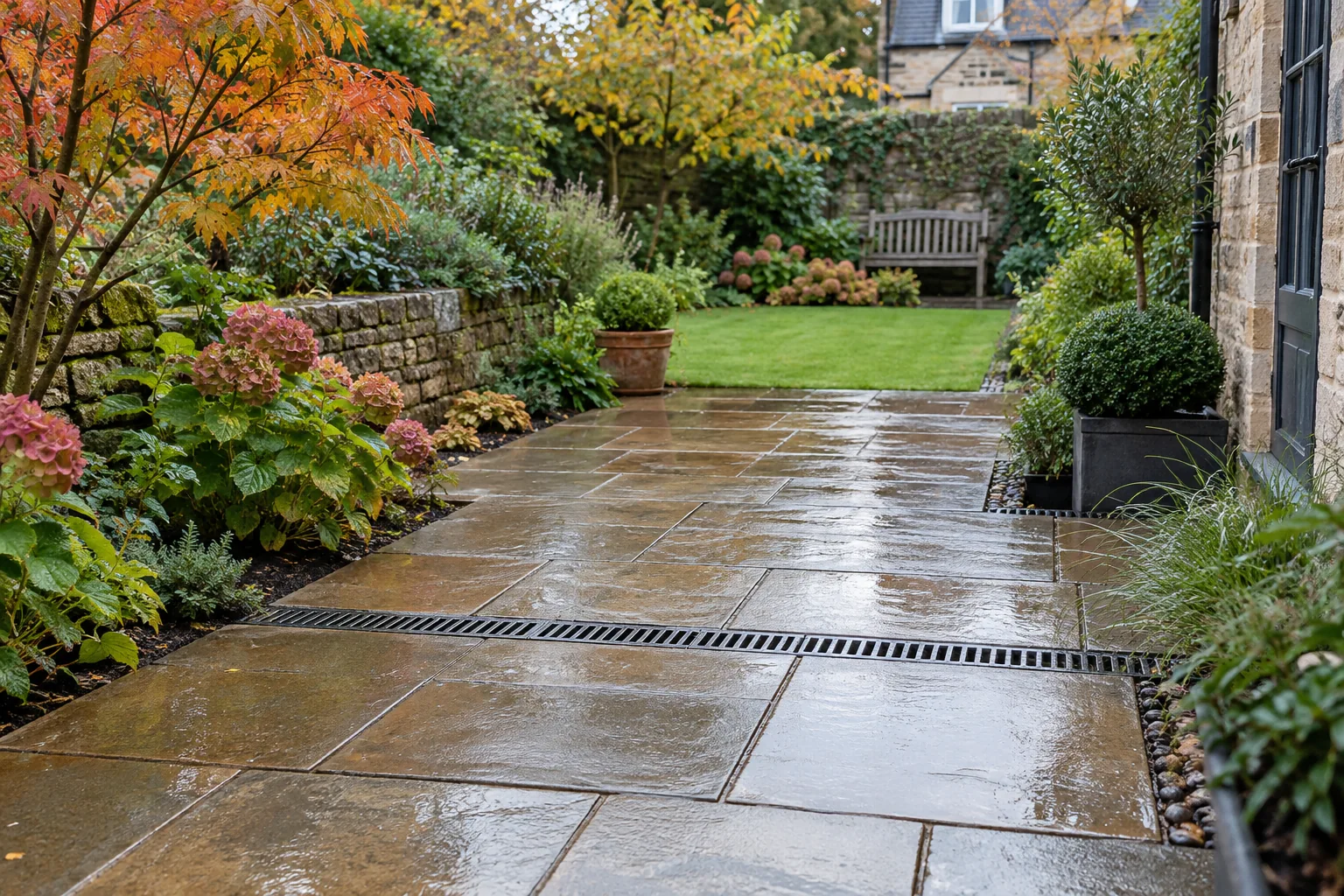
After cleaning, observe the route following ordinary rain. Does water run towards a blocked gully? Does a downpipe discharge across the paving? Is an overhanging hedge keeping the path shaded and damp? A little shade is normal, but recurring standing water calls for investigation. Do not assume algae is the cause of every slip; uneven steps and loose edges are separate hazards.
Clear accessible leaf debris from drain covers without pushing it into the opening. If a gully remains blocked or water collects repeatedly, record when and where it happens. Our article on distinguishing compacted soil from drainage problems is useful for adjoining beds, although a failing paved route may need a paving or drainage specialist rather than a soil treatment.
Trim encroaching plants only where they obstruct access or trap debris, and consider the plant and season before cutting. Give the path enough room to dry and to be swept regularly. If a boundary hedge needs significant work, the hedge trimming service can discuss an appropriate scope. Avoid removing established planting simply to expose every inch of paving to sun.
Keep the walking line safe through autumn
Inspect the main route after windy or rainy days, especially before visitors, deliveries or bin collection. A quick sweep is easier than letting wet leaves compact on steps. Keep tools and pots off the path, and report any loose slab promptly. If a section remains unsafe, restrict access until it can be assessed; a cleaned surface does not compensate for a structural defect.
The practical sequence is simple: identify the material and defects, clear loose debris, brush growth where people walk, and use stronger methods only when the paving and drainage allow them. Recheck the route after rain. That keeps the path usable while protecting the surface, its joints and the plants around it.