

An autumn handover is easier when the garden is safe to enter, its main features are visible and the condition has been recorded clearly. Falling leaves and slower growth can hide a blocked path, damaged edging or abandoned items. A rushed final tidy may remove plants that should remain, while leaving a small pile of waste can make a well-kept space appear unfinished. A short inspection before any cutting saves time.
Start with the tenancy agreement, inventory and any agreed maintenance responsibilities. They establish the relevant standard for that property; there is no single gardening checklist that applies to every tenancy. Then walk the garden from gate to back door and note access, lawn, borders, hedges, paving, pots and waste. Photograph anything that needs attention before work begins and again afterwards, using the same viewpoints where possible.
Inspect before clearing
Look at the garden as a new occupant would. Can the gate open fully? Is the path to bins or a shed unobstructed? Are steps slippery with wet leaves? Have brambles or shrubs narrowed access? Check whether the lawn is overgrown or simply longer because rain has prevented mowing. A practical list based on these observations is more useful than ordering a blanket cut-back.
Identify plants before removing them. Autumn perennials may be brown and still healthy, and bulbs can be invisible beneath the soil. A mature shrub that looks untidy in October might flower on old wood next spring; heavy pruning could remove the buds. If a plant is uncertain, photograph it and seek identification rather than cutting first. The aim is to reveal and care for the garden, not to strip it bare for a handover image.
Check the boundary from inside the property. A hedge may be leaning over a path, but its trimming window and nesting activity still matter. Where work is needed, agree its scope and timing. The hedge trimming service can assess difficult boundaries without treating every hedge as a same-day task.

Make routes and surfaces safe
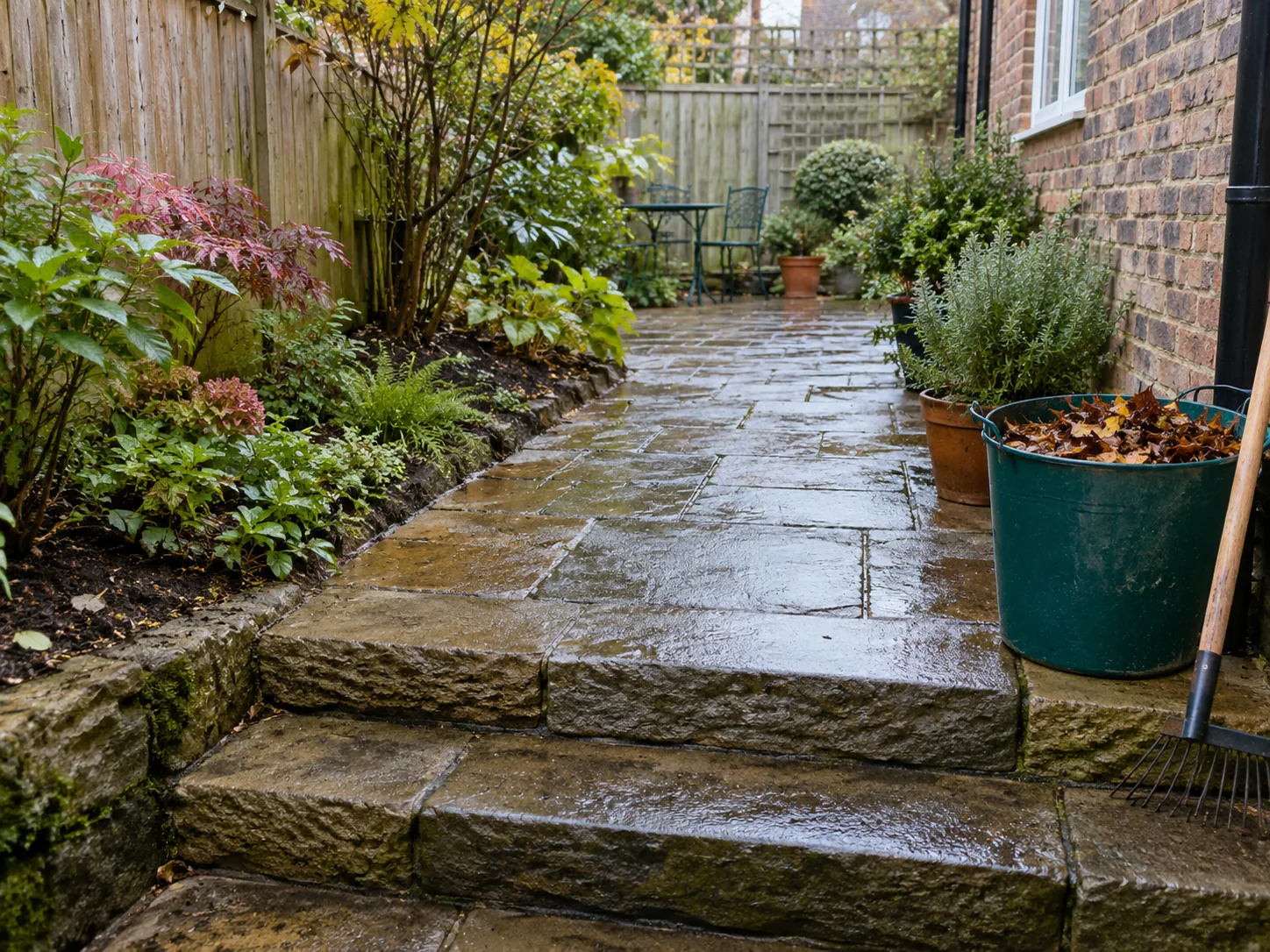
Sweep leaves from the main path, steps and drain covers. A narrow safe route is more important than collecting every leaf from a quiet border. Check for loose pots, hoses, broken edging and concealed objects that could be tripped over. Do not hide damaged paving beneath a new layer of gravel or mulch; record the issue for the handover.
If paving is slippery after rain, brush off loose debris and identify the surface before choosing a cleaner. High pressure can damage some joints or stone. The local patio cleaning service may be relevant for built-up algae or staining, but a cleaning appointment should be matched to the material and actual condition.
After sweeping, look at where water collects. A blocked grille may be easy to clear; a recurring puddle may need separate investigation. Photograph persistent water after rain rather than claiming it was repaired by a cosmetic tidy. Leaves that have been moved off paving can be sorted for garden waste or used beneath appropriate planting if they are clean and not piled against stems.
Tidy the lawn when conditions allow
An autumn lawn may still need a light mow, but wet turf can be damaged by machinery and footsteps. If the ground is firm and grass is growing, use an appropriate raised setting, collect heavy clumps and define the edge where it improves access. If the surface is saturated or frosty, postpone mowing and explain the condition in the handover record. An uneven cut made through mud is unlikely to improve the property.
Rake a heavy cover of fallen leaves from grass so it can receive light. Move from a firm edge where possible. Bare patches should be documented, particularly if they reflect shade, heavy use or a drainage problem. A hurried scattering of seed immediately before handover does not establish grass, so do not present it as a completed repair. Our guide to repairing bare lawn patches explains the preparation and time involved.
The lawn mowing service can help with a suitable cut when weather permits. If a regular service has been used, ask for the date and scope of the last visit so the next occupant or manager knows what was done.
Sort waste and retained items clearly
Garden waste is often the part of a handover that causes confusion. Separate cuttings, leaves and branches from broken pots, packaging and personal items. Agree whether the work includes removal, use of an existing garden-waste subscription or leaving material in an approved compost area. Do not assume a large pile can be placed in a household bin or left beside a gate.
Before disposing of anything that may belong to the property, such as planters, tools, timber edging or a water butt, compare it with the inventory and ask the relevant person if needed. A broken-looking pot may still be a listed item. Keep retained items in a defined place and photograph them. This is particularly useful when a garden has several sheds or storage corners.
The garden clean-up service describes help with overgrown spaces and green-waste arrangements. Give a clear list of what should stay, what can be removed and where access is restricted. A few wide photographs make a quote more accurate than a description such as ‘general tidy’.
Record condition and next actions
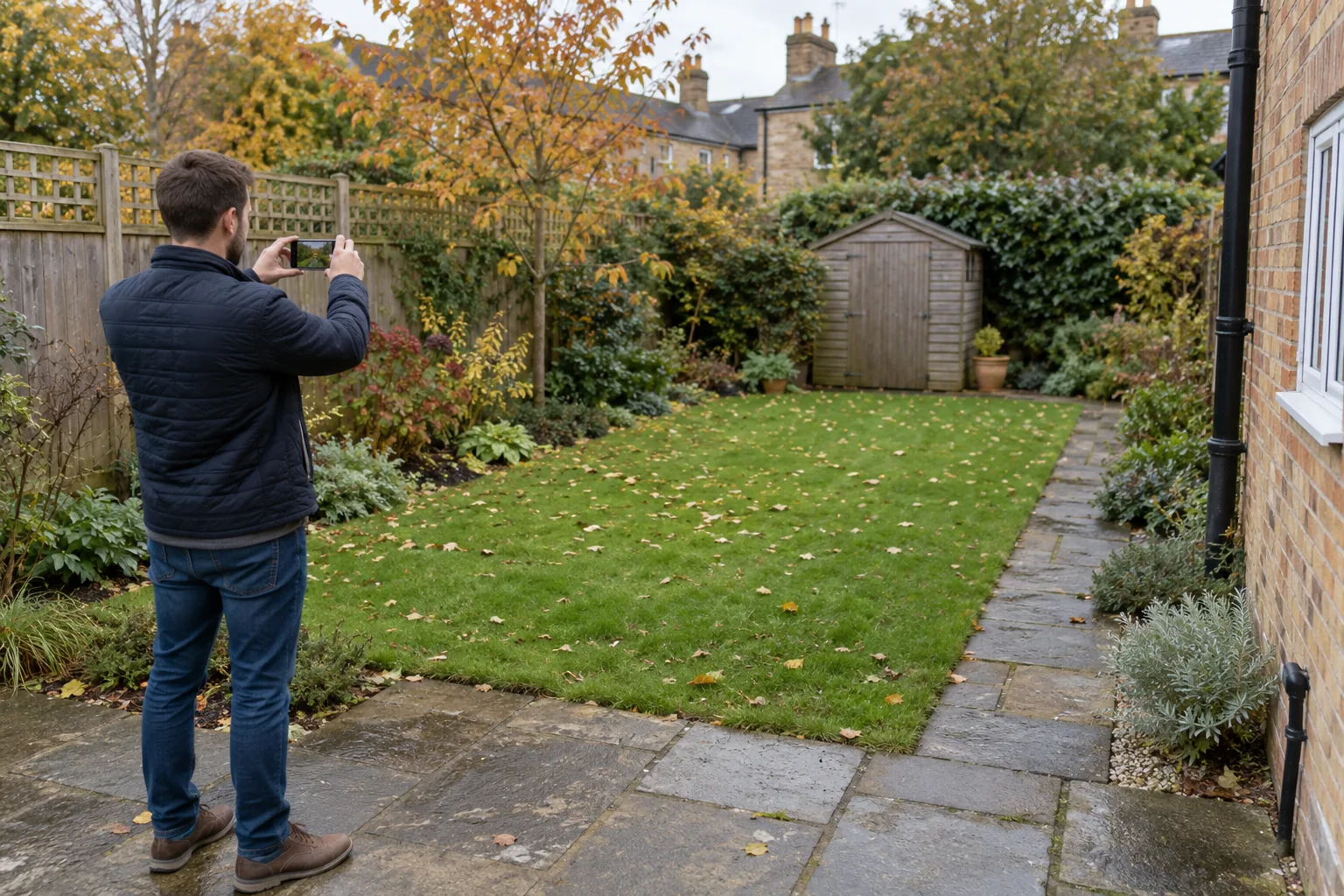
Take photographs in daylight after the work, ideally from the same positions used at the start. Include the path, lawn, major beds, boundaries, patio and any retained items. A close image of a problem area should be paired with a wider view so its location is clear. Keep the record factual: ‘water standing by the patio after rain’ is more useful than guessing the cause.
Note any task that could not reasonably be completed in autumn. A hedge may need work in another season; a saturated lawn may require a drier window; bulbs and perennials may be best left alone. State what was done and what remains for future care. If the property has an irrigation system, outdoor tap or garden lighting, record obvious condition and where controls are located without claiming a technical inspection that was not performed.
Keep the next routine manageable
A neat handover will not last if no one knows who is responsible for the next leaf fall or spring growth. Confirm the agreed arrangement for mowing, leaf clearance, watering and waste, using the tenancy documents as the starting point. For a property between occupants, a short planned visit may preserve access and reveal problems before they become expensive. The garden maintenance service can discuss a practical schedule matched to the garden.
The best result is a garden that can be understood at a glance: safe routes, visible planting, managed waste and clear notes. Tidy what conditions allow, record what they do not and keep the work proportionate to the property. That makes the outdoor handover useful to the people receiving it, not merely photogenic for a day.