
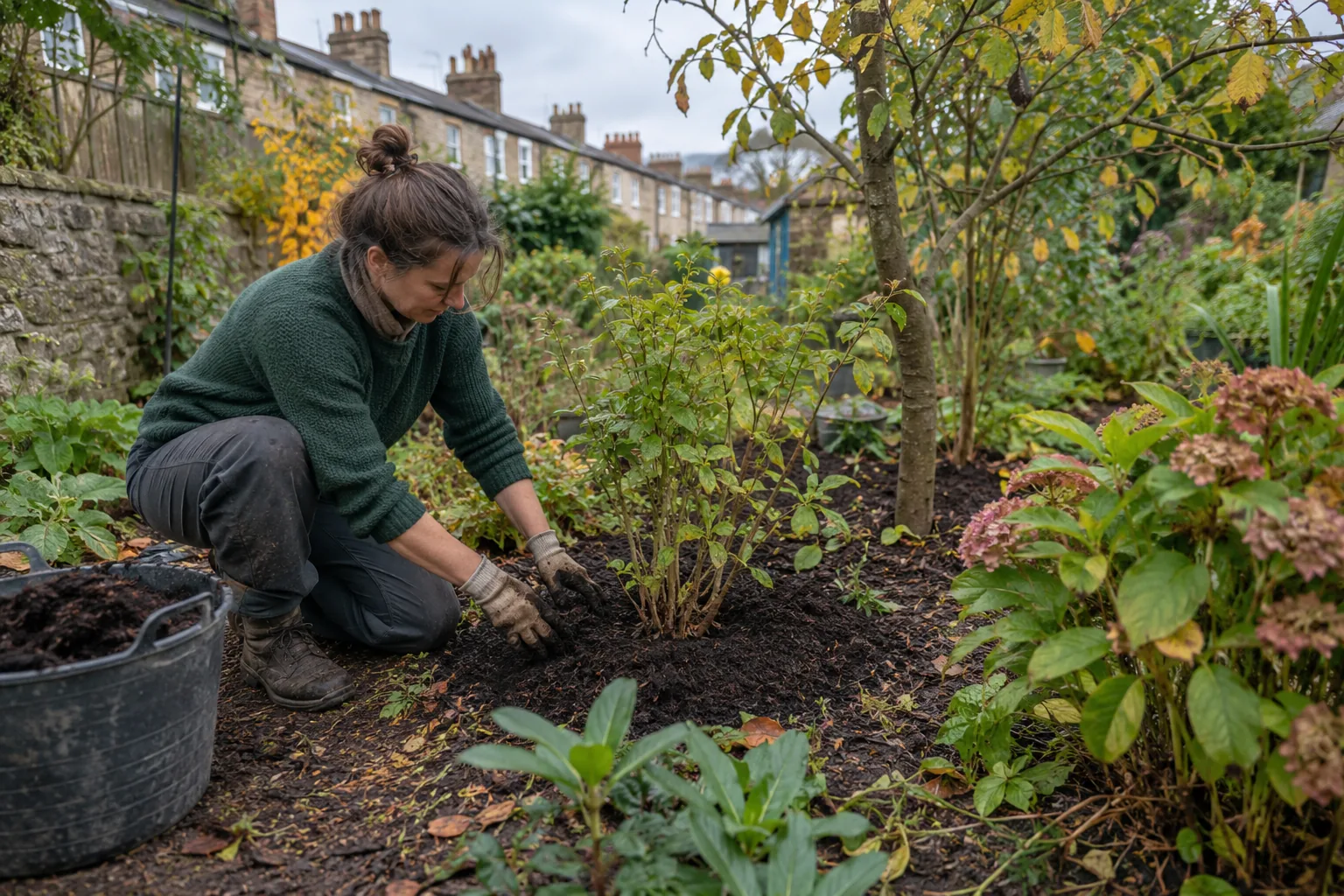
Mulch can protect exposed soil, reduce weeds and gradually improve a border, but spreading the same material across every bed is rarely the best use of time or money. An established shrub border, a dry raised bed and a damp patch of low-growing perennials have different needs. In a Bristol autumn, the starting point is to look at the soil and plants before opening a bag of compost or bark.
Ask three questions. Is the soil bare or already covered by plants? Is it moist and workable rather than waterlogged or frozen? Could a layer of material bury crowns or hold dampness against stems? Where the answers favour mulching, choose a suitable material and leave a clear gap around vulnerable growth. Where they do not, postpone the job or use a lighter, more targeted application.
Know what mulch is meant to achieve
A mulch is a covering placed over soil rather than dug in. Well-rotted garden compost, leafmould and chipped bark are common organic choices; gravel and grit are mineral options for particular plantings. The RHS guide to mulches describes benefits that include limiting weeds, moderating soil temperature and retaining moisture. As organic materials break down, they also add to the soil over time.
Those benefits depend on material and placement. Compost that suits a mixed border may not be ideal against the foliage of a small, drought-adapted plant. Fresh woody chips behave differently from mature compost and should not be treated as an instant fertiliser. A decorative gravel layer can be useful in a dry planting scheme but will not enrich soil in the way decomposing organic matter does.
Be clear about the job you want done. If weeds are the main problem, remove persistent roots first; a shallow dusting will not stop them returning. If soil is already hidden by dense groundcover, extra mulch may add little value. If the aim is winter protection for roots, concentrate on exposed soil around plants rather than piling material over their centres.
Check soil condition and timing
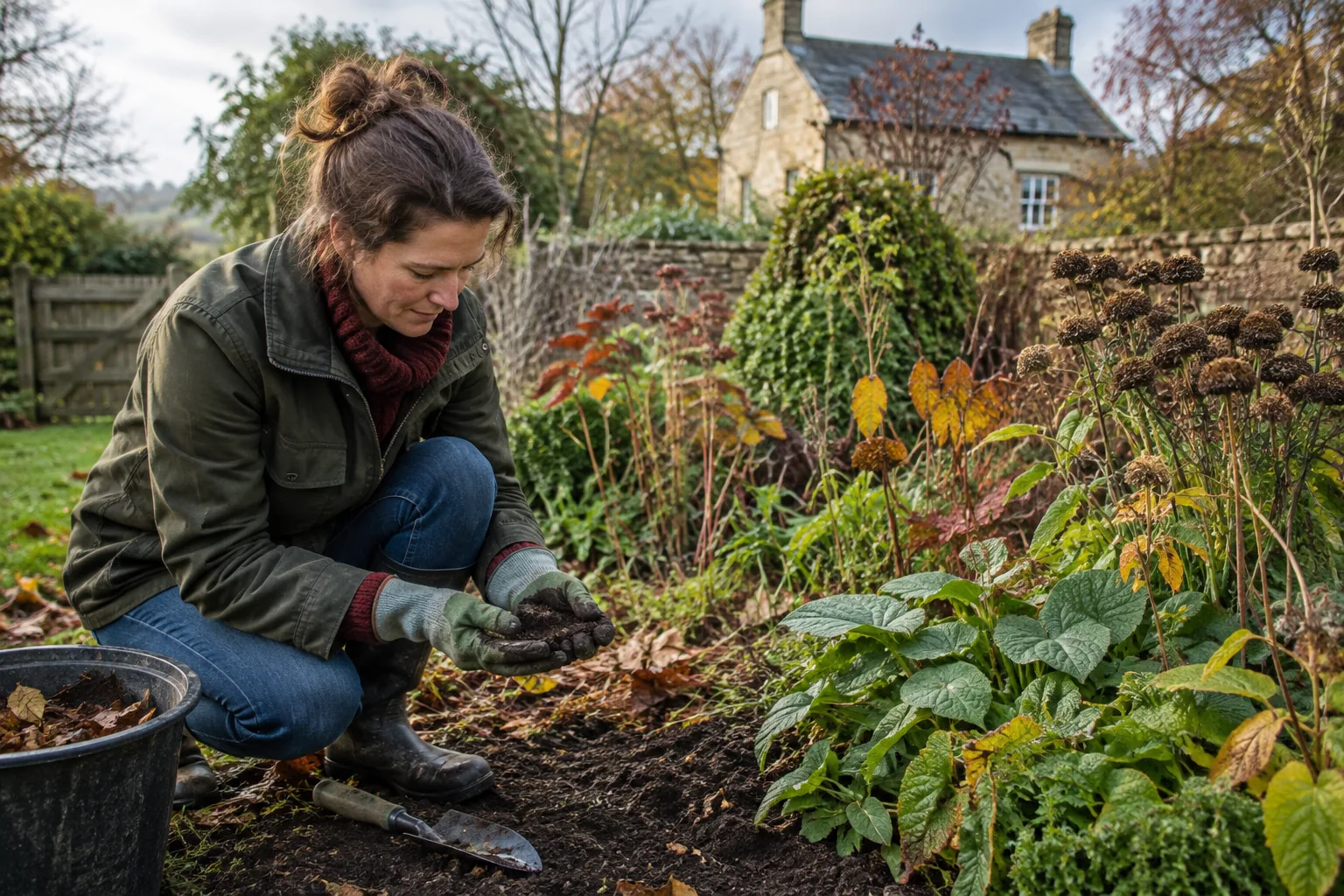
The RHS recommends laying mulch on moist soil after weeding, while avoiding frozen ground. Autumn is one suitable window, although its step-by-step organic mulching guide also identifies late winter or early spring as a useful annual routine. That flexibility matters in a wet season: there is no need to force the work into one October weekend if the bed is saturated.
Test a small area from a path. Soil should not smear into a sticky mass under a trowel or hold standing water in the planting hole. Mulch cannot repair a waterlogged bed merely by covering it. If rainwater runs into the bed from paving, investigate that route first. Our guide to compacted soil and drainage sets out observations that help distinguish pressure on the surface from a wider water problem.
In a dry spell, water newly planted shrubs appropriately before mulching rather than placing a dry barrier over dry soil and assuming it will solve the problem. An established border may need less intervention. Keep the material off the path, drain grilles and air bricks, and take care not to raise the soil surface against a wall.
Give established shrubs room to breathe
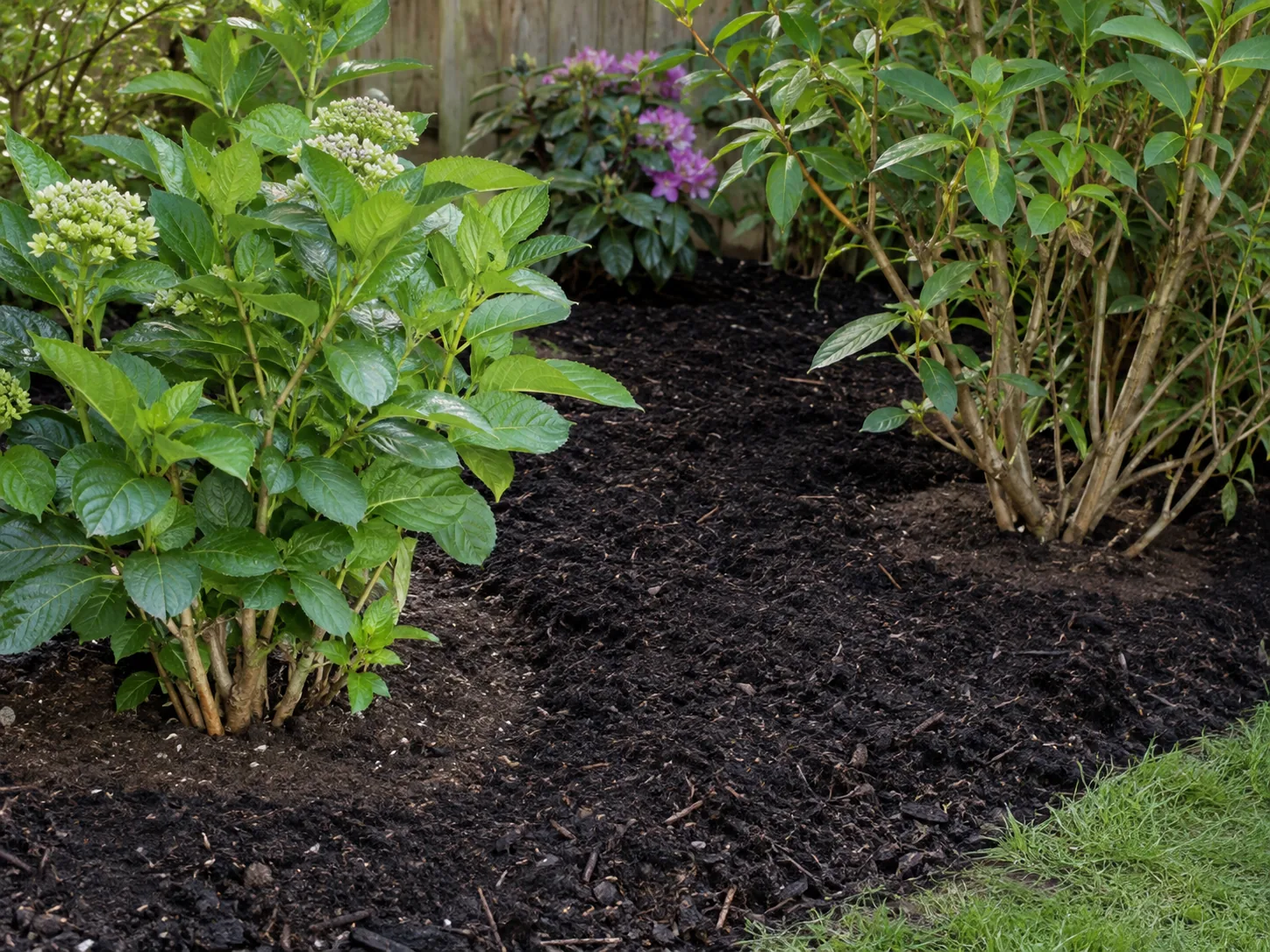
An open shrub border is often a good candidate for organic mulch. Remove visible weeds, then spread well-rotted compost or another suitable material over the soil between plants. The RHS advises a substantial layer for reliable weed suppression, commonly at least 5cm, but the exact application should fit the material and the planting. Measure by the resulting coverage, not by the number of bags bought.
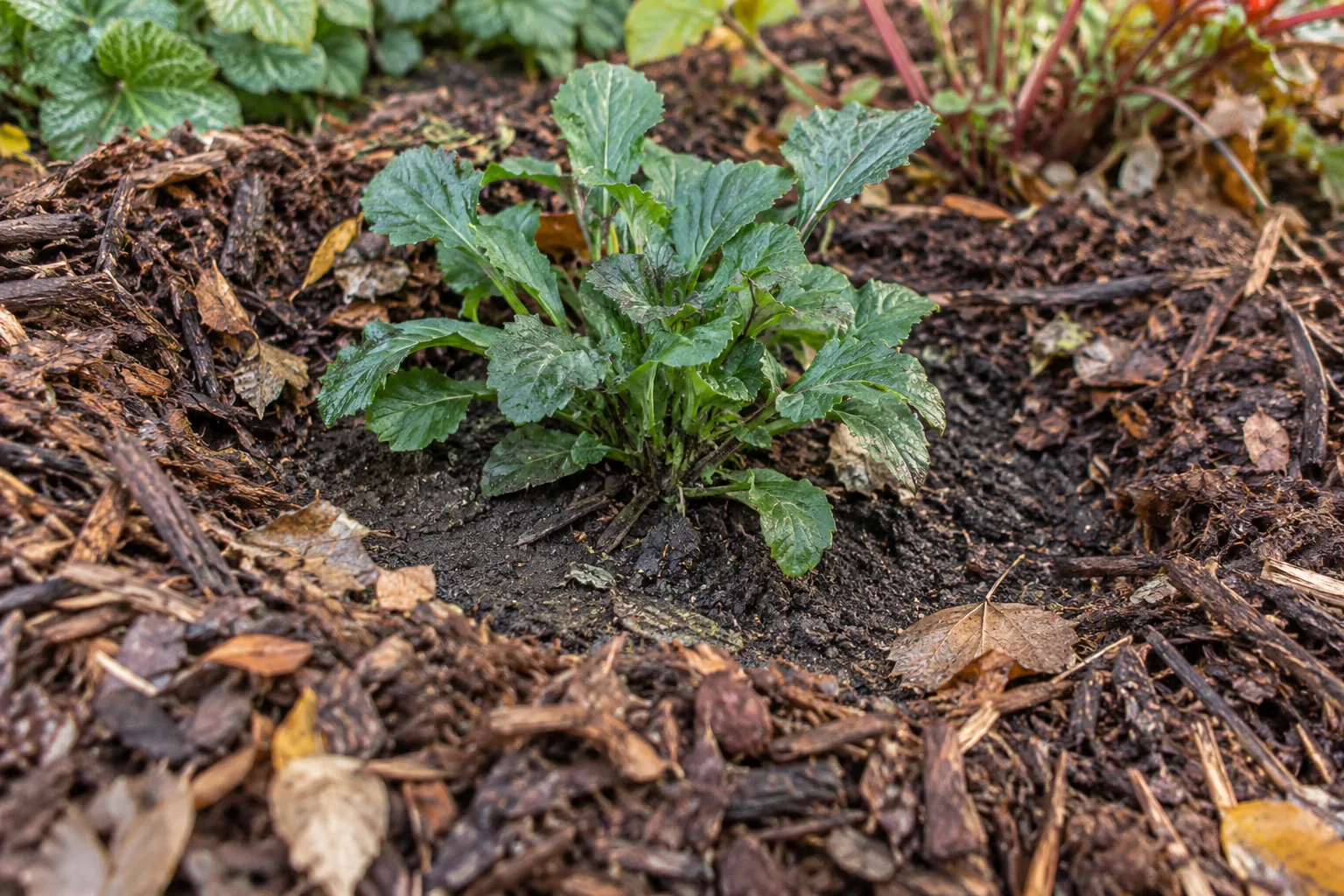
Leave a gap around woody stems. Material heaped against a trunk or shrub base holds moisture against bark and can increase the risk of softening or disease. Think of a shallow ring with a clear centre, not a cone. If the shrub is newly planted, check its watering needs and ensure the root flare or original soil level remains visible.
Leafmould can be useful where you have a clean, mature supply, while fresh fallen leaves are a different material. A loose layer beneath a hedge can shelter wildlife, but a dense wet mat around small stems is less helpful. Our guide to sorting autumn leaves explains how to move leaves from lawns and paths into more suitable places.
Keep small crowns and dry-loving plants clear
Low perennials can disappear beneath a thick layer of material. If you cannot see the crown or basal leaves, pull mulch back so air and light reach them. Some plants need a free-draining collar around the base. The RHS specifically notes that ground-covering Mediterranean plants such as thyme may be best left unmulched, because a damp covering can hold too much moisture near stems and foliage.
This is where a bed-by-bed decision pays off. A compost mulch may be helpful between taller, established plants, while a patch of thyme or another low, dry-loving plant should be kept clear. Do not assume a neat, uniform surface is the measure of a healthy border. Variation can reflect the real needs of the planting.
Bulbs and new shoots also need thought. Mark where they are planted so you do not bury a small emerging clump or damage it while raking. If a border is densely planted and there is little visible soil, use narrow hand tools or skip mulching rather than disturbing roots to create space for material.
Choose clean material and apply it carefully
Home-made compost should be well rotted and free of persistent weed roots. Bought products should be suitable for the intended use; check whether they are soil improvers, decorative bark or something else. Avoid using contaminated debris simply because it is available. The RHS notes that poor-quality material may bring weeds, pests or disease into a border. If uncertain, use a trusted source and start with a small area.
Spread material with a bucket and hand rake from the edge rather than walking back and forth over wet soil. Keep access to inspection points and do not cover a plant label you may need for later pruning. After heavy rain or wind, check that the mulch has not washed into a path or gathered against stems. Topping up a thin spot later is easier than undoing an overfilled border.
For a larger site, a garden maintenance visit can combine weeding, mulch placement and plant checks in one plan. Ask for the material and depth to be matched to each bed. A well-mulched garden need not look identical from corner to corner; it should have covered soil where coverage helps and open crowns where plants need air.
The practical rule is simple: mulch the soil, not the plant. Select a suitable material, wait for workable conditions and leave clear space around stems and crowns. If the bed is already densely planted, persistently waterlogged or full of tiny dry-loving plants, review it before adding anything. The right autumn choice may be a targeted layer, a later date or no mulch at all.