
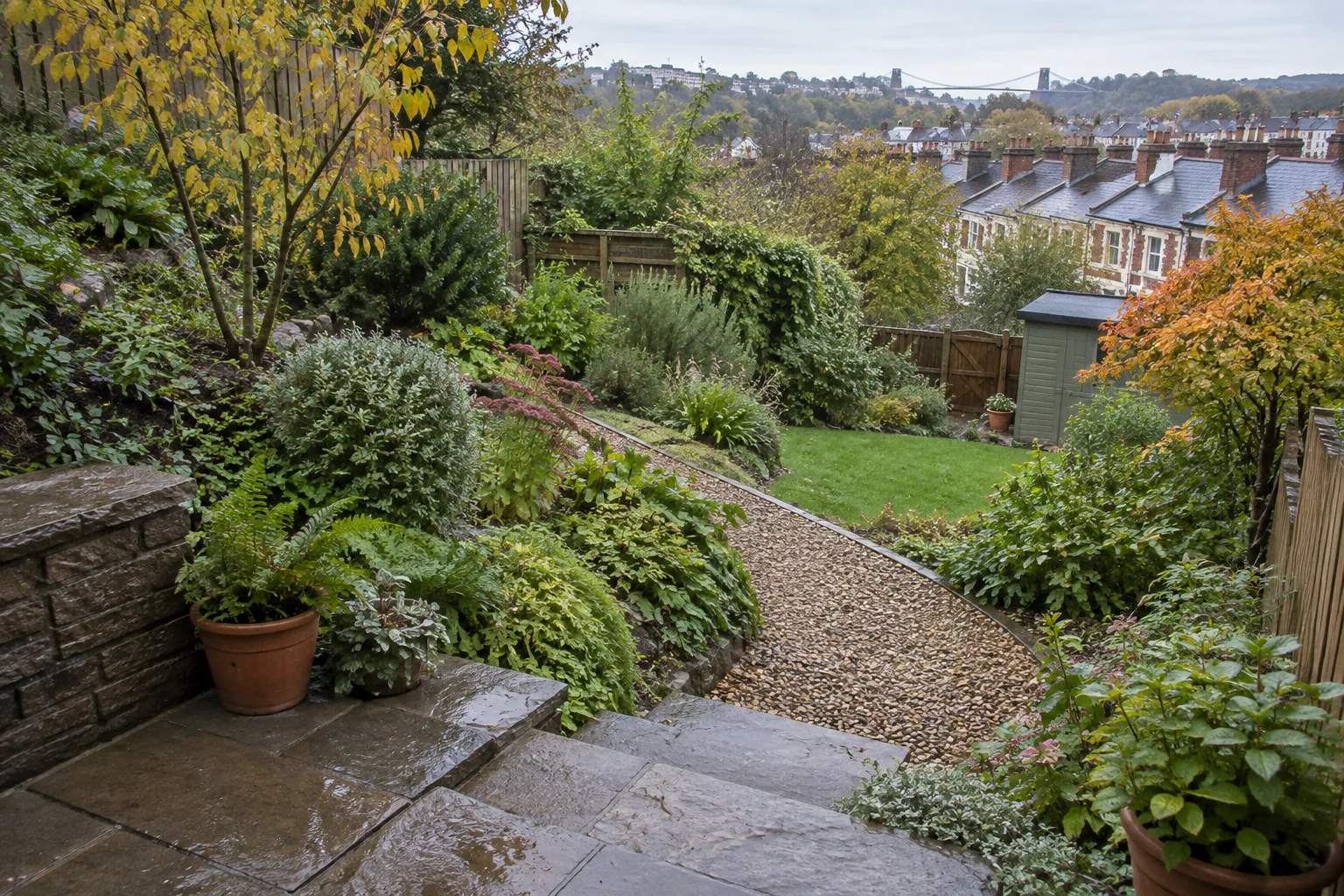
A sloping garden changes the way rain behaves. Water can run across bare soil, carry fine particles downhill and leave roots exposed at the top while depositing mud on a path or patio below. In Bristol, a bank behind a terrace or a small rising plot may also be difficult to reach safely for routine care. The answer is usually a combination of ground cover, careful water management and a route that lets you work without repeatedly trampling the slope.
Begin by finding out where the water comes from and what it does during a heavy shower. Planting can help stabilise a bank over time, but it cannot correct a broken drain or a stream of runoff arriving from a hard surface above. A practical plan treats the cause, protects the exposed soil and keeps future maintenance realistic.
Read the slope after rain
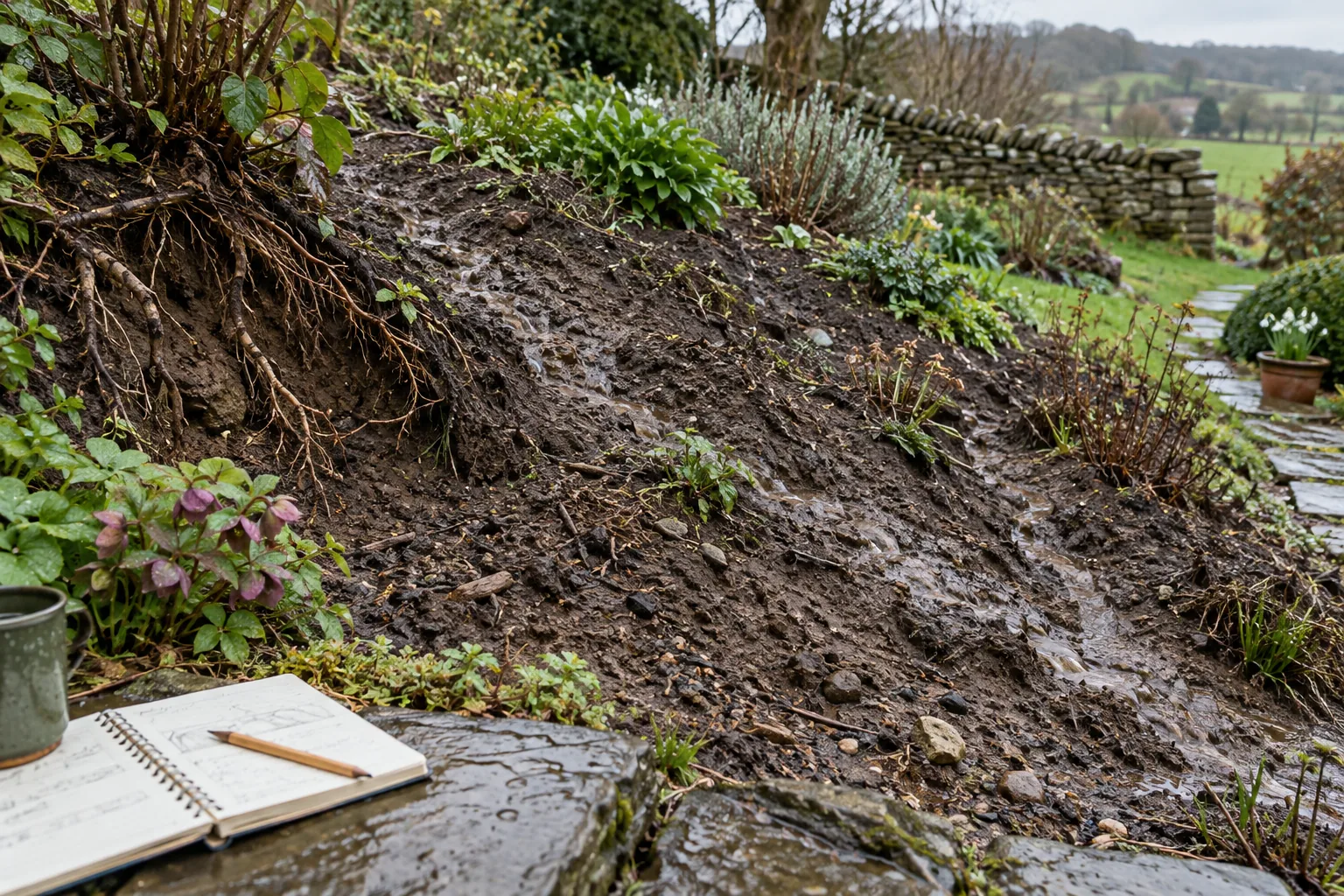
Look for narrow channels, fresh silt at the bottom, exposed roots and patches where mulch has collected in one place. These clues show the route water takes. Photograph them before sweeping up the evidence. Check whether a downpipe, patio, neighbouring surface or compacted path is feeding the flow. If water is concentrating at one point, address that source before spending money on plants that will be washed out.
Notice whether the soil is loose and sandy, heavy and sticky, or a mixture of disturbed fill. A slope can dry rapidly at the top while staying wet at its foot. Test by feeling the soil at several levels after rain and again during a dry spell. This helps distinguish surface erosion from poor drainage. If the bank is steep, moving, cracked or close to a building, seek a qualified assessment before excavating or building a retaining structure.
Mark routes you already use. A worn diagonal track often shows the easiest line through the garden, but repeated footsteps compact soil and create a channel for runoff. A planned path or a few stable access points can protect both the planting and the person tending it. Our garden design service can help coordinate levels, access and planting when a compact plot has several competing needs.
Keep the soil covered while plants establish
Bare ground is vulnerable to direct rain impact. Retain sound existing vegetation where possible, including roots that already bind the upper layer. If weeds must be removed, clear and replant in manageable sections instead of stripping the whole bank in one weekend. Work only when the ground is safe underfoot and avoid smearing wet clay into a hard surface.
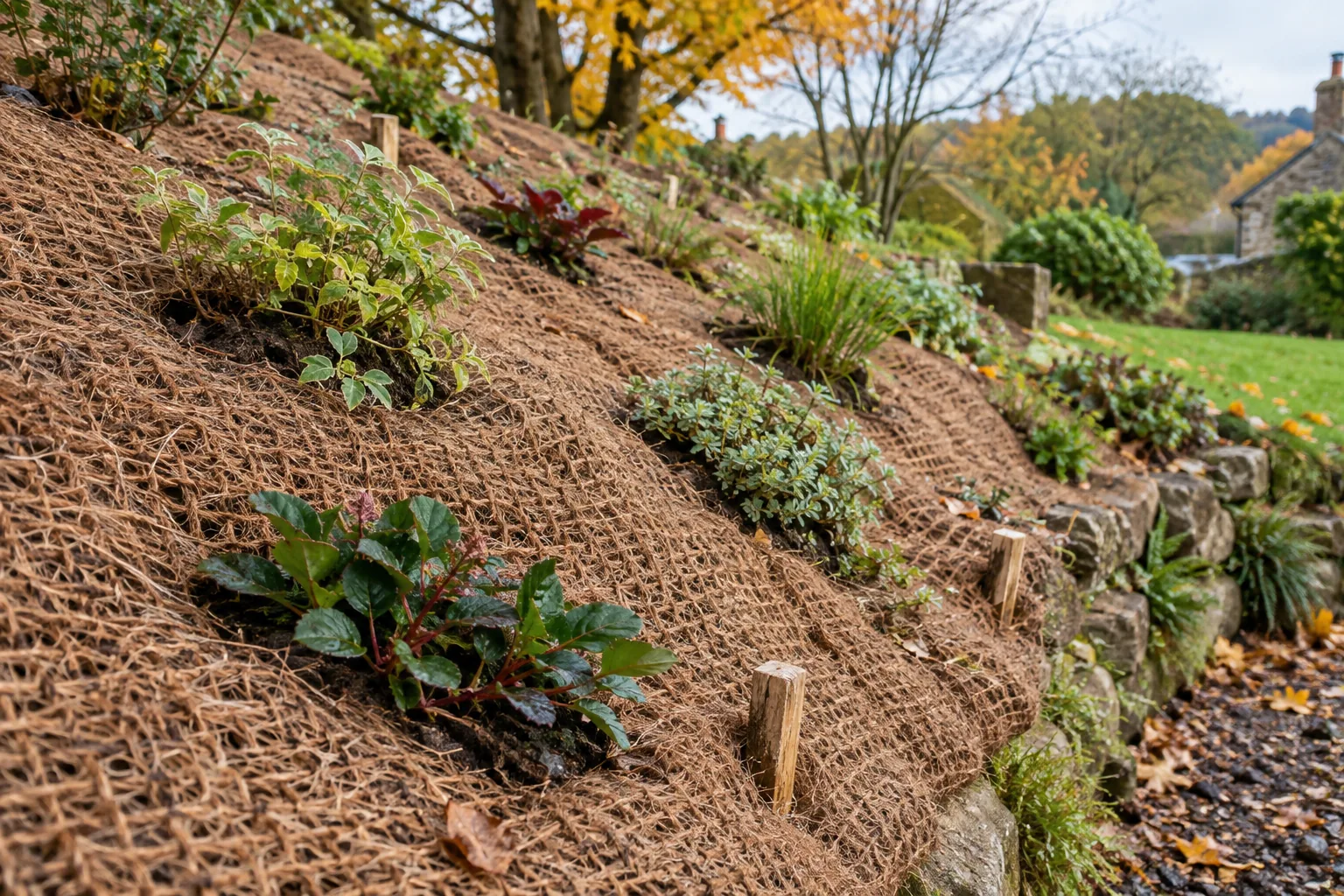
For a temporarily bare, steeper bank, the Royal Horticultural Society recommends coarse coconut matting or a similar pegged material that plants can grow through. It holds the surface while stems and roots develop. Choose a product and fixing method suited to the slope, keep edges secure and inspect it after storms. Loose plastic sheeting is a poor substitute: it can direct water into faster channels and obstruct the soil underneath.
Organic mulch can help on gentler ground, but very fine or lightweight material may slide or wash downhill. Apply a modest layer around plants rather than heaping it against stems. On a steeper bank, combine mulch with planted pockets or another restraint that holds it in place. Do not use mulch to hide a developing gully; fix the concentrated water route first.
Choose plants for roots, light and maintenance
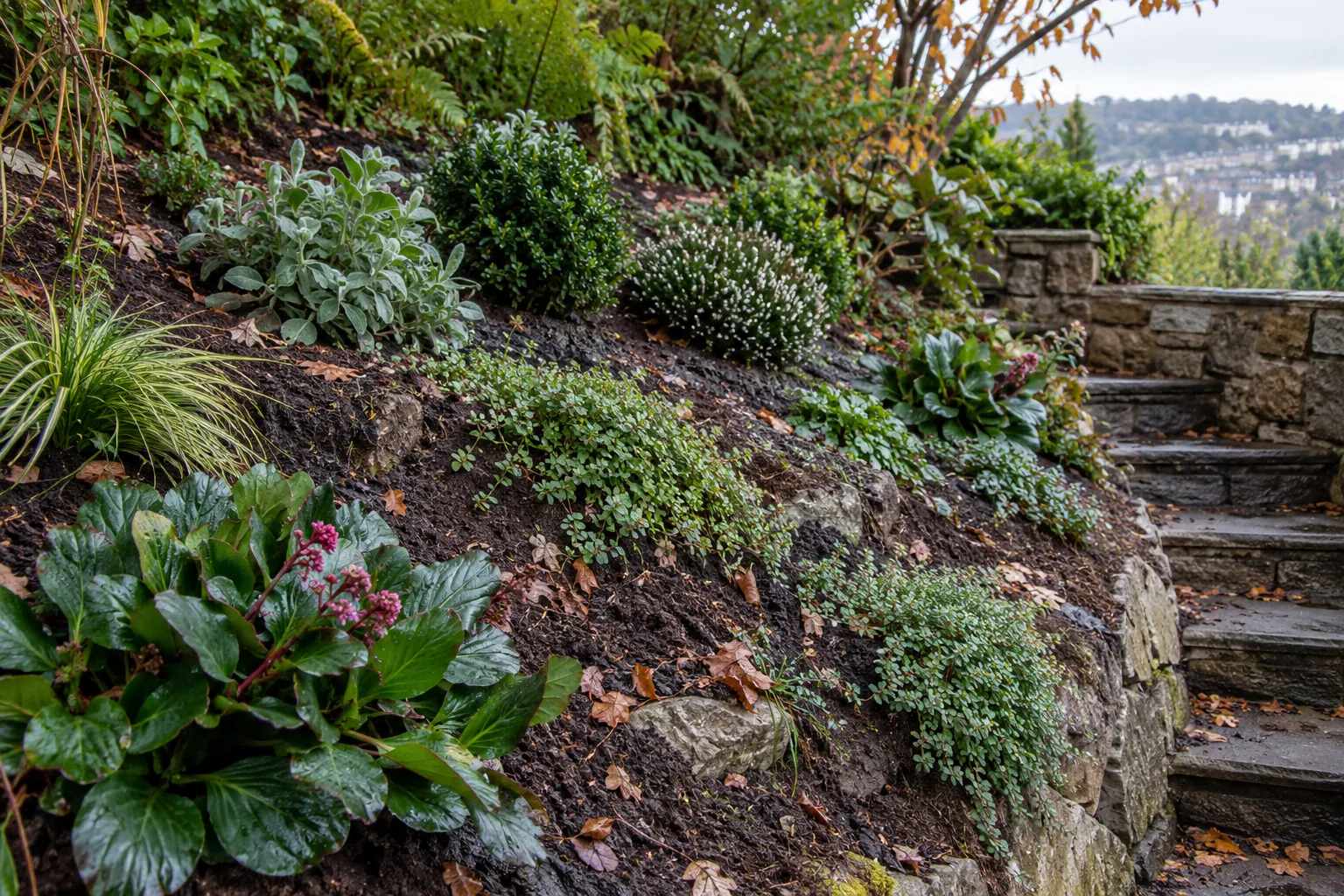
Ground-cover plants and spreading shrubs provide lasting cover once established. Choose them for the site's light, soil, exposure and available space. A vigorous climber that covers a bank quickly may also climb a fence or smother neighbouring plants. Read mature dimensions and plan how you will reach it for pruning. Mix low cover with deeper-rooted structural planting where the slope permits, rather than relying on a single species across the whole area.
The RHS guidance on banks and slopes emphasises strong-growing ground-cover plants for stabilisation, with careful preparation and watering while they establish. Roots need contact with the soil, not a thin layer of compost placed over a compacted bank. Make each planting pocket reasonably level so water can soak in near the roots. Water thoroughly at planting and check moisture through the first growing season, including dry spells that can affect the upper slope more severely.
Avoid promising that planting alone will hold an unstable bank. Vegetation helps protect the surface, but retaining walls, significant changes in level or persistent runoff may need structural drainage and professional design. Likewise, do not plant where inspection of a wall, drain or service route must remain possible.
Slow runoff without sending it elsewhere
If a hard surface above the bank sheds water, examine its fall and drainage. A small change at the top may prevent a large amount of erosion below. Rain should not be redirected onto a neighbour's land or towards a house wall. Water that soaks in safely may be useful to plants; water that scours a new channel needs interception, spreading or controlled drainage appropriate to the site.
Small contour features can break the length of a flow path. A planted shelf, stable edging or well-designed path can slow water, but each should be designed to avoid creating a new concentrated outlet. Improvised timber barriers may trap water and fail, especially when wet soil builds up behind them. Check the bank after the first strong rain following any change, not just on installation day.
For an existing garden with muddy paths and standing water, our garden maintenance service can identify routine care needs; a more complex drainage problem deserves its own assessment. Photographs taken during rainfall often explain the issue more clearly than dry-weather descriptions.
Plan safe upkeep from the beginning
New planting will need weeding, watering and occasional trimming. Leave access points where you can stand securely without pulling on shrubs or walking across exposed soil. On a narrow bank, one reachable route may be better than several steep informal tracks. Keep steps and path edges clear of loose material that becomes slippery in wet weather.
Monitor the slope through winter and spring. Replace a failed plant promptly so the bare patch does not enlarge. Refasten any lifting matting and clear leaves from drains while allowing a modest leaf layer under established shrubs. Record where new sediment appears. If erosion continues despite cover, revisit the water source rather than repeatedly topping up the lost soil.
A healthy planted slope is built gradually. Keep what already holds the ground, protect open sections while new roots establish, give rain a safe route and make care possible without damaging the bank. Those choices turn a muddy problem area into a useful part of the garden that can cope better with Bristol's wet seasons.