
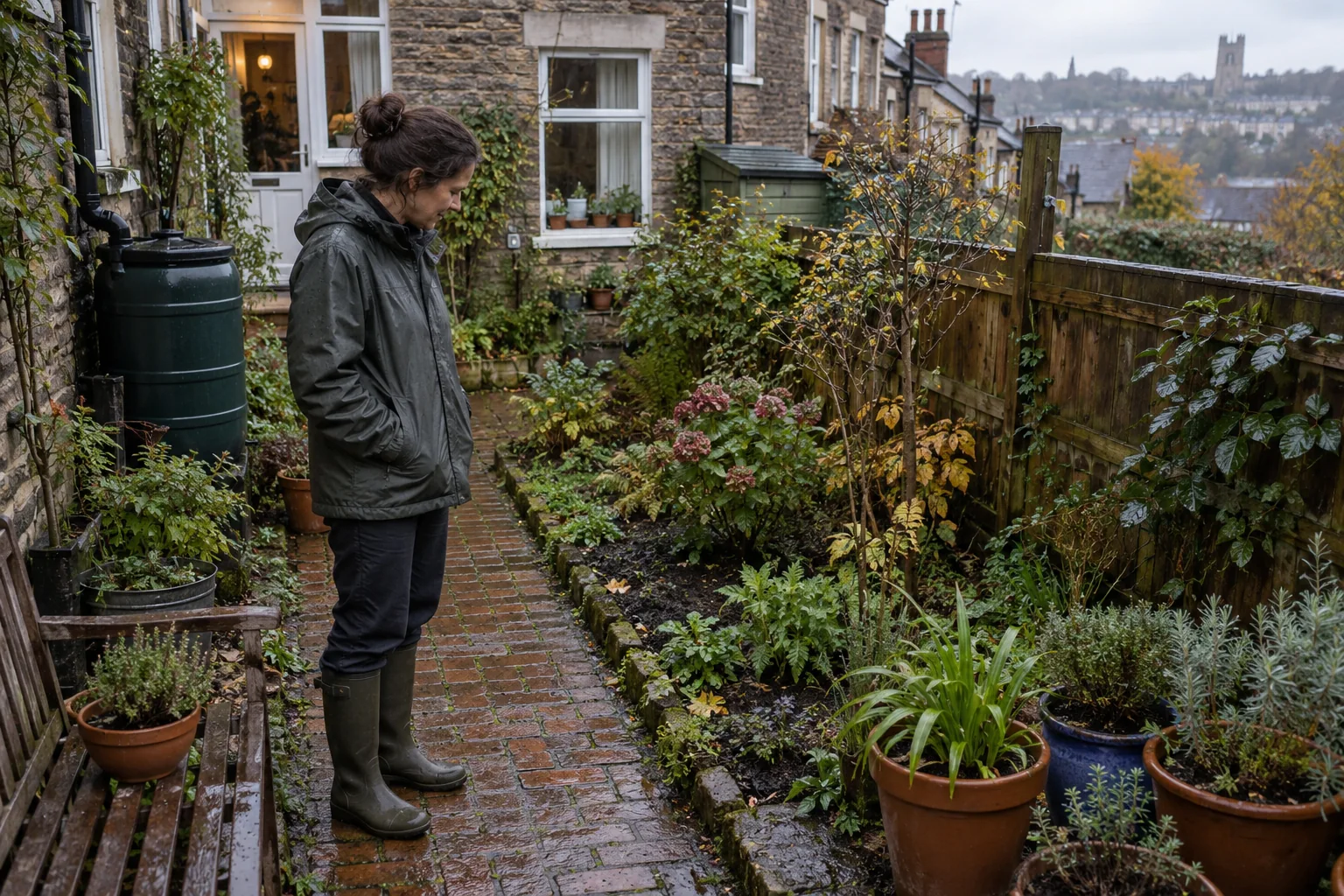
A compact Bristol garden can feel especially crowded in November. A few pots, one narrow border and a short path all share the same rain. Leaves gather at the doorway, a planter stays sodden and the patch of lawn becomes the quickest route to the bin. The useful response is a light, regular check rather than a weekend of heavy digging. Most tasks take minutes; some are best postponed until the ground dries.
The RHS November jobs guide highlights clearing leaves, raising containers and making space for winter wildlife. In a small garden, apply those jobs selectively so that access stays usable while beds retain some shelter.
Start at the route you use every day
Walk from the door to the gate, bin and shed after rain. Note where water stands, where leaves make paving slippery and where you step off the path to avoid a puddle. Sweep the frequently used paving and keep a drain or gully opening clear. Check that the water has somewhere to go before washing the path; pushing debris into a drain only moves the problem. If the surface is algae-coated, use a method appropriate to its material and test a small area first. Our guide to cleaning a slippery garden path covers that decision in more detail.
Do not turn the whole garden into bare, swept ground. Leaves on paving need moving, but those in a quiet border can often remain as a loose layer. Keep leaf litter away from the crowns of small plants and from drainage points. If there is more than the border can hold, gather it for leafmould. A shallow pile behind shrubs offers shelter while staying out of the walking route.
In a terraced garden, consider the shared boundary too. A blocked outlet or overflowing water butt can send water towards the neighbour's side. Check connections from a safe position and arrange a repair if the problem is beyond routine clearing. Do not redirect water across a boundary as a quick fix. If a downpipe discharges directly onto a planted corner, note how far the damp area extends before deciding what to change.

Protect soil by choosing where to stand
Wet soil is easy to compress. A tiny border may have no spare edge to work from, so resist the urge to weed or plant from the middle of it immediately after rain. The RHS November flower advice specifically warns against walking on sodden soil when preparing beds. Work from the path, use a board to spread weight if access is essential, and leave digging until the soil is workable.
Look for a lasting problem rather than reacting to every puddle. Rainwater that disappears soon after a shower differs from a wet patch that remains for days. Photograph the same spot after successive spells of rain and notice whether water arrives from a roof, adjoining paving or higher ground. The observation will help you decide whether a simple change to the route of runoff is needed. Our clay-border drainage guide explains how to check the pattern before altering a bed.
If plants are leaning into a narrow path, tie stems back gently rather than cutting everything down at once. Sound seed heads and hollow stems can provide winter interest and habitat. Remove damaged growth that obstructs access, and leave the rest where it can stand safely.
Many small gardens have a raised bed against a fence. Check whether the timber or masonry is permanently damp and whether soil is held against a structure that was never designed as a retaining wall. You do not need to dismantle it on a wet afternoon. Make a note, take a photograph and seek appropriate help if it looks unstable. Keep stored compost bags and tools off the bed so their weight does not concentrate on saturated soil.
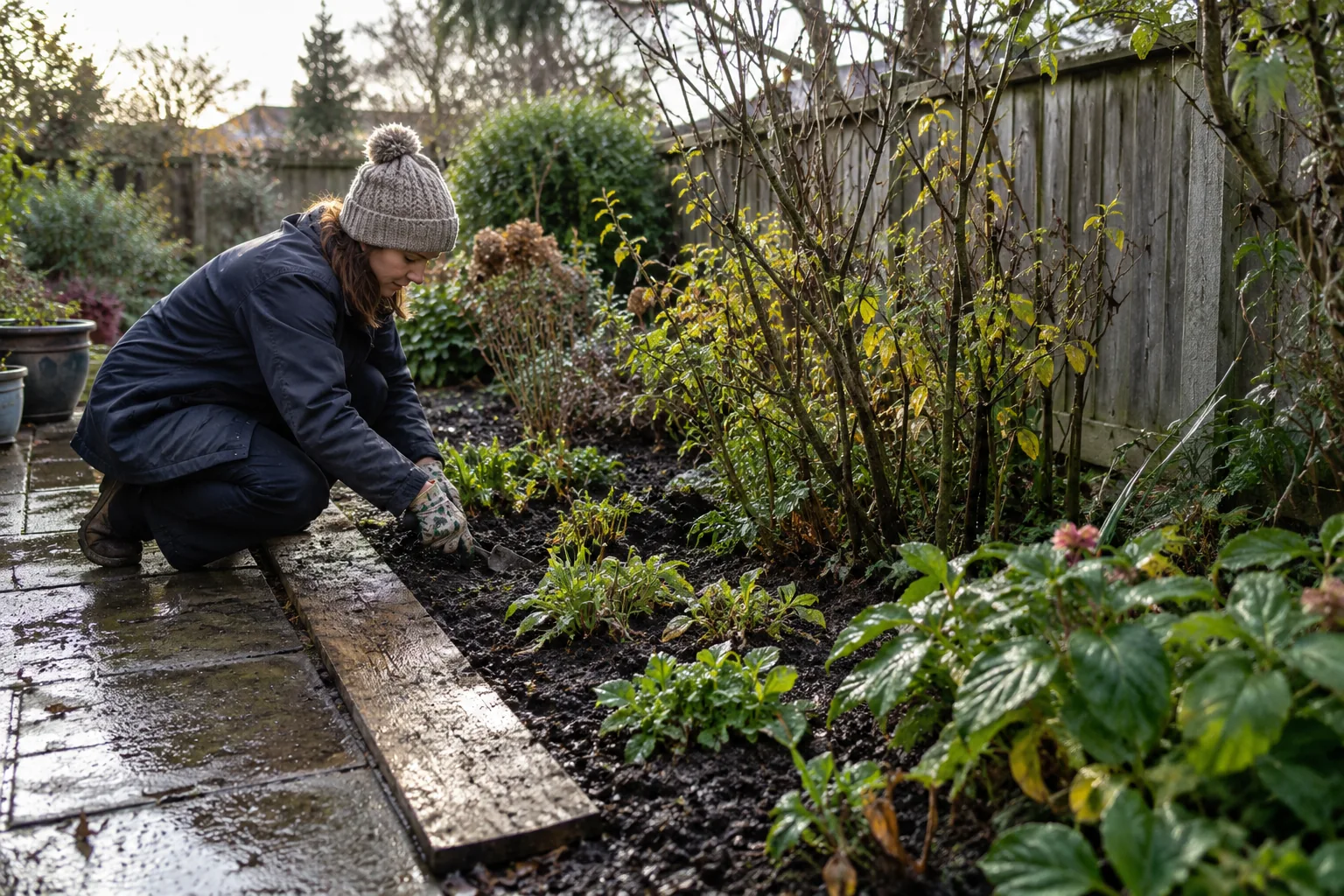
Give containers a quick, individual check
Pots are often the main planting space in a city garden. Rain reaches each differently: an exposed pot may stay saturated while an evergreen under an overhang remains dry. Check the compost with a finger before watering. Confirm drainage holes are open and lift patio containers on feet or bricks so they are not sitting in winter wet. Remove saucers that retain water through rainy periods. The RHS container-maintenance guide also advises moving a persistently sodden pot under temporary cover, while checking sheltered evergreens for dryness.
Group vulnerable pots near a sheltered wall if suitable, without blocking air or access to the house. A large, heavy planter may be safer left in place; changing where runoff lands can be easier than moving it. Keep labels or a quick phone note of which plants need checking. Our separate guide to winter rain and garden containers covers a fuller pot setup.
Avoid a blanket watering schedule. Plants under cover still use water, particularly evergreens, whereas dormant deciduous plants outdoors may need little extra. Likewise, routine feeding is unnecessary for most containers in winter. The point of checking each pot is to respond to its actual condition. Yellowing or wilting foliage can have more than one cause, so feel the compost and inspect the drainage before adding water or fertiliser.
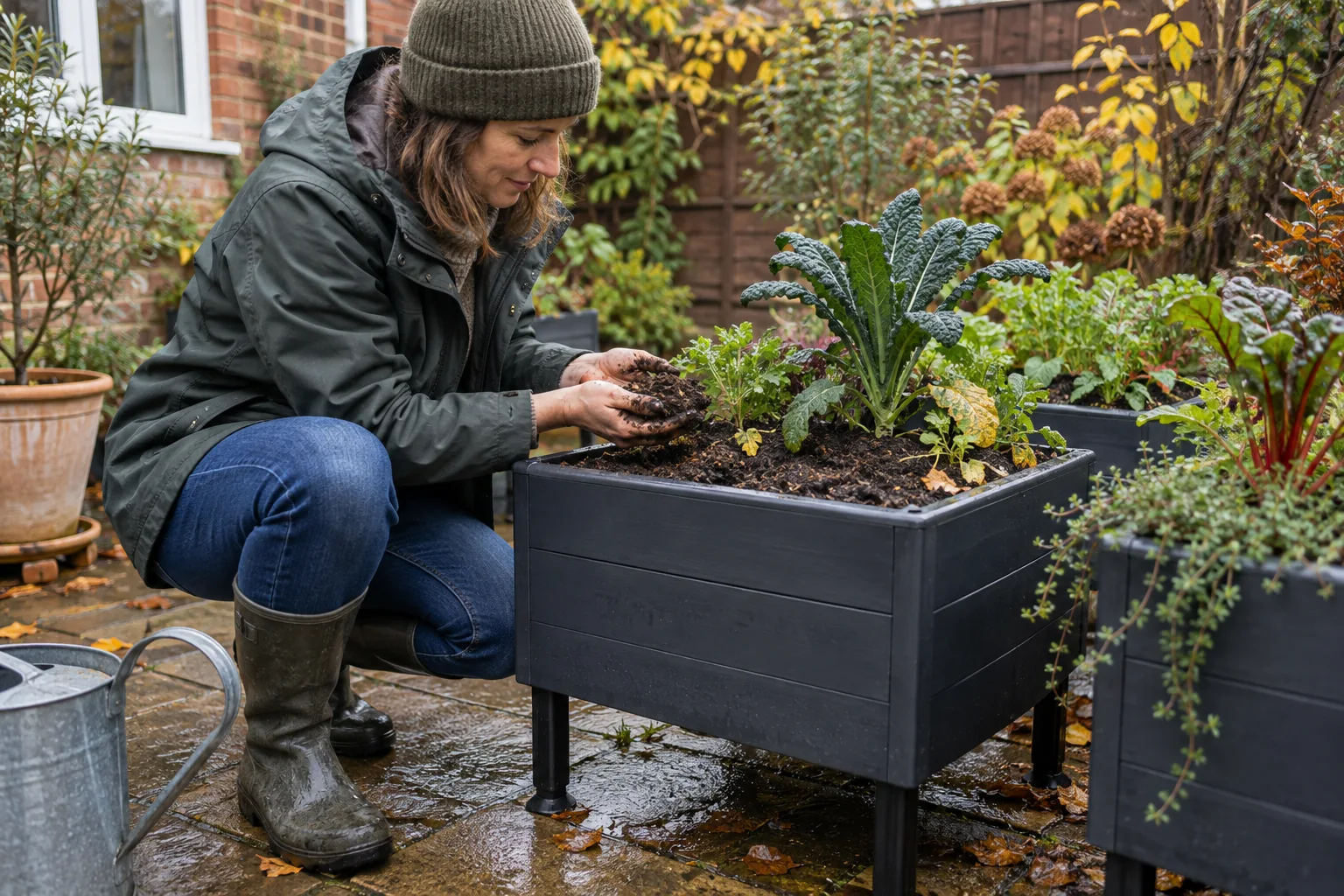
Keep the maintenance list short
Use a ten-minute circuit once or twice a week: clear the main path, check the drain, inspect pots, look for wind damage and collect any litter. Add a longer visit only when a specific job calls for it. Secure a loose trellis tie or move a lightweight item before a windy forecast; avoid undertaking structural work in unsafe weather. Check a small lawn from the path rather than crossing it when saturated. The RHS waterlogged-lawn advice explains why walking on very wet turf can worsen the surface.
November is also useful for recording what works. Which container stayed attractive, where did the path become awkward, and which corner had room for leaves? Make a simple sketch while the evidence is visible. This gives a better basis for spring changes than guessing in a dry month.
For rented spaces or a shared courtyard, agree which path and drain each person maintains. A brief, written routine prevents a neglected corner from becoming everybody's problem. Keep any temporary board or container arrangement tidy enough that another resident can reach the bins and emergency exits. Where there is no soil at all, a few well-drained pots and a clear walking surface remain worthwhile goals; there is no need to imitate a large garden's autumn checklist.
If several jobs are accumulating, prioritise safe access, drainage openings and plant stability. Cosmetic tidying can follow in a drier spell. A small garden should still feel alive in winter: a clear route and a few carefully managed containers are enough to make it welcoming without stripping every border.