
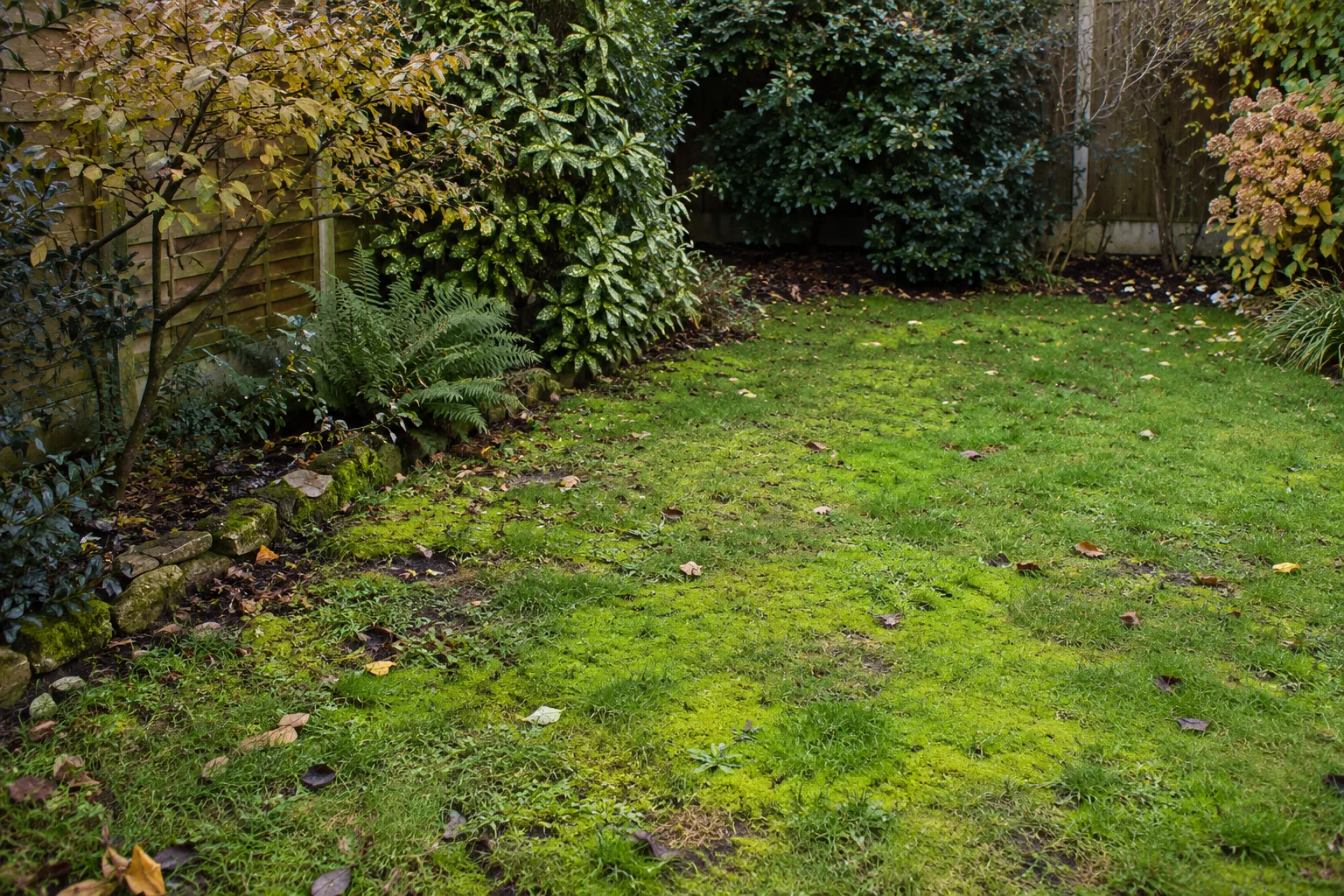
Moss in a lawn can be soft and green, yet frustrating if you want a durable grass surface. Raking it out may improve the appearance for a while, but it will often return where the same conditions remain. The useful starting point is to ask why grass is weak in that part of the garden. Shade, dampness, compacted ground, close mowing and wear can all give moss an opening.
Moss itself is not automatically a fault. The Royal Horticultural Society notes that it provides habitat and can be a sensible part of a shady or damp lawn. Decide first whether the area needs to be a grass lawn for play, access or appearance. If you are content with a mixed green surface, a campaign to remove every patch may create work without improving how the garden is used.
Map where the moss grows
Look at the pattern rather than treating the whole lawn identically. A strip beside a wall may be shaded for most of the year. A patch by the gate may be walked over repeatedly. A low corner may remain wet after rain. Moss under a tree may reflect shade, competing roots and limited moisture at different times. These are different problems, even if the green growth looks similar.
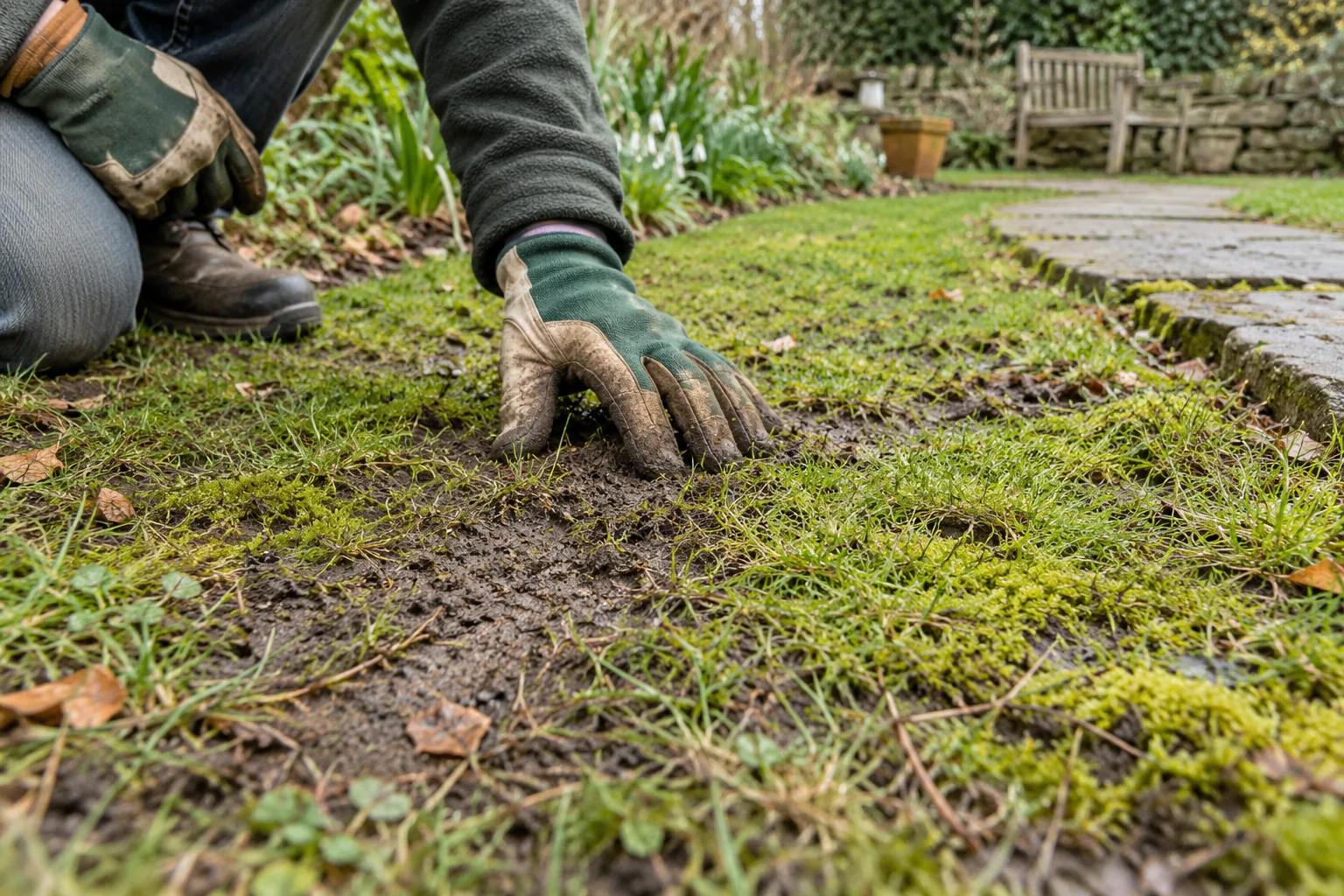
Check the lawn after a wet week and again after a dry spell. Does water stand on the surface, or does the ground merely feel cool and shaded? Is the soil hard where people walk? Is the grass thin because the mower cuts it very short? Photographs taken from the same position through the seasons can show whether the issue is persistent or follows a particularly wet winter.
Take a small soil sample from the affected area and compare it with a healthier part of the lawn. You may find a shallow layer of turf over building rubble, very different moisture or a dense surface that sheds water. Do not infer a hidden drainage defect from one puddle after exceptional rain. Repeated observations are more useful than one dramatic photograph, especially before paying for disruptive ground work.
Do not guess that acidic soil is the cause simply because moss is present. Some mosses favour acidity, but many conditions overlap. If a pH decision would change what you apply to the soil, use a suitable test and interpret it for the grass and soil you actually have. Adding lime without a clear reason is unlikely to correct shade, wear or standing water.
Help the grass where conditions can change
Raise the mowing height if repeated close cutting has left the grass sparse. Keep mower blades in good condition and avoid cutting when the ground is saturated. A taller, healthier grass cover can compete more effectively than stressed, scalped turf. Vary the walking route where possible, or provide a durable path along a route that must be used every day.
Where compaction is the main issue, aeration may help air and water move through the surface. The RHS recommends aerating and top-dressing as part of improving compacted lawns. Choose the method and timing for the soil condition, and do not force a machine over wet ground that will be further damaged. A small lawn may need a different approach from a large, heavily used one.
Consider whether surrounding plants can be pruned appropriately to improve light without harming their health or removing valuable shade. A north-facing yard may never receive enough direct sun for a conventional fine lawn. Shade-tolerant grass can improve a suitable site, but seed alone will not fix heavy traffic, waterlogging or an unsuitable surface. Our lawn mowing service can help establish a sensible cutting routine for the grass that is there.
Remove moss only as part of a wider plan
If you want more grass, scarifying can remove moss and dead material when the lawn is growing strongly enough to recover. The RHS identifies October or early November as a useful period in suitable conditions, but a cold, sodden late autumn lawn is a poor candidate for aggressive work. On a small patch, a spring-tined rake may be enough. Larger areas may call for a mechanical scarifier used at an appropriate setting.
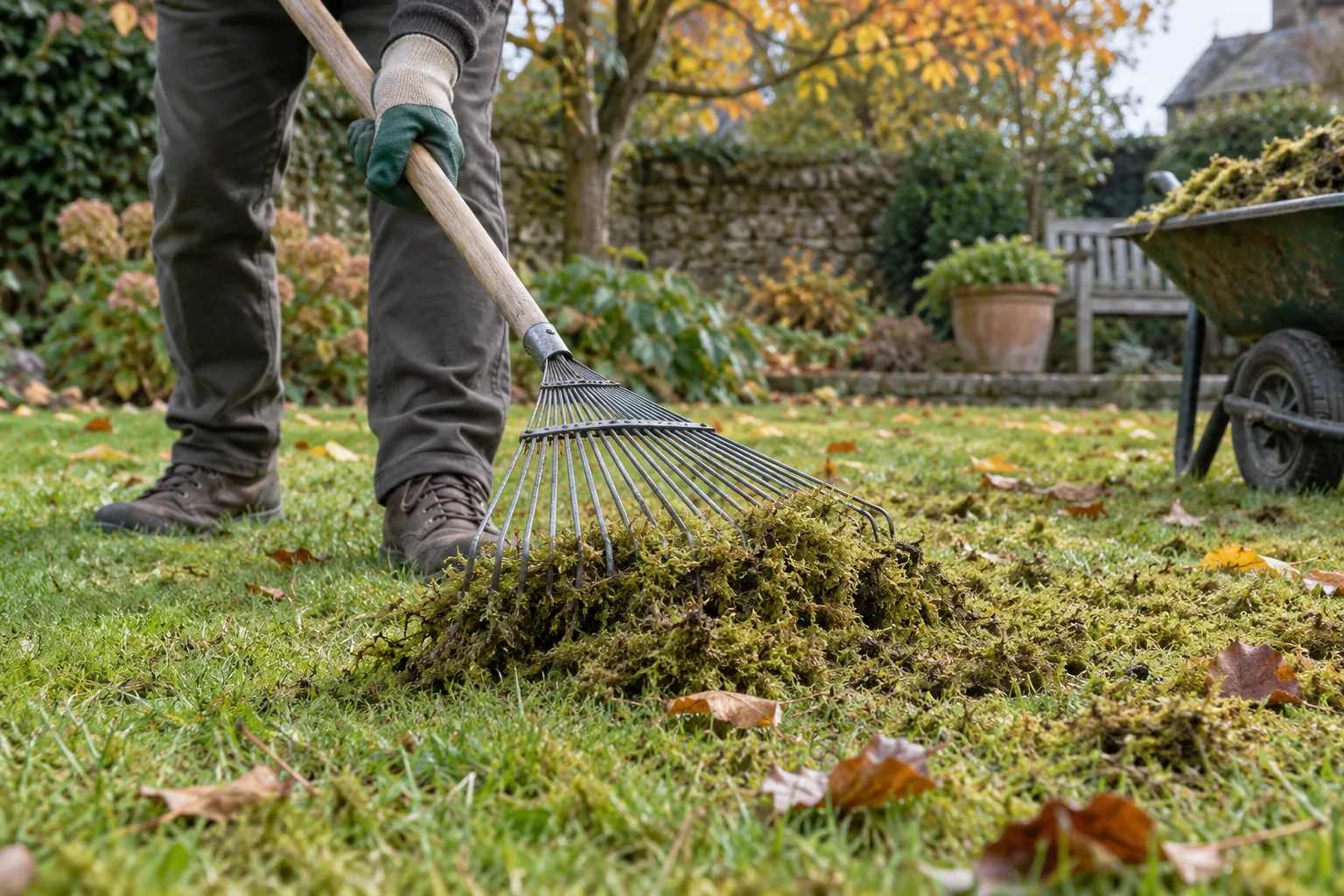
Expect the surface to look thin immediately after moss removal. Prepare to improve the growing conditions and reseed or repair bare areas at a suitable time. Remove excessive debris, choose a grass mixture suited to the light and expected use, and water new seed according to weather. If the ground remains compacted or deeply shaded, the repair may be short-lived. No moss product can permanently change the site conditions that favour moss.
Avoid doing every intervention on the same day simply because equipment is available. Heavy scarifying, deep aeration and reseeding all place demands on a weakened lawn. Plan a sequence around active grass growth, suitable soil moisture and your ability to water new seed. Where the lawn has almost no grass left, a careful renovation plan may be more efficient than repeated patch repairs.
Follow any product label carefully if choosing a treatment. Consider whether a non-chemical approach meets the need before applying anything. Keep children and pets away as the product requires, and avoid runoff into drains or water. Chemical treatment without addressing the cause can leave a brown patch followed by more moss. A soil and lawn assessment is usually a better first expense than repeated treatments.
Know when to change the surface or expectation
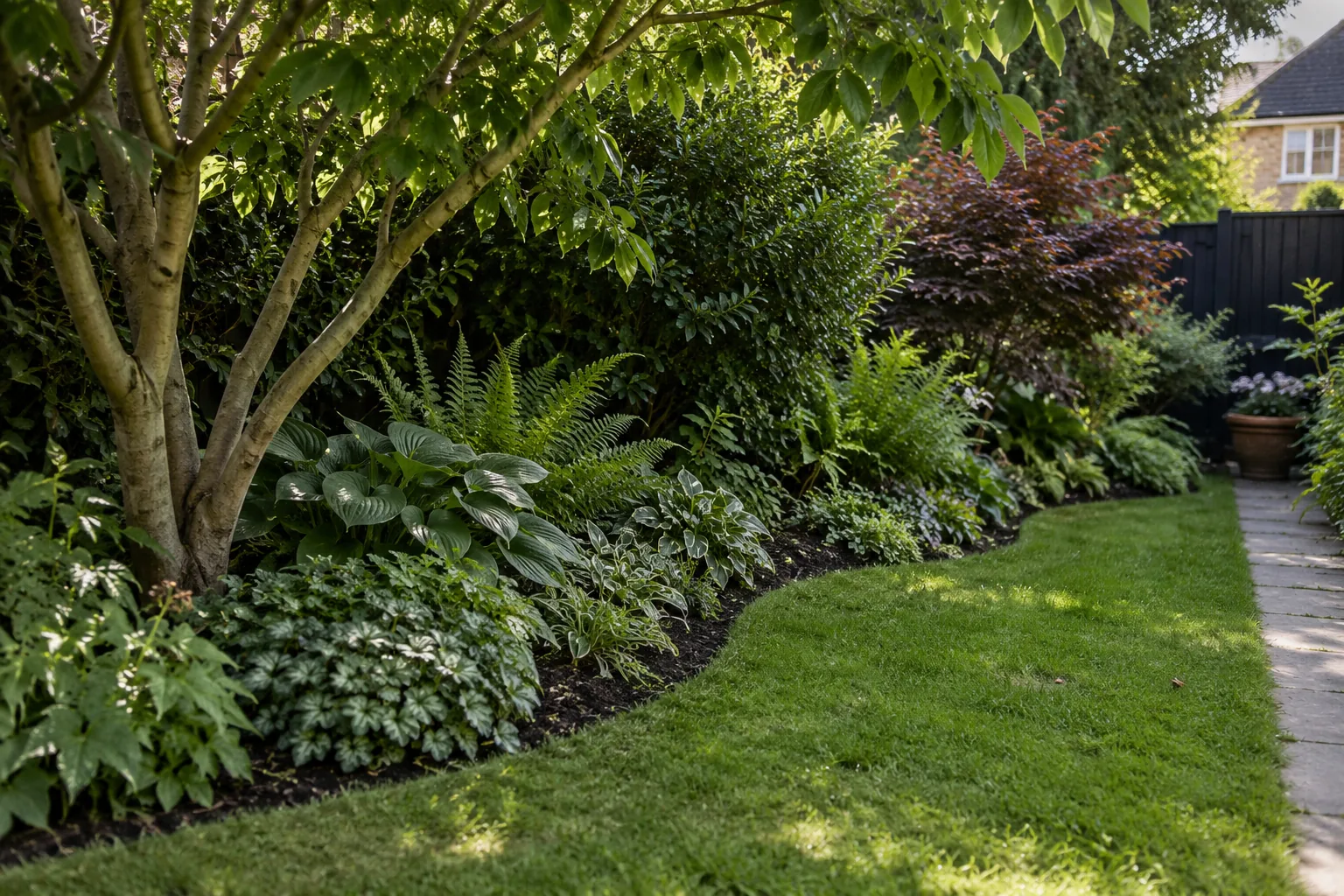
Sometimes the most durable solution is to stop asking grass to grow where it cannot thrive. A shaded strip beneath a boundary hedge may suit shade-tolerant ground cover better. A narrow route between doors may need a properly designed path, with planting at its edges. A damp corner might require investigation of levels and drainage before any new lawn is laid. Our garden design service can help plan a surface that fits how the space is used.
Do not make a major drainage change by simply directing water into another part of the garden or towards a neighbour. First establish where runoff comes from and where it can go safely. If a lawn is wet because of a blocked outlet, leaking pipe or altered ground level, that issue needs attention before sowing. For ordinary seasonal wetness, waiting until the soil is workable may be the most useful action.
Moss is a clue, not a complete diagnosis. Keep it if it suits the garden, or improve the conditions for grass where that is feasible. Map shade, wear, moisture and compaction, then match the repair to the cause. A Bristol lawn that is managed for its real site will usually demand less repeated raking than one treated as the same patch of turf everywhere.