
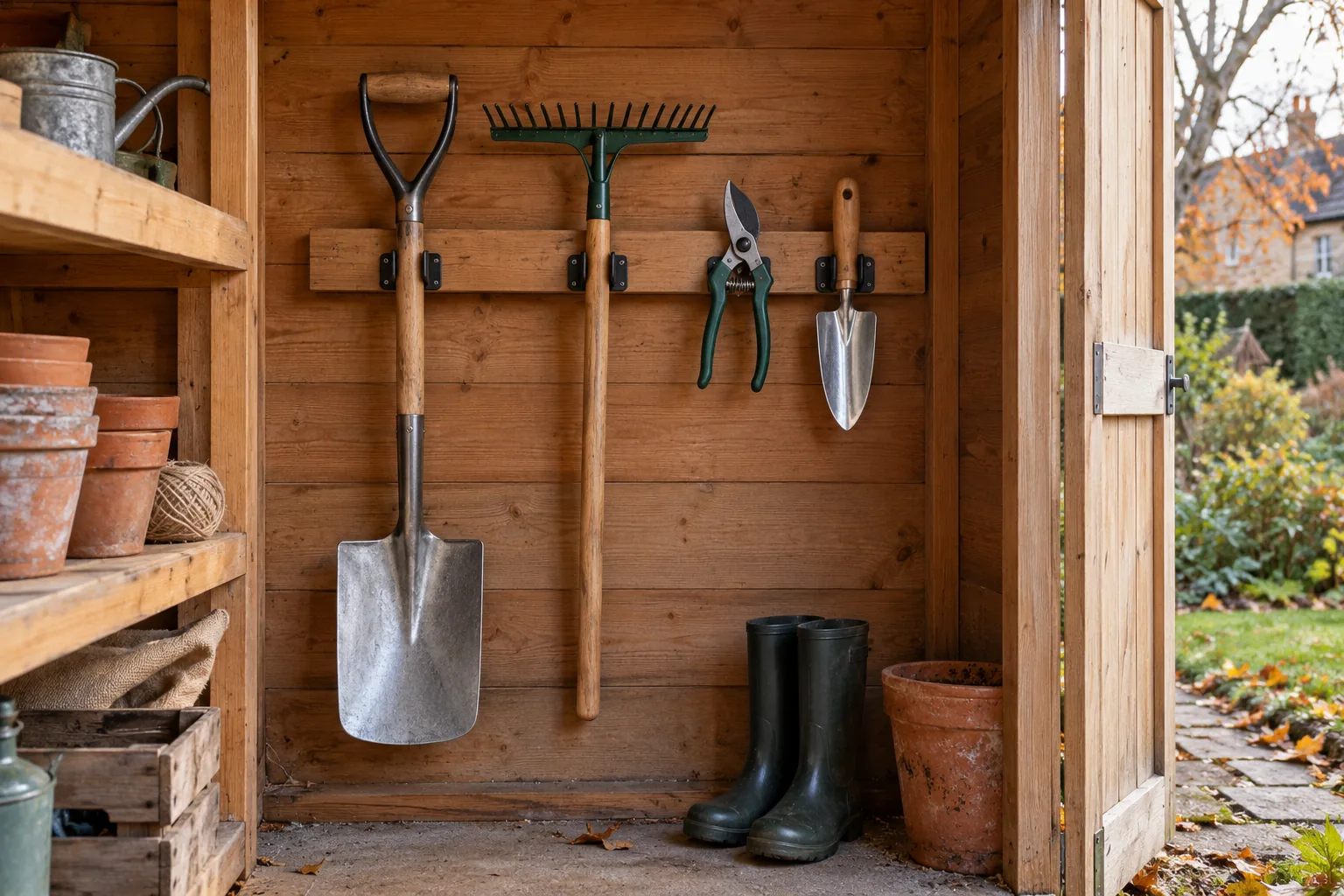
Putting tools away at the end of autumn is a small job that can prevent a frustrating start to spring. Wet soil left on a spade, sap on secateurs and a mower stored with grass packed underneath all make the next use harder. Winter storage is less about buying specialist products and more about cleaning, drying, checking damage and giving each tool a dry place. A simple routine also reveals which items need repair before the busy growing season.
Choose a dry day and lay out only the tools you can clean safely in one session. Wear gloves for sharp edges and follow the manufacturer's instructions for powered equipment. Keep children and pets away from blades and cleaning products. If a tool is damaged in a way that affects safe use, set it aside for suitable repair or replacement rather than hanging it back on the rack.
Clean soil and plant material first
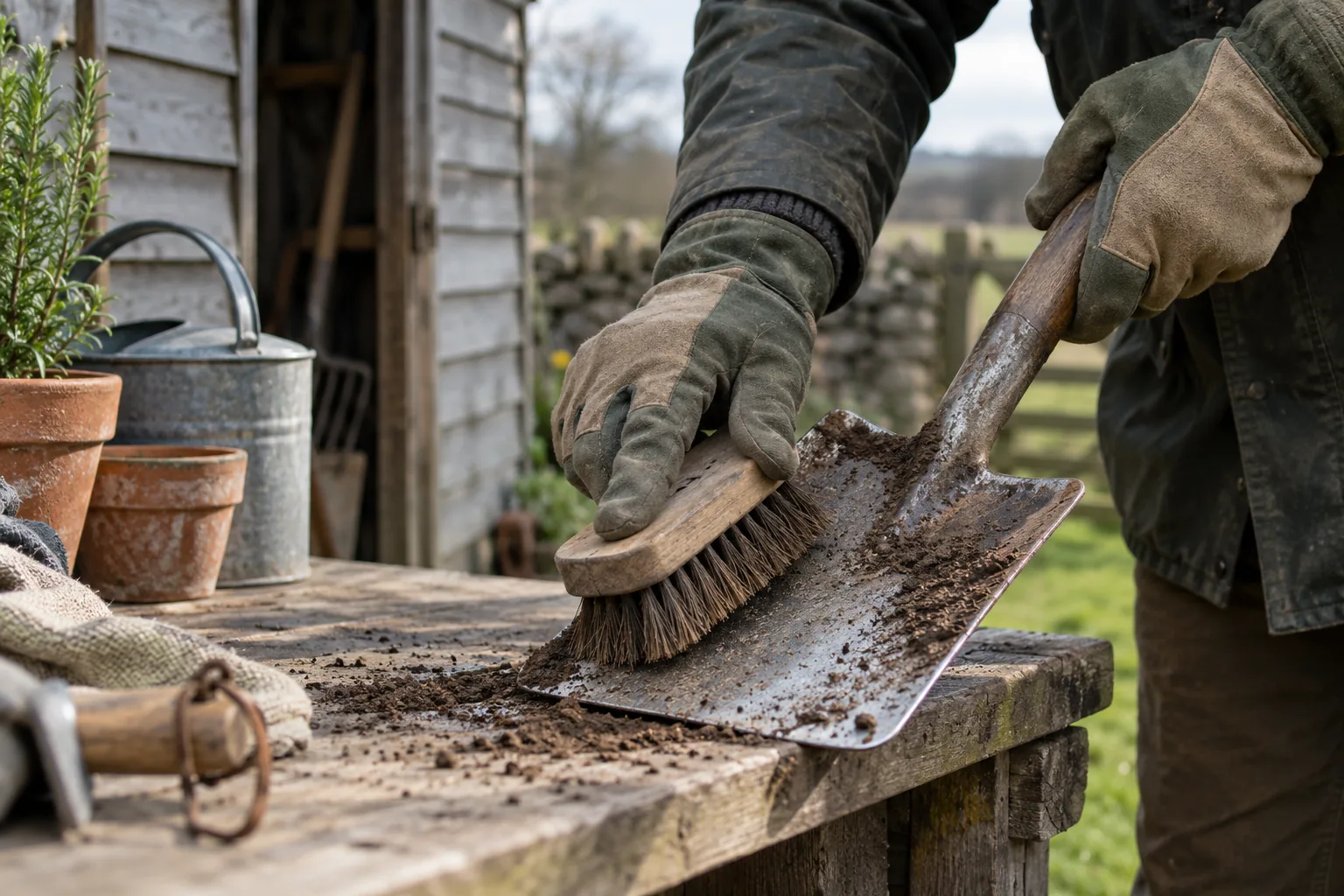
The Royal Horticultural Society recommends removing soil from digging tools with a stiff brush, washing very muddy tools when necessary and drying them afterwards. Scrape stubborn earth from a spade or fork without damaging the metal. Clean joints and the point where a blade meets its handle. Soil left in these areas holds moisture and can conceal cracks or looseness.
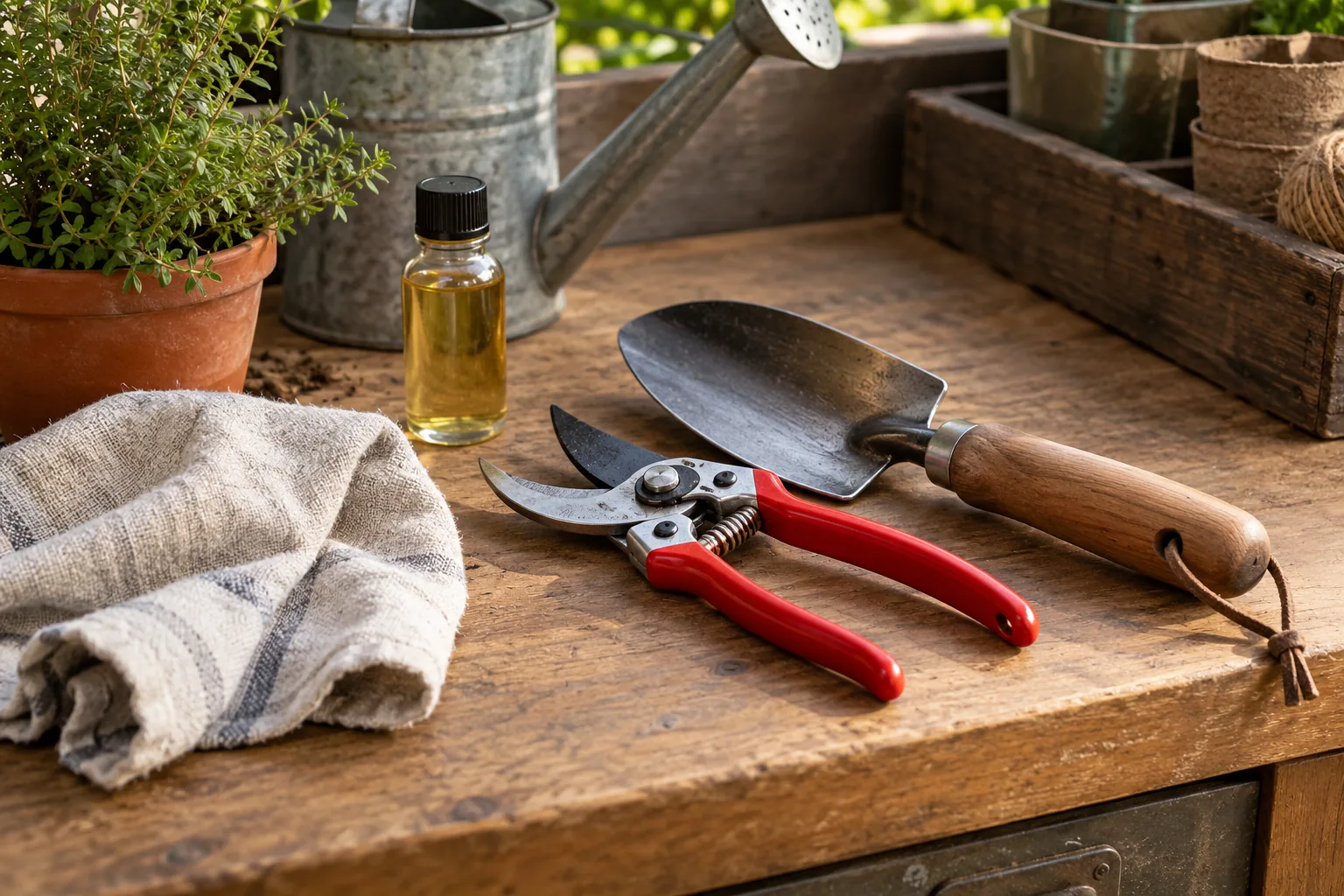
Secateurs and loppers need attention around the cutting blade and pivot. Dried sap can make them stiff and obscure a chipped edge. Use a suitable cleaning method for the tool and wipe it dry. Where a tool has contacted visibly diseased material, clean and disinfect it according to appropriate product directions before using it on healthy plants. Do not confuse ordinary cleaning with disinfection; both may matter in different circumstances.
Brush loose grass from rakes, shears and the outside of a mower. For powered equipment, disconnect its power source before working near the blade or underside, and consult its manual. Avoid directing water into electrical components or engine openings. A hose may make cleaning faster but can create a storage problem if the tool is put away wet. Finish with a dry cloth and allow hidden crevices to dry.
Clean boots and reusable garden trays before storing them too. Soil carried between gardens can move unwanted pests, diseases and weeds. A stiff brush is often enough for ordinary mud; if there has been a known plant disease problem, follow suitable hygiene advice for the affected equipment. Let trays and boots dry separately before stacking them in a closed cupboard.
Inspect and protect working parts
Run a careful visual check of blades, handles, bolts, springs and hinges. Splintered wooden handles, bent tines and loose heads are easier to deal with now than during the first spring planting weekend. Tighten only parts designed for owner adjustment and seek repair advice where the fix is unclear. Do not improvise a handle repair on a tool that will be used with force.
The RHS notes that a light protective film of suitable general-purpose oil has traditionally been used on cleaned metal to reduce rust. Some modern stainless-steel tools need less of this care. Wipe away excess product, wear gloves as directed and follow the tool and oil manufacturers' instructions. A drop of appropriate lubricant at a secateur pivot can restore smooth movement after cleaning. Keep oil off grips and surfaces where it would make handling slippery.
Sharp tools work better, but sharpening is not a race. Check the original blade shape and the manufacturer's guidance before using a file or stone. Replace a damaged blade where the tool allows it. If you are unsure, a competent sharpening service may be safer than removing too much metal. Reassemble and test moving parts without placing fingers across the cutting edge.
Give powered tools their own checklist
Electric, battery and petrol equipment have different storage requirements. Read the manual for the exact model, including battery charge and storage guidance, fuel handling, cleaning and servicing intervals. Remove or isolate the power source before maintenance as directed. Do not assume the procedure for a corded mower applies to a cordless trimmer or a petrol machine.
Inspect cables and plugs for visible damage, but leave electrical repair to a qualified person. Store batteries and chargers in conditions allowed by the manufacturer, away from damp and extreme temperatures. Petrol tools may require fuel treatment or draining according to their manual; do this only with appropriate ventilation and fire precautions. If servicing is overdue, book it while demand is lower rather than discovering the problem when the grass is growing quickly.
Make a note of the model, parts and any fault you observed. A simple label tied to an unusable machine prevents someone else trying to start it. Store blades and attachments together where possible, with guards fitted. Keep manuals or a photograph of the model plate in a place you can find when ordering a replacement part.
Arrange a dry, accessible storage space
Tools should be dry before they go into a shed or cupboard. Check for roof leaks, condensation and water entering under the door. A rack can keep spades off a damp floor and make sharp edges easier to see. Do not hang a heavy tool from an unsuitable wall or an improvised hook that may pull out. Leave room to remove one item without dragging down the whole collection.
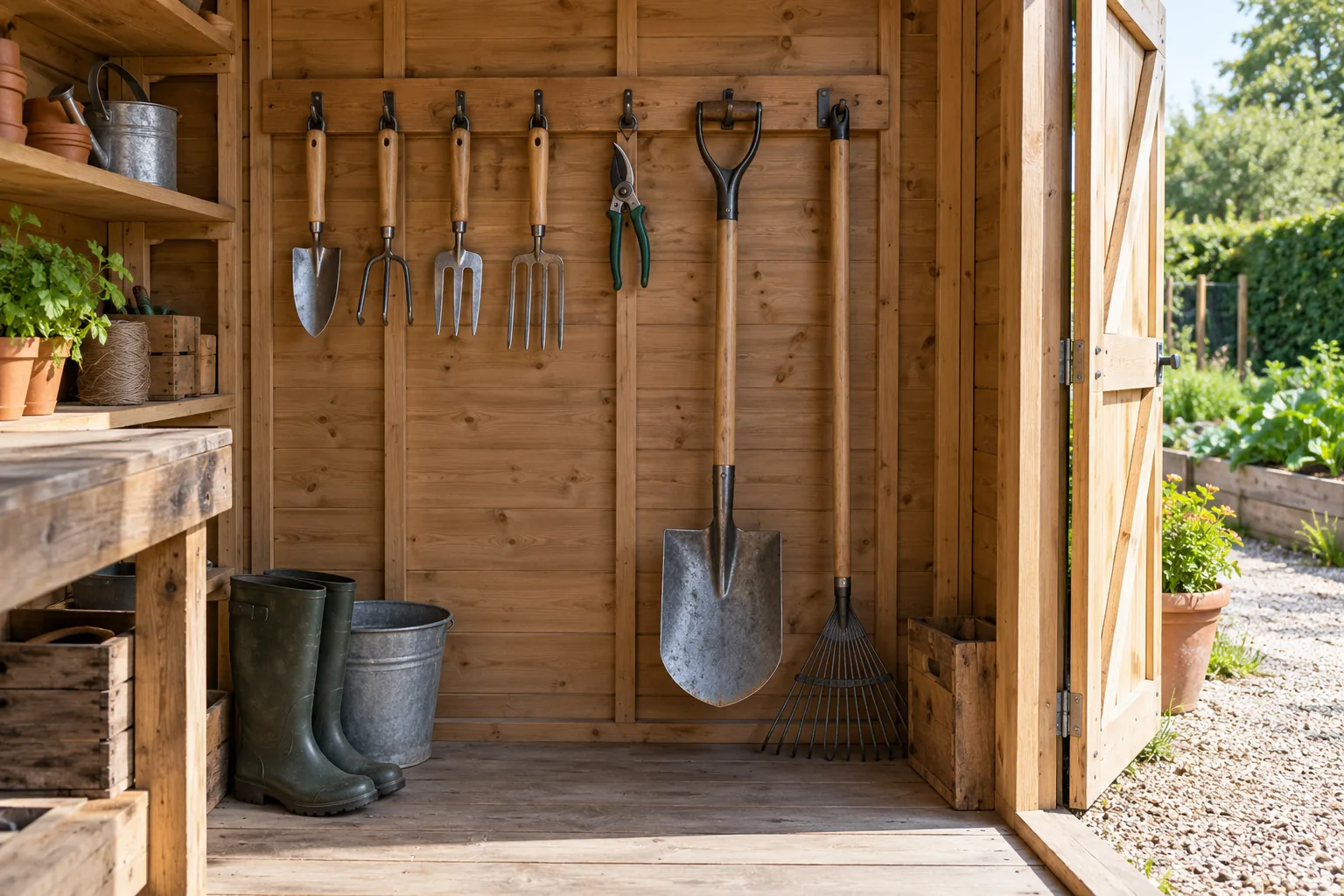
Separate chemicals, fuels and batteries according to their labels and manuals. Do not leave them beside heat sources or where children can reach them. Sweep the storage floor and remove wet leaves; a clean space makes new leaks or pest activity easier to notice. Keep a clear route to items you may need in winter, such as a broom, leaf rake and hand fork. Our garden maintenance service can help with seasonal garden tasks while your equipment is being serviced.
Before closing the shed, list any missing parts, worn gloves or tools to sharpen. Photograph the organised rack so it is easier to put everything back after a winter job. If you share the equipment, agree which tools are ready to use and which have been set aside for repair. The goal is a safe, usable collection rather than a perfect display.
If a seasonal garden clean-up produces a large pile of wet leaves or cuttings, deal with that material before stacking tools against it. Damp debris can hold moisture against handles and make the storage area harder to inspect. Keep plant waste in an appropriate composting or collection area, clear of the tool rack and shed door.
A final clean and inspection can be completed in stages. Start with the tools used most often, dry them thoroughly and store them where they remain accessible. Then handle specialist equipment according to its manual. When the first spring job arrives, you will know what is ready and what still needs attention, instead of starting by scraping last autumn's mud from a blade.