
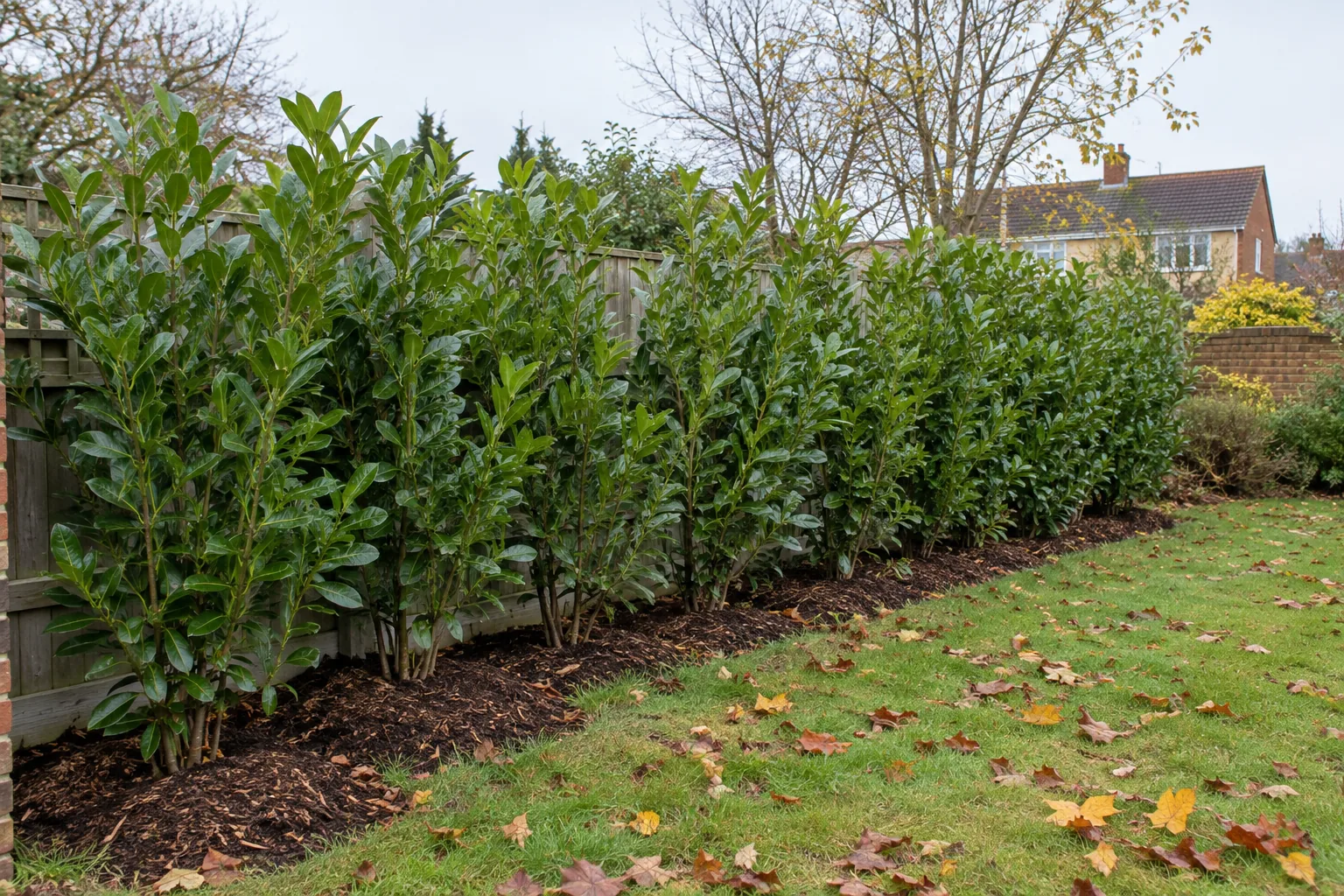
A new hedge can look settled after a week of rain, yet still be vulnerable to drying. Its roots occupy a limited area and may not draw enough water when cold wind strips moisture from evergreen leaves. A deciduous hedge has fewer leaves to lose water through in winter, but its roots still need good contact with workable soil. The best protection is a sensible combination of planting depth, moisture checks, mulch and shelter where exposure is severe.
Do not assume that every winter problem is drought. Waterlogged ground, buried stems, wind rock and damaged roots can produce similar weak growth later. Start by identifying the species, when it was planted and how the site behaves after rain. A row beside a wall or under an overhang may receive less rain than the open garden only a metre away.
Record which plants came as bare-root stock and which came in containers. Roots can differ in how far they extend into the surrounding soil at first, and a dry container compost rootball may behave differently from the bed around it. Check each plant's root zone rather than relying on the weather report alone. If you did not plant the hedge yourself, ask for the species and aftercare instructions from the installer.
Check the planting before adding protection
Walk the hedge after a calm, dry spell. Are plants upright and firm? Is the base of each stem visible above the soil and mulch? Is there a gap where wind has rocked a plant loose? The Royal Horticultural Society advises placing hedging plants at their previous soil level and keeping the first root flare visible if the old mark is unclear. A deep-set plant cannot be fixed by piling on more compost.
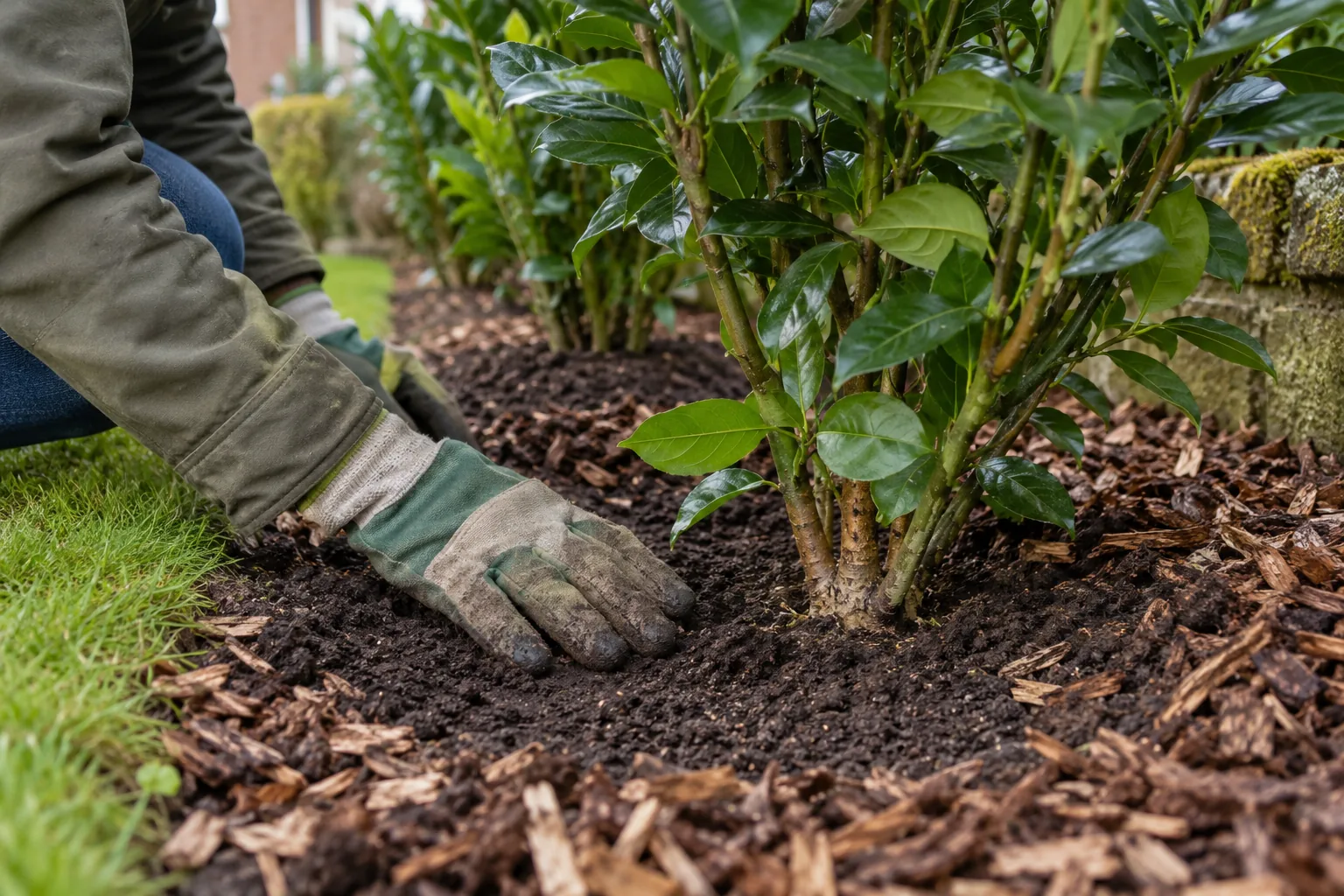
If a plant has loosened, gently firm the surrounding soil when it is workable, rather than stamping wet clay into a hard surface. Recheck after the next storm. Larger, exposed plants may need an appropriate temporary support, but a line of small whips should not automatically be tied to a rigid structure. Supports must avoid rubbing stems and should be inspected as growth begins.
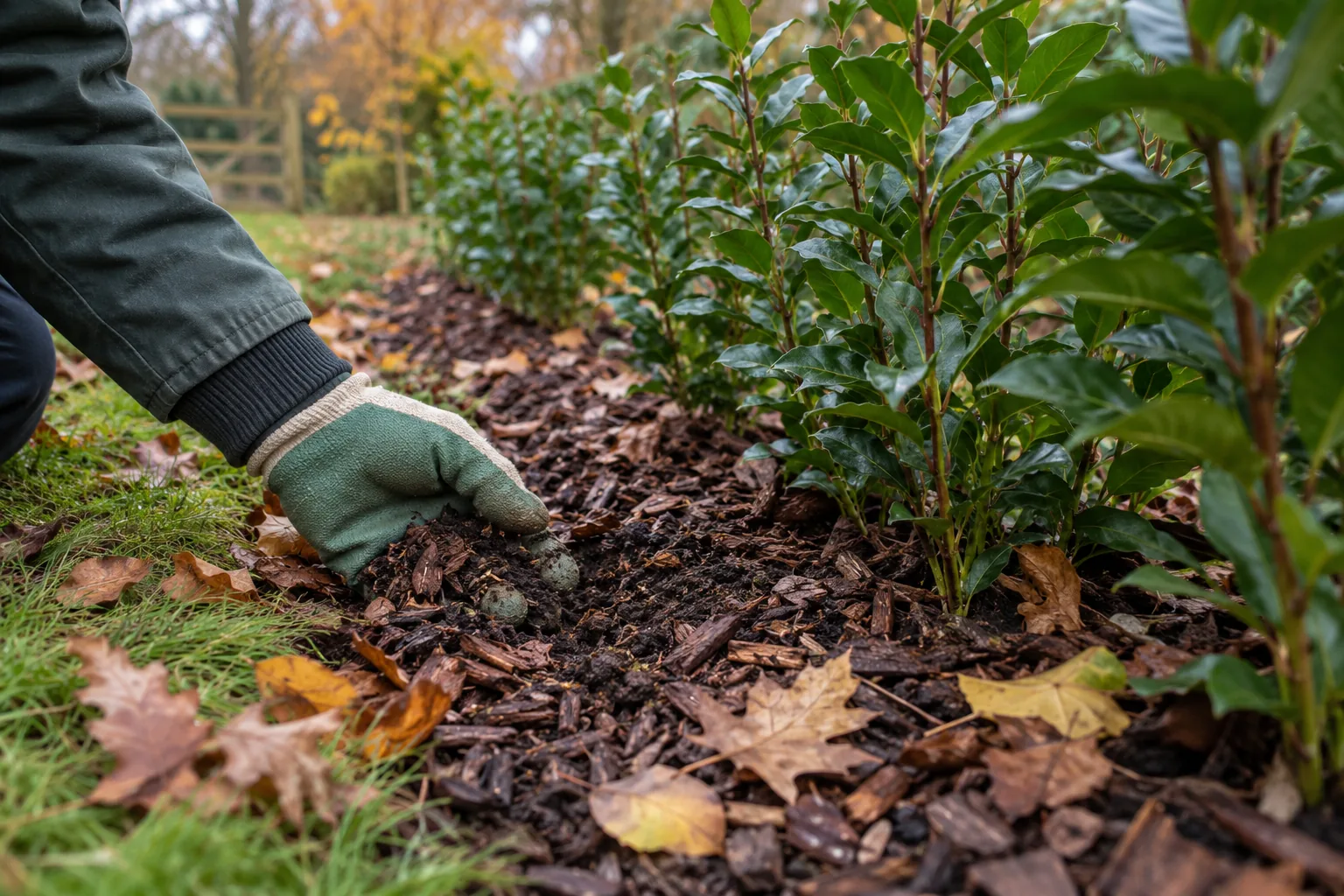
Keep competing grass and persistent weeds away from the root zone. A suitable organic mulch can reduce evaporation and weed growth, but leave a clear space around each stem. Mulch heaped against bark can hold moisture at the base and hide planting-depth problems. Do not bury the plants in a ridge of material to make the row look tidy.
Read the moisture below the surface
Winter rain is helpful but uneven. Push a finger or a small hand tool into the soil beside a plant, without damaging roots, to check below a dry-looking surface. A plant under eaves may need water while one in an open, low section is saturated. Water when the root zone is genuinely dry and the soil can absorb it; do not add water to ground already wet enough to smear and pool.
The RHS recommends regular watering of newly planted hedges for the first two years. That does not mean watering on a fixed weekly schedule through every winter. Frequency depends on rainfall, drainage, soil and species. A thorough watering during a dry, mild period may be useful; a light daily sprinkle can encourage a misleading damp surface while leaving the roots short of moisture.
Containers and raised beds need separate attention because their limited soil volume can dry or freeze faster than open ground. Check drainage holes and whether water is trapped in a saucer. If the hedge is planted in an elevated trough, consider the weight, exposure and irrigation plan from the outset. A hedge intended as a permanent boundary generally needs enough root volume to establish; a shallow decorative trough can make care demanding.
Reduce wind stress without sealing plants in
A newly planted evergreen in an exposed position can lose moisture from its leaves when wind is strong and roots are slow to replace it. Where the site justifies it, a temporary, breathable windbreak set on the windward side may reduce stress. Leave air movement around the plants and avoid wrapping an entire hedge tightly in plastic. Check fixings after storms so the screen itself does not fall onto the plants.
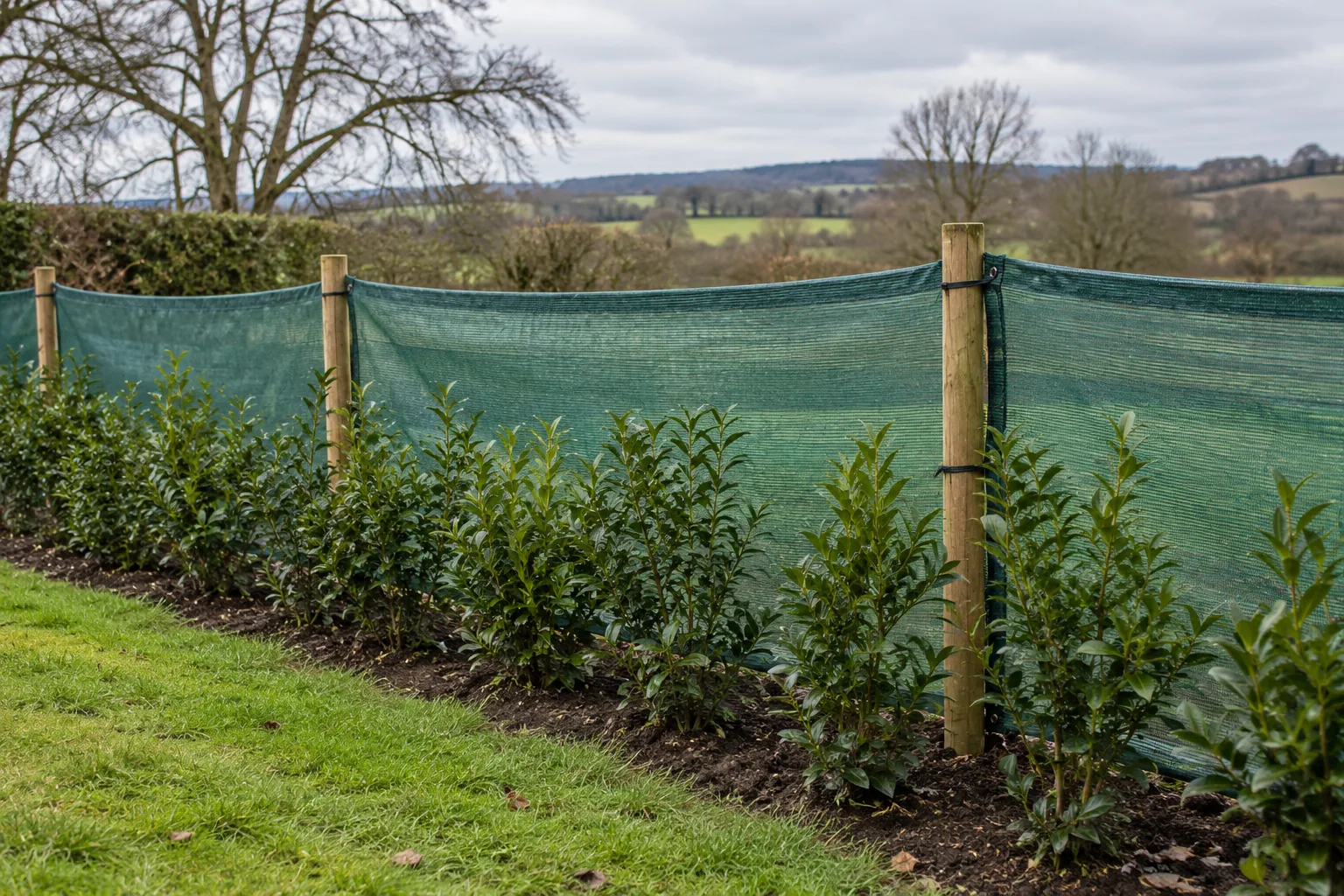
Choose shelter proportionate to the site. A city courtyard protected by walls may need no screen at all, while an open boundary may be exposed to persistent wind. Also consider salt spray near roads, reflected heat from paving and shade cast by buildings. The best long-term answer can be a species suited to that exposure rather than a permanent arrangement of seasonal covers.
Check the screen from both sides of the boundary before fixing it. A temporary panel must not block a gate, public route, drain or neighbour's access. Where posts are needed, find buried services first and make sure the support can withstand local gusts. If the planting is on a shared line, agree any attachment to shared structures before work begins.
Avoid late, heavy pruning merely to make a young hedge look uniform. Establishment comes first, and pruning timing differs between species. Remove broken growth cleanly where necessary, then follow suitable species guidance for formative pruning. Our hedge trimming service can assess the right timing and shape after the plants have settled.
Watch the hedge through spring
Winter protection is only the beginning. As temperatures rise, new growth and longer days increase water demand. Inspect the row weekly during dry spells, especially where roots compete with an established tree or boundary planting. A single failing plant may reveal a buried drain, rubble pocket, dry overhang or damaged root system rather than a problem across the whole hedge.
Do not judge establishment from early buds alone. Plants can use stored energy to leaf out before roots have grown into surrounding soil. Look for sustained growth, even leaf colour and firm stems through the first summer. Keep notes or photographs of the weak points; these make it easier to identify a pattern and replace a failed plant in a suitable season. Our garden maintenance service can include these establishment checks.
If leaves brown, first check moisture and drainage rather than applying fertiliser automatically. Confirm whether the affected growth is old or new, and whether the damage faces the prevailing wind. A severe symptom may need a plant-specific diagnosis. Feeding a stressed hedge without solving its water or root problem can waste money and delay a useful correction.
The practical winter routine is short: check that plants remain at the right level, keep mulch clear of stems, test soil moisture and inspect after strong wind. Water only when conditions call for it, and provide breathable shelter where exposure is real. These actions help a young Bristol hedge reach spring with its roots and growing points in better condition.