
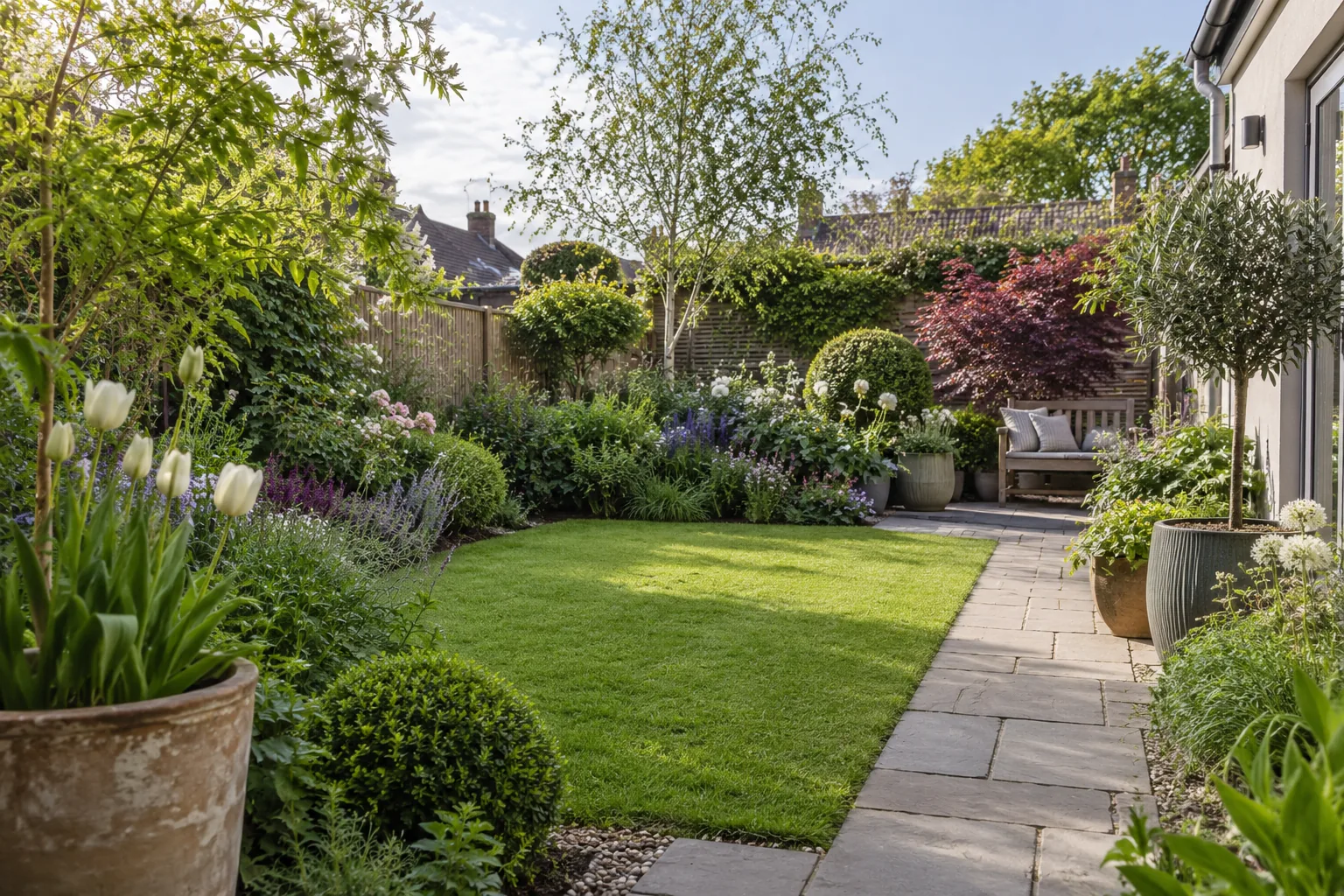
Low-maintenance is a useful design goal, but it is not a promise that a garden will look after itself. Plants grow, leaves fall, weeds arrive and drains still need checking. The real question is how much time you can reliably give the space, which jobs matter most to you and where a simpler layout can reduce repeated work. A garden planned for a realistic routine is more enjoyable than one that demands a perfect weekend every week.
Start with an honest time budget. Ten minutes twice a week is different from one uninterrupted hour on a Sunday. A household away for several summer weeks needs a different planting and watering plan from one with someone at home daily. Include the work you dislike as well as the work you enjoy. You may love pruning roses but never want to edge a lawn.
Count the recurring jobs first
Walk through the garden and write down what currently needs doing in a typical spring, summer, autumn and winter. Mowing, hedge cutting, watering pots, sweeping paths and removing weeds recur at different rates. A plant label may tell you about eventual size but not the minutes you will spend reaching behind it to clear leaves. The Royal Horticultural Society points out that no garden is entirely free of maintenance, yet design choices can reduce the load.
Separate essential safety and access work from appearance. Clear a slippery route, keep doors and drains accessible, and inspect unstable branches or damaged structures. A border can be slightly untidy for a week without causing trouble. This distinction helps when time is limited: you can decide which jobs must happen now and which can wait for the next visit.
Estimate a baseline in ordinary conditions, then allow for seasonal peaks. New planting needs more attention in its first year. Summer drought can make containers demanding; autumn leaf fall may create a short burst of clearing. A low-maintenance garden is one whose peaks you can manage or arrange help for, rather than a space that never has a busy month.
If you are making a plan for someone else, ask them to describe a normal week rather than an ideal one. Access, strength and confidence with tools may change over time. A garden that depends on lifting heavy pots or climbing a ladder for routine care is unsuitable if those jobs cannot be done safely. Identify tasks that can be redesigned away and tasks that require occasional professional help.
Simplify the layout before changing every plant
An awkward shape can create work even when the plants themselves are easy. Tiny strips of lawn between beds take longer to mow than one coherent area. Numerous small pots dry at different speeds. Borders too narrow for mature shrubs need repeated pruning to preserve the path. Measure the usable routes and decide where planting can grow naturally without blocking them.
Keep a surface you can clean with the equipment you own. Complex paving patterns, inaccessible corners and poorly drained low spots can each add maintenance. Existing sound paving may be worth retaining rather than replacing it for fashion. A clear route from door to gate makes weeding, watering and bringing tools through the garden easier. Our garden design service can help make those everyday movements part of a redesign.
A lawn can be simple if it is accessible, reasonably level and suited to the light. It becomes demanding where there is deep shade, heavy wear or persistent wetness. Decide whether you want a closely cut surface or can accept longer grass and seasonal flowers in a less-used area. Either choice still needs management, but the routine is different. Do not replace every troublesome patch with hard surfacing without considering water movement and the look of the space.
Select plants for their future size and site
The right plant in the right place is one of the most effective ways to reduce work. Check mature height and spread, soil moisture, exposure and light before buying. A fast-growing hedge next to a narrow passage may need frequent cutting. A drought-tolerant plant in heavy, persistently wet soil may fail despite its reputation for being easy. Choose a restrained mix that can fill the space at maturity without constant correction.
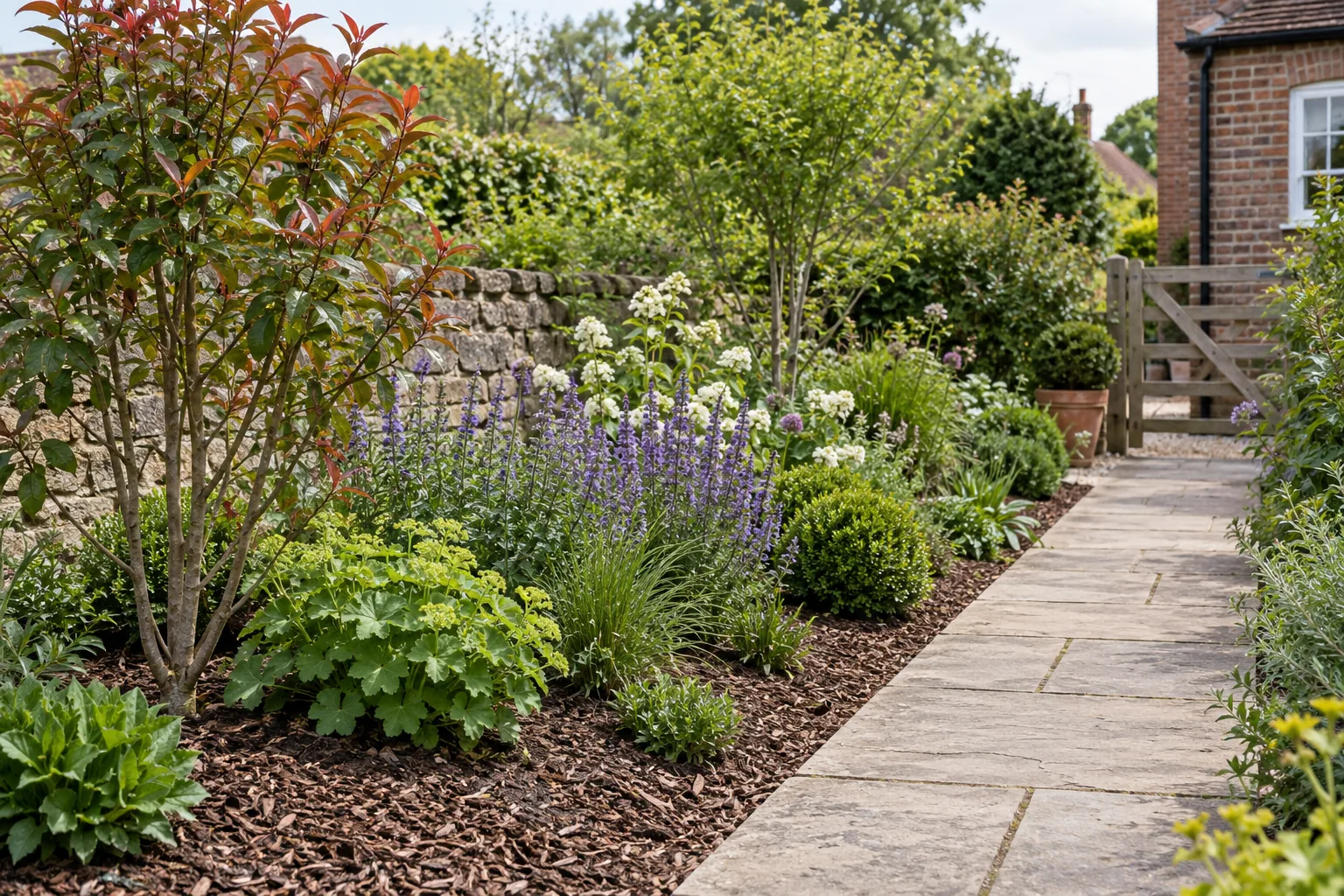
Ground-covering plants and a suitable mulch can help suppress weeds while borders establish, though neither removes the need to inspect and hand-weed. Keep mulch away from stems and avoid burying existing plants. Perennials that die back may need a seasonal tidy, while evergreen structure can remain visible through winter. Balance both if you want interest without frequent bedding changes.
Containers are helpful where there is no open soil, yet a collection of tiny pots can be a high-maintenance choice. The RHS notes that container plants generally need regular watering and feeding because their root space is limited. Larger suitable pots, grouped near a water source, may fit a limited routine better. They still need drainage checks, repotting and winter care where appropriate.
Build a routine you will actually keep
Try a short weekly walk-around: remove obvious weeds while small, check moisture in new plants and pots, look at paths and drains, and note anything that needs a longer session. A monthly block can handle pruning at the correct time, edging, compost or mulch work and tool maintenance. The timing depends on plants and weather; a rigid calendar is less useful than observing conditions.
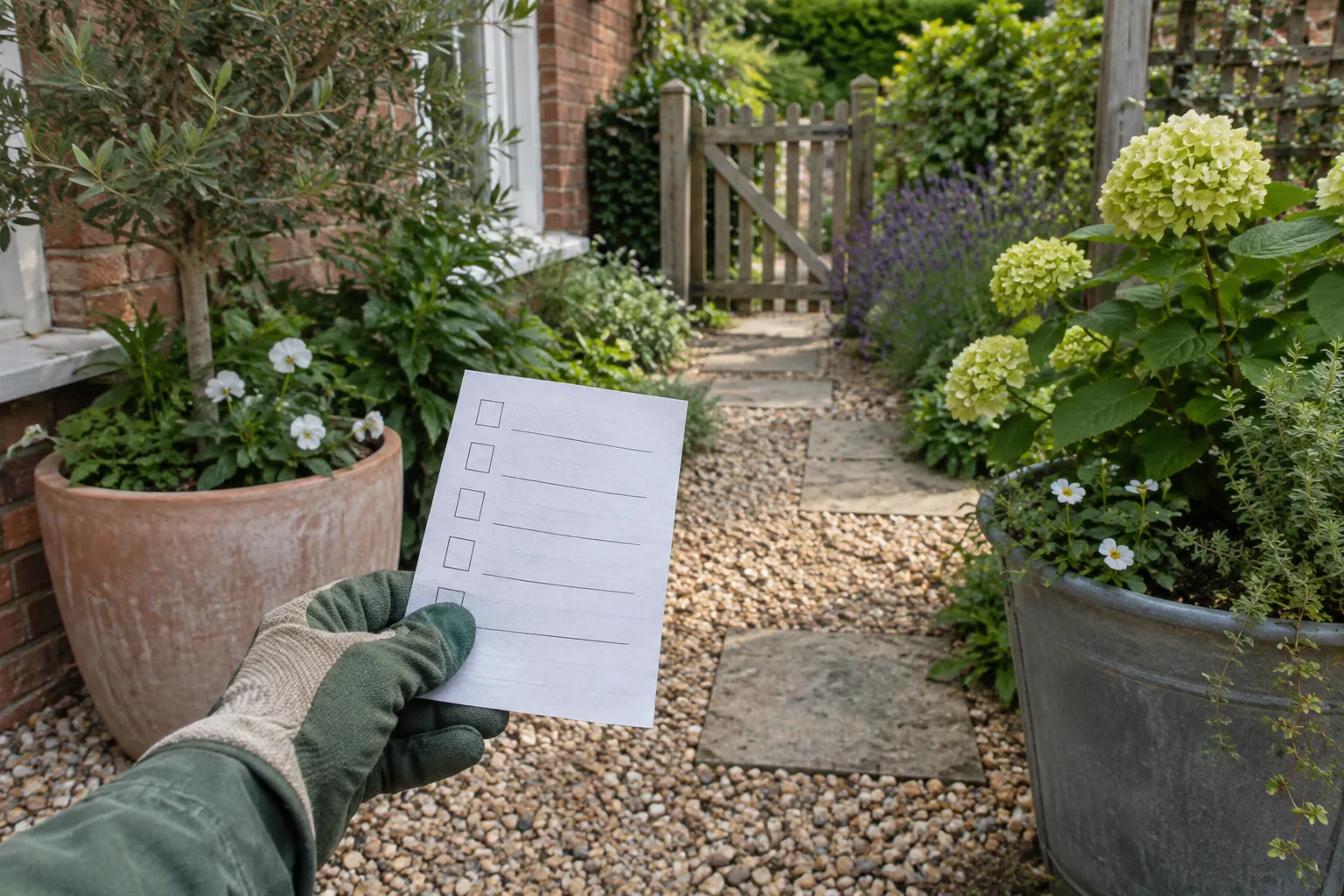
Batch related jobs to reduce setup time. If the mower is out, do all the grass areas; if pruning tools are clean, finish one appropriate group of plants. Keep a small set of reliable tools where they can be reached quickly. Plan how green waste leaves the property, because a full bag left on a narrow path creates another job. Our garden maintenance service can cover recurring tasks if your available time is best spent on planting or enjoying the garden.
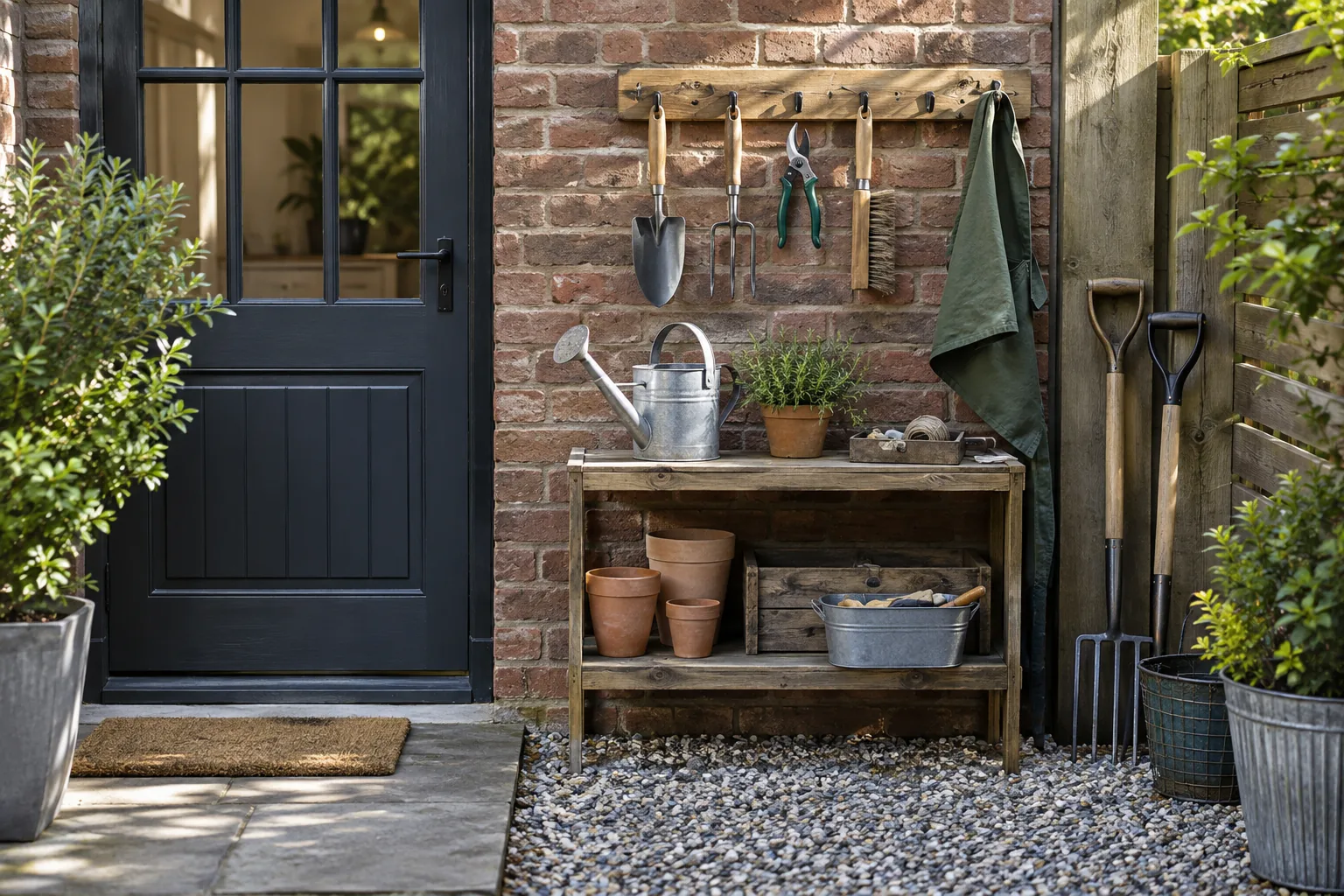
Review the plan after a season. Record which parts looked good with little effort and which repeatedly needed rescue. A plant that needs weekly watering in a spot you rarely visit may be better moved or replaced during a suitable season. A lawn edge that always takes too long may need a clearer shape. Change one source of repeated work at a time and see whether the routine improves.
The best low-maintenance garden is not bare or static. It matches its owner's time, ability and priorities. Give new plants proper establishment care, make access easy, and choose a manageable level of neatness. With those decisions in place, a small amount of regular attention can keep a Bristol garden useful and attractive without turning every free day into a long list of chores.