
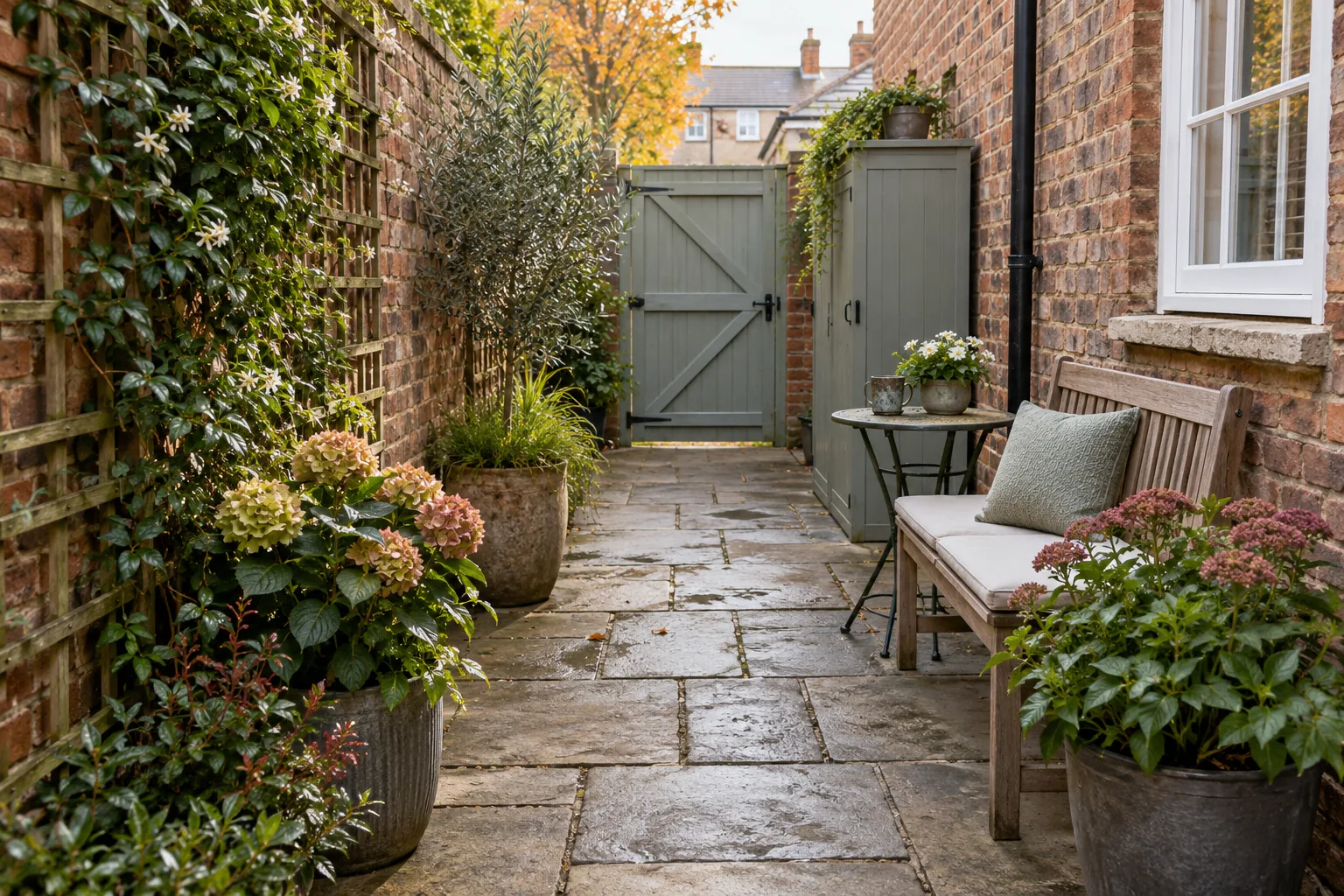
A narrow yard can look full before it feels useful. A bench occupies the sunny corner, the bin blocks the gate and a collection of small pots leaves little room to walk. The answer starts with measurements and daily routines, rather than choosing furniture from a photograph. A modest yard can support seating, practical storage and healthy planting when every item has a clear place and the route through it still works.
Begin by deciding what the space must do on an ordinary weekday. You may need to carry a bicycle through, reach a rear door, put out bins or sit with two people and a cup of tea. Those movements set the layout. The remaining area can then hold plants that suit the light and the time available for care.
Draw the route before buying furniture
Measure the yard at several points: old walls and boundary lines are rarely perfectly straight. Record door swings, steps, taps, drains, inspection covers and the direction of the sun at the times you would actually sit outside. Mark where rainwater runs after a shower. A layout that looks generous on paper can fail if the chair legs obstruct a door or the storage lid cannot open fully.
Use string, cardboard or movable containers to test the footprint of a proposed bench and storage unit. Walk the route carrying the objects that normally pass through it. Leave room to turn at the gate and to clean behind fixed items. If a wheelchair, pushchair or mobility aid is part of the household, test the real turning and access needs with the person who uses it. A narrow yard should be planned around those needs from the outset.
Put the most frequent activity nearest the appropriate access point. A seat beside the kitchen may be convenient, but only if opening the back door does not trap someone behind it. A storage box next to the gate can simplify bin day, provided it does not narrow the exit. Our garden design service can help map these competing uses before paving or built-in work begins.
Choose a seating footprint that earns its place
One comfortable seat used often is better than a large dining set that must be shifted every day. A wall-side bench can keep the centre of the yard open. Folding chairs work where storage is genuinely accessible; otherwise they may become permanent obstacles. A small movable table can serve drinks without fixing a broad surface into the route.
Check the seat at the hour you expect to use it. A south-facing wall can feel pleasantly warm in spring yet uncomfortably hot in summer, while a shaded end may be damp long after rain. Think about privacy at seated eye level, not just while standing. A planter or light screen can soften a view, but a solid barrier may make a narrow space darker and restrict air movement.
Materials need to suit exposure and upkeep. Timber may need periodic treatment according to its specification; metal can heat in strong sun; cushions need a dry home. Do not assume a storage bench is waterproof enough for textiles without checking its design and the conditions where it sits. Test whether the bench lid can lift when the seat is in its final position.
Give storage a specific job
List what actually needs to live outside: perhaps hand tools, a hose, a small bag of compost or the folding seats. Measure those items before selecting a box or cabinet. Long-handled tools may fit better on a securely fixed rack than in a deep chest. Keep hazardous products in suitable, secure storage according to their labels and away from children and pets.
Raised feet or a suitable base can help keep some units out of surface water, but the detail depends on the product and the yard. Do not cover a drain or make an inspection chamber inaccessible. A tall store can cast considerable shade on a small bed, so draw its shadow as part of the planting plan. If a unit needs fixing to a boundary wall, confirm ownership, construction and the manufacturer's fixing instructions first.
Avoid using every vertical surface for shelves and hooks. A wall crowded with items can make the yard feel narrower and complicate maintenance. One organised storage zone is easier to use than several tiny boxes scattered along the route. Leave space to wash the paving and inspect the wall behind the store.
Plant in layers without stealing the path
Plants bring softness and seasonal change, but their mature size matters more than their size at purchase. A single climber on a suitable support may use less ground than several broad shrubs. Check how it attaches, whether the wall or trellis can support it and how often it will need tying or pruning. Keep growth clear of windows, gutters and neighbouring property.
Where ground soil is limited, containers can be useful. The Royal Horticultural Society notes that containers suit patios and small gardens, but they need drainage holes and generally require more watering and feeding than plants in open ground. Several well-sized containers may be easier to care for than a line of tiny pots. Match plants to the actual light: the brightest patch may shift across the yard with the season.
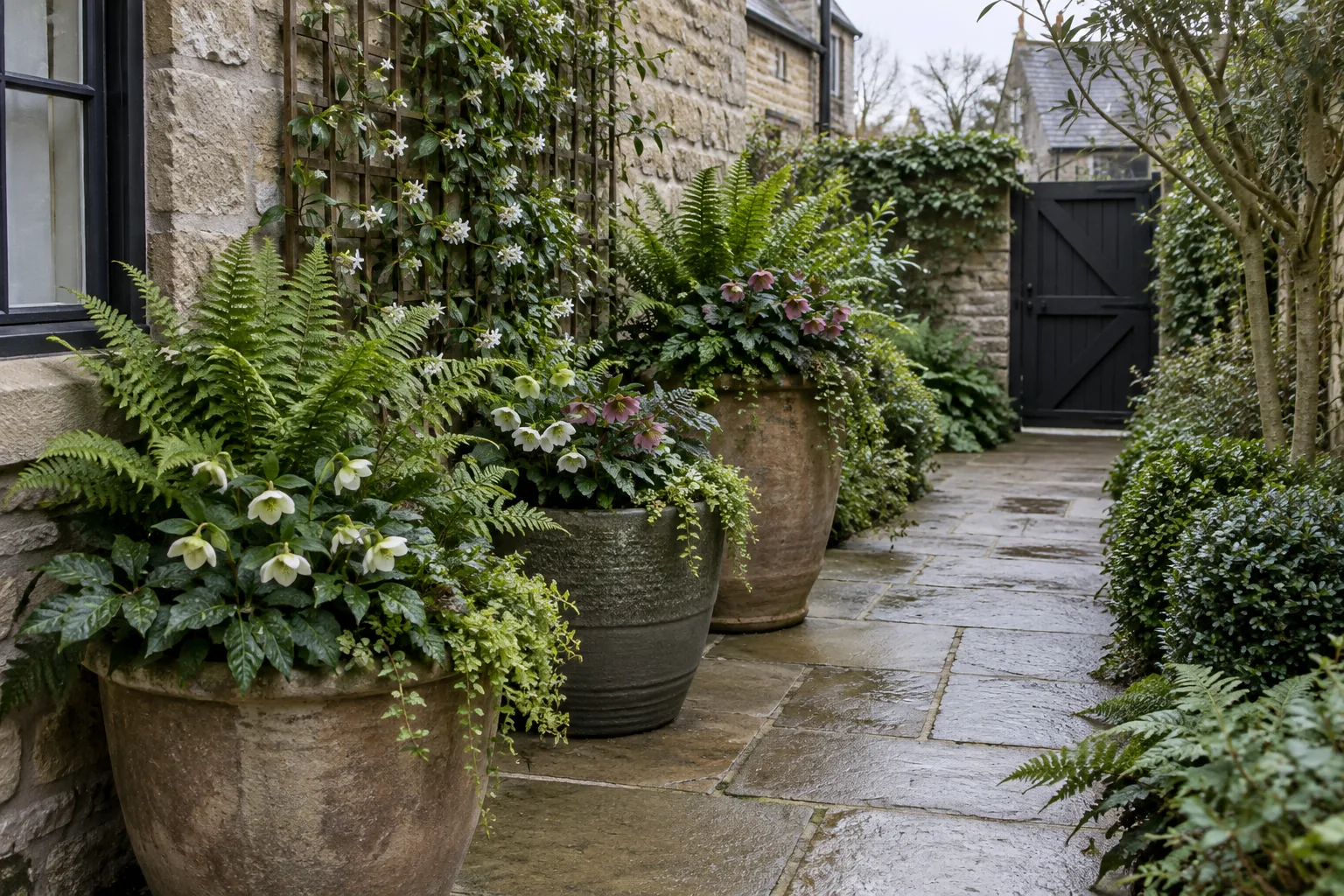
Group pots where they can be watered without dragging a hose through the seating area. Place heavy containers before filling them, particularly on a roof terrace or raised structure where load capacity needs professional assessment. Keep drainage outlets open and avoid allowing water to run against doors or neighbouring walls. The aim is a planted edge, not a path that narrows each summer as foliage expands.
Make the surface and maintenance work together
An even, slip-conscious route is useful in wet weather. Existing paving may simply need careful cleaning and joint repair, while a larger redesign might change levels or drainage. Do not direct runoff towards the house or another property. Check where water goes before setting a storage unit over a low point. Our patio cleaning service can help maintain a suitable existing surface as part of a practical layout.
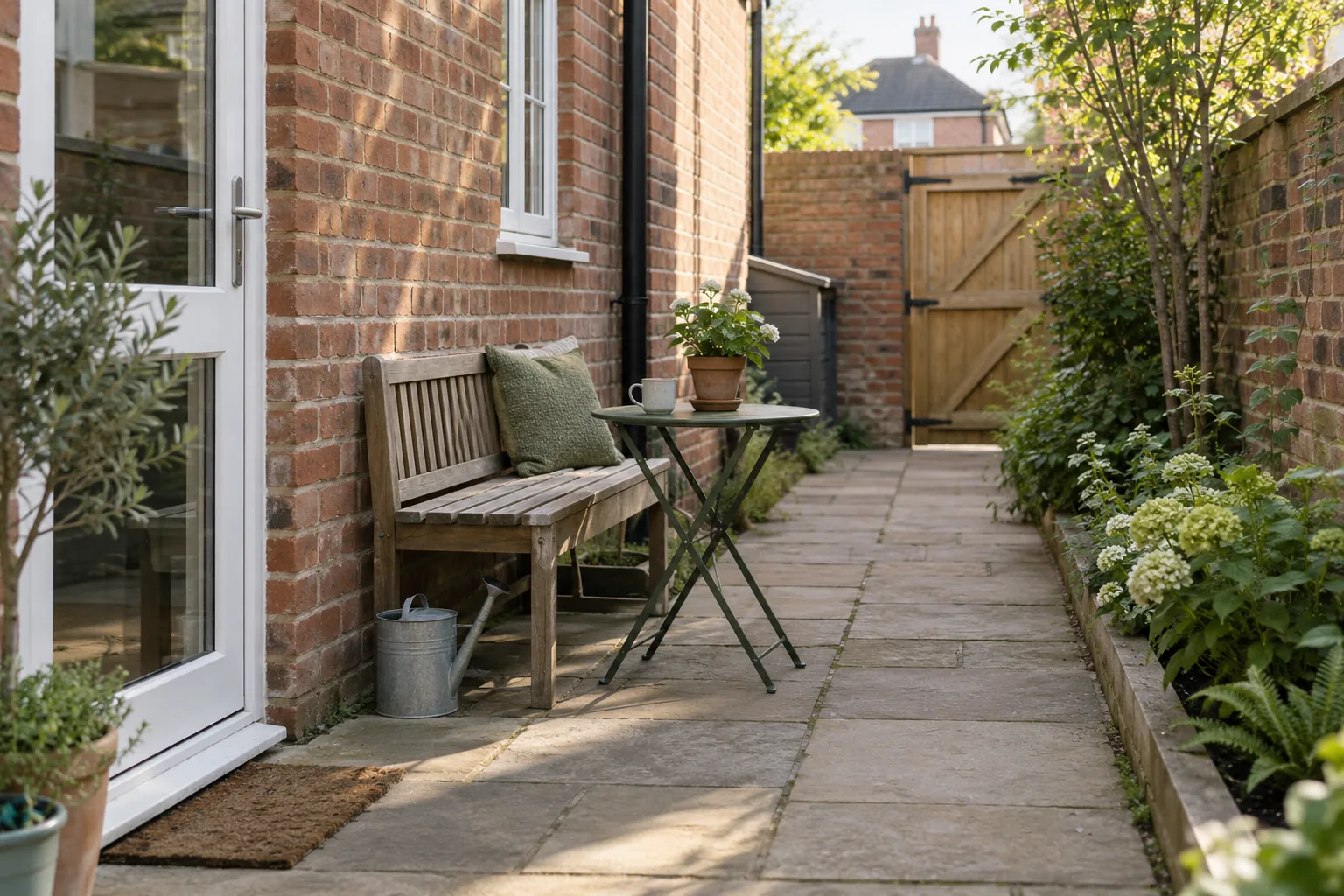
Plan for the less attractive jobs too. Can you reach fallen leaves behind the bench? Is there room to move pots when repotting? Can a full watering can pass without brushing every plant? A narrow yard benefits from a simple palette and repeatable routines. Seasonal pruning and a monthly check of drains, fixings and container moisture will usually do more for usability than adding another decorative feature.
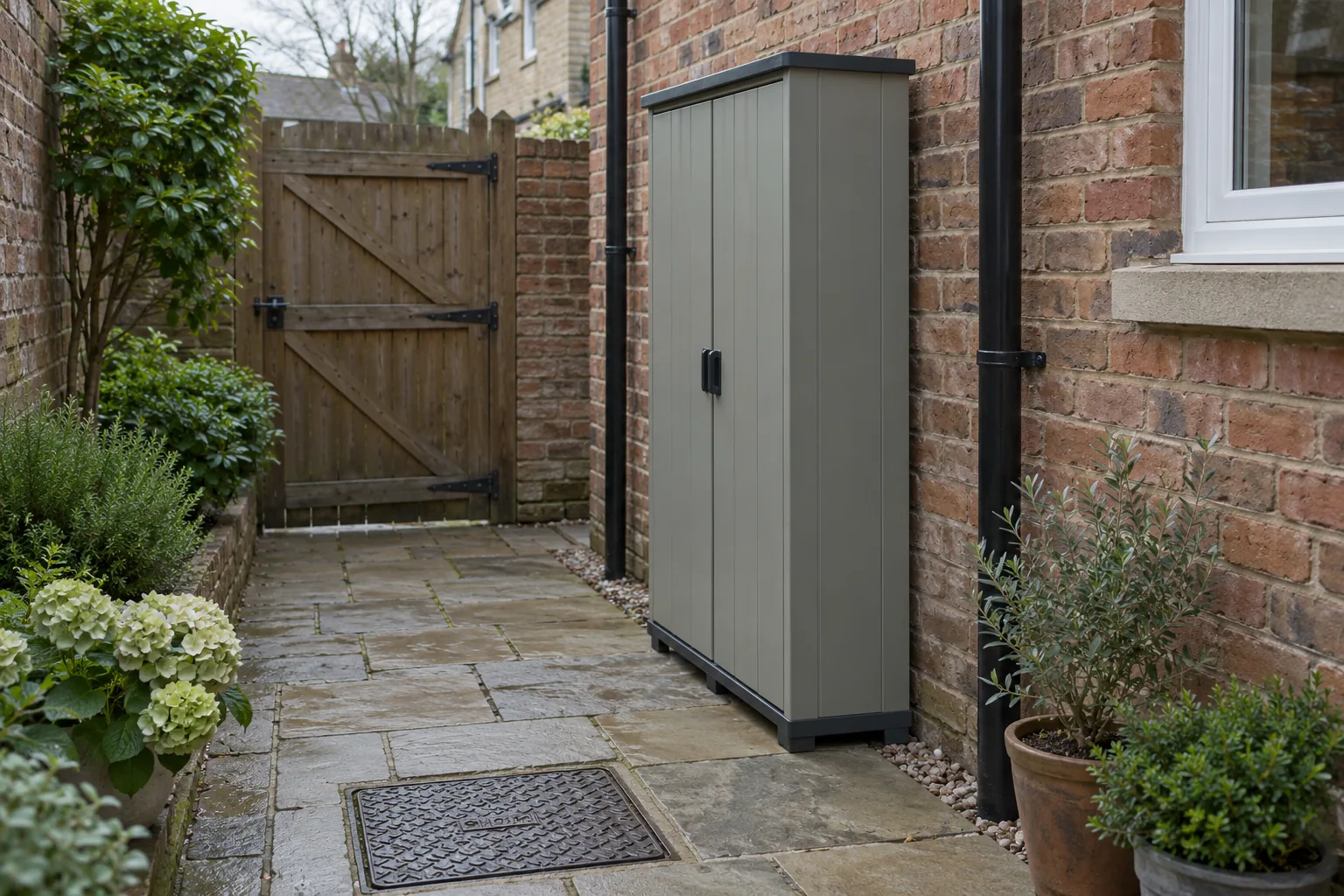
Before buying, tape out the chosen arrangement and live with it for a week. Try it on a wet morning as well as a sunny afternoon. You may discover that the bench belongs on the opposite wall or that a smaller store would free the turning space. In a narrow Bristol yard, success is measured by how easily you can enter, sit, tend plants and put things away, with each use leaving room for the next.