
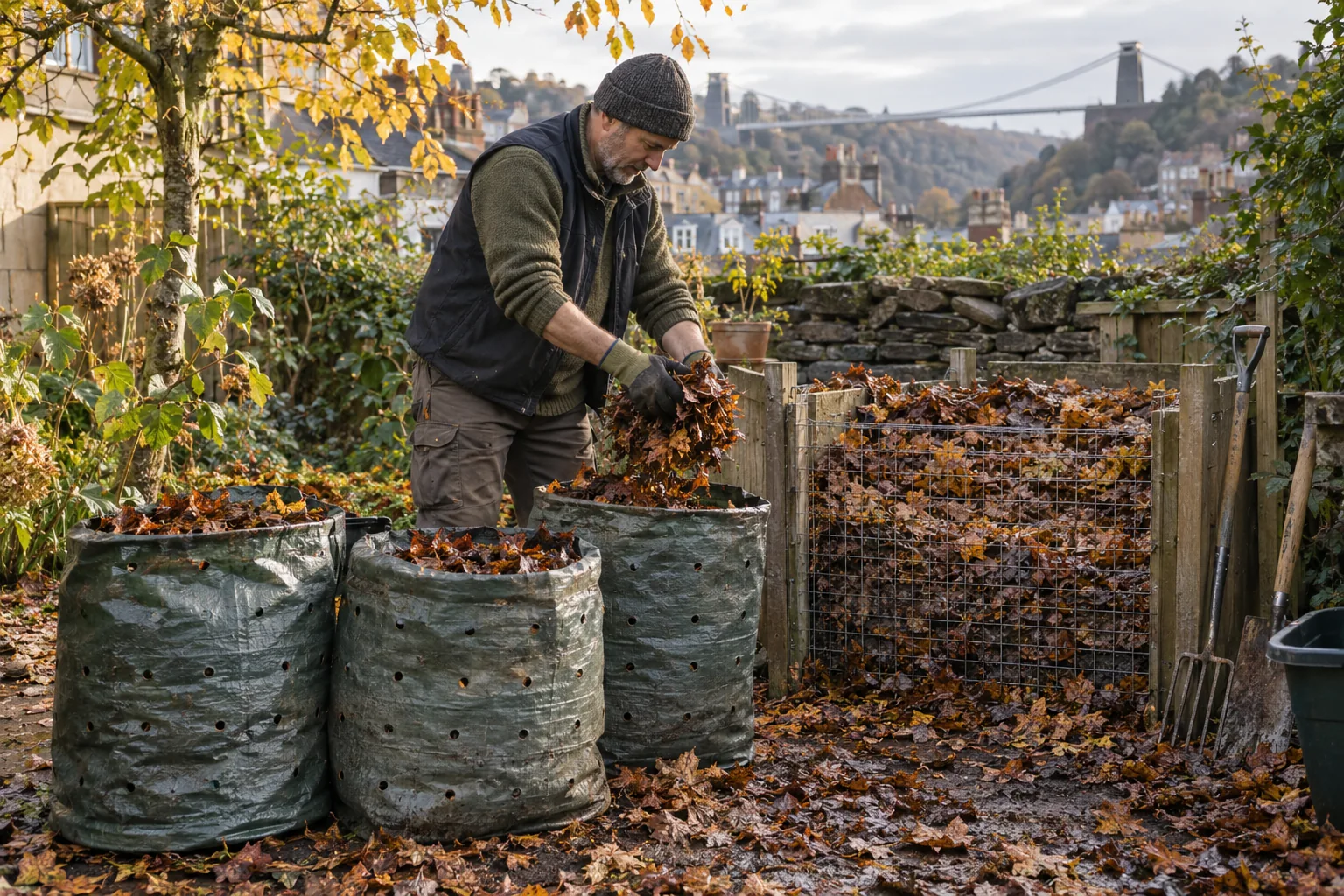
Autumn leaves can become a useful soil conditioner without being mixed into the kitchen compost bin. Leafmould is made mainly from fallen leaves and moisture, breaking down slowly into a dark, crumbly material. It needs little equipment, but it does need time and a place where the leaves can stay damp without scattering across the garden.
The Royal Horticultural Society's leafmould guide describes a simple bag or wire-frame method and notes that most leaves take around two years to break down fully. That makes this a good October project for a Bristol garden: collect a manageable batch now, label it and use it when it is ready rather than expecting instant compost in spring.
Keep leafmould and compost jobs distinct
A regular compost heap usually combines nitrogen-rich material, such as fresh plant trimmings or suitable kitchen scraps, with drier carbon-rich material. It needs a balance of ingredients and management. Leafmould works differently. Leaves and moisture are the main inputs; fungi do much of the slow decomposition. You do not have to add kitchen waste, fertiliser or a proprietary starter to make a useful batch.
Putting a large autumn fall into a small kitchen compost bin can crowd out the other ingredients and slow the heap. The RHS describes bagging leaves separately for a couple of years as one practical solution. A handful of leaves may still help balance a compost mix, but the dedicated leaf batch is easier to manage when the volume is large. Label it clearly so it is not mistaken for finished potting compost.
Decide how much material your space can hold. A small courtyard may fit two perforated bags behind a shed, whereas a larger garden can use a wire bay. You do not need to collect every leaf. Some can remain beneath suitable shrubs or in quiet habitat areas, provided they do not smother a lawn or block a path. Our guide to where autumn leaves can go helps make that initial choice.
Collect clean leaves for the batch
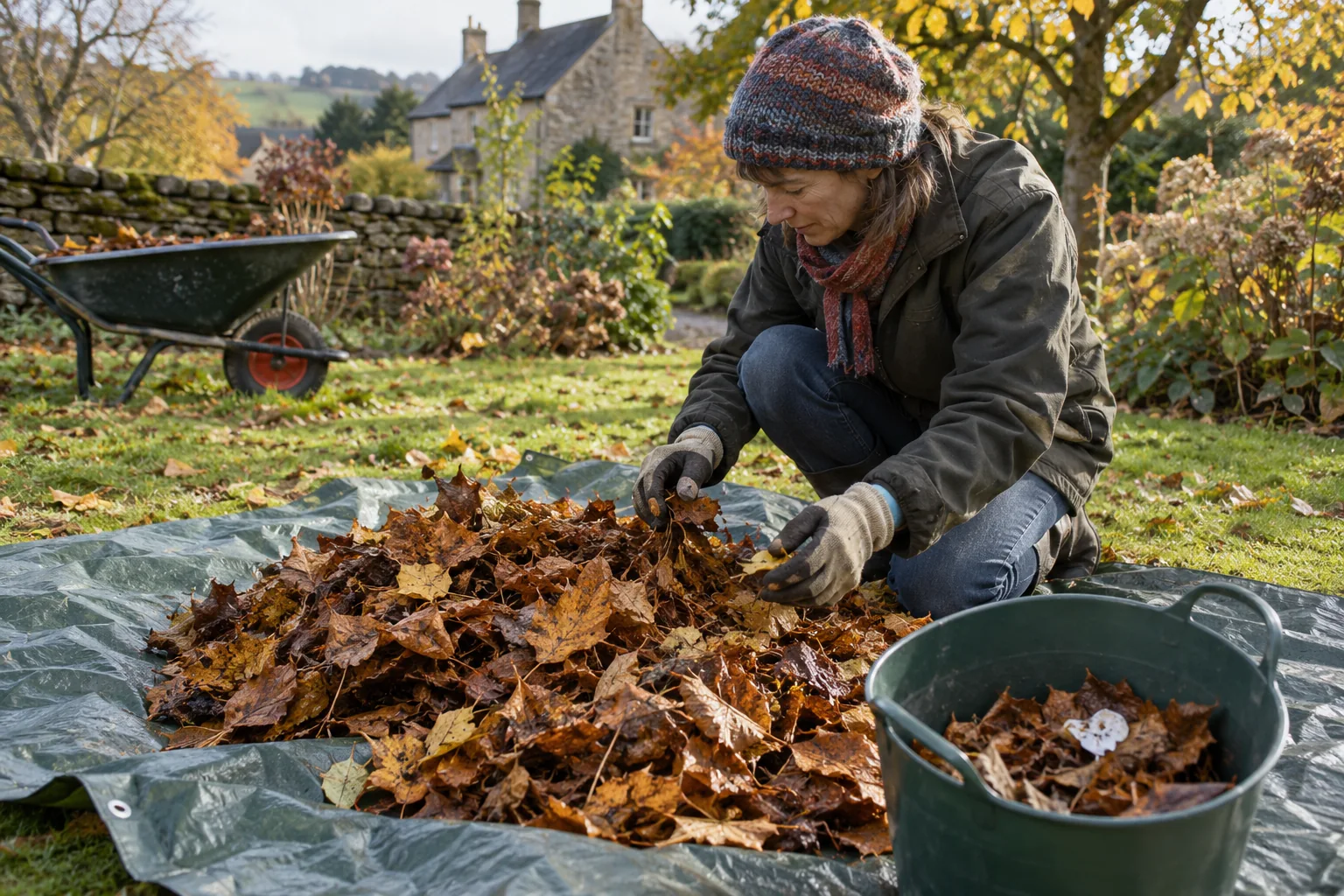
Sweep leaves from paths and rake them from lawn areas where a heavy layer blocks light. Choose a dry enough day to work safely, but the leaves themselves need not be bone dry. Remove litter, plastic, stones and obvious contaminants before storage. Street leaves can contain debris, so the RHS advises sorting through them rather than tipping the whole pile into a leaf bay.
Most deciduous leaves will eventually break down. Oak, beech and hornbeam are particularly suitable for good leafmould. Thick leaves such as sycamore or horse chestnut decompose more slowly; shredding can help. A rotary mower can chop suitable leaves on a firm lawn, but do not run it over stones or a wet, muddy surface merely to speed the process. Keep conifer needles in a separate batch if you want to use them for a particular purpose.
Avoid adding diseased material indiscriminately or mixing in perennial weeds with seedheads. Identify any suspect leaves and choose a suitable disposal route when uncertain. You are building a clean soil-improvement material, not hiding every autumn waste item in a bag. A small amount of grass collected with mower-shredded leaves is normal, but a sodden bag of fresh grass is not a leafmould batch.
Use a perforated bag in a small garden
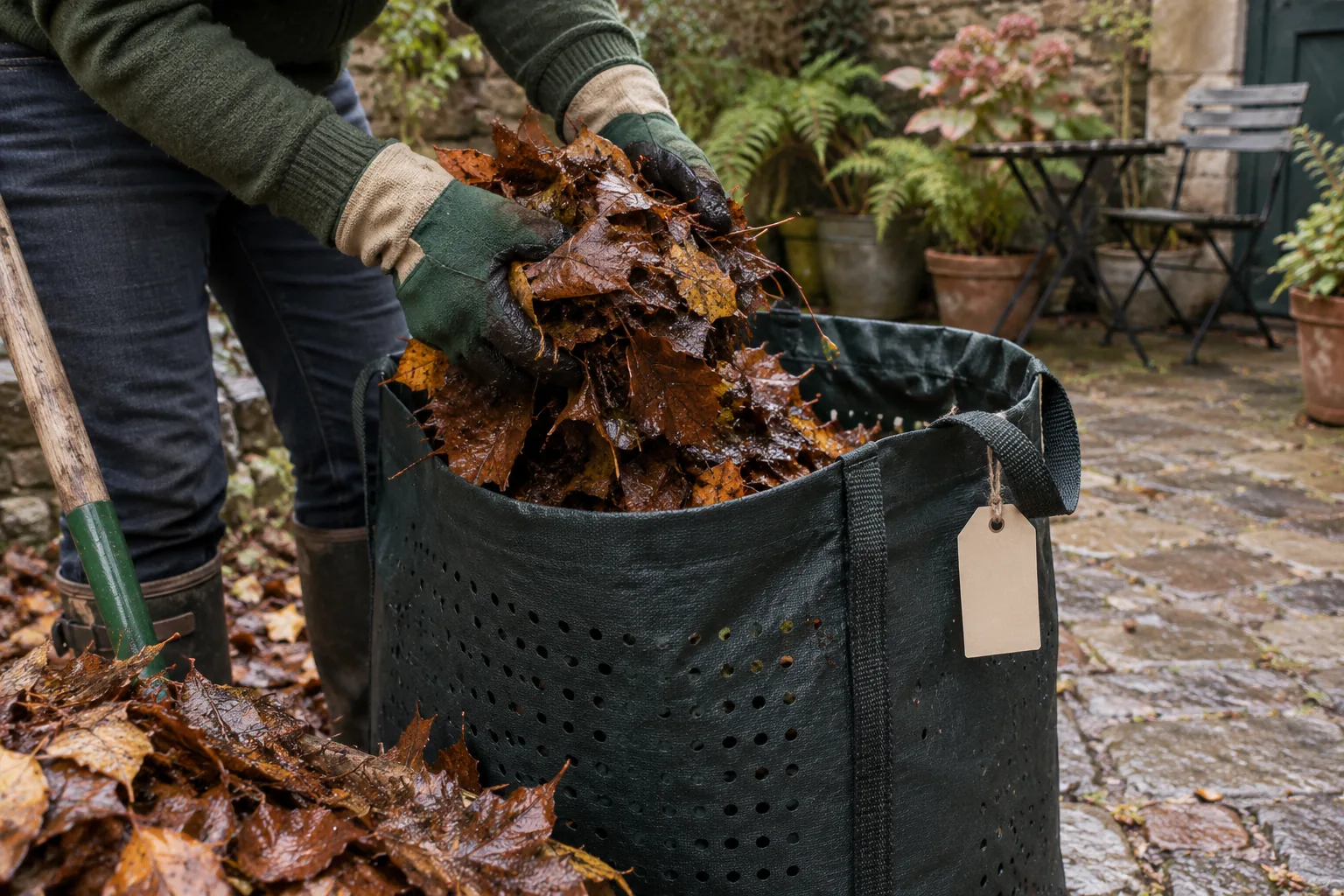
Put the leaves into a sturdy reused compost bag or bin liner. Moisten dry leaves lightly as you fill; a damp handful should feel moist without dripping. Pierce several holes in the sides and base so air can enter and excess water can escape, then close the top loosely. Set the bag where it will not block access or tip into a drain. Use a tool carefully when making holes, with the bag on a stable surface rather than held in your hand.
The RHS bag method allows leaves to sit for up to two years. Write the month and year on a label that will survive rain. If you make a second batch next autumn, separate it from the first so you can use the older material first. A tidy pair of labelled bags takes much less space than an open leaf pile that blows back across paving.
Check the bags occasionally. If they are completely dry, add a little water; if they are waterlogged, improve the drainage holes and position. You do not need to turn them like an active hot compost heap. Keep them out of a main route and away from a wall where persistent damp would be unwelcome. Our guide to cleaning a slippery garden path is relevant if loose leaves collect around the storage area.
Build a wire bay for larger volumes
For a garden with several trees, make a simple round or square frame from wire mesh supported by posts. Place it in a sheltered spot where wind will not scatter the contents, while retaining enough access to add leaves and check moisture. The mesh lets air through and keeps the leaves together. Avoid blocking a shared path, boundary access or drainage feature.
Fill the bay with sorted leaves and settle them gently. The volume will shrink markedly as they break down, so a full-looking frame in October may be much lower by spring. Moisten it if autumn has been unusually dry. Do not compact it into a waterlogged mass. A larger heap can decay more steadily than a very thin layer, but the practical size is the one you can maintain and reach safely.
Keep woody branches, rubble and household rubbish out. If the garden has more leaves than the bay can hold, bag the remainder or check local garden-waste options. Bristol City Council's garden-waste page lists current collection routes. Do not leave overflowing sacks on a pavement while waiting for a service you have not arranged.
Use the material at the right stage
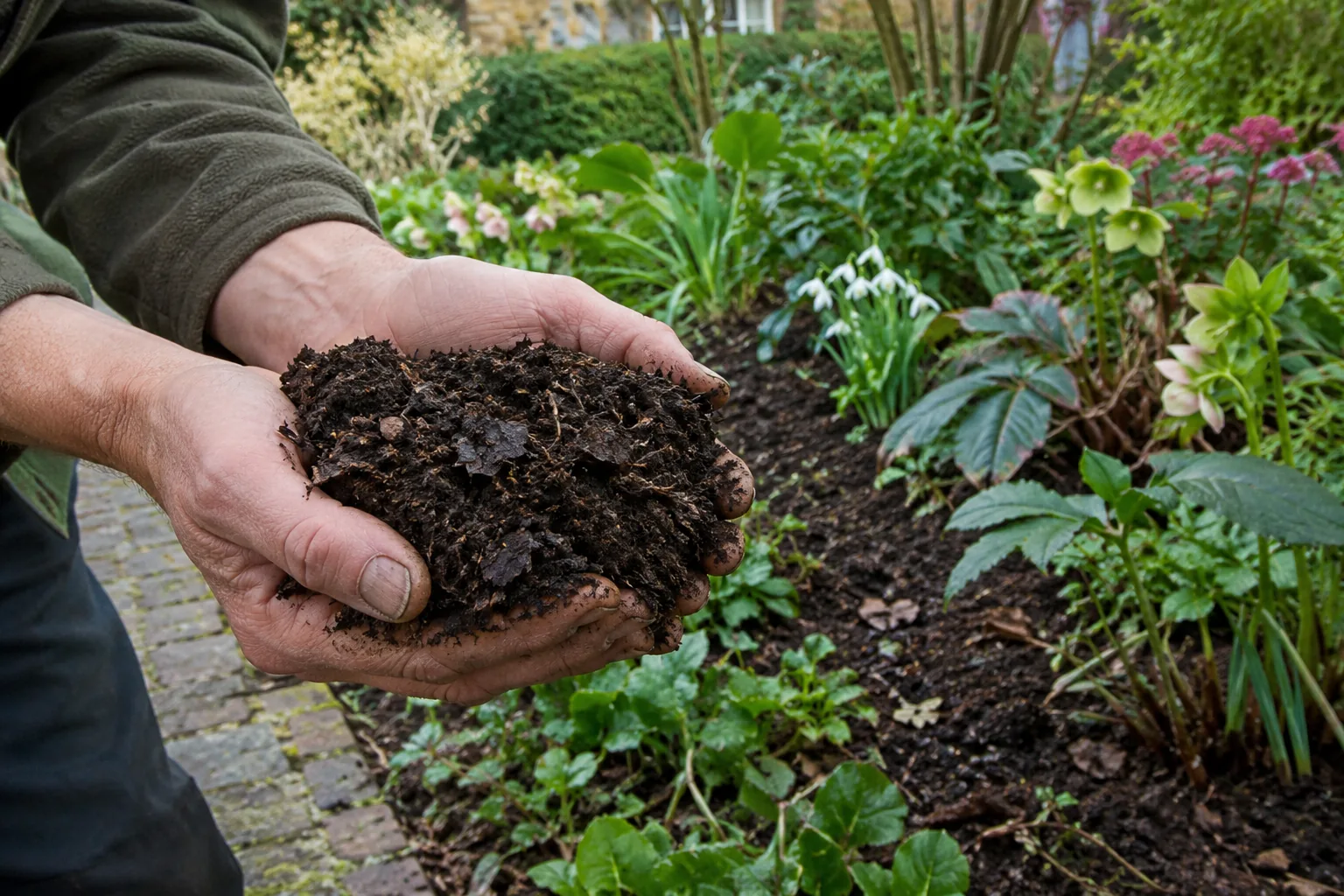
Partly decomposed leafmould can be useful as a surface mulch where appropriate, but it will still contain recognisable pieces. After around two years, a well-rotted batch becomes finer and more soil-like. The RHS distinguishes those stages and describes mature leafmould as a soil conditioner and possible ingredient in carefully prepared growing mixes. Do not substitute a fresh bag of leaves for a tested seed-sowing mix.
Check texture and smell before spreading. A good finished batch is earthy and crumbly rather than a wet mass of intact leaves. Use it around suitable established plants without burying their crowns. Our autumn mulching guide explains when a bed is ready for a surface layer. Save finer material for a use that benefits from it.
Leafmould is a slow, low-effort cycle. Sort a clean batch, keep it damp and contained, mark its age and inspect it occasionally. By keeping it separate from the kitchen compost, you can manage a large autumn fall without overwhelming the main bin and gain a useful material for future borders.