

An autumn garden rarely needs everything done at once. Start with work that prevents a problem getting worse: clear leaves from paths and lawns, deal with standing water, protect vulnerable pots, and secure anything likely to be damaged by wind. Then turn to planting, soil care and selective tidying when conditions allow. A border that looks untidy can usually wait; a slippery step or a lawn buried under wet leaves is more pressing.
In Bristol, autumn can bring mild spells between wet, windy days. That makes a fixed calendar less useful than a quick inspection after rain. Walk the garden, note where water collects, look for blocked access and decide which jobs can be completed without trampling saturated soil. The aim is to enter winter with a usable, resilient space, not to strip every bed bare.
First, make routes and drainage safe
Wet leaves on paving can become slick, particularly in shaded passages and beside steps. Sweep the route you actually use, including the approach to bins, sheds and gates. Check whether loose pots, fallen stems or trailing hoses create a trip hazard. If algae has made a surface slippery, identify the paving material and jointing before choosing a cleaning method. High pressure is not suitable for every stone, joint or older surface; the patio cleaning service explains the scope of professional help.
After a substantial shower, look for puddles that remain long after the rest of the garden drains. A single low patch is different from a whole lawn that feels spongy underfoot. Keep off very wet turf: repeated foot traffic can compact soil and leave ruts. Do not rush to dig wet beds either. Sticky soil smears and compacts when worked, making a future planting problem harder to solve. Mark the trouble spot, observe it over several rainy days and investigate its cause before paying for drainage work.
Check that water can leave containers freely. A pot sitting in a saucer full of rainwater may keep roots wet for days. Empty the saucer, clear blocked drainage holes if accessible and raise a heavy container on pot feet where safe. Do not assume every drooping plant needs another watering: feel the compost first.
Keep the lawn clear, but let its condition set the pace
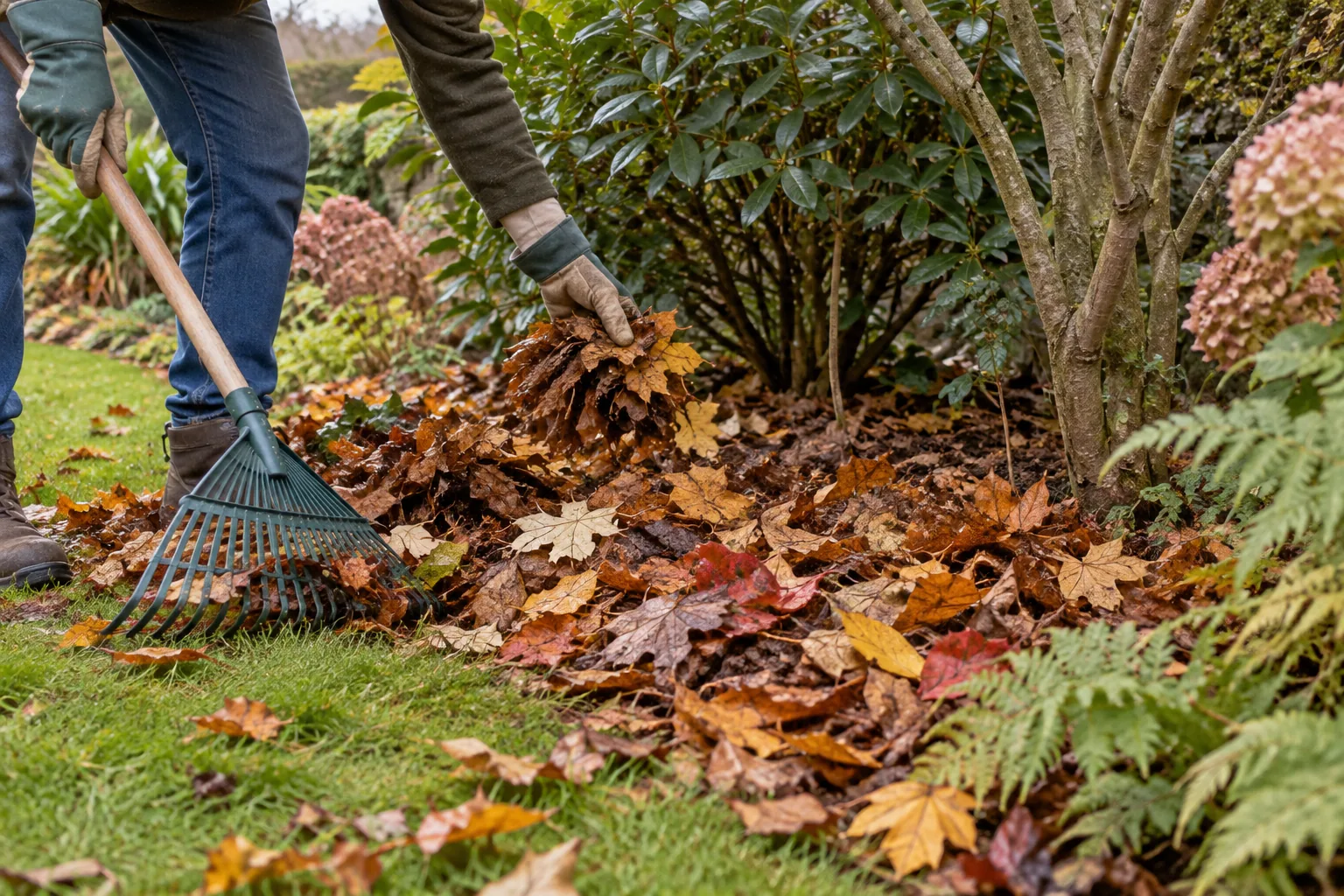
A thick blanket of leaves blocks light from the grass and stays damp. Rake it off when the lawn is firm enough to walk on. You do not have to remove every leaf: small amounts can be collected on a later pass, while clean leaves can be used elsewhere. The RHS autumn lawn guide recommends doing renovation tasks in suitable mild, damp conditions rather than when the ground is waterlogged or frosty.
Grass may still grow during a mild October. Mow if it needs cutting and the surface is reasonably dry, but avoid taking off a large amount in one pass. Raise the mower height compared with a close summer cut and remove clumps of wet clippings that would smother the turf. If growth has slowed, there is no need to mow simply because a date is on the calendar. For a garden where mowing is difficult to fit around the weather, the lawn mowing service sets out the available help.
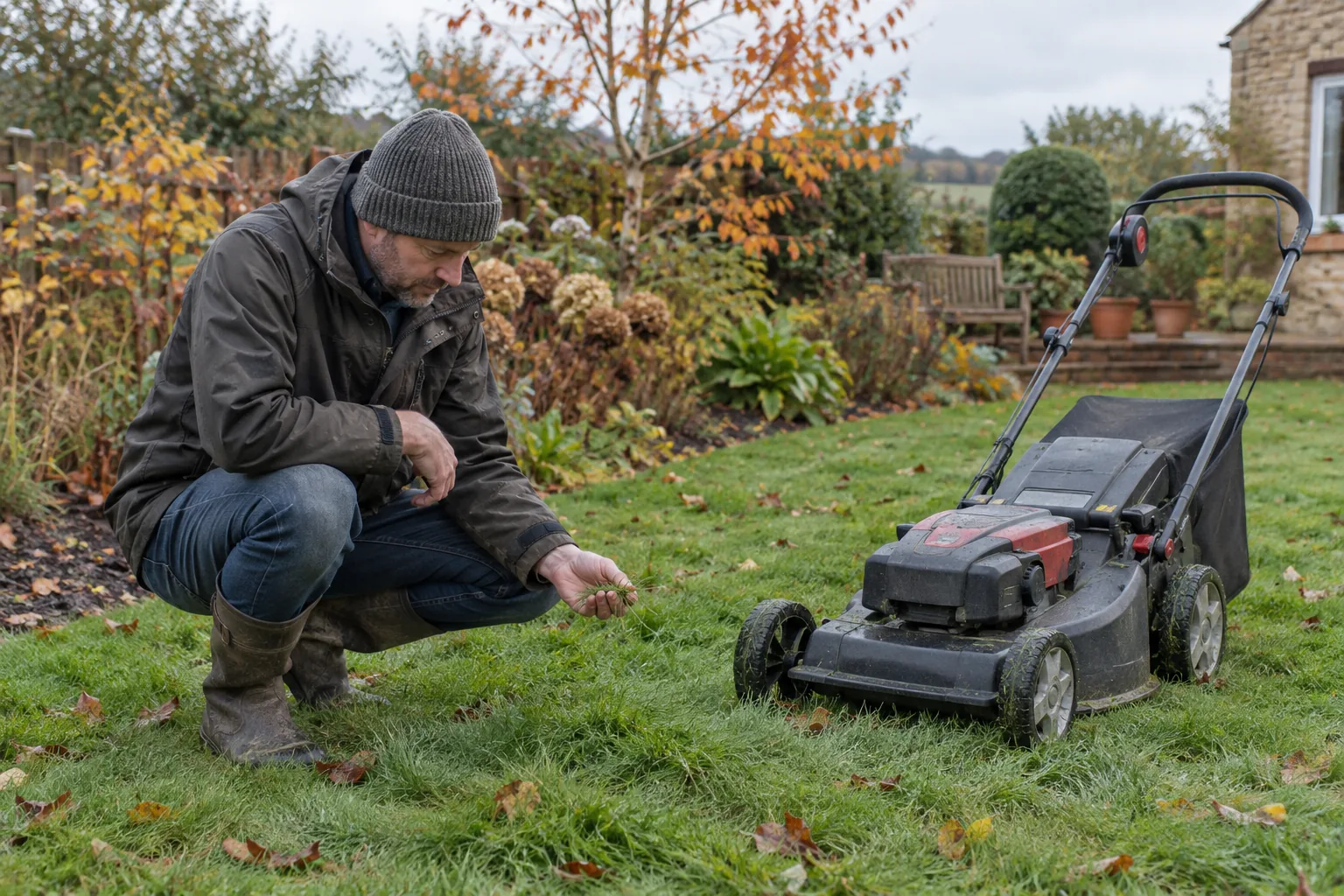
Aerating or scarifying can be worthwhile where compaction or thatch is a real issue, but neither is an automatic annual job. A badly waterlogged lawn needs diagnosis first. Pulling equipment across saturated turf can worsen the surface. If you are considering seed for bare patches, check whether there is enough warmth and time for establishment; later in the season, it may be more sensible to protect the area and plan a spring repair.
Move leaves to the right places
Leaves are a resource as well as a clean-up job. Move them off paving, drains and grass, then choose a destination. A loose layer beneath established shrubs or a hedge can shelter small creatures and gradually break down. Keep it clear of delicate crowns and avoid piling wet leaves against stems. Large volumes can go into a leaf-mould container or an appropriate garden-waste collection rather than a mixed pile that is difficult to manage.
The RHS guidance on garden wildlife favours leaving some leaf litter and standing perennial stems as habitat. You can still maintain a tidy appearance: define path edges, clear the entrance and leave the quieter parts of a border less disturbed. This is a practical compromise in a small garden where every metre is visible.
Be selective with cutting back
Not every brown stem is a problem. Firm seedheads can provide structure and food, and hollow stems may shelter insects. Remove material that has collapsed across a path, is rotting onto a vulnerable plant or shows obvious disease. Leave sound stems standing where they are not in the way, and cut them back later when you know what the plant is and how it grows.
The same caution applies to shrubs and hedges. An autumn tidy is not a reason to give every plant a hard prune. Different species flower on different ages of wood, and a late cut may remove next year's buds or leave tender growth exposed. Identify the plant first; if it is uncertain, postpone substantial pruning. The existing guide to keeping a garden healthy all year offers broader maintenance context, while the hedge trimming service describes help with boundaries that have become difficult to manage.
Use good planting weather, not simply a free weekend
Autumn can be a useful time to plant hardy shrubs and perennials because the soil often retains warmth and rainfall helps establishment. It is still important to avoid planting into a waterlogged hole. Test the chosen spot after rain, consider the mature size of the plant and water it in according to actual soil moisture. A plant put in the wrong place is a larger future task than one kept in its pot for another suitable day.
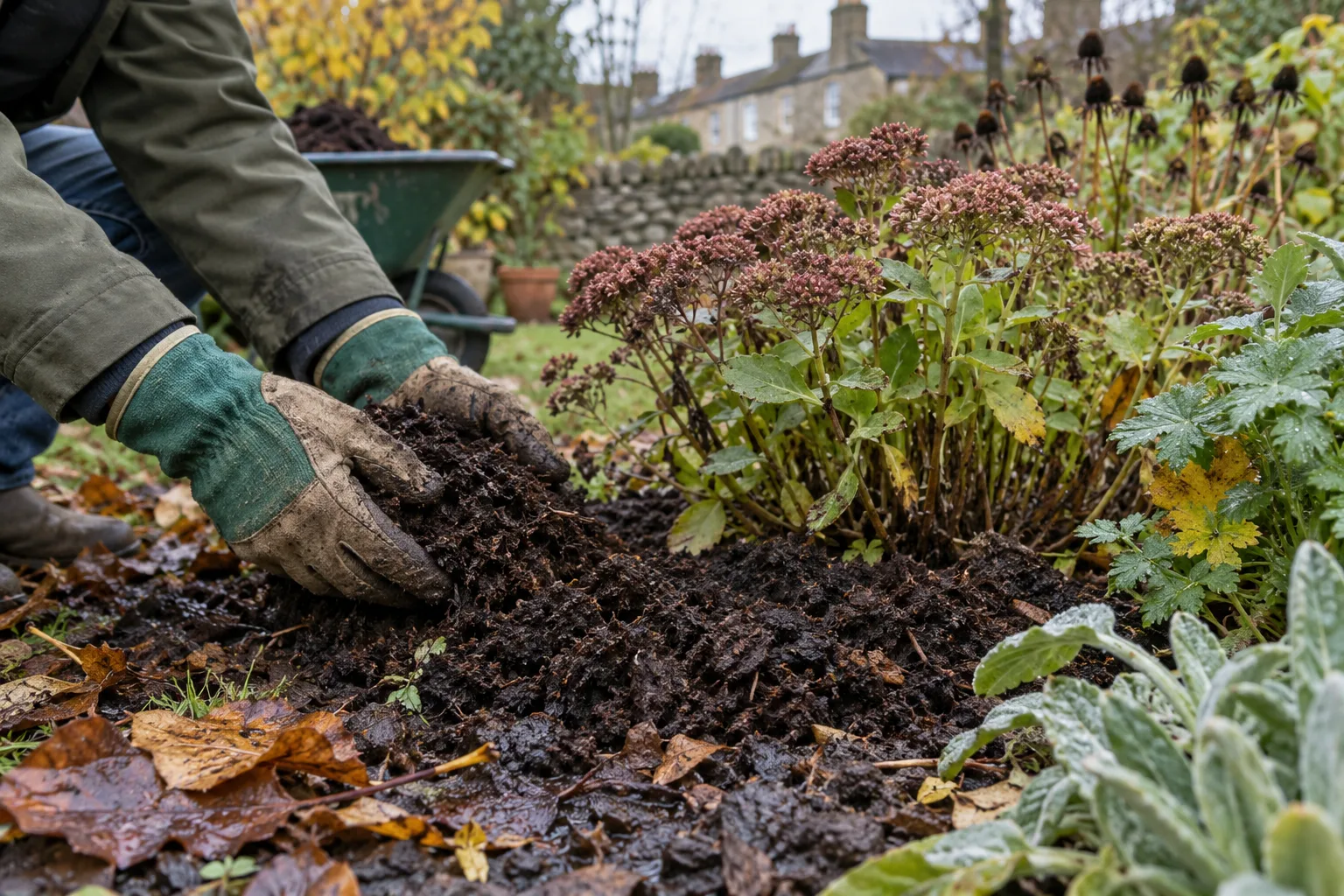
Beds also benefit from a layer of well-rotted compost or other suitable organic matter. Spread it over clear soil without burying perennial crowns or pressing it against woody stems. Earthworms and weather can work it into the upper soil over time; heavy digging is unnecessary in many established borders. If the bed is full of persistent weeds, remove their roots before mulching rather than hiding them beneath a thin covering.
Finish with a short, realistic winter list
Before putting tools away, check ties on climbers, secure light furniture and move vulnerable pots to a sheltered position appropriate to the plant. Clean soil from hand tools and keep electrical equipment dry. Record anything you could not safely fix now: recurring puddles, a damaged path joint, a failing shrub or a lawn that needs spring repair. A photograph after rain can be more useful than a vague memory when you plan the next visit.
If time is limited, choose three outcomes: a safe route, a lawn that can breathe and a clear plan for the problem areas. The rest can be phased. A garden maintenance visit may help where several seasonal jobs need coordinating, but even a short self-managed inspection will prevent unnecessary work and show what genuinely needs attention before winter.