
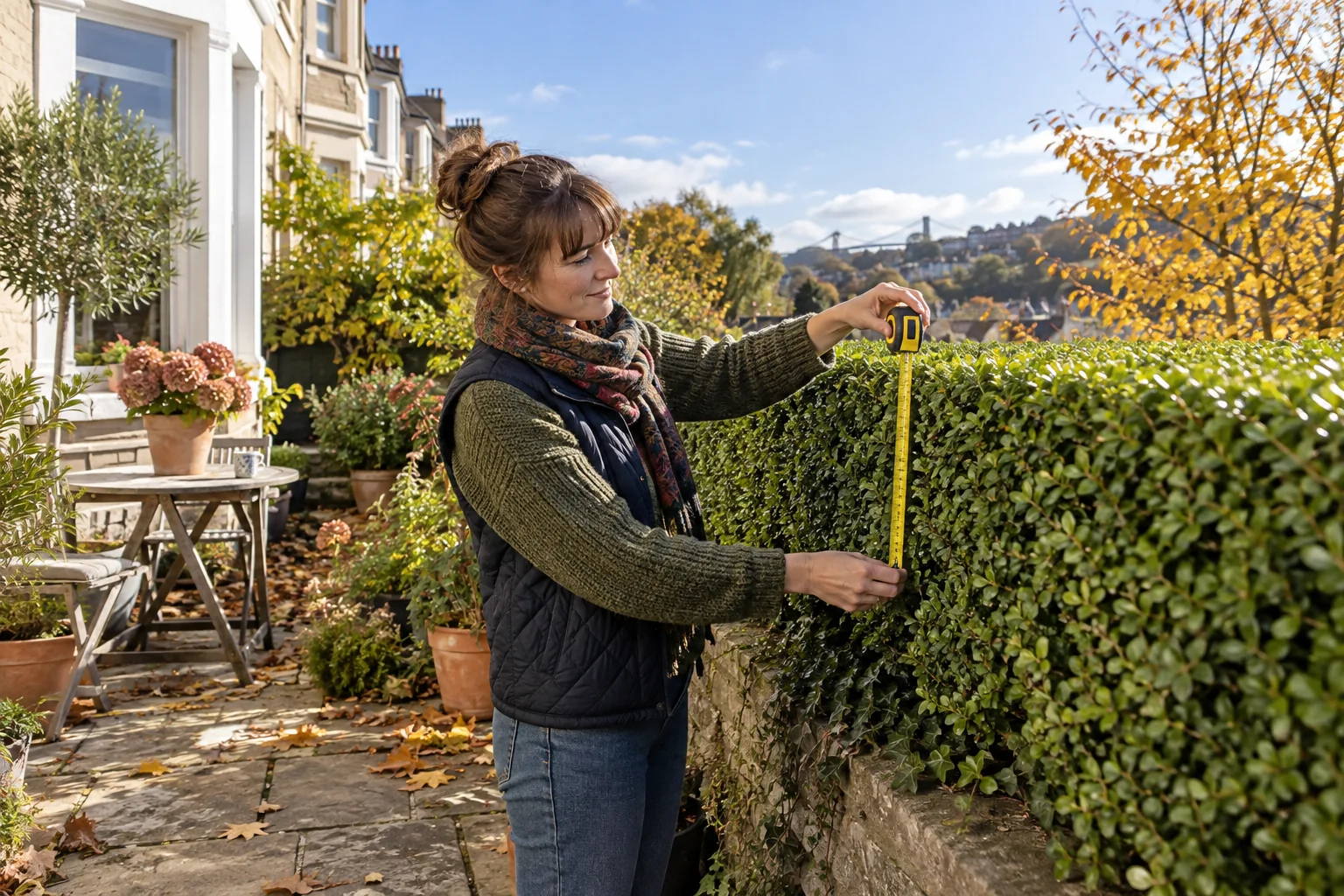
A hedge can give a compact garden privacy and a softer boundary than a fence, but the wrong height or width can leave the lawn and beds in shade. The decision starts with the view you want to screen, the amount of light the garden receives and the space you can spare for future growth. Draw the mature hedge, not just the row of small plants you will buy.
The Royal Horticultural Society's hedge selection guide recommends deciding the height you can achieve and maintain, then matching plants to the soil and situation. That is particularly useful in a Bristol terrace garden, where a metre taken from a boundary may be a substantial part of the usable width.
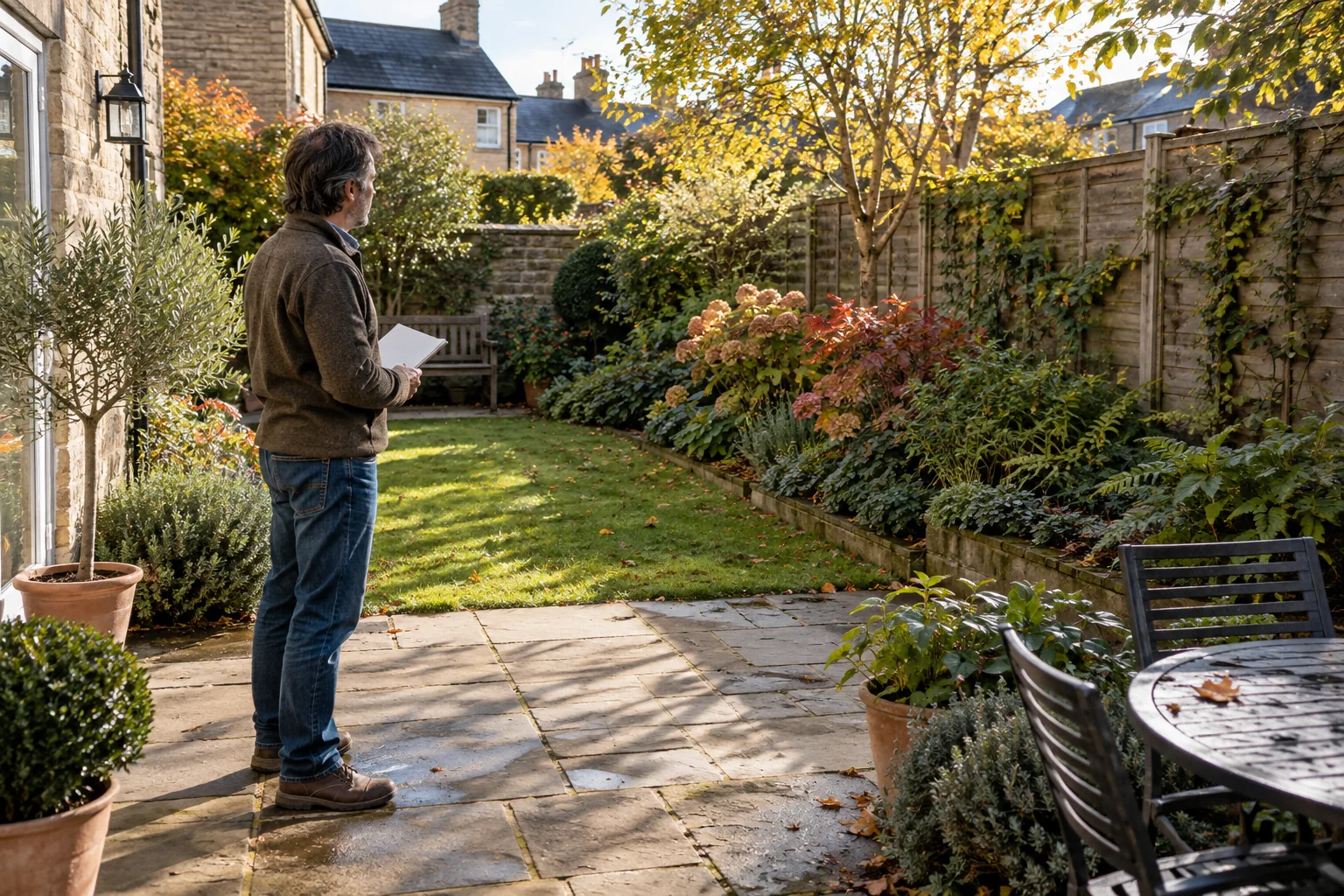
Map light before choosing a boundary
Observe the garden at several times of day. Note where morning and afternoon sun reaches the main sitting area, vegetable bed or lawn. A neighbouring building may already cast shade, so a new hedge could affect one area much more than another. Take photographs from the house and garden on a bright day, and mark the spots where light matters most.
Consider the sun's lower winter path as well as summer use. A tall evergreen screen may block light all year, whereas a deciduous hedge lets more through after its leaves fall. A deciduous plant may still retain some dry leaves or have dense branches, so do not assume it will become transparent. The level of privacy you need in winter helps determine whether evergreen foliage is essential.
Stand where you want to feel private and identify the exact line of sight. A low hedge may screen a path or neighbouring patio when seated, while leaving open sky above. A short section of taller screening near a particular window can be less imposing than raising the whole boundary. Sketch the desired height along the length rather than asking for a single uniform wall of green.
Allow for the hedge's mature width
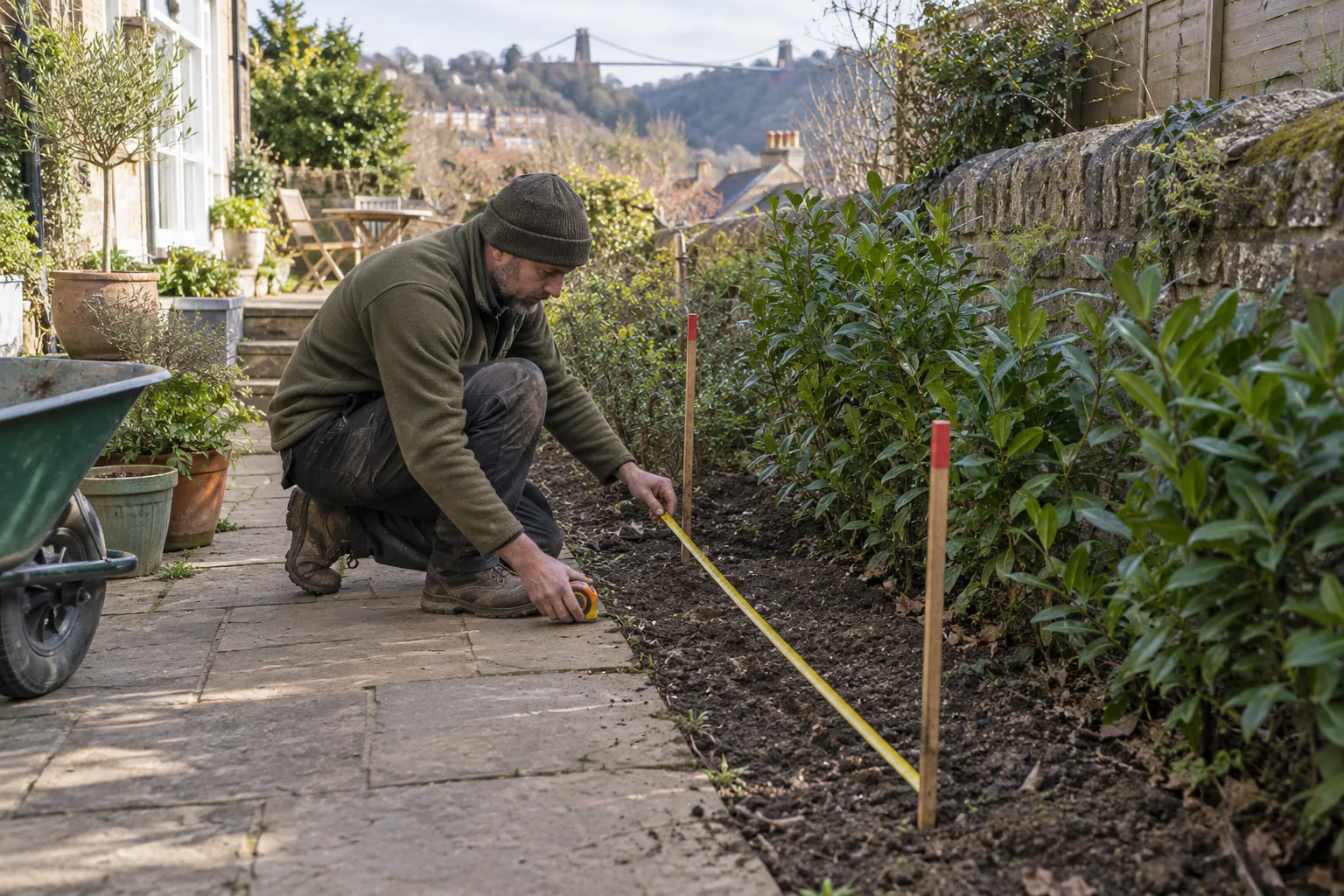
Measure the available strip from the boundary to paths, beds and furniture. A young plant may fit in a narrow trench, but its trimmed form needs width on both sides. Leave room to reach the hedge with tools without stepping into a prized border or leaning over a neighbour's property. A clipped face that can be maintained safely is more useful than one that requires repeated difficult access.
Set the planting line back from the legal boundary. The RHS hedge-growing guide advises this so growth does not spread onto a neighbour's plot or a pavement. Check title plans or agreements where the exact line is uncertain, especially in a rented or shared garden. Do not choose a planting position simply by following an old fence whose ownership is unclear.
Remember the roots and nearby surfaces. A hedge planted too close to a narrow path can make the route feel cramped even before branches touch it. Keep gates, bin storage and maintenance access workable. Our guide to preparing a rental garden for handover shows why clear access matters to more than appearance.
Choose the habit before the species
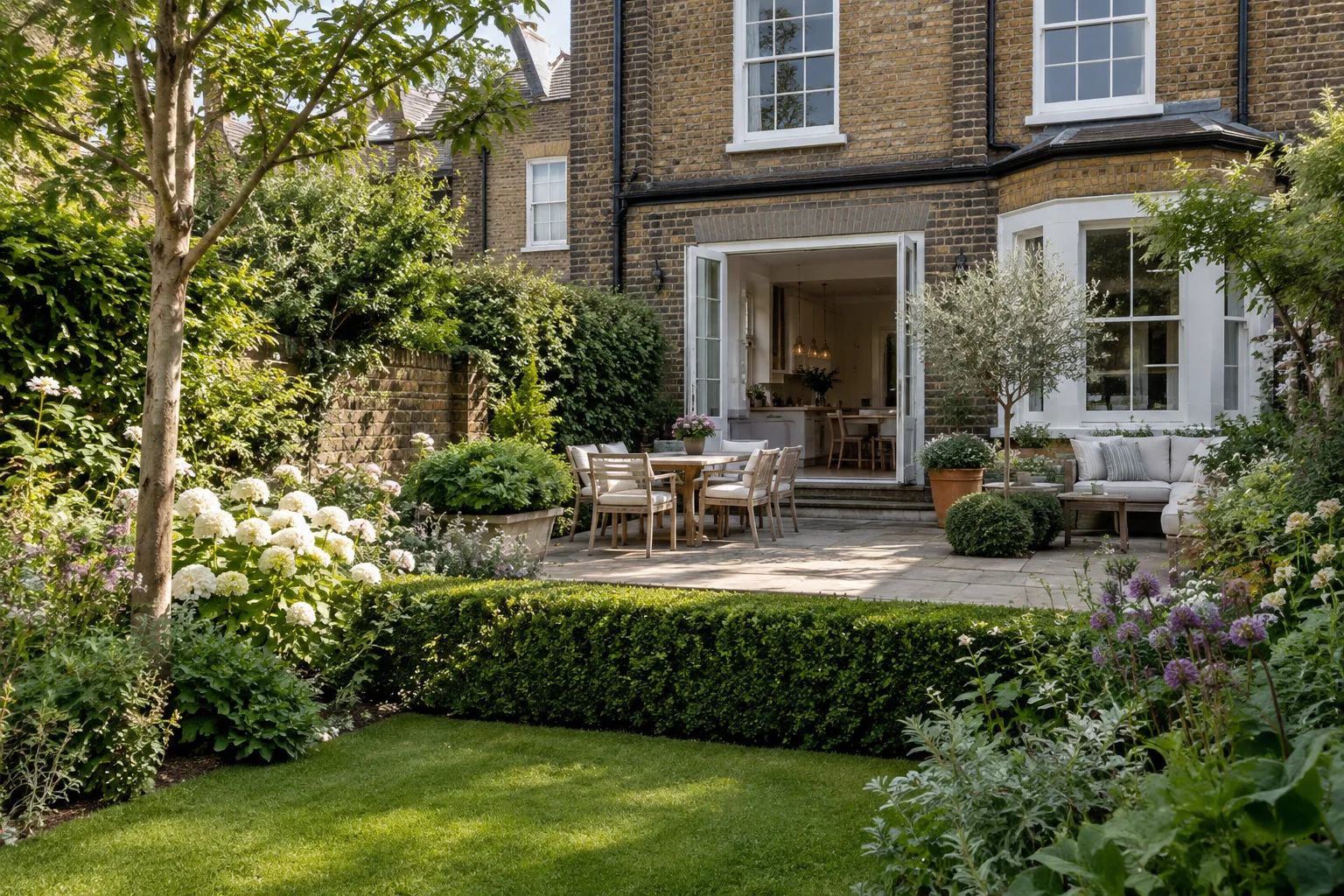
Decide whether you want a formal clipped line or a looser flowering boundary. Formal hedges can be kept relatively contained with regular care, but the maintenance commitment is real. Informal hedges may offer flowers and fruit yet generally need more room to arch and spread. A vigorous species that grows quickly can save time at first and create a larger long-term task.
The RHS notes that Leyland cypress grows rapidly and is less satisfactory as a small trimmed hedge. It is a poor default for a compact plot merely because it promises fast screening. Yew is a traditional dense formal choice where site conditions suit it, but it also needs time to establish and should be chosen with its eventual scale in mind. Beech offers a deciduous alternative and may retain brown leaves in winter. Check each candidate's mature habit, light needs and maintenance before ordering.
Do not treat a plant list as a guarantee for your specific site. Heavy wet soil, deep shade and exposure can rule out an otherwise attractive hedge. Look at established hedges in similar nearby gardens, then compare the plants' requirements with your own conditions. The RHS selection guide provides maintained-height ranges and suggested spacing for different species; use the entry for the plant you actually select rather than one generic spacing for all hedges.
Plan establishment and maintenance
Smaller young plants often establish more readily than large instant-screening specimens, although they take longer to join into a solid line. A semi-mature hedge costs more and needs careful watering during establishment. Budget for those first two years, not just the purchase and planting day. Planting into a weed-filled strip or leaving roots dry will undermine even a well-chosen species.
Prepare the soil and planting trench for the chosen hedge, avoiding work when the ground is waterlogged. Space plants according to the species and the intended maintained height. Water them in and keep the root zone from drying during establishment. A mulch may help in suitable conditions, but keep it away from stems. Our autumn mulching guide explains when the bed is ready for it.
Agree who will trim the hedge and how often. Plan safe access to both faces and the top before it becomes tall. The hedge trimming service can discuss the size a boundary can be kept at in practice. A design that depends on cutting large amounts off a mature hedge every year may be better revised while it is still on paper.
Review the effect from both sides
Before planting, put canes or a string line at the proposed height and stand in the places that matter: the kitchen window, patio chair, gate and neighbouring view. This simple mock-up reveals whether the screen solves the privacy issue or creates a dark corridor. Adjust its length or height while the plan is still flexible.
If one section needs screening, consider whether a short hedge combined with other planting will do the job. A mixed border may maintain openness and seasonal interest. Keep sight lines at entrances and the route to a gate clear. A hedge should make the small garden more usable, not merely fill the boundary from end to end.
The best choice is the one you can maintain at a height and width that protect the garden's useful light. Observe the sun, measure the space, choose a plant for the actual soil and plan its care. Privacy develops over time; the design should continue to work once the hedge is mature.