
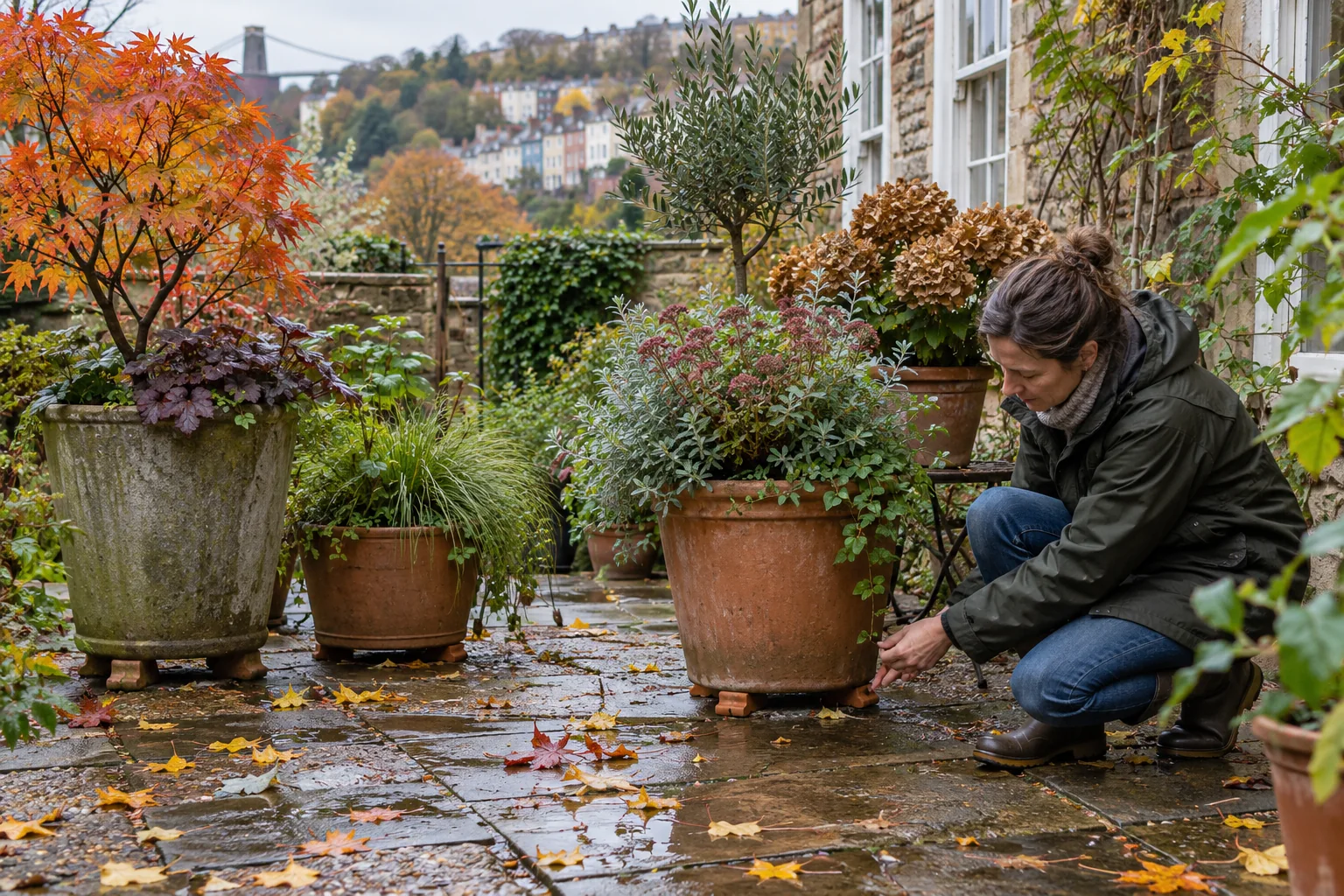
A pot that looks healthy in October can struggle after weeks of rain. Water trapped in compost pushes out air around the roots, while a saturated container is more vulnerable when temperatures fall. The solution is not to seal every plant away from weather. It is to make sure each pot can drain, choose a suitable position and check the needs of the plant inside it.
The Royal Horticultural Society's container-growing guidance highlights winter waterlogging and recommends keeping drainage holes clear, including by raising pots on feet or bricks. That is a useful first step in a Bristol courtyard or paved garden, where a container may sit flat on a wet surface for months.
Check the container before the plant
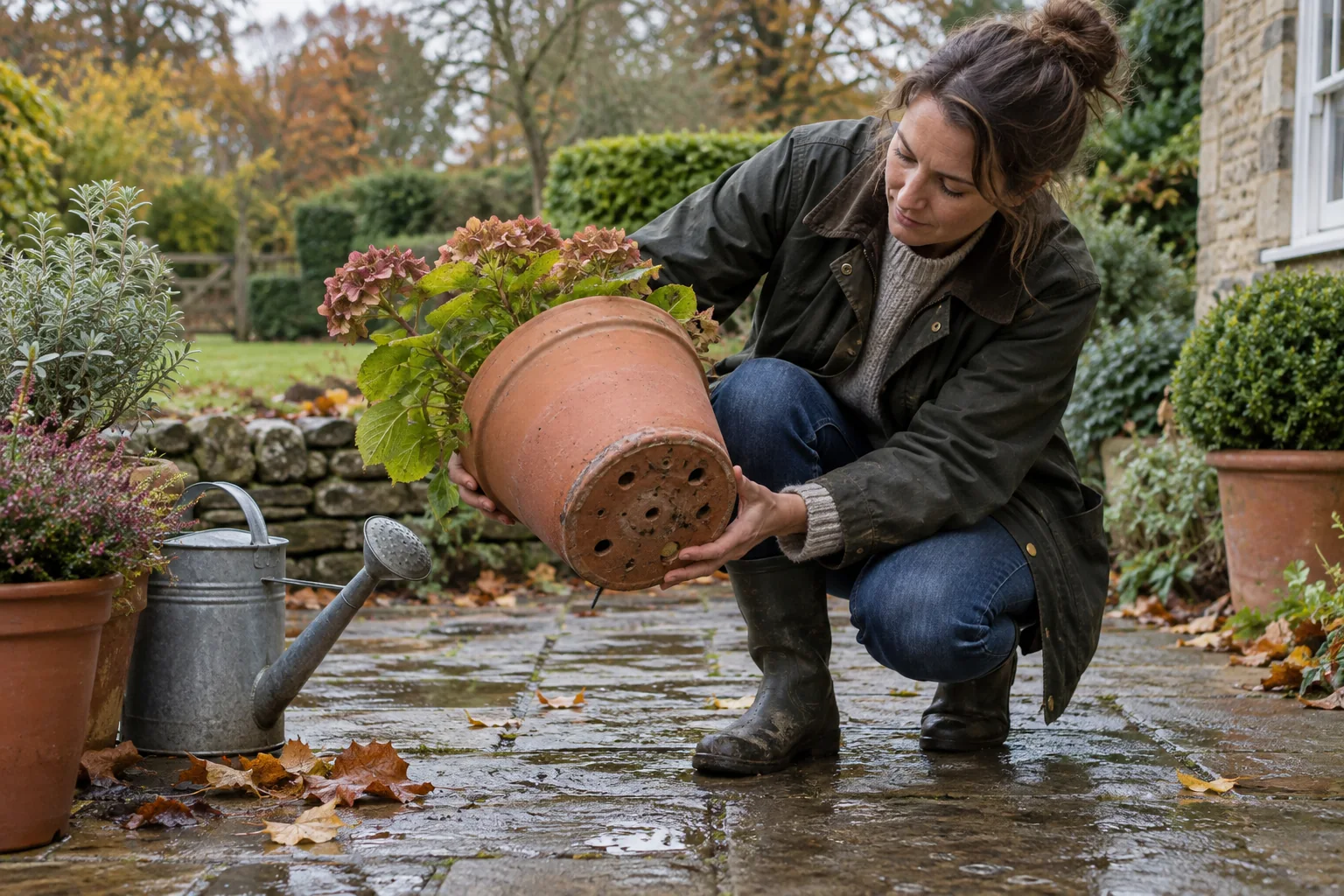
Lift or tilt each pot safely and look underneath. Are there drainage holes? Are they open, or blocked by compacted compost, roots or the surface beneath? A decorative outer pot without an outlet can hold water even when the inner nursery pot drains well. Empty any standing water and consider removing the outer pot for the wet season, or use it only where rain cannot collect inside.
Inspect cracks and unstable edges. Terracotta that is merely described as frost-resistant may still suffer if it fills with water and freezes; the RHS advises using frost-proof terracotta for winter displays. Plastic, fibreglass and wood behave differently, so read the maker's guidance rather than assuming one treatment fits every material. A cracked heavy pot also creates a tipping or handling risk when moved.
Check that compost has not sunk into a dense, sealed mass. Water should leave the bottom after a normal watering, but do not pour litres through a cold, already soaked container as a test. If the mix remains saturated despite open holes, the plant may need repotting into a suitable compost when conditions allow. Avoid adding a layer of gravel as a substitute for functioning outlets; the path out of the pot must still be clear.
Raise pots so water can escape
Pot feet, short bricks or suitable spacers create a gap under the base. This helps water leave through the holes and reduces the chance of an outlet sealing against paving. Support the pot evenly, especially if it is large or top-heavy. A wobbly arrangement on a path is a worse hazard than the original damp patch.
The RHS guide to winter container planting also recommends raising pots to aid drainage and reduce cracking in freezing conditions. Keep the support clear of the actual holes. After setting a container down, look from the side: if it rocks, reset the feet before filling or watering it. A heavy planter may require two people to move safely.
If water from several pots runs across a main path, reposition them so the route remains safe. Our guide to cleaning a slippery garden path covers leaf and algae hazards on paving. Pot feet help the container; they do not solve a patio that itself drains towards a doorway or a blocked gully.

Adjust watering to the season
Plants grow more slowly in cooler weather, but rainfall may not reach every pot. Dense foliage can shield the compost, and containers tucked under eaves can stay surprisingly dry. Feel below the surface rather than watering by habit. Give water when the plant and compost need it, then allow the excess to drain. Empty saucers that collect rain unless the plant has a specific need for them.
Smaller pots dry and cool faster than large ones, so inspect them individually. A winter bedding display on an exposed wall may differ from a shrub in a large sheltered planter. Do not feed routinely to push soft new growth; the RHS notes that winter container plants generally do not need feeding. Follow the requirements of any specialist plant rather than applying one rule to everything outdoors.
Watch for yellowing, wilting or a sour-smelling compost, which may indicate a root problem. These signs are not proof of waterlogging on their own, but they prompt a drainage check. A plant that wilts in wet compost may have roots unable to take up water. Do not respond automatically with another full watering can.
Place tender and hardy pots differently
Group pots where appropriate to reduce exposure and make inspections easier, but keep enough air movement around foliage. A sheltered position near a wall can help some borderline-hardy plants, while hardy winter bedding can remain in the light it needs. Avoid pushing pots against a downpipe outlet or into a low point where rainwater pools.
Roots in pots are more exposed to cold than roots in open ground. Check the plant's hardiness and the exposure of the site. A tender specimen may need a frost-free place rather than a layer of wrap around the pot. If protection is needed for a hardy container, use breathable, suitable materials and follow plant-specific guidance. Wrapping a pot while leaving its drainage holes blocked treats only one part of the problem.
Keep access in mind. A row of large pots can narrow a route to bins, gates or sheds. Move them to a stable position before prolonged rain makes the ground and containers harder to handle. The garden maintenance service can include seasonal container checks when a property has many planters or changing occupancy.
Deal with oversized or failed containers
An established shrub may have roots circling densely at the bottom of its pot, leaving little useful compost and poor water movement. Repotting into an appropriately sized container can help, but do not move a large plant into a vastly oversized pot just before winter. Too much unused wet compost can remain saturated around a small rootball. Check the species and season before disturbing the roots.
If the container has no hole and cannot be modified safely, use it as a decorative cover under shelter or replace it with a planted pot that drains. Do not drill ceramic or stone without the correct method and protective equipment. A failing planter may have value as a garden feature, but it should not be asked to keep a living plant healthy through a wet winter.
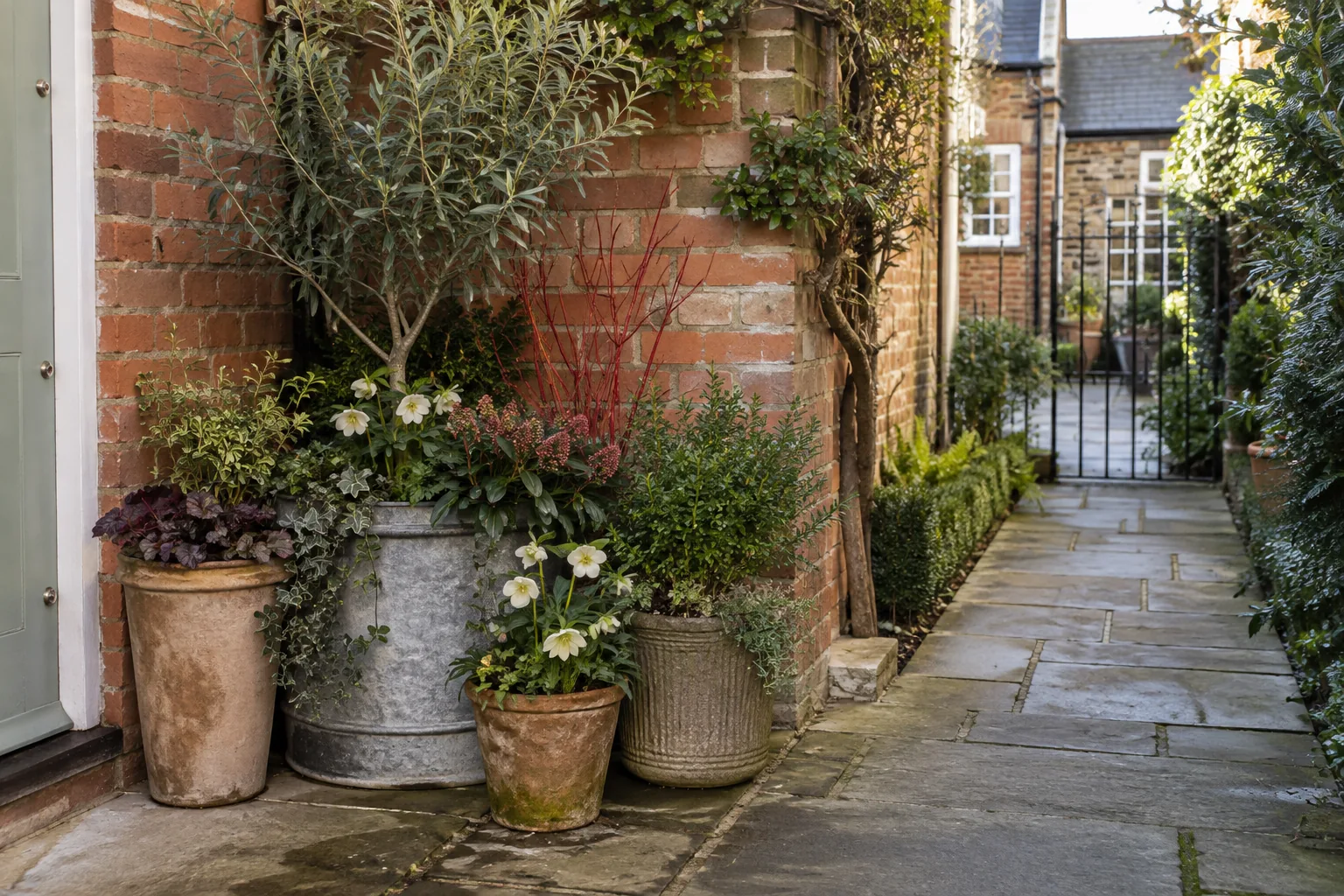
Keep any removed compost, broken pot pieces and plant material sorted. If a display is being renewed, choose a container and compost suited to the plants, not just a colour that looks good by the door. Our garden clean-up service can help remove larger amounts of agreed green waste when a courtyard is being reset.
Recheck after heavy rain
After a wet spell, look beneath the pots and feel the compost. Check that feet have not shifted, holes remain clear and saucers are not holding water. A pot that stays sodden needs attention. Record recurring standing water on the paving as a separate issue, especially if it collects near a wall or entrance.
The winter routine is straightforward: use sound containers with clear outlets, raise them securely, water according to the plant and weather, and place them for suitable light and shelter. A few minutes of inspection now can prevent months of roots sitting in wet compost while keeping the garden's paths usable.