
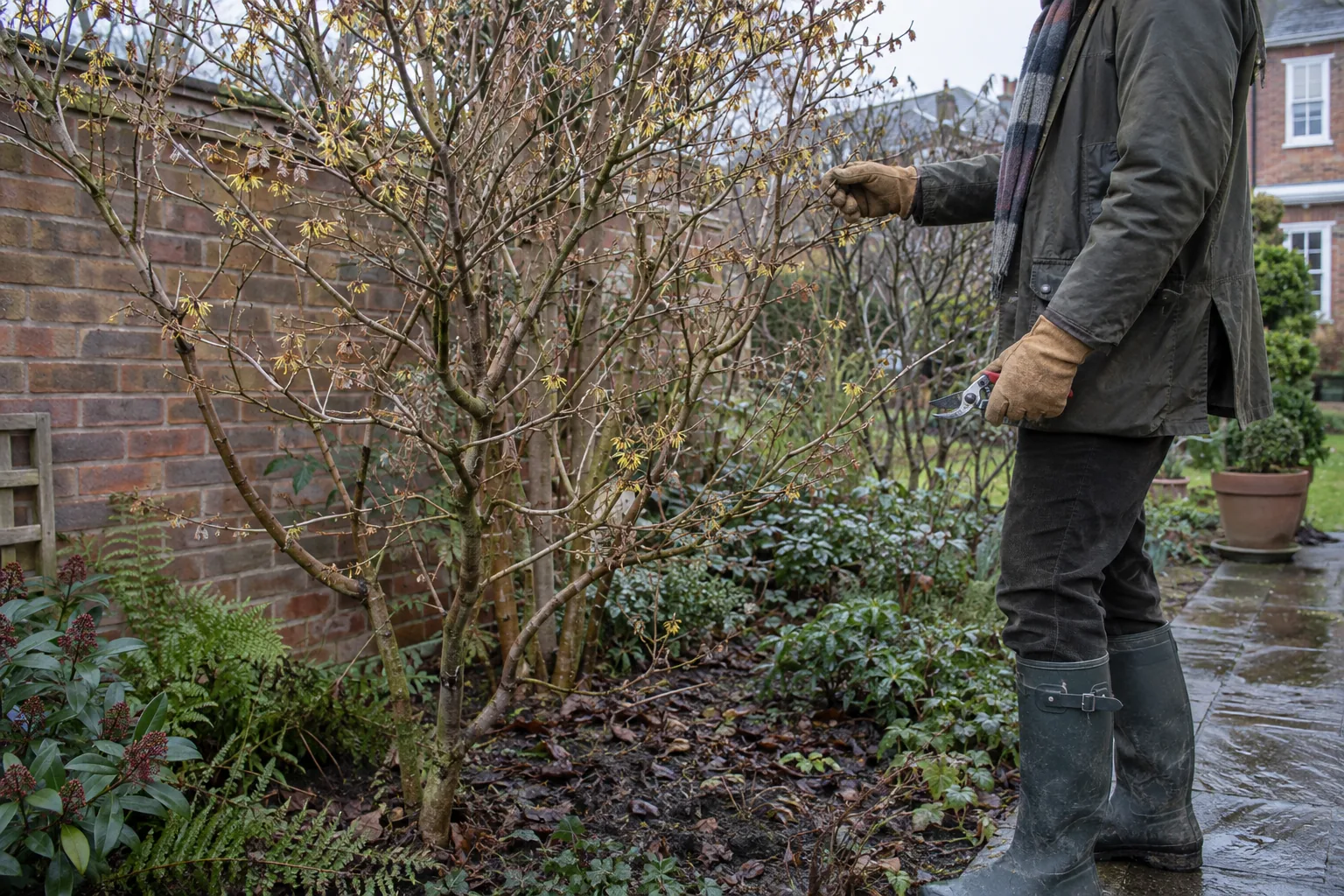
Winter can look like the obvious time to cut back every shrub. Growth has slowed, stems are easier to see and garden jobs feel less urgent. Yet a neat November trim can remove next spring’s flowers or expose tender growth to frost. The right timing depends on the shrub, when it flowers and whether it keeps its leaves. A short identification check is therefore more valuable than a blanket winter pruning session.
In a Bristol garden, begin with the plant’s name if you know it. Look for a label, old planting plan or photographs of its flowers. If you cannot identify it confidently, observe it through one flowering season before making a severe cut. Meanwhile, remove clearly dead, damaged or crossing stems where necessary and safe. Treat large, unstable branches separately from routine pruning, particularly near a path, building or overhead cable.
Why flowering time changes the answer
Some shrubs form flower buds on stems made during the previous growing season. Many spring-flowering plants fall into this group. Cut those stems in winter and you remove the display before it opens. The Royal Horticultural Society advises pruning early-flowering deciduous shrubs after flowering, when new shoots have time to grow for the following year. A shrub can look tidy after an early cut yet flower poorly for a full season.
Other deciduous shrubs bloom on new growth produced in the current year. Buddleja davidii and some late-summer flowering types are commonly pruned in early to mid-spring. Cutting too early in winter can leave fresh shoots exposed to cold. The RHS specifically cautions against winter pruning of summer- or autumn-flowering shrubs for that reason. “Flowers in summer” is a useful clue, but it is not a substitute for checking the species and its pruning group.
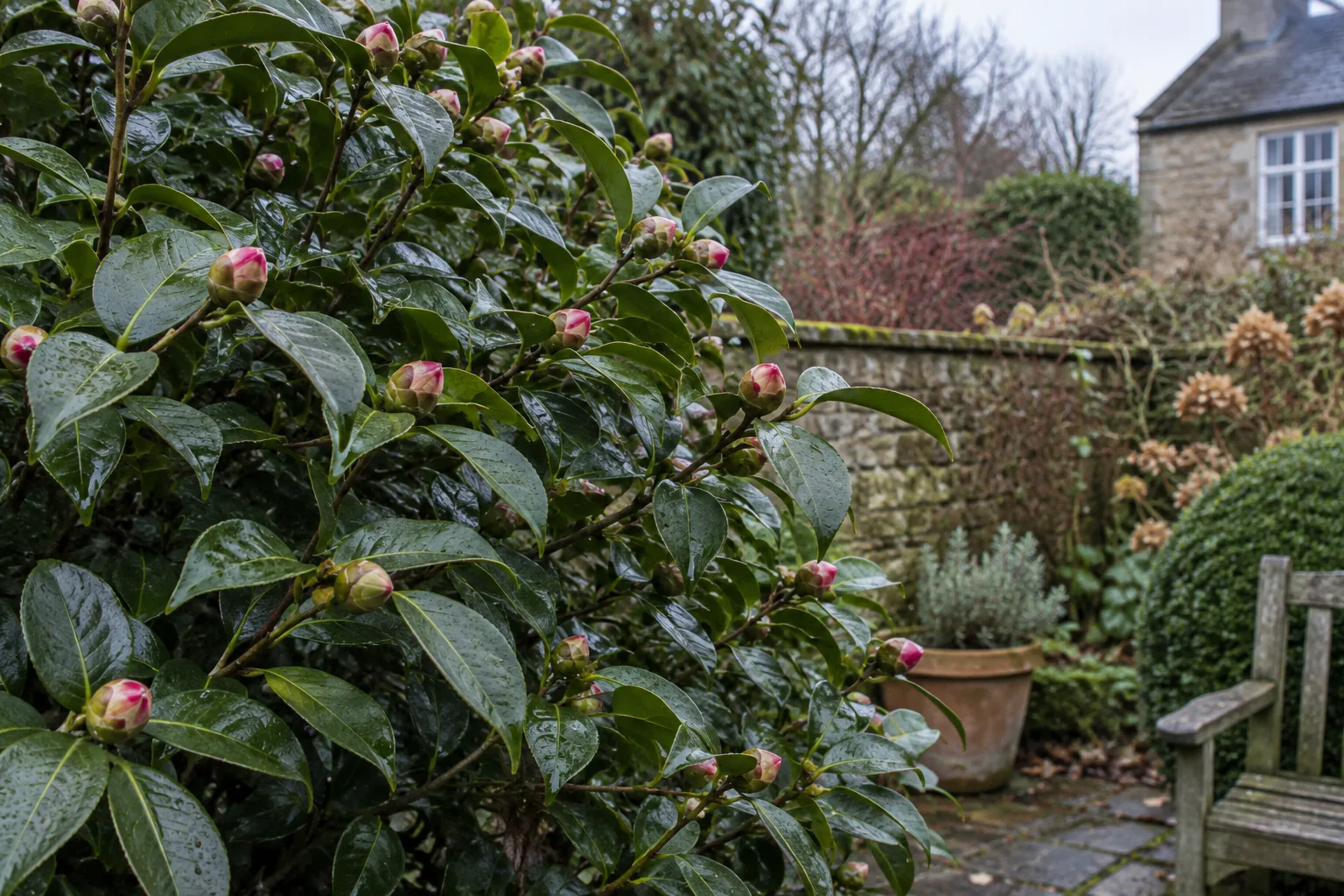
Evergreens need another approach. They keep leaves and do not behave exactly like dormant deciduous shrubs. A winter haircut can leave bare patches or vulnerable cut surfaces, while flowering evergreens may already carry buds. Rhododendron and camellia, for example, are generally left alone apart from limited tidying and deadheading as appropriate. Identify the particular plant and seek species guidance before reducing it heavily.
Useful winter work on deciduous shrubs
The clearest winter task is inspection. Once leaves have fallen, you can see the framework of a deciduous shrub, its oldest stems and any rubbing branches. Remove dead wood back to healthy tissue with clean, sharp tools. Where two branches cross, choose which one to retain based on the plant’s shape and future space. Make careful cuts rather than leaving long stubs. If a stem looks diseased, clean tools before moving to another plant.
An established, overgrown deciduous shrub may be suitable for renovation between November and March, according to RHS guidance, but this is a separate decision from routine tidying. Severe pruning can sacrifice flowers for a year or two, especially where blooms form on older wood. Check the species, its vigour and the position of healthy low growth before committing. A phased reduction can be kinder to the garden’s appearance and wildlife than cutting everything down at once.
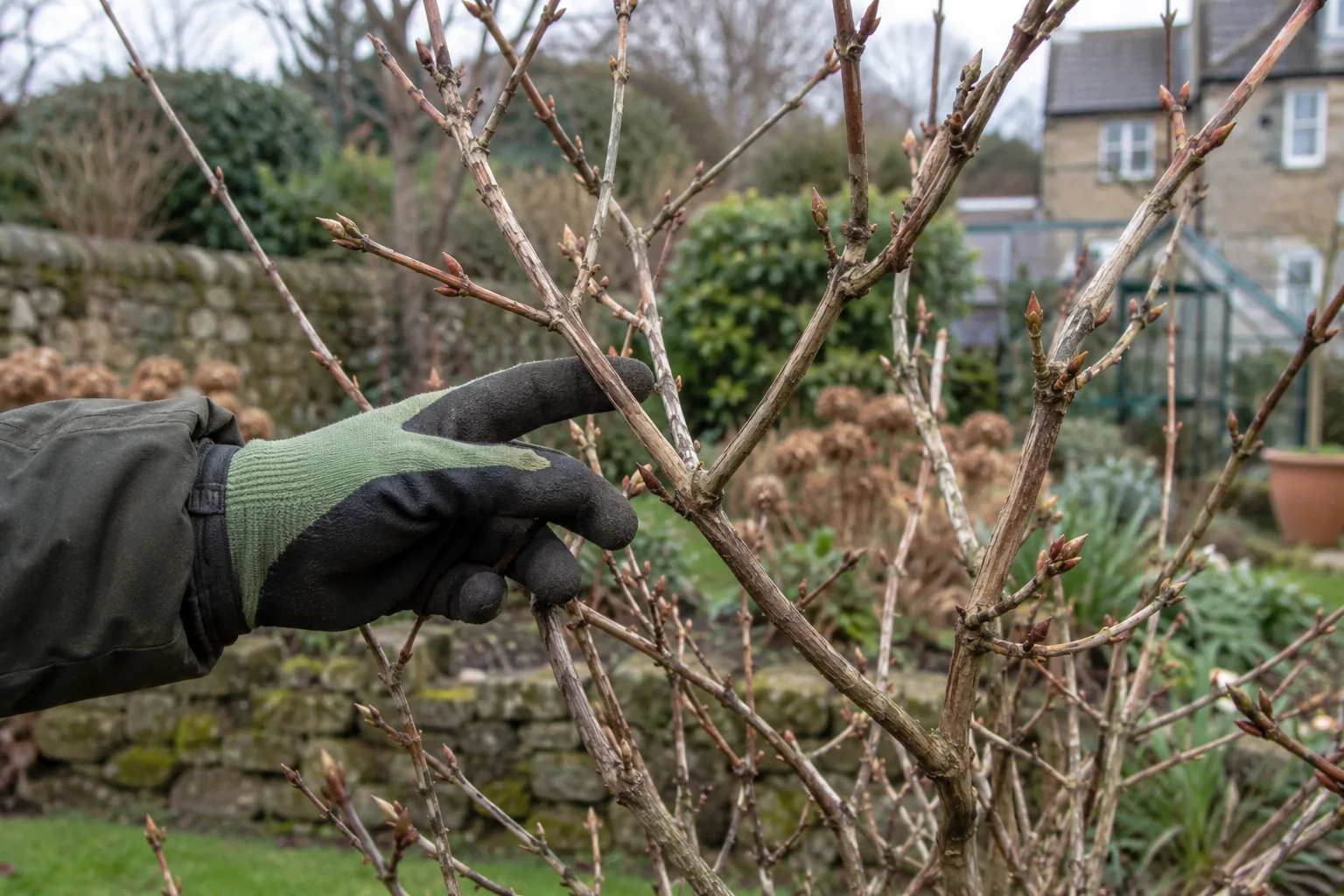
Shrubs grown for colourful young stems, such as some dogwoods, have their own late-winter or early-spring pruning pattern. The aim is to encourage vigorous fresh stems that show the best winter colour. The exact method depends on the plant’s maturity and design role. Do not apply that hard-cut technique to an unrelated flowering shrub just because both have bare stems in January.
Protect spring flowers and evergreen structure
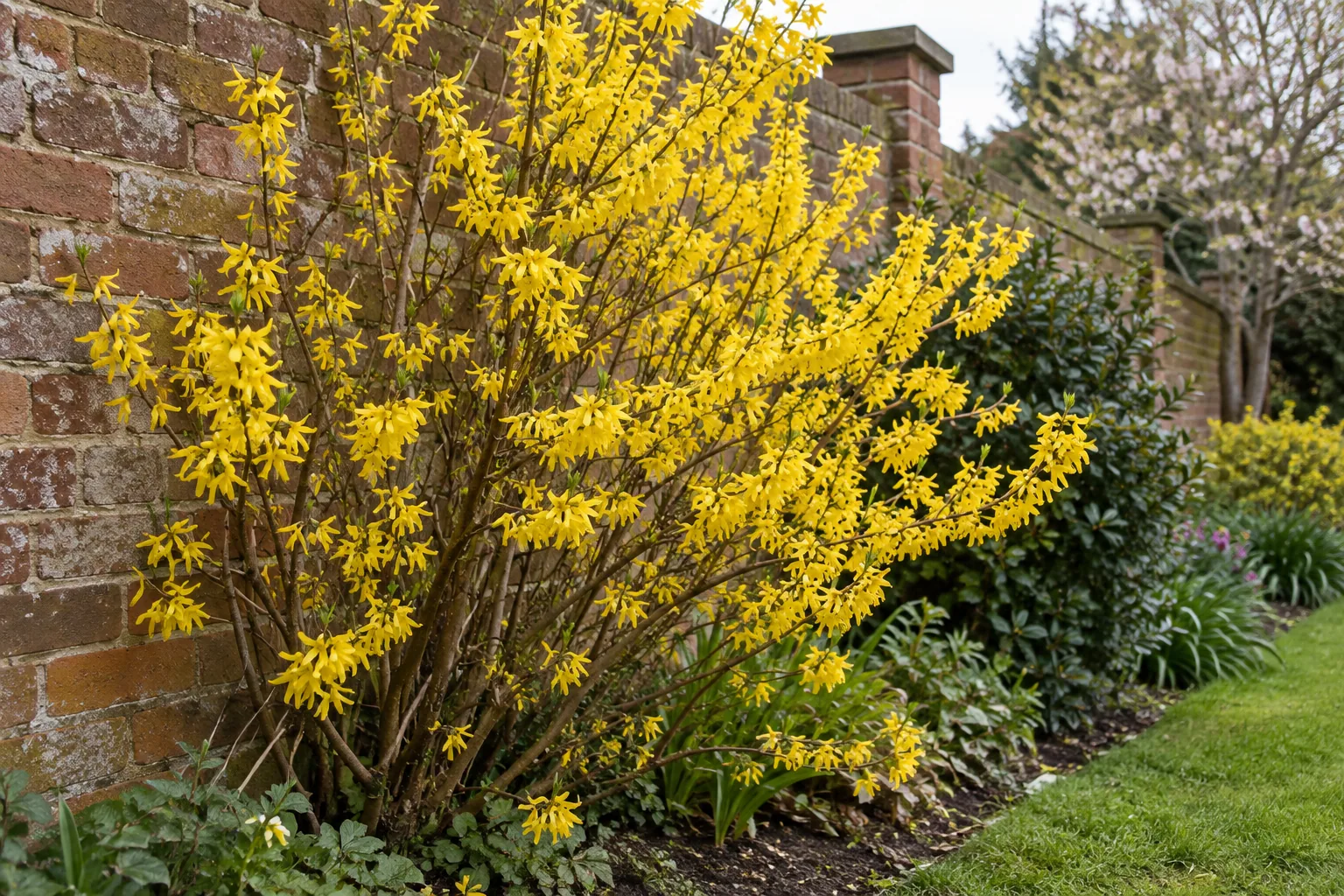
If a shrub flowers before or around early summer, make a note to assess it just after flowering. You can then remove spent flowering shoots and shape it without automatically losing the next display. Forsythia and many other familiar spring shrubs respond to pruning at this stage, but the extent of the cut varies. A young plant may need only light shaping; an older one may benefit from selective removal of ageing stems near the base.
For an evergreen, wait for the recommended window for that species. Many spring-flowering evergreens are shaped after flowering, and some need very little routine pruning. Avoid creating a flat face of cut leaves on a large-leaved shrub when selective hand cuts would keep its natural outline. If a hedge has grown beyond its space, check the species before deciding how much old wood it can regenerate from. Our hedge trimming service can help assess size and an appropriate maintenance rhythm.
Cold weather also matters. Even a plant that tolerates pruning in its dormant season is easier to work on during a mild, dry spell than during hard frost. Frozen or waterlogged ground makes access slippery and can damage nearby soil and planting. Pause if tools crush or tear stems rather than making clean cuts. Wear eye protection and avoid using ladders on unstable ground.
Check wildlife and the reason for pruning
Before entering a dense shrub, look and listen for active birds. Nesting is often associated with spring and summer, but timing varies, and the practical rule is to stop work if an occupied nest is suspected. Winter berries and shelter also matter to wildlife. Leaving some sound flowering or fruiting growth can be worthwhile where space allows. Do not turn a necessary safety cut into an unnecessary full clearance.
Ask what the pruning should achieve. A branch blocking a gate needs a local correction. An overcrowded centre may need selective thinning to improve structure. A shrub planted too close to a wall may need a longer-term replacement plan if repeated hard cutting is its only way to fit. Cutting without a purpose can produce a cycle of vigorous regrowth and more work next year.
Photograph the plant before and after work, particularly if several people care for the garden. Record when it flowered and which stems were removed. That small note makes future timing easier. For a mixed border, our garden maintenance service can help organise seasonal tasks around the plants actually present rather than a single date on the calendar.
A simple decision before the first cut
Identify the shrub, establish whether it is deciduous or evergreen, and note when it flowers. Check whether its flowers grow on old or new stems, then consult species-specific guidance. Decide whether the work is routine shaping, removal of damaged wood or major renovation. Finally, inspect for wildlife and choose safe working conditions. If any of those answers is uncertain, limit the work to essential, clearly justified cuts until you know more.
Winter pruning is useful for the right shrubs and the right purpose. It is equally useful to leave a healthy spring-flowering or evergreen shrub alone until its proper window. That small restraint can preserve flowers, shelter and a balanced shape while keeping a Bristol garden manageable through the year.