
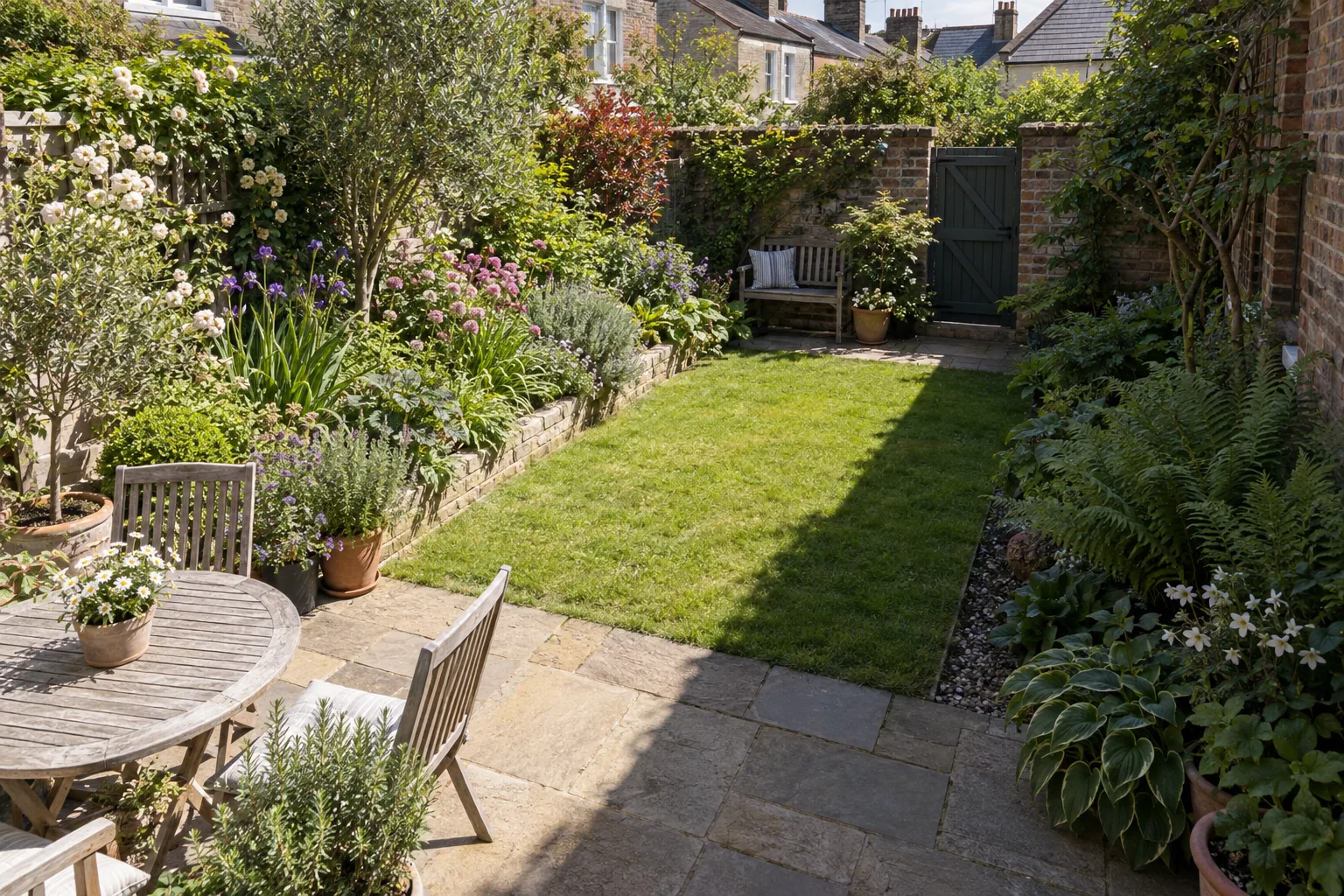
A plant label may say “full sun” or “partial shade”, but a Bristol garden rarely fits one description from fence to fence. A tall terrace, a neighbour’s tree and a shed can each create a different patch of light. The same border may enjoy morning sun, become shaded at lunchtime and receive a brief bright spell in the evening. Choosing plants from a compass direction alone can therefore lead to disappointing growth.
Before buying, map where direct sunlight actually reaches the places you intend to plant. Add notes about soil moisture and exposure, because shade beneath a thirsty tree differs from shade beside a wall. A simple record made over several days is more useful than a complicated gadget used once.
Start with aspect, then observe the real garden
Find north using a reliable map or compass and mark it on a rough sketch. Aspect gives a useful starting point: a south-facing open border is often brighter than a north-facing one. Yet walls, fences and buildings can override that pattern in a compact plot. The Royal Horticultural Society advises considering orientation alongside the shade created by structures and trees when assessing a garden’s microclimate.
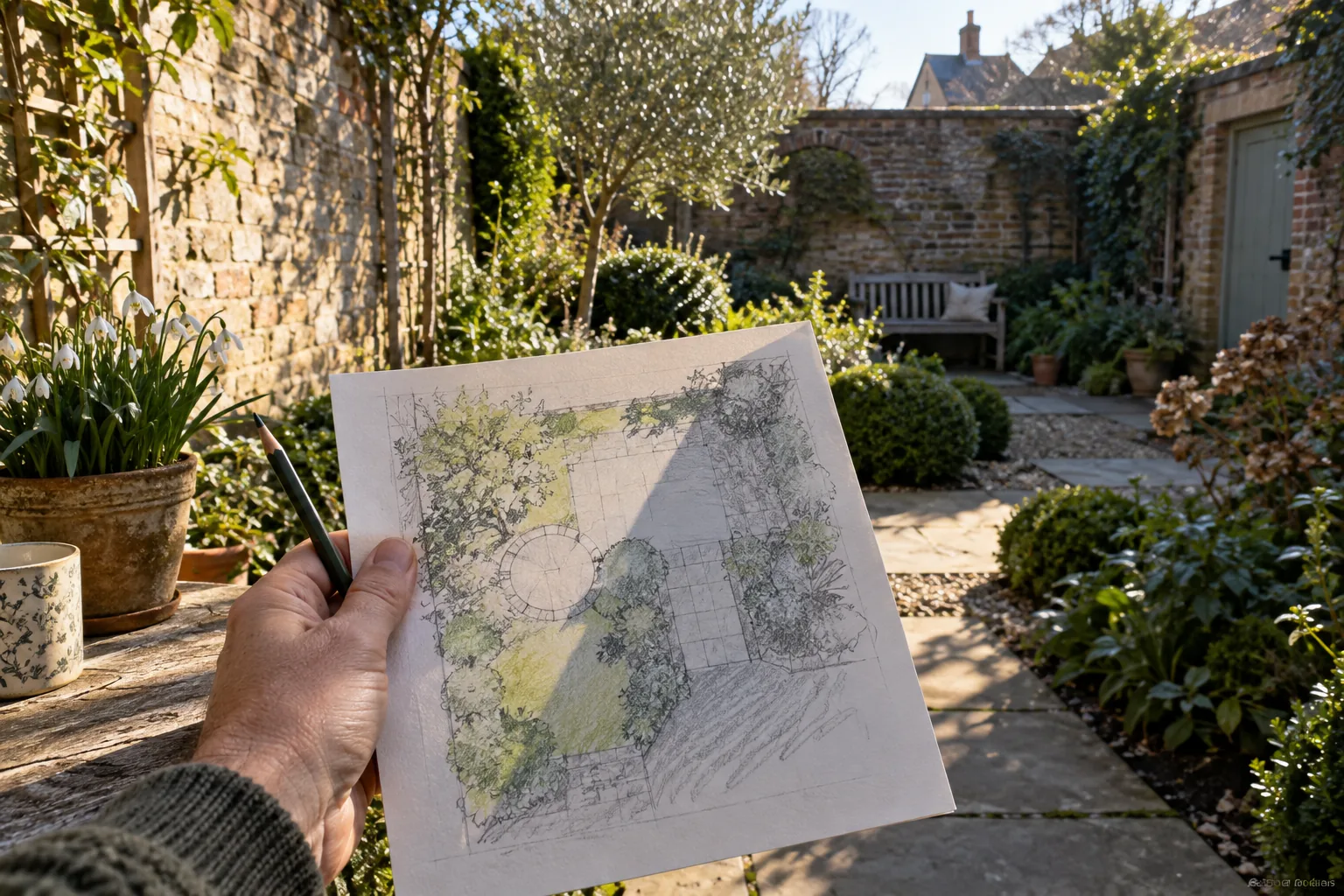
Draw the outline of beds, containers, paving and tall features. Mark the height and position of walls and any large deciduous or evergreen trees. You need not produce a scaled survey. The aim is to identify each planting spot clearly enough that you can compare your notes with a plant’s requirements later. A border along the house may deserve two or three separate entries if only one end sees the sky.
Look beyond your own boundary. A neighbouring building may shade a patio each afternoon, while a tree across the fence may cast moving, dappled light. Do not assume that a bright-looking area receives direct sun; reflected daylight can make a space pleasant for people while leaving sun-loving plants short of the light they need.
Record direct sun at useful times
On a reasonably clear day, check each proposed planting spot in the morning, around midday, mid-afternoon and early evening. Note when direct sunlight touches the soil or foliage and when it disappears. Repeat on another clear day if possible. Cloud makes a single observation unreliable, so record weather beside the time. A phone photograph from the same viewpoint at each check gives a quick visual comparison.
You do not need minute-perfect totals. The RHS describes full sun as more than six hours of direct sun at midsummer and partial shade as roughly three to six hours. Light shade can mean a place open to the sky but screened from direct sun; dappled shade is broken light through a canopy. These terms help you sort a site, but the strength of light matters too. Three hours around midday is more intense than three hours after dawn.
Measure the particular planting position rather than the centre of the garden. A pot next to a wall can receive much less light than one moved a metre away. If a fence casts shade across a bed, mark the edge of its shadow on your sketch at each visit. That small exercise often reveals a sunny strip suitable for flowering plants beside a cooler section better reserved for shade-tolerant foliage.
Account for season and changing trees
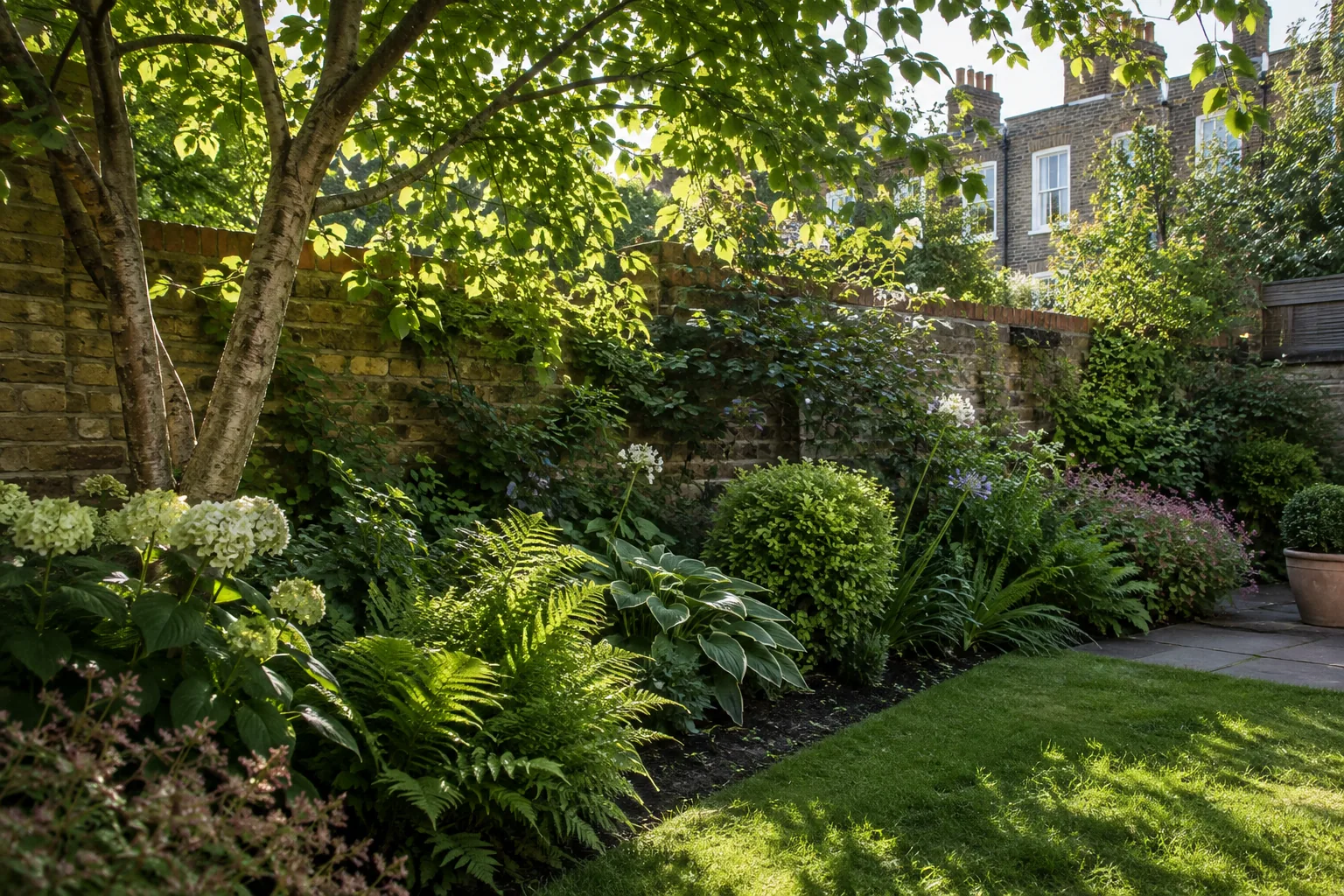
A light survey in October cannot tell you exactly how a border will behave in June. The sun is lower in the sky, shadows are longer and daylight is shorter. A deciduous tree may let winter light through its bare branches and shade the same patch heavily after leafing out. An evergreen canopy provides more persistent cover. Use an autumn record as a starting point, then revisit the garden in spring and summer before making an expensive, permanent planting scheme.
If you have recently moved in, ask whether older photographs show the space at a different season. They may reveal when a tree fills out or which corner becomes hot in summer. A rough garden diary is particularly helpful for narrow rear yards, where sunlight may arrive for only a short window between neighbouring buildings. Our garden design service can help arrange seating, access and planting around those usable light windows.
Avoid relying entirely on a phone sun-path app. It can show the sun’s approximate direction but may not account accurately for a neighbour’s roofline, an overhanging tree or a recently built structure. Your own observations provide the local detail that an orientation diagram misses.
Separate shade from soil conditions
Shade is only one part of the decision. Soil beneath a mature tree often dries because its roots compete for water, even though the ground looks cool. A shaded spot by a wall may stay damp or become dry under a rain shadow. Feel the soil a few centimetres below the surface after rain and again during a dry period. Note puddling, compaction and whether roots make digging difficult.
Check wind and heat as well. A west-facing paved yard may be bright but expose containers to reflected warmth and faster drying. A north-facing passage may be cooler and funnel wind. Different parts of a small garden can have distinct microclimates, so record what you actually experience rather than assuming that all shade is moist and all sun is warm. If persistent wetness affects a planting area, see our garden maintenance service for help assessing routine care needs.
Match plants to the mapped spot
Take the sketch and notes when you visit a nursery. Compare a plant’s light preference with the specific bed or pot, then check its mature size, soil and moisture needs. “Tolerates shade” may mean it survives but flowers less freely; “prefers shade” can be quite different. If you want flowers or fruit, look for guidance on performance under your actual level of light, not simply whether the plant remains alive.
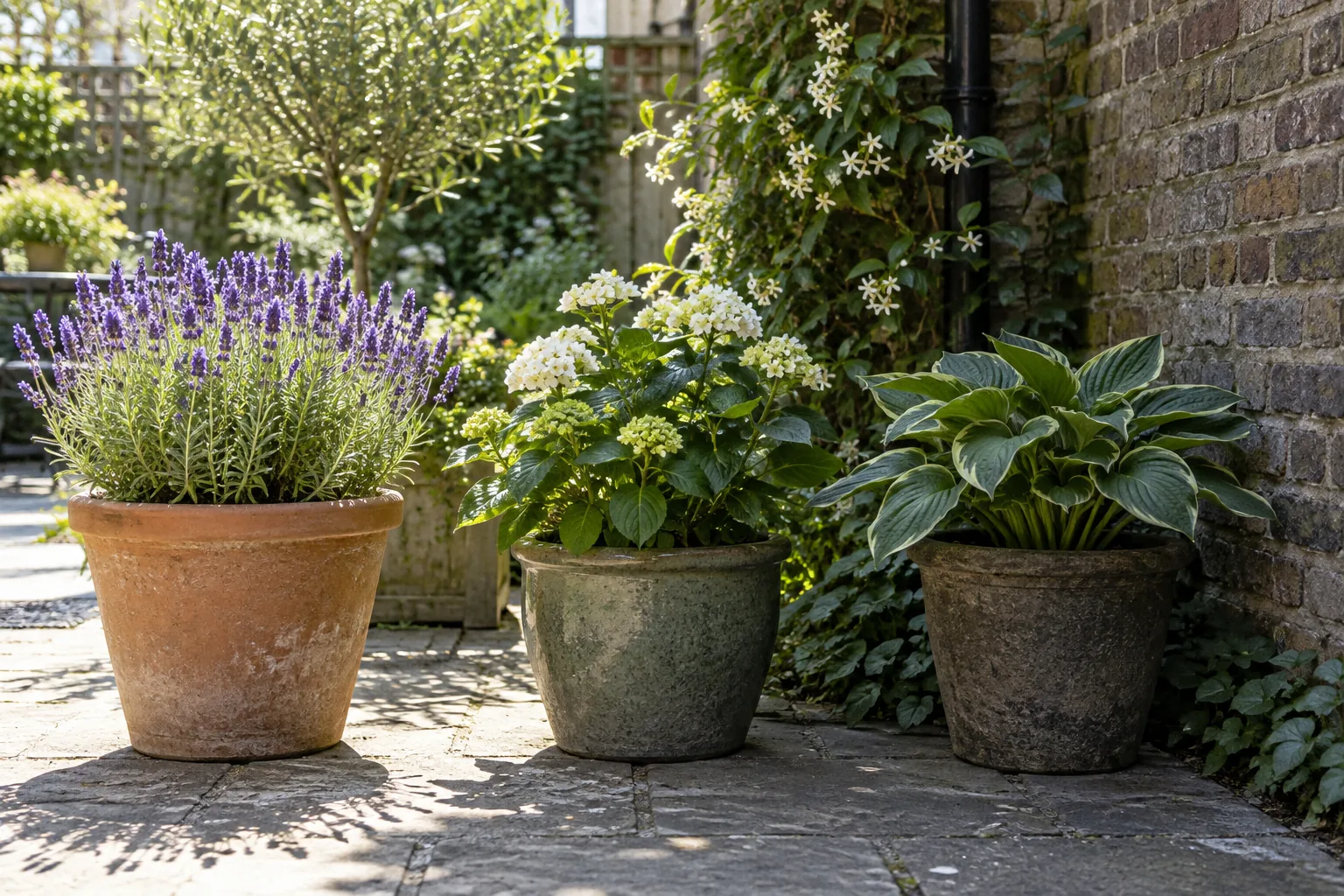
Group plants with similar needs. In a mixed border, put the most light-demanding choices where they receive the longest direct sun and use shade-tolerant plants under canopies or near walls. Leave room for growth so one successful shrub does not shade the rest within a few years. In containers, a short trial is easy: move a pot between positions for a season before committing to a larger planting.
Observe established plants too. Sparse growth, stems leaning strongly towards a gap, weak flowering or scorched leaves can indicate a mismatch, although watering, soil and pests may also be involved. Assess the whole site before moving a struggling plant. Pruning a neighbour’s tree or removing a mature specimen should never be the automatic first response to a light problem.
The best planting plan begins with a modest map, repeated observations and a willingness to revisit them as the seasons change. Once you know where direct sun falls, what kind of shade remains and how the soil behaves, you can choose plants for each real position in the garden. That makes a compact Bristol plot easier to care for and gives new planting a fairer start.