
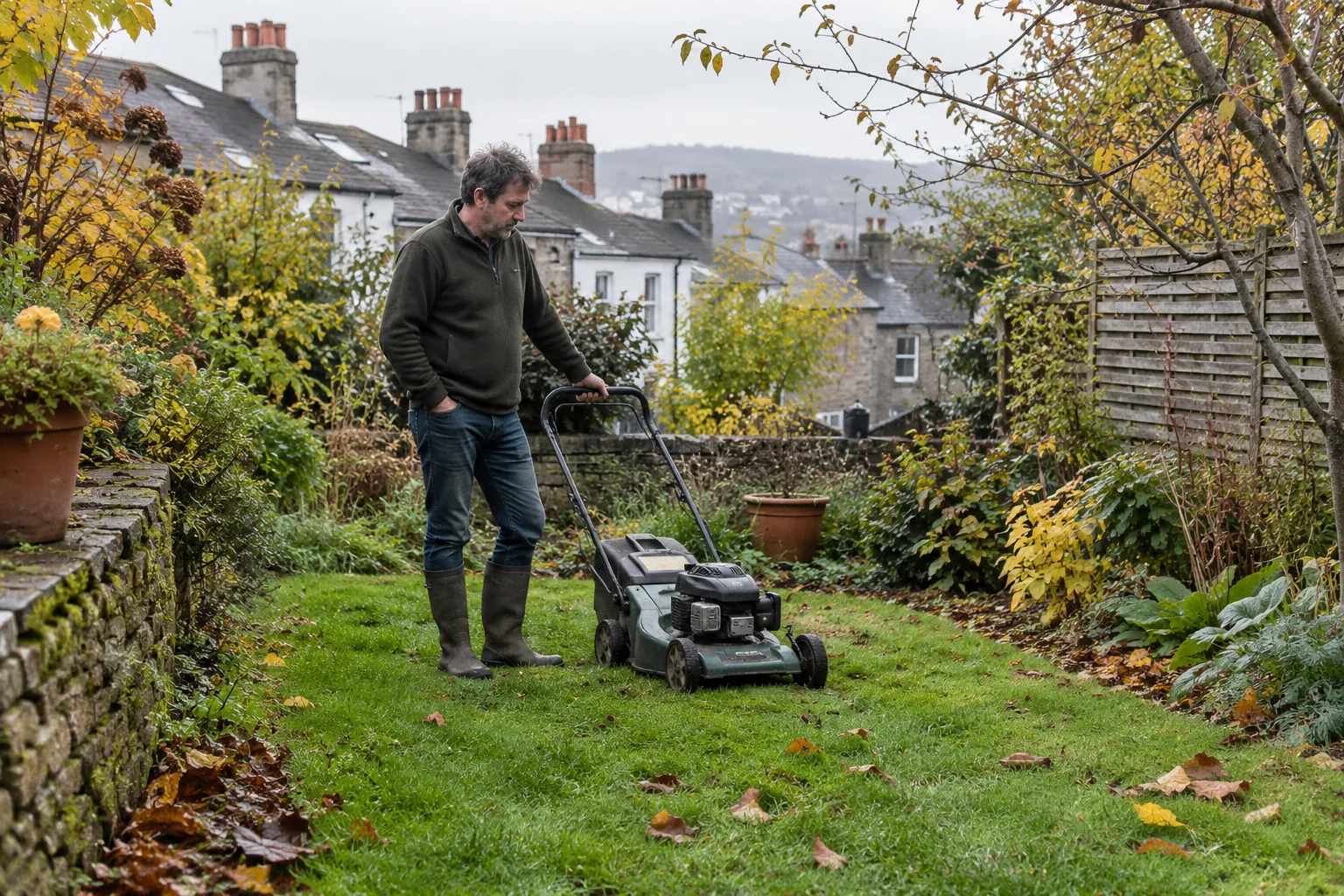
There is no reliable date for the last lawn cut. Grass responds to warmth, light and moisture, not a calendar entry. In a mild Bristol autumn it may continue growing well into November; in a cold or waterlogged spell, mowing may become unsuitable much earlier. The useful decision is whether the grass has grown enough to need cutting and whether the lawn can support the mower without damage.
Take a look at the whole lawn before starting. Check its height, feel the surface underfoot, examine the blades and consider the forecast. If the grass is growing, the ground is reasonably firm and the leaves are not wet or frosty, a light cut may be worthwhile. If the soil squelches, the grass is covered with dew or a frost is expected that morning, leave the mower in the shed and try again when conditions improve.
Let growth determine the timing
The idea of a single final mow is convenient, but some lawns need several light cuts through autumn while others slow early. A sunny front lawn may grow faster than a shaded rear patch at the same property. Recent feeding, rainfall and grass type also affect the pace. Walk round rather than judging from a window: long tufts near a border can make the whole area look overgrown even when most of it is fine.
The RHS guidance on mowing explains that ordinary lawns can generally be kept longer in spring and autumn than in summer. The RHS October lawn advice says to mow if necessary during mild weather, using a slightly higher cutting height than in summer. That wording matters. A weekly appointment is not a reason to cut a lawn that has hardly grown, and the first cold night is not proof that mowing has finished for the year.
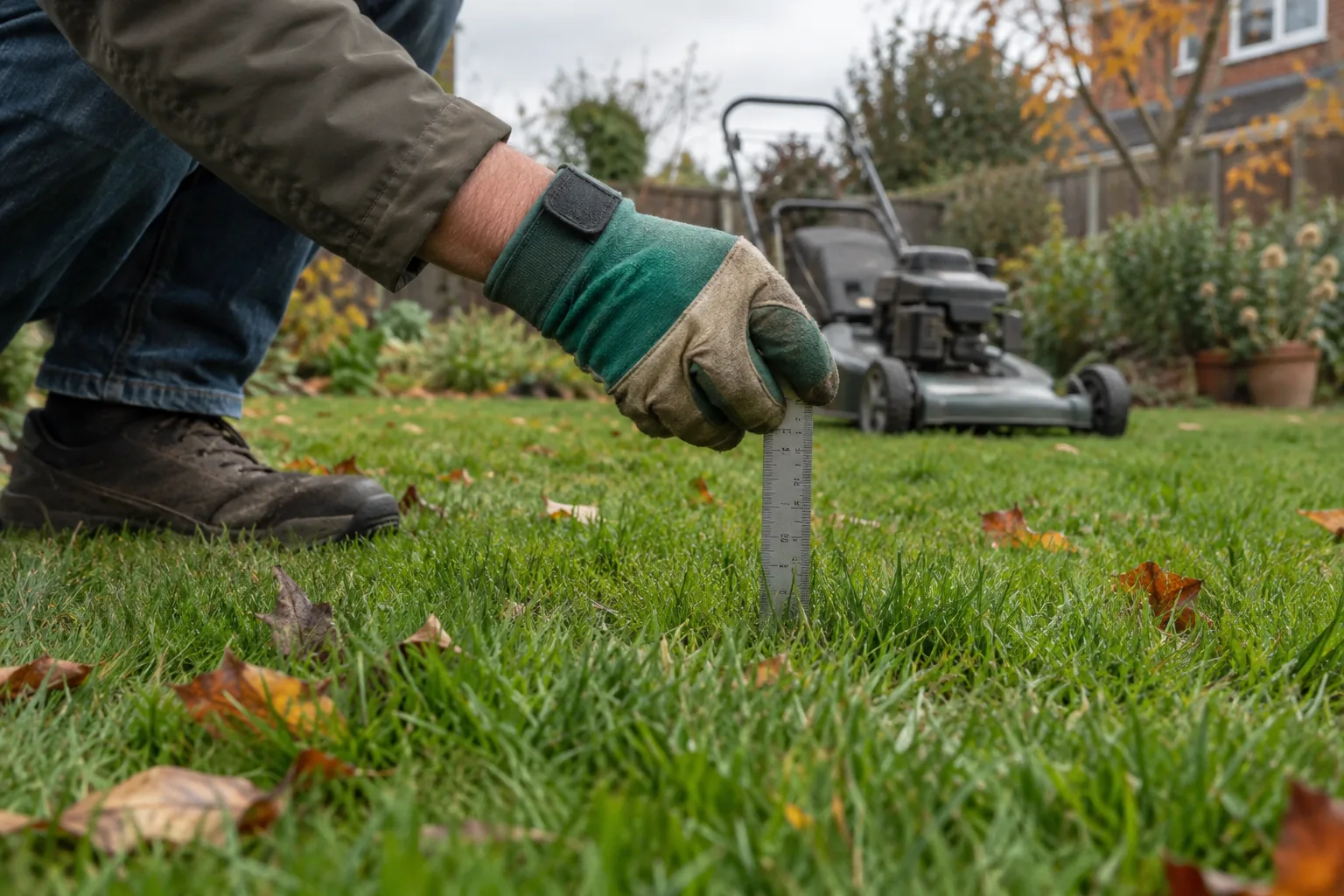
Check moisture at the surface and below
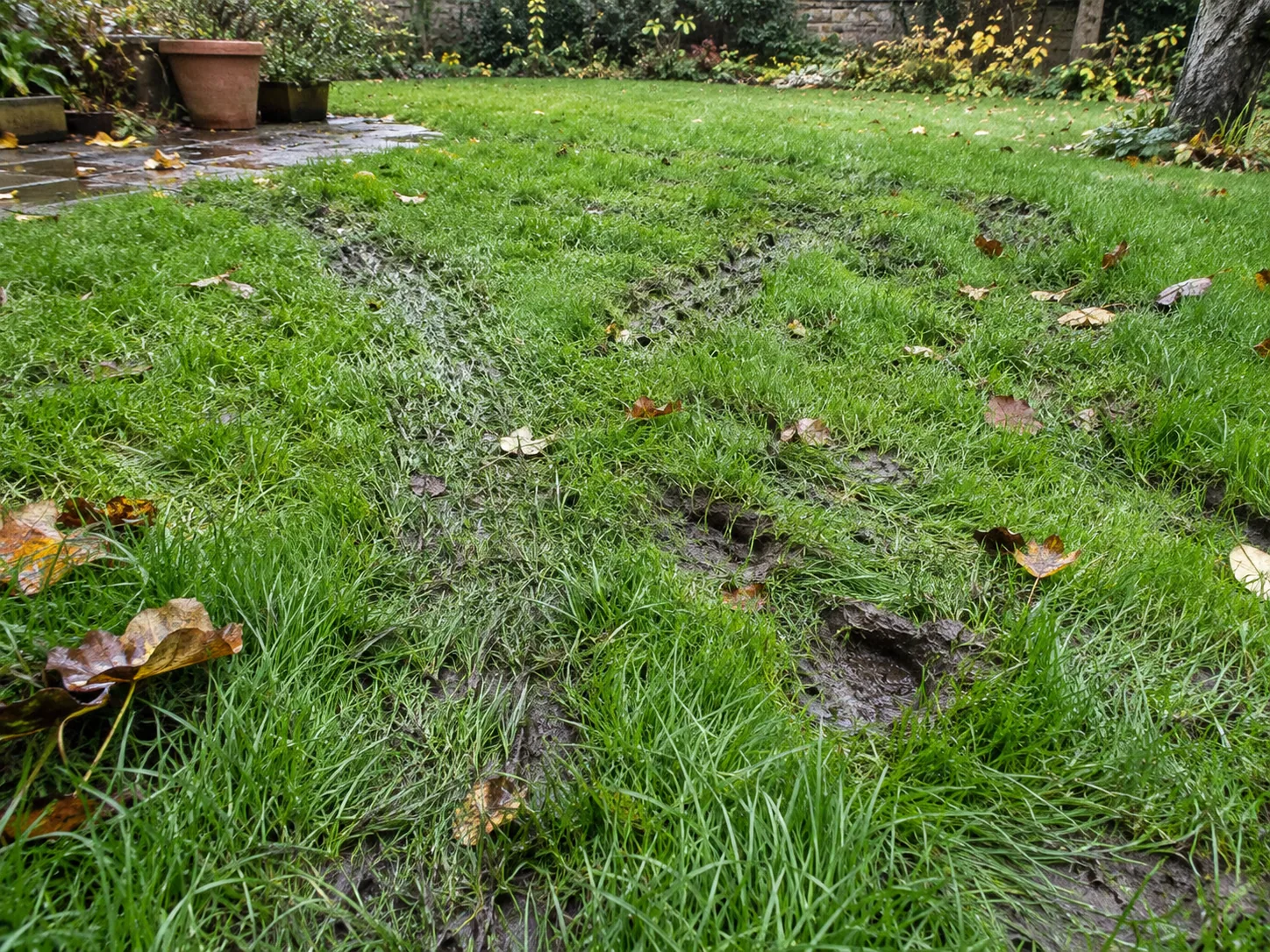
The grass blades should be fairly dry. Wet grass clumps, sticks under the mower and can produce an uneven finish. More important, the soil should support the weight of the mower and your feet. If a test step leaves a deep imprint, mowing risks ruts and compaction. A small urban garden can stay damp beneath fences and trees long after an open park has dried.
Do not be tempted to rush out immediately after a shower simply because rain is forecast again tomorrow. Wait for a suitable window. Work from a firm path where possible when checking the lawn, and avoid repeatedly crossing the same saturated strip. If only one corner remains wet, it is better to leave that patch than drag the mower through it. Persistent wetness may point to shade, compaction or drainage issues that deserve separate attention.
Frost is another reason to pause. Walking or mowing on frozen grass can bruise the leaves, and a partly thawed lawn may be wet and soft underneath. Let the frost disappear and assess the surface again. A bright morning is not automatically a mowing window when the lawn still feels cold and slippery.
Raise the cutting height and remove less
An autumn cut should generally be less severe than a close summer finish. Set the mower higher and avoid removing a large proportion of the blade in one pass. Short grass has less leaf area to gather light and can expose weak patches just as growth is slowing. If the lawn is unusually long, reduce it in stages when weather permits rather than scalping it to the desired height at once.
The right setting depends on the mower, lawn and amount of shade. The RHS gives indicative heights for ordinary domestic lawns, while its advice on lawns in shade recommends leaving grass longer in low light. Treat those figures as a guide, not a target that overrides the condition of your own turf. On a bumpy lawn, a raised setting also reduces the chance of scraping high spots.
Clear leaves without damaging the turf
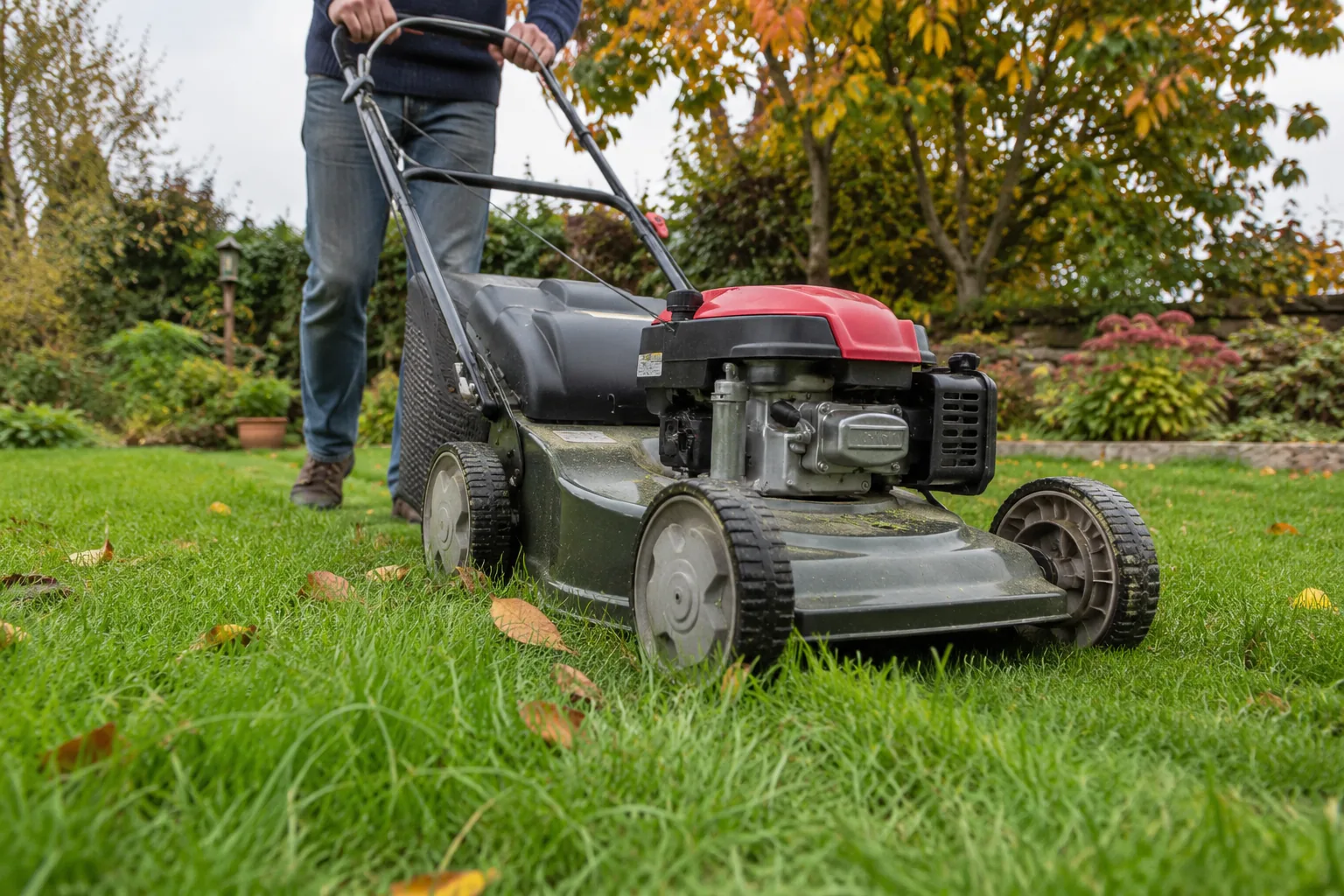
Leaves can hide stones and small objects from the mower and form damp clumps in the collection box. Lift a heavy covering before cutting. A light scatter may be collected during the mow, but do not force the mower through a thick, wet layer. Check especially beneath overhanging trees and at the base of fences, where wind can pile leaves into a dense strip.
After mowing, collect clumps of wet cuttings. A fine, dry scattering may break down quickly, but a heavy mat can smother the grass. Remove material from paths as well; grass and leaves left on paving become slippery. Clean the mower after the job and let it dry before storage. If this may be the last cut for several weeks, a few minutes of maintenance now will make the next start easier.
Where leaves continue to fall, keeping the lawn clear is a separate task from mowing. You may need to rake again even if the mower stays unused. Our guide to where autumn leaves should go explains how to use them without smothering the turf. The garden maintenance service covers seasonal leaf clearance as well as lawn care, and the lawn mowing service can discuss a schedule that follows growth rather than forcing the same frequency all year.
Recognise when the lawn needs diagnosis instead
Mowing will not fix a patch that remains spongy, bare or mossy. If the mower wheels sink in one area, stop and inspect the soil after rain. Water may be collecting in a low point, or repeated use of a narrow route may have compacted the ground. A shaded area beneath a tree may also stay damp and grow slowly. Cutting the whole lawn shorter to make one patch look even often makes the weak area worse.
The RHS autumn lawn care guide discusses aeration and repairs where conditions are suitable. Such work should be chosen for a diagnosed problem, not added automatically to the last mowing session. Wet soil is particularly vulnerable to further compaction. If the cause is unclear, note when the patch is wet, how long it takes to drain and how much light it receives before deciding on a treatment.
Decide again after each mild spell
After a cut, keep watching rather than declaring the season finished. Mild weeks can restart visible growth, and the RHS notes that occasional mowing may even be useful in a mild winter if grass and soil conditions allow. Conversely, a lawn that has not grown does not need a ceremonial final pass. Use the same short test each time: growth, dry blades, firm soil and a suitable forecast.
For a small Bristol lawn, this flexible approach is easy to manage. Keep leaves off the grass, avoid traffic during wet or frosty spells and use a raised mower setting when a light cut is genuinely needed. If the lawn has recurring problem patches, separate their repair plan from the mowing decision. The best last cut is simply the last one that helped the grass without damaging the ground.