
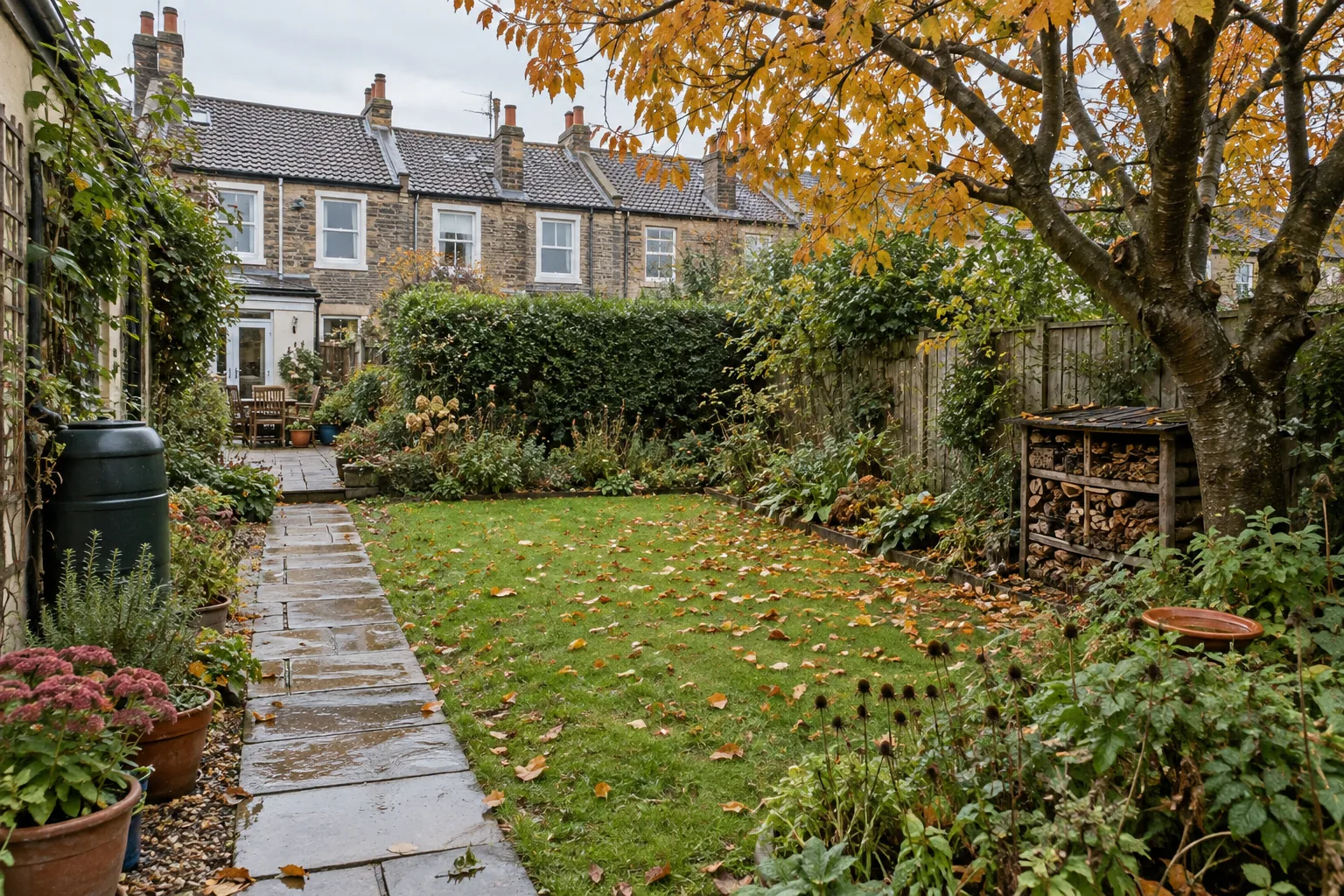
A fall of leaves is not a single problem with a single solution. On a path it can become slippery; over a lawn it can block light; beneath a shrub it may shelter wildlife and gradually feed the soil. The useful question is where each pile should go. In a small Bristol garden, a quick sort usually works better than clearing every leaf into a waste bag.
Begin with the places people use and the plants that need light. Move leaves from steps, drains, paving and grass, then decide whether the material is clean enough to keep. Some can sit under established planting; the rest can become leafmould or go through an appropriate garden-waste collection. You can keep the garden presentable without making every border bare.
Clear routes and drains first
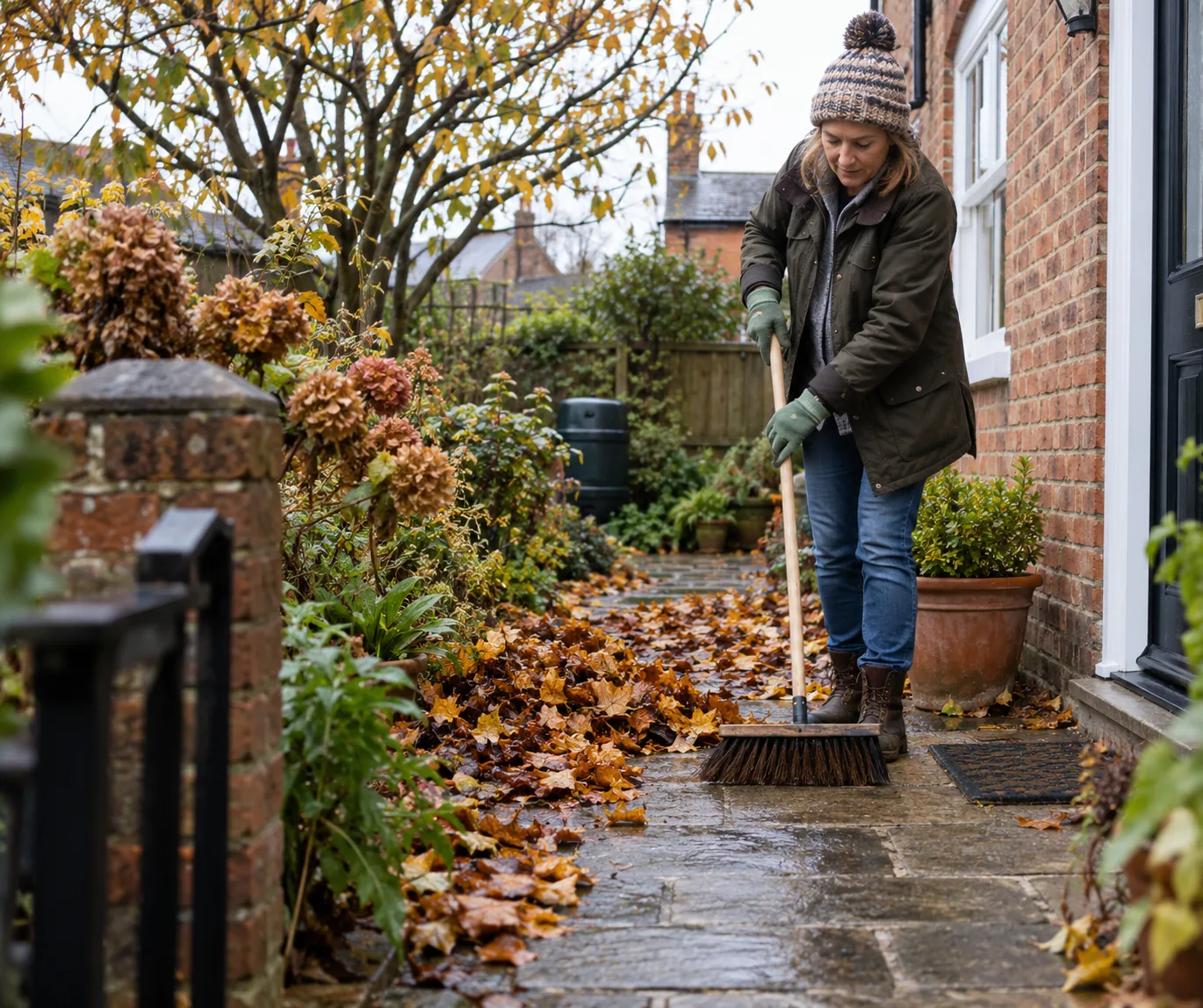
Wet leaves conceal uneven paving and can turn a shaded step into a slip hazard. Sweep the route between the back door, bins and gate before working on ornamental areas. Check drain grilles and gullies as well: a small accumulation can hold water against a wall or leave a puddle across a path. Put collected leaves in a bucket or wheelbarrow so you can sort them instead of blowing them into the nearest border.
Do not use a high-pressure cleaner simply to shift leaf residue. Different paving and jointing tolerate different treatments, and forceful water can remove joint material or damage a softer surface. A stiff brush and a careful rinse may be sufficient. Where algae or staining remains, identify the surface before choosing a method. The local patio cleaning service describes professional options for difficult paved areas.
Lift thick layers from the lawn
Grass needs light and air even as growth slows. A mat of wet leaves can flatten it and keep the surface damp, so rake or collect heavy falls when the ground is firm enough to walk on. Avoid repeated trips across a soggy lawn: footprints and wheelbarrow tracks may cause more harm than the leaves you are removing. Work from the edge where possible and return when conditions improve.
There is no need to chase every single leaf. A few scattered leaves can be picked up on the next pass. The distinction is between a light scattering and a covering that hides the turf for days. The RHS October lawn advice recommends clearing fallen leaves and judging lawn work by weather and soil condition. If mowing is still needed in mild weather, collect clumps of cuttings and leaves rather than leaving them to smother the grass.
Leaves from a lawn are often excellent for leafmould. Keep the collection free of litter. The lawn mowing service can include seasonal preparation where a larger tidy is needed.
Keep a measured layer beneath shrubs and hedges
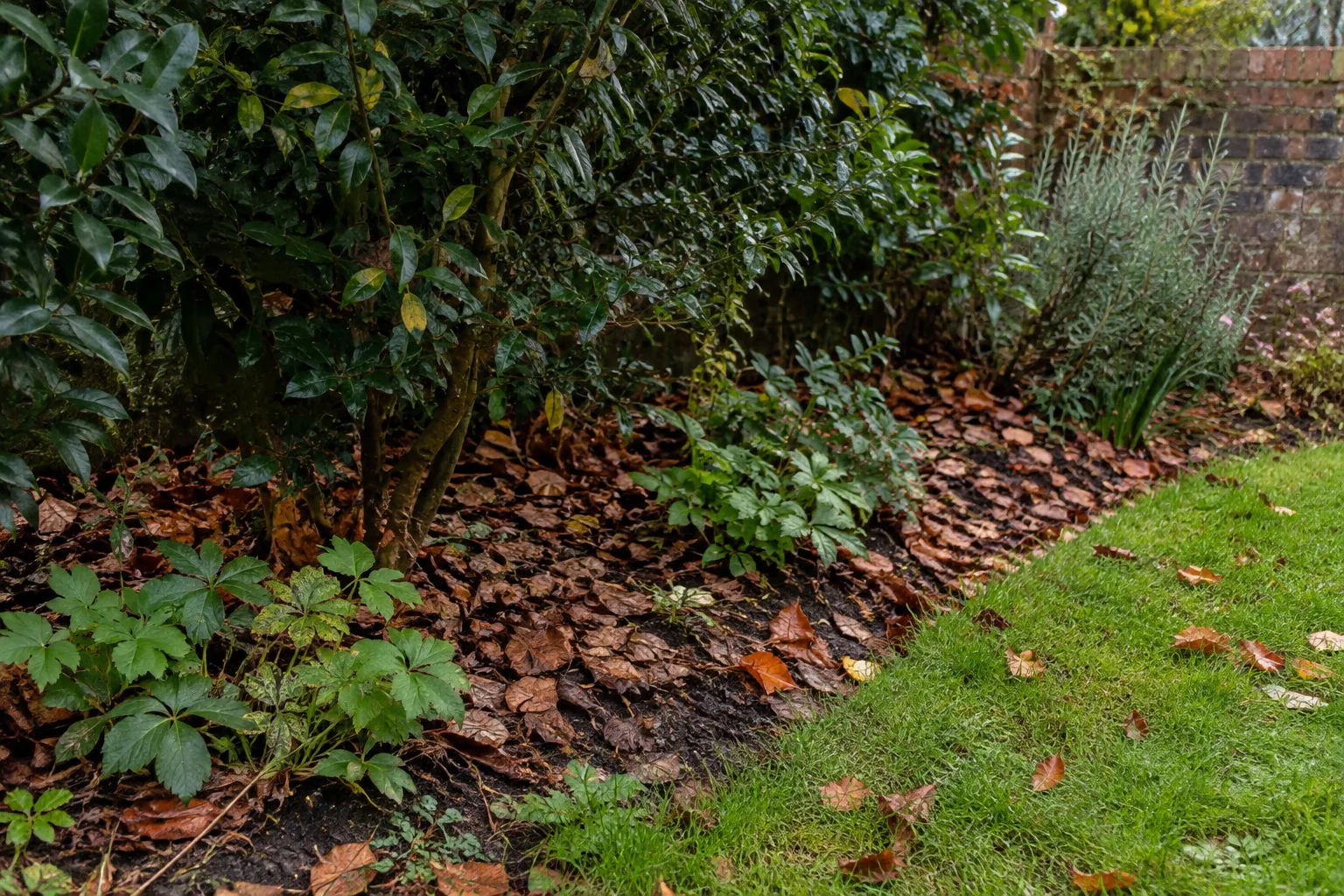
An established hedge or shrub border can hold some fallen leaves. They make a sheltered, damp layer for small invertebrates and eventually decompose into organic matter. Move leaves there gently rather than packing them into a dense mound. The RHS advice for trees and shrubs in October suggests using collected leaves on borders or beneath plants, while the RHS pollinator guidance notes the shelter offered by leaf litter under hedges.
Keep the layer away from the crowns of low perennials and from the stems of young plants. A thick wet pile pressed against a small plant can exclude light and air. Evergreen groundcover may also be hidden by leaves; gently free its foliage rather than leaving it buried. Check the border after heavy wind, as leaves tend to collect in the same corners and against fences.
This is a place to use judgement rather than a fixed depth. If you can still see the structure of the planting and the leaves are loose, the layer may be useful. If a mound has collapsed into a sodden sheet over small plants, move some of it to a leafmould container. Keep visible edges and access points tidy, leaving the quieter rear of the bed less disturbed.
Make leafmould from the surplus
Leafmould is the crumbly material produced as leaves break down, mainly through fungal activity. It is different from the faster, mixed compost made with a balance of green and brown ingredients. It is useful as a soil conditioner and can help retain moisture when applied appropriately around established planting. It is also a straightforward way to keep a seasonal surplus on site.
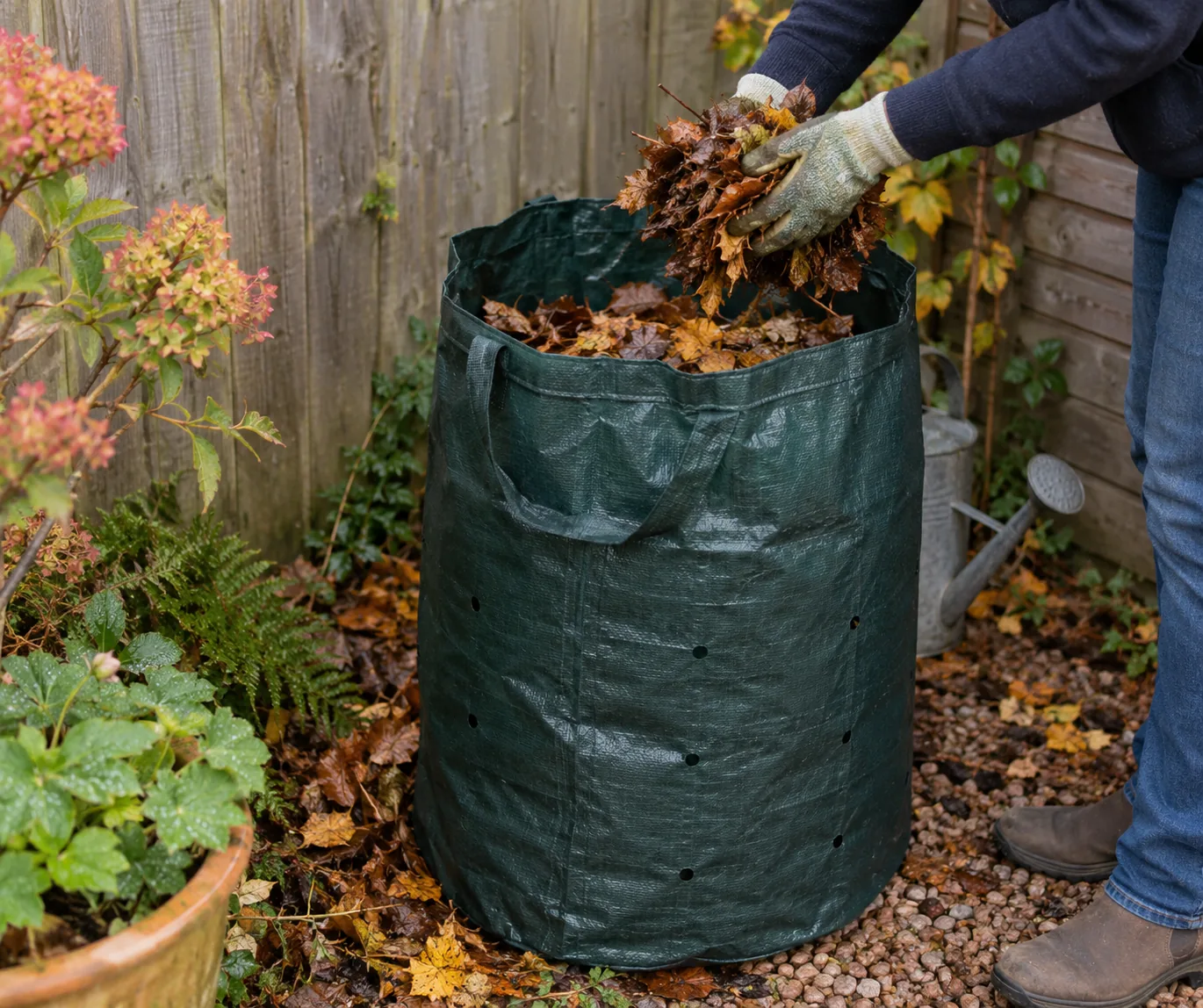
For a small garden, fill a reusable sack or sturdy bag with damp leaves and make a few air holes. Set it in a sheltered spot where it will not obstruct a drain or path. Larger gardens can use a simple wire-mesh bay. Keep the leaves moist rather than waterlogged and allow time: the texture changes gradually, so do not expect finished material in a few weeks. Label the bag with the collection date to avoid confusing it with general waste.
Keep rubbish, stones and woody twigs out of the batch. If you cannot store all the leaves sensibly, use the council's current garden-waste arrangements or agree removal as part of a garden clean-up.
Set aside suspect material
Healthy fallen leaves are generally useful. Leaves with obvious disease need a more careful decision. The RHS advises removing leaves affected by problems such as rose black spot, quince leaf blight and apple or pear scab to reduce recurrence. Collect these separately rather than spreading them beneath susceptible plants. Follow local waste guidance, and avoid assuming that a small, cool home compost heap will deal with every pathogen.
Also separate leaves contaminated with road litter, pet waste or other debris. A pile swept from a street-facing entrance may be less suitable for a vegetable bed than clean leaves collected from your own lawn. If you are unsure what has been sprayed or deposited on material, choose a conservative destination.
Make the routine fit the space
In a terrace garden, storage is often the limiting factor. Designate three destinations before the next windy day: a container for clean leaves, a quiet area beneath established shrubs and an agreed outlet for the excess. Keep a brush near the door so the essential route can be cleared in minutes. If leaves blow in from neighbouring trees, the routine still works; their origin matters less than their condition and where they land. The wider autumn garden jobs guide can help prioritise other work before winter.
Take one last look after rain. If the lawn is visible, drains are clear and small plants are not buried, the job is probably done for now. Leave some undisturbed leaf litter where it can be useful. A balanced garden maintenance visit can help when leaf clearance needs to be coordinated with mowing, border care and waste removal, but a simple sorting habit will already make the garden safer and more hospitable through autumn.