
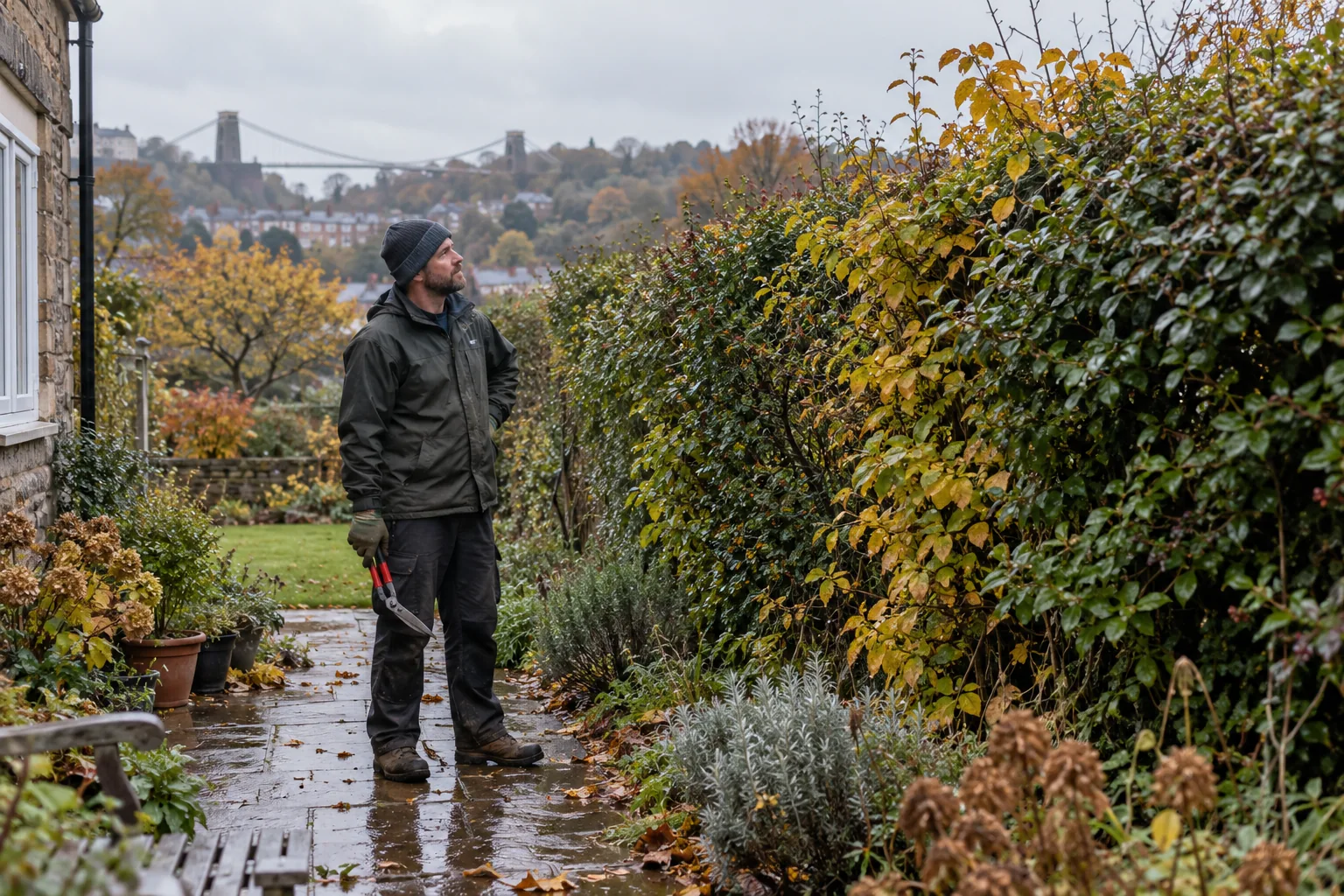
A hedge can look ready for a cut even when the timing is wrong. A hidden active nest, a shrub about to flower, wet ground under the ladder or an overgrown conifer that cannot regrow from old wood can all change the plan. A short delay is often the most effective decision. Inspect the hedge and the working area before booking a full trim or starting a machine.
The Royal Horticultural Society's hedge guidance asks gardeners to check for nesting birds and choose the right technique for the plant. Autumn is outside the usual peak nesting months, but the calendar alone does not prove a hedge is clear. The condition of the plant and the safety of access matter too.
Stop if a nest is being used or built
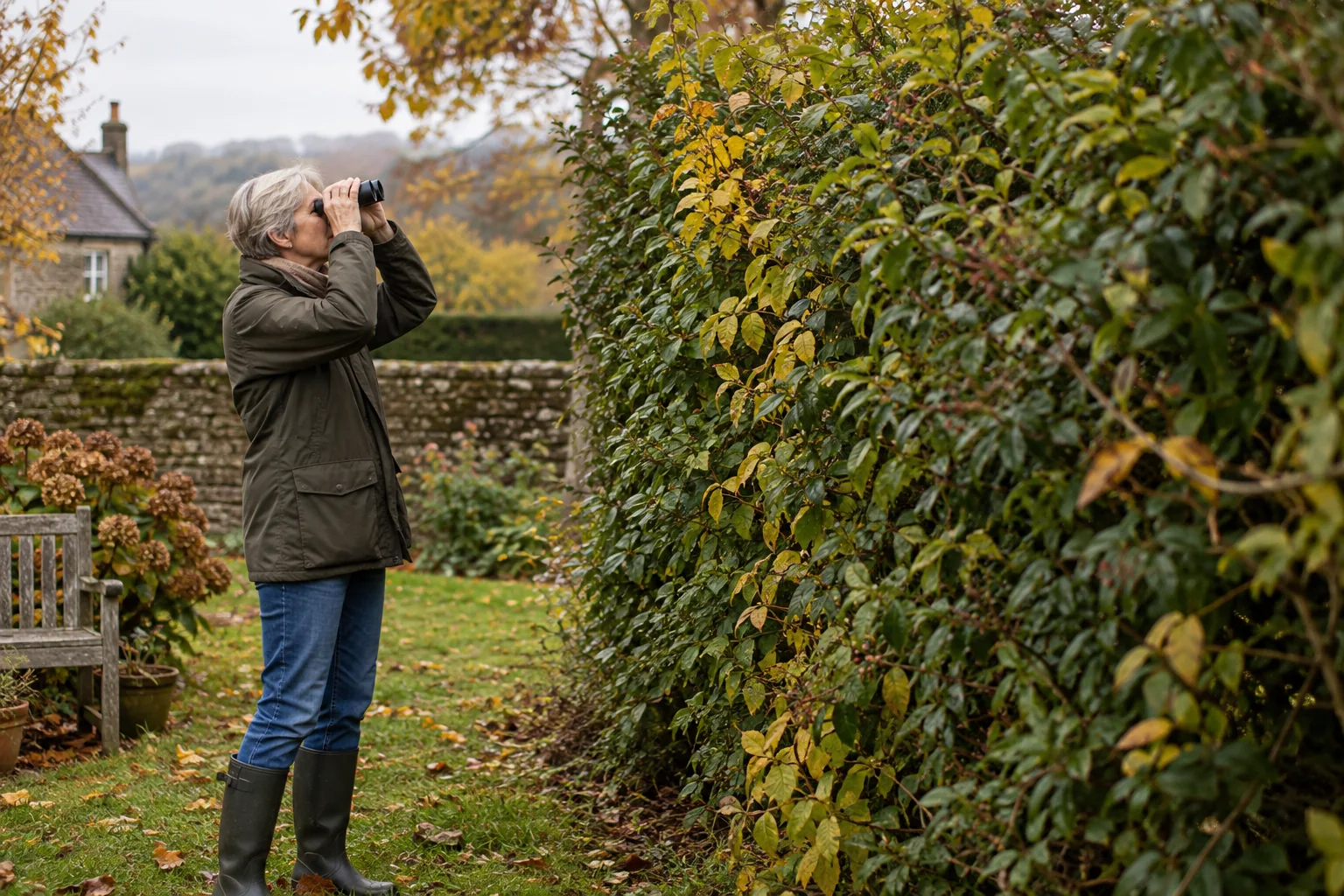
Watch the hedge quietly from a distance before disturbing it. Repeated adult birds entering one spot, alarm calls or visible nest activity are reasons to stop and look more carefully without pulling foliage apart. If a nest is active, postpone trimming the affected area until the young have fledged and the nest is no longer in use. Do not move or expose the nest to make the job easier.
The Wildlife and Countryside Act 1981 protects a wild bird's nest while it is being used or built. The RHS notes that the main UK nesting season runs from early March to early August, but it can extend beyond that period. A late nest is therefore a real possibility rather than a reason to assume October work is automatically safe.
If you are unsure, leave the section alone and seek appropriate advice. An urgent access problem elsewhere in the garden may be handled without touching the occupied part. Tell a contractor where you observed activity before work starts. A completed trim is never worth damaging an active nest.
Check the plant's own pruning window
Hedges are made from different shrubs, and their flowering times vary. A formal evergreen clipped for neatness has a different schedule from an informal hedge grown for blossom and berries. Before trimming, identify the main species and decide whether the cut would remove next season's flower buds or this season's fruit. A late tidy may be possible, but a hard reduction needs a plant-specific plan.
Berries can be a valuable autumn and winter food source. The RHS guidance on hedge wildlife suggests trimming berrying hedges such as hawthorn and holly in alternate years where practical, allowing flowering and fruiting sections to remain. A partial, rotational approach may keep a boundary usable while retaining more wildlife value than cutting every face every year.
Conifers need particular care. The RHS advises that most do not reshoot from old wood, with yew an exception, and warns that trimming conifers after August can encourage bare patches. A large October reduction of a Leyland cypress hedge is therefore not a routine tidy. If it has become too broad or tall, get a species-specific assessment before exposing brown interior branches that may never green up.
Inspect the hedge from both ends as well as straight on. Patchy light, previous severe cuts and gaps behind a climbing plant may change what can be achieved in one visit. Ask what the hedge should look like next year, not just how much material can be removed today. This is especially useful where a boundary combines several species.

Wait when weather makes the cut poor or unsafe
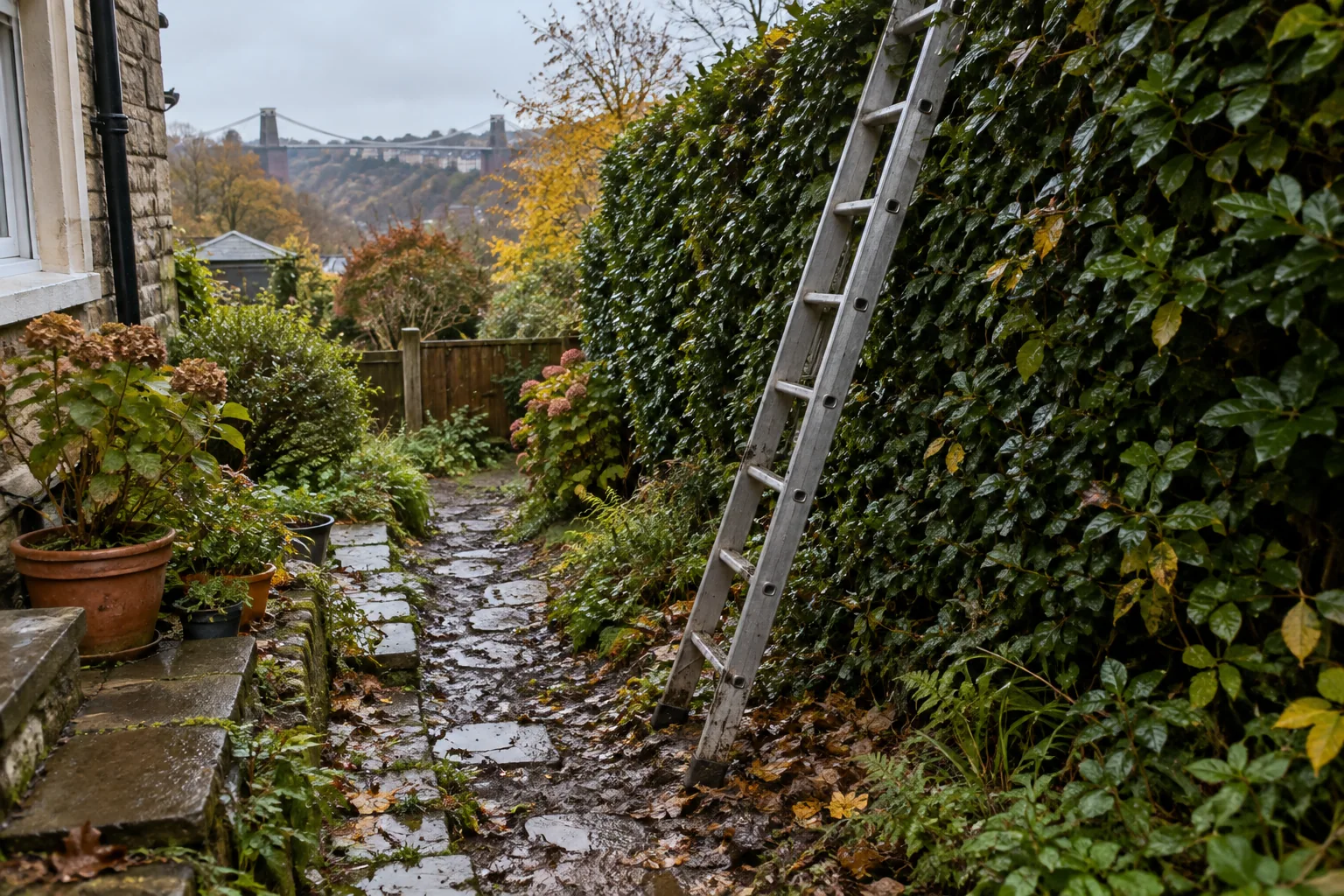
Avoid working at height in strong wind, heavy rain or icy conditions. A stable footing and clear view of the cutting line are essential. Wet leaves on paving or a soft border under a ladder can make a normal trim hazardous. A powered tool near dripping foliage and cables requires its own safety checks. Postponing until a dry, calm day is a practical choice, not neglect.
Inspect the ground and the route for carrying tools and cuttings. If a hedge borders a narrow path or steep bank, you may need a different access method. Do not place a ladder on loose paving or waterlogged soil to meet a booking date. Our guide to cleaning a slippery path explains why the walking surface deserves attention before garden work begins.
Frost can affect the plant as well as the operator. A severe cut into exposed growth immediately before a cold spell may leave vulnerable tissue. The exact risk depends on the species and scale of pruning. If temperatures are falling and the job is not urgent, reschedule and check the plant's recommended timing. A light cut to remove a branch obstructing a gate is different from reducing the entire hedge.
Reconsider a hedge that has become too large
An overgrown hedge may need staged renovation rather than one dramatic trim. First identify the plant and inspect how far green growth extends into the canopy. For many conifers, cutting beyond that into old bare wood can leave permanent gaps. A deciduous hedge may respond differently, but its renovation still needs the right season and aftercare. Do not assume every hedge can be brought back to the same narrow outline.
Measure the height and width you can safely maintain afterwards. If the desired result requires repeated high-level work or reaches beyond the property, revise the target. Our guide to planning a hedge for a small garden explains why mature width and access should be considered before planting. The same questions help when deciding whether an existing hedge can be kept.
Photograph the whole hedge and problem spots before asking for a quote. Include the surrounding path, fence and neighbouring side where visible. The hedge trimming service can discuss a realistic scope and timing based on the species and access. If roots, boundary ownership or structural damage are involved, those issues may need separate advice.
Keep essential access without a full trim
Sometimes a hedge narrows a path or catches a gate. Identify the minimum work needed to restore safe access without cutting an active nest or making an unsuitable large reduction. A careful removal of a few clearly obstructing shoots may be possible when the plant and wildlife checks allow it. Keep the cut proportional and record what still needs doing later.
Clear loose cuttings and fallen leaves from the walking line. Do not pile them against the hedge base or over drains. If the garden is being handed over, leave a note explaining why a planned trim was postponed and when it should be reassessed. This is more useful than presenting an unsafe or biologically harmful job as complete.
The decision is to pause whenever wildlife, plant health or access makes the planned cut unsuitable. Check again when conditions change. A hedge kept healthy and safely maintainable over several years is a better result than one forced into shape on the wrong afternoon.